Bonte Museum (본태박물관)
Seogwipo (서귀포), Jeju Island (제주)
Sources checked October 2026
- Year
- 2012
- Architect
- Tadao Ando
- Type
- Museum of traditional Korean craft and contemporary art
- Access
- Open to the public, paid admission, every day 10:00 to 18:00, last entry 17:00 (official website, October 2026)
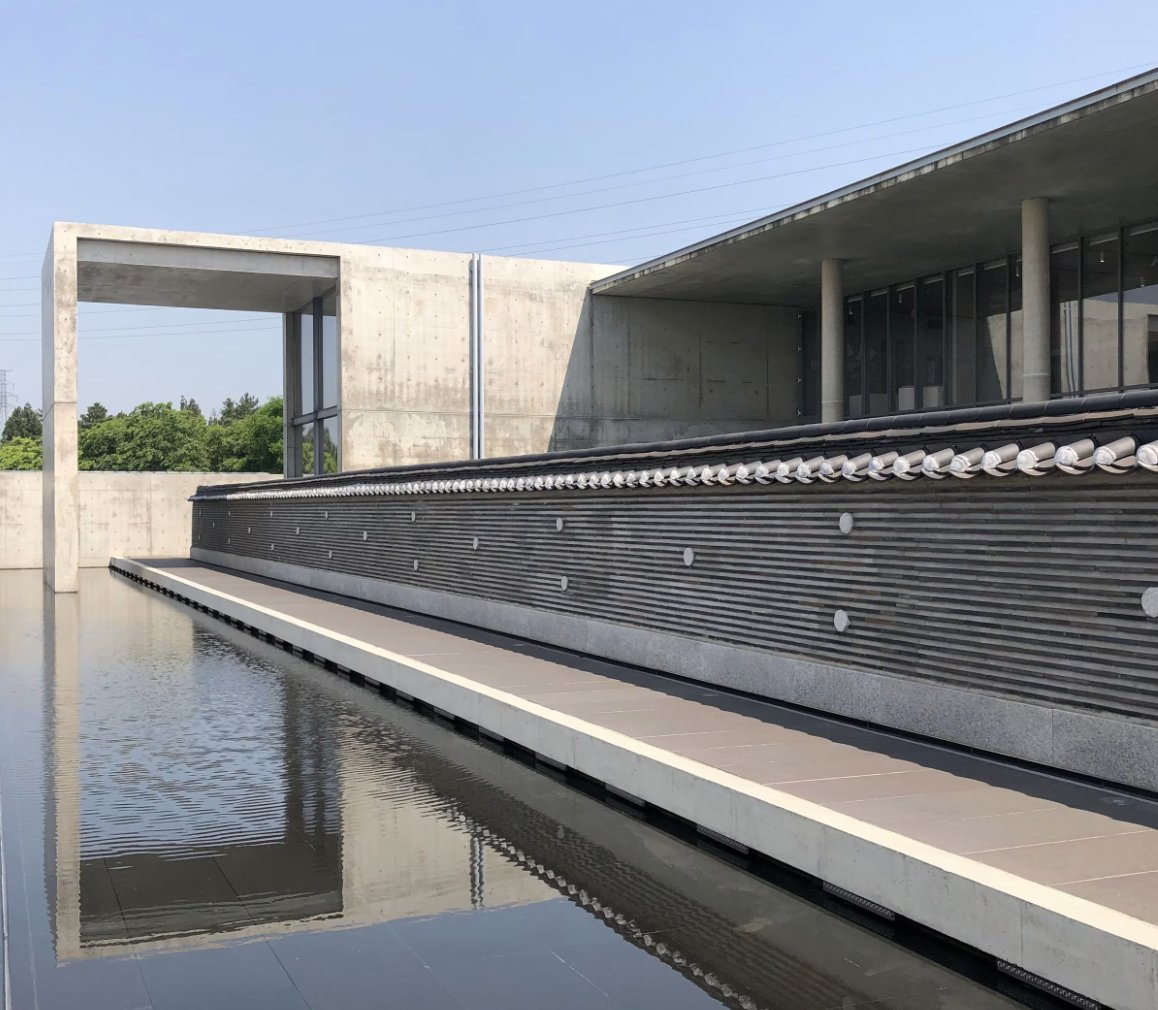
Opened in 2012 on Jeju Island, the Bonte Museum brings traditional Korean craft and contemporary art together in a Tadao Ando (안도 다다오) building: exposed concrete, walls in the traditional Korean style, water and courtyards. The original museum consists of two L-shaped volumes that meet at different heights around a triangular courtyard and a long rectangular one. Visitors see old Korean tables and screens as well as works by Picasso, Dalí, Nam June Paik or Kusama Yayoi. In 2026 a stainless-steel pavilion, Bonstar, was added.
Affiliate links — booking through Verrière helps fund our research, at no extra cost to you.
History
The museum opened in 2012 on Jeju Island. Its name, 本態 (본태), means "the original form": the aim is to explore the intrinsic beauty of a culture, long hidden under the traces of time. It grew out of more than forty years of devotion to traditional Korean craft, which the institution wants to share with as many people as possible.
Tadao Ando began the plans in 2009 and completed the museum in 2012. His concept is "tradition and modernity that yield to the land of Jeju", with two spaces, one for traditional craft and one for contemporary art. He describes a volcanic island where lava lies exposed everywhere and the wind is so strong that trees hardly grow; the layout and route, he says, came out of constant fieldwork on the site.
At opening the museum had two galleries; others were added, and in 2026 a pavilion also designed by Ando, Bonstar (본스타), brought the total to six.
Architecture
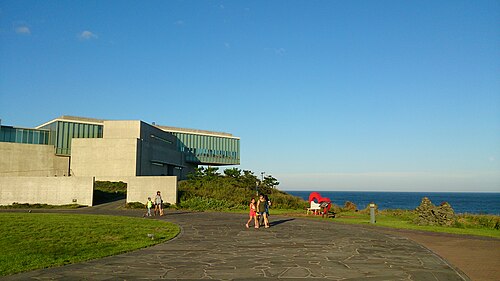
The original museum consists of two L-shaped volumes that meet at different heights, without working against the slope of the land, and form a triangular courtyard and a long rectangular one. Ando combines exposed concrete with light and water. The first gallery, a single sweep from the first floor to the ground floor, is walked through without corridors; it is plain and on a human scale. The second opens under deep eaves onto a tall hall and the main exhibition room, with views of Sanbangsan (산방산), Moseulbong (모슬봉) and 단산.
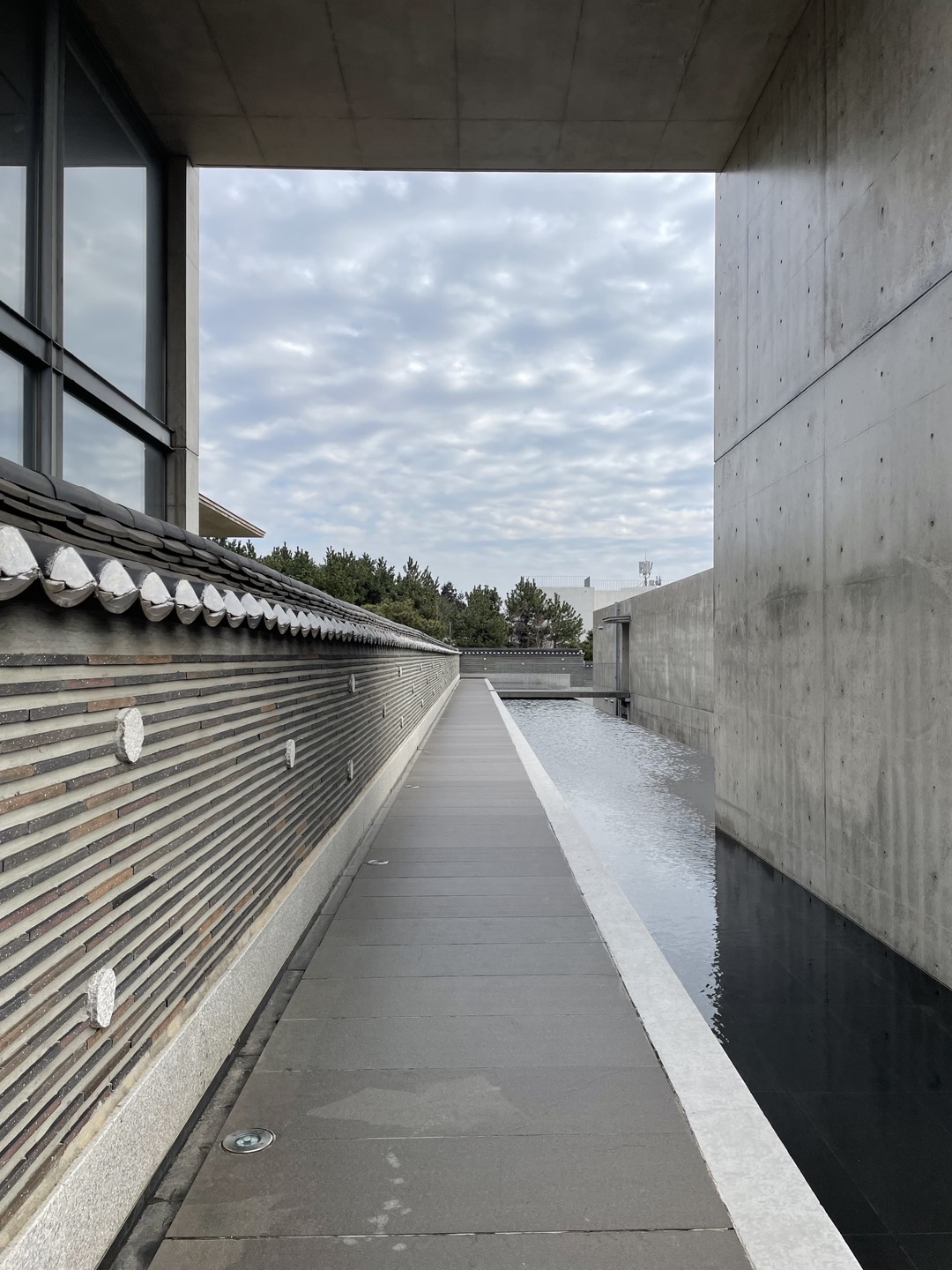
The route is a winding maze rather than an efficient path: the scenes ahead are deliberately hidden. It passes through an inner courtyard (중정), Ando's signature, and ends at the meditation room (명상의 방), where the architect hopes visitors will sort out what they have seen and thought. He says the idea of an indirect approach comes from his experience of Japanese temples.
Between the buildings, the walls are not exposed concrete but in the traditional Korean style: Ando worried that concrete would feel rather modern, and decided after several site visits and discussions with the client. You walk along a wall on one side and, on the other, shallow water that moves with the wind; a waterfall completes the arrangement and is meant to be seen and heard. Inside, the angle of the light casts moving shadows that sharpen the contrast between dark and bright.
Bonstar, opened in 2026, changes material: stainless-steel panels reflect the sky, clouds and light of Jeju, and the colour of the building varies with the weather and the hour. Concrete and stainless steel answer each other there.
Use today
The first gallery shows traditional Korean craft: small tables (소반), wooden furniture, bojagi (보자기) and screens. The second brings together contemporary art, including Nam June Paik (백남준), Kusama Yayoi (쿠사마 야요이), Robert Indiana, Julian Opie, Picasso and Dalí, as well as Ando's meditation room (2012). The third is devoted to Confucian rites, the fourth to Korean funerary rites (bier-carriages 상여, figurines 꼭두). The fifth gallery and Bonstar host temporary exhibitions.
Kusama's Infinity Mirrored Room – Gleaming Lights of Souls (2008), first shown in 2014, is permanently installed. Outdoors, a sculpture park includes Children's Soul by Jaume Plensa and Euphoria by David Gerstein. The museum café, with its large glass windows, looks onto a pond and, in the distance, Sanbangsan; the roof of the fifth gallery offers a view of the whole south coast, with Hallasan (한라산) behind.
Visiting
The museum is open every day from 10:00 to 18:00, last entry 17:00; any change due to weather or internal reasons is announced on the website and the museum's social media. The building can only be visited with a ticket, which can be bought online and exchanged at the ticket office. Allow 1.5 to 2 hours. Personal photography is allowed everywhere except in the fifth gallery. The audio guide is free (via QR code): bring your own earphones.
The museum is in Andeok (안덕면), Seogwipo (서귀포), at Sallongnam-ro 762beon-gil 69, about 40 minutes by car from the airport and 15 minutes from Jungmun (중문). The bus stop is about a 20-minute walk away: a taxi is the most practical option, from Jungmun or the Donggwang (동광) transfer hub.
Photos
33.30° N, 126.39° E
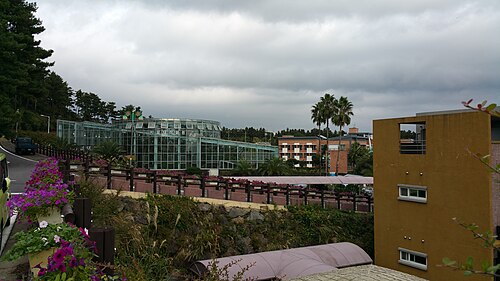
Greenhouses nearby
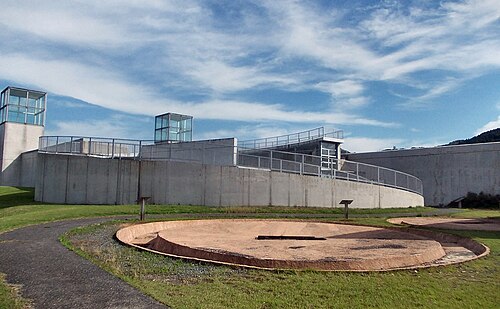
Architecture nearby
Sources (14)
- bontemuseum.com/
- bontemuseum.com/museum
- bontemuseum.com/visitor-information
- bontemuseum.com/faq
- bontemuseum.com/hall-bonstar
- bontemuseum.com/hall01
- bontemuseum.com/hall02
- bontemuseum.com/hall03
- bontemuseum.com/hall04
- bontemuseum.com/sculpture-park
- ko.wikipedia.org/wiki/본태박물관
- jjan.kr/articleAmp/20240902580177
- openstreetmap.org/way/645842838
- openstreetmap.org/way/645842840
Affiliate links — booking through Verrière helps fund our research, at no extra cost to you.