Onomichi City Museum of Art
Onomichi, Hiroshima
Sources checked October 2026
- Year
- 2003
- Architect
- Tadao Ando
- Type
- Municipal art museum, 1980 building renovated and extended
- Access
- Open to the public during exhibitions, closed on Mondays (official site, October 2026)
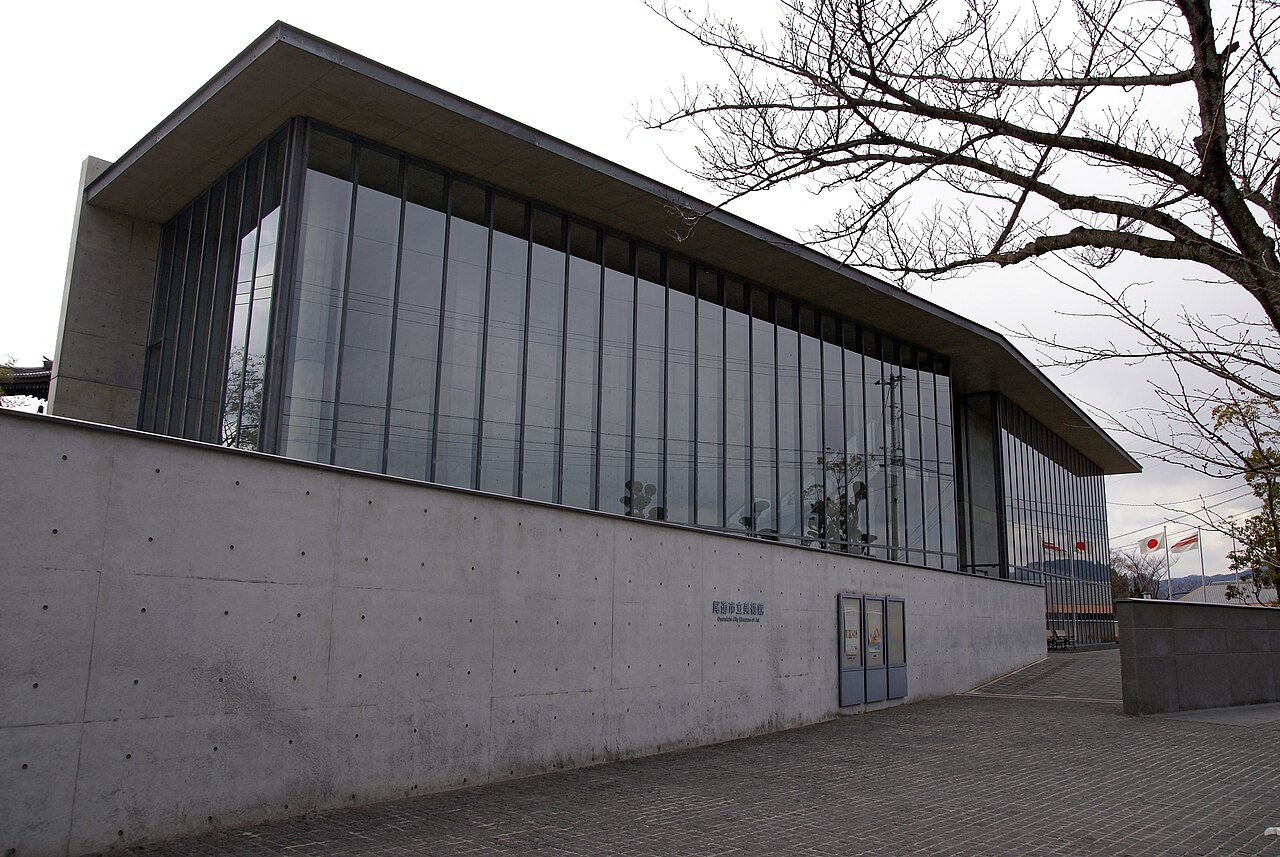
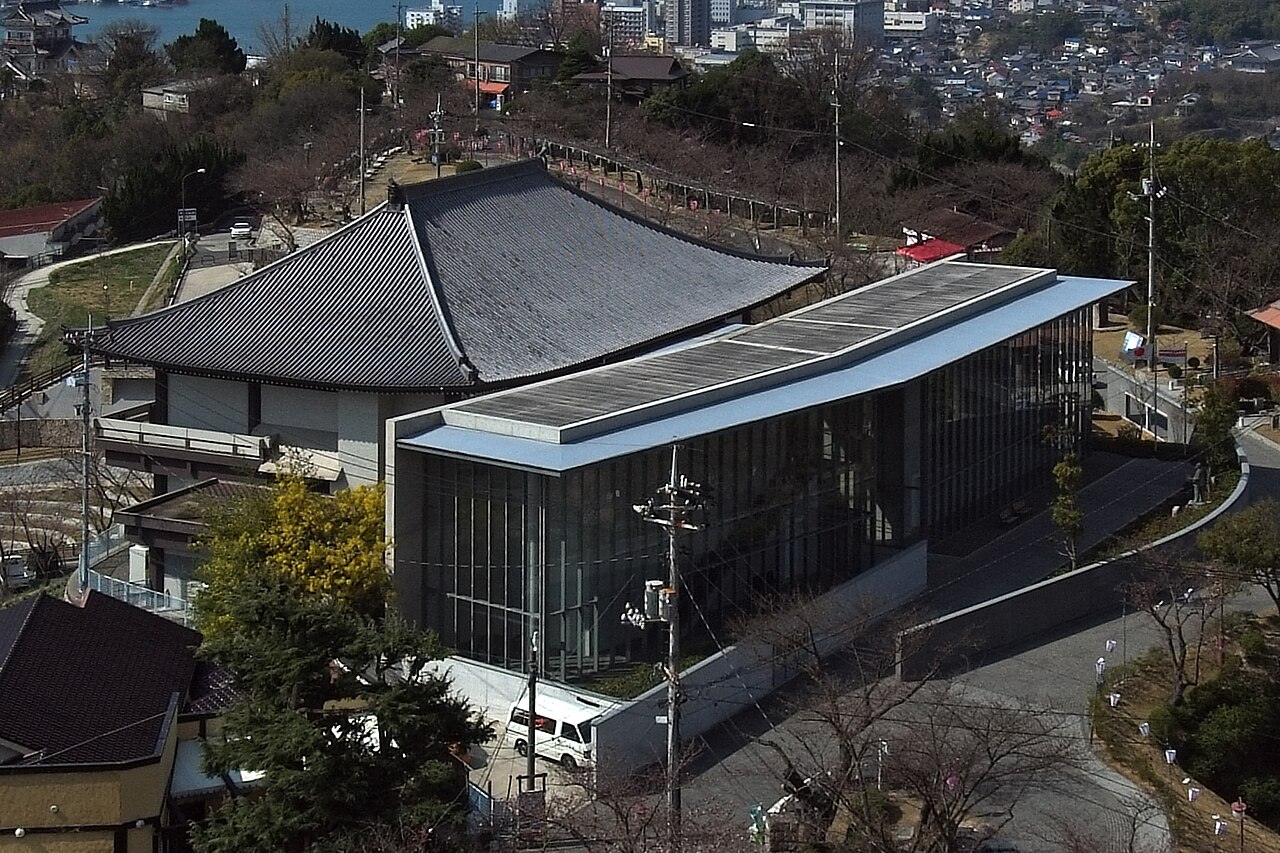
Opened in 1980 in Senkō-ji Park (千光寺公園), the Onomichi City Museum of Art (尾道市立美術館) reopened on 11 January 2003 after a project by Tadao Ando. The architect renovated the 1980 building, with its tiled roof, and joined it to a new wing of exposed concrete and glass, which became the entrance. The museum stages temporary exhibitions and holds mostly works linked to Onomichi.
Affiliate links — booking through Verrière helps fund our research, at no extra cost to you.
History
The museum began as a request from residents: in 1978 the city of Onomichi (尾道市) marked its 80th anniversary and chose, among its commemorative projects, to build the museum that many had asked for. It opened in March 1980 in Senkō-ji Park, with a new building (本館, honkan) and the former local NHK broadcasting station (旧NHK尾道放送局), converted into galleries.
After the city's centenary (1998) and the opening of the Shimanami Kaidō (しまなみ海道) road link in 1999, the city launched its "Machigoto geijutsu bunka-kan" programme (まちごと芸術・文化館構想). The old building, finished more than sixty years earlier, was then demolished to make way for a new wing (新館, shinkan), and Tadao Ando was commissioned. His idea: renovate the 1980 building, drawing on its age, and fuse it with the new wing to create a landscape. The museum closed in May 2001, works were completed in September 2002 and it reopened on 11 January 2003.
Architecture
Ando's project keeps the 1980 building and adds a new wing, which replaces the former NHK building and is now the main entrance. From outside the two parts look separate; inside they join without a break.
The new wing is a quadrangular volume on two levels, with about 670 m² of floor area. It pairs exposed concrete, a hallmark of Ando's architecture, with large glass panels: the glass, running floor to ceiling, faces rough bare-concrete walls, and the volume's clean outline draws shadows on the floor and walls that move with the sun.
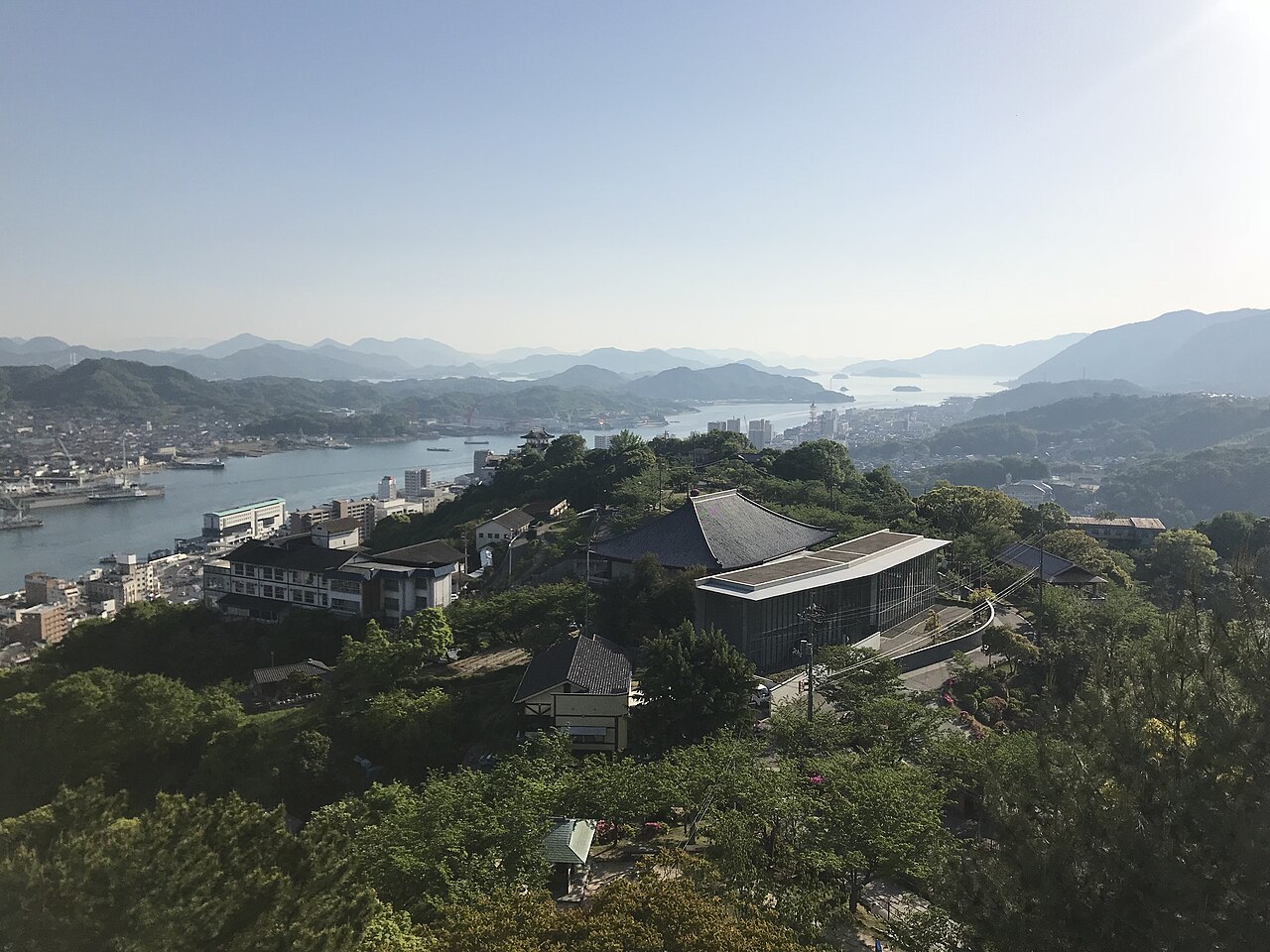
The 1980 building kept its hipped roof (寄棟造) of true tiles (本瓦葺), whose shape and structure follow the roof of the neighbouring temple Saigō-ji (西郷寺), whose main hall is a nationally designated Important Cultural Property. It holds galleries, with a café and the shop on the ground floor and, on the first floor, a glazed lobby looking out over the Onomichi Strait (尾道水道). Open, quiet spaces are numerous, designed so that visitors can simply enjoy the view.
Use today
The museum stages temporary exhibitions: it has no permanent display and can be entered only while an exhibition is on. It holds mostly works linked to Onomichi, divided into oil paintings, Japanese-style paintings, watercolours and drawings, prints and photographs, sculpture, crafts and calligraphy.
Among them are painters tied to the city, such as Kobayashi Wasaku (小林和作), Moritani Nanjinshi (森谷南人子) and Hirata Gyokuun (平田玉蘊), as well as French painting, echoing Honfleur, Onomichi's twin town, with Emmanuel Damoye among others. On the ground floor, the shop offers goods drawn from the collection, reproductions of famous paintings and works by local artists, and the café serves tea and sweets from Onomichi.
Visiting
The museum is open 9:00 to 17:00, last entry 16:30 (hours may change for a special exhibition). It is closed on Mondays (official rule: "祝日の場合は翌日", the following day if the Monday is a public holiday), except during Golden Week and the Obon period, from 29 December to 3 January, and between exhibitions. As there is no permanent display, come while an exhibition is on. Admission is charged, with a reduced rate for students, and set exhibition by exhibition for special ones; it is free up to junior high school.
The museum stands in Senkō-ji Park, on the hill, and has no car park of its own: by car, set the satnav to the park's car park (千光寺公園駐車場) rather than to the museum, which may lead to a private car park. From JR Onomichi Station, allow about 15 minutes on foot to the ropeway's lower station, a 3-minute ride, then about 5 minutes on foot.
Photos
34.41° N, 133.20° E
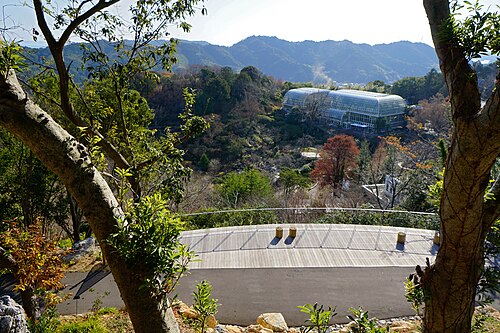
Greenhouses nearby
Architecture nearby
Sources (13)
- onomichi-museum.jp/about/
- onomichi-museum.jp/guide/info.html
- onomichi-museum.jp/guide/floormap.html
- onomichi-museum.jp/guide/ticket.html
- onomichi-museum.jp/info/post_98.html
- onomichi-museum.jp/collection/
- onomichi-museum.jp/collection/nihonga.html
- onomichi-museum.jp/collection/yusaiga.html
- mlit.go.jp/tagengo-db/common/001554816.pdf
- museum.or.jp/museum/6294
- ja.wikipedia.org/wiki/尾道市立美術館
- openstreetmap.org/way/679798418
- wikidata.org/wiki/Q11465485
Affiliate links — booking through Verrière helps fund our research, at no extra cost to you.