Tottori Hanakairo Flower Dome (とっとり花回廊 フラワードーム)
Nanbu, Tottori Prefecture
Entry updated on October 5, 2026
- Year
- 1999
- Architect
- Architect Five (structural design: Umezawa Structural Engineers)
- Style
- Contemporary glazed lattice-shell dome
- Dimensions
- Dome 50 m in diameter and 21 m high
- Status
- Open to the public
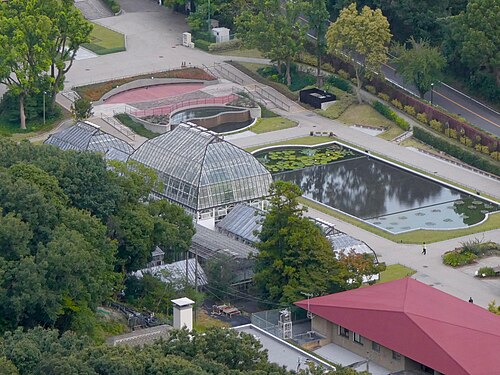
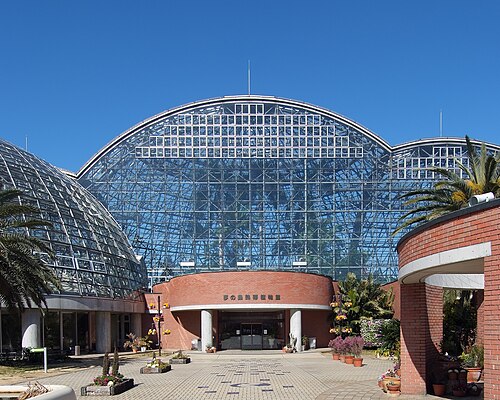
The centrepiece of the prefectural Tottori Hanakairo flower park, which opened in Nanbu on 18 April 1999, the Flower Dome is a glasshouse 50 m across and 21 m high. Designed by the practice Architect Five, it is built as a single-layer lattice shell made mostly of 60 mm rods, a structure whose engineering by Umezawa Structural Engineers won the 10th Matsui Gengo Prize. Kept above 15 °C even in winter, it shelters tropical and subtropical plants and several hundred orchids, at the heart of a 50-hectare park with views of Mount Daisen.
Affiliate links — booking through Verrière helps fund our research, at no extra cost to you.
History
1 min
Tottori Hanakairo is a flower park created by Tottori Prefecture in the town of Nanbu, in Saihaku District; a small part of it spills over into neighbouring Hōki. Construction ran from August 1995 to March 1999 and cost around 18.2 billion yen. The landscape was designed by the Tokyo Landscape Research Institute (東京ランドスケープ研究所), the buildings by the practice Architect Five, and the structural engineering was entrusted to Umezawa Structural Engineers (梅沢建築構造研究所).
The park opened on 18 April 1999 across some fifty hectares, which places it among the largest flower parks in Japan. The Flower Dome, completed in March 1999, occupies its centre: it is the great glasshouse around which the whole site is arranged, inside the ring of a covered promenade one kilometre long. The engineers' work earned the structure the 10th Matsui Gengo Prize (松井源吾賞), which the engineering firm lists among its credits.
The park is twinned with the Keukenhof garden in the Netherlands. It is now run by an operator appointed by the prefecture, which holds flower workshops and seasonal illuminations there. The sources consulted mention no major alteration to the dome since its opening.
Architecture and engineering
1 min
The Flower Dome is a glass dome 50 metres in diameter, rising to 21 metres. Its frame is a single-layer lattice shell curved in two directions, made mostly of 60 mm diameter rods assembled into a grid. According to the engineers, only the members running in one direction were bent; the others are straight pieces cut to the length between two nodes and joined with pins. The complex combines reinforced concrete and steel.
The dome is the centre of a circular composition. A covered promenade, both gallery and viewing walk, forms a ring 320 metres across and one kilometre round, linking the park's pavilions, among them the lily house. The gallery rests on an eccentric truss carried by a single pier every 25 metres, the whole acting as a box-section tube. Level throughout and lined with benches, the walkway allows visitors to circle the gardens sheltered from the rain while taking in every part of the park.
Plant collections
1 min
The glasshouse is kept above 15 °C even in midwinter for its tropical and subtropical planting. The park gives pride of place to orchids, which it calls the 'king of flowers': more than 500 plants according to the official website, over a thousand according to a gardening magazine. They bloom among large plants such as the daiō-yashi palm (ダイオウヤシ) and the ōgi-bashō (オオギバショウ), alongside rare foliage plants. Displays change with the seasons; during the illumination season, from November to January, chandelier decorations and shows combining light and music fill the dome.
Outside the glasshouse, the park is known for its lilies: some 10,000 blooms and all fifteen species of wild lily native to Japan. The flower hill, covering one hectare, is planted with more than 50,000 seasonal plants.
Visiting
1 min
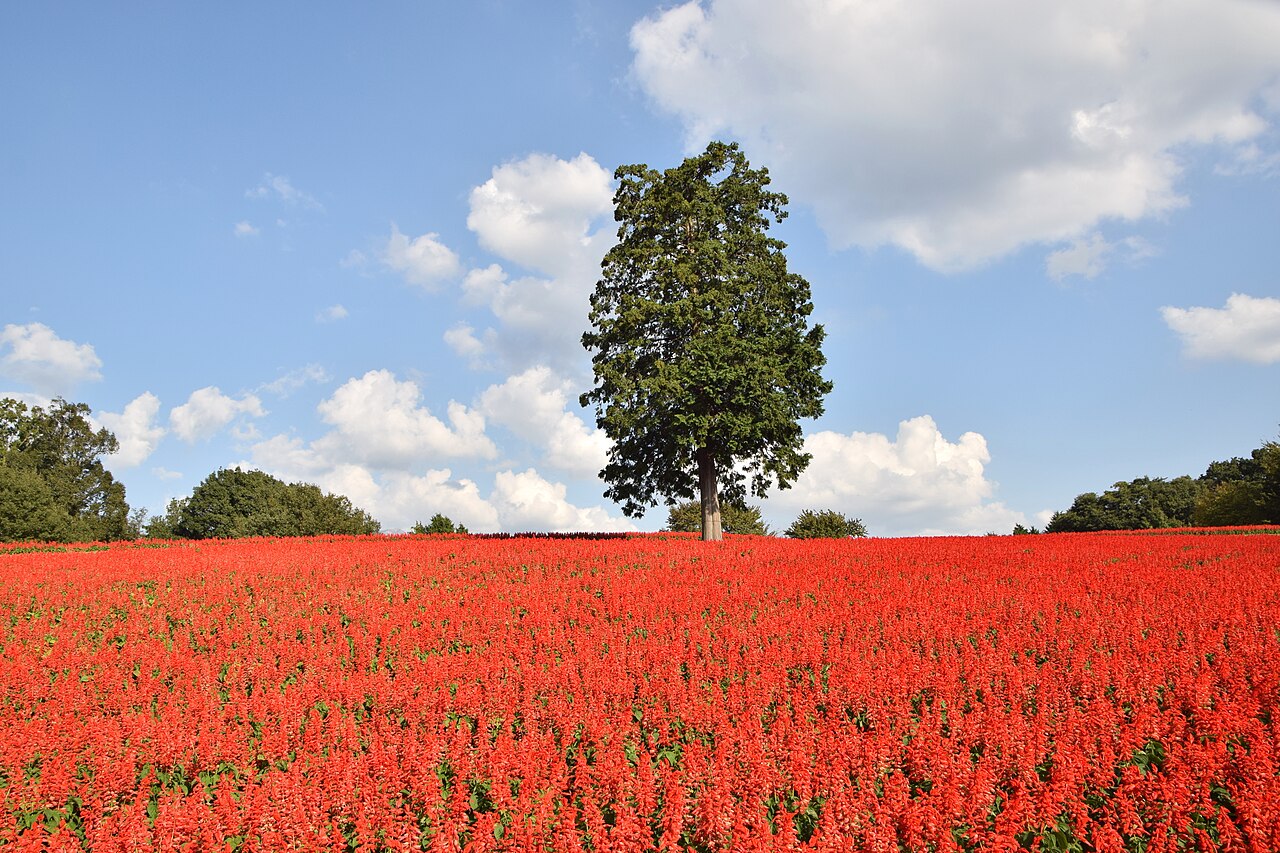
The glasshouse stands at the centre of the park, in the middle of the ring formed by the covered promenade. A walk of about an hour and a half takes in the dome and the main gardens, although plant lovers can easily spend the whole day. Spring, the tulip season in April and May, and autumn, when the red salvias of the flower hill stand out against Mount Daisen, are the most striking times; the 'secret garden' (秘密の花園) opens only in those two seasons. In winter, the heated glasshouse and the evening illuminations take over from the outdoor beds.
35.35° N, 133.43° E
Greenhouses nearby
More greenhouses — Japan
Do you have a good photo of this greenhouse? Suggest it for this page →