Yokogurayama Natural Forest Museum
Ochi, Kōchi Prefecture
Sources checked October 2026
- Year
- 1997
- Architect
- Tadao Ando
- Type
- Municipal natural history museum
- Access
- Open to the public, closed on Tuesdays and Wednesdays (museum's official website, October 2026)
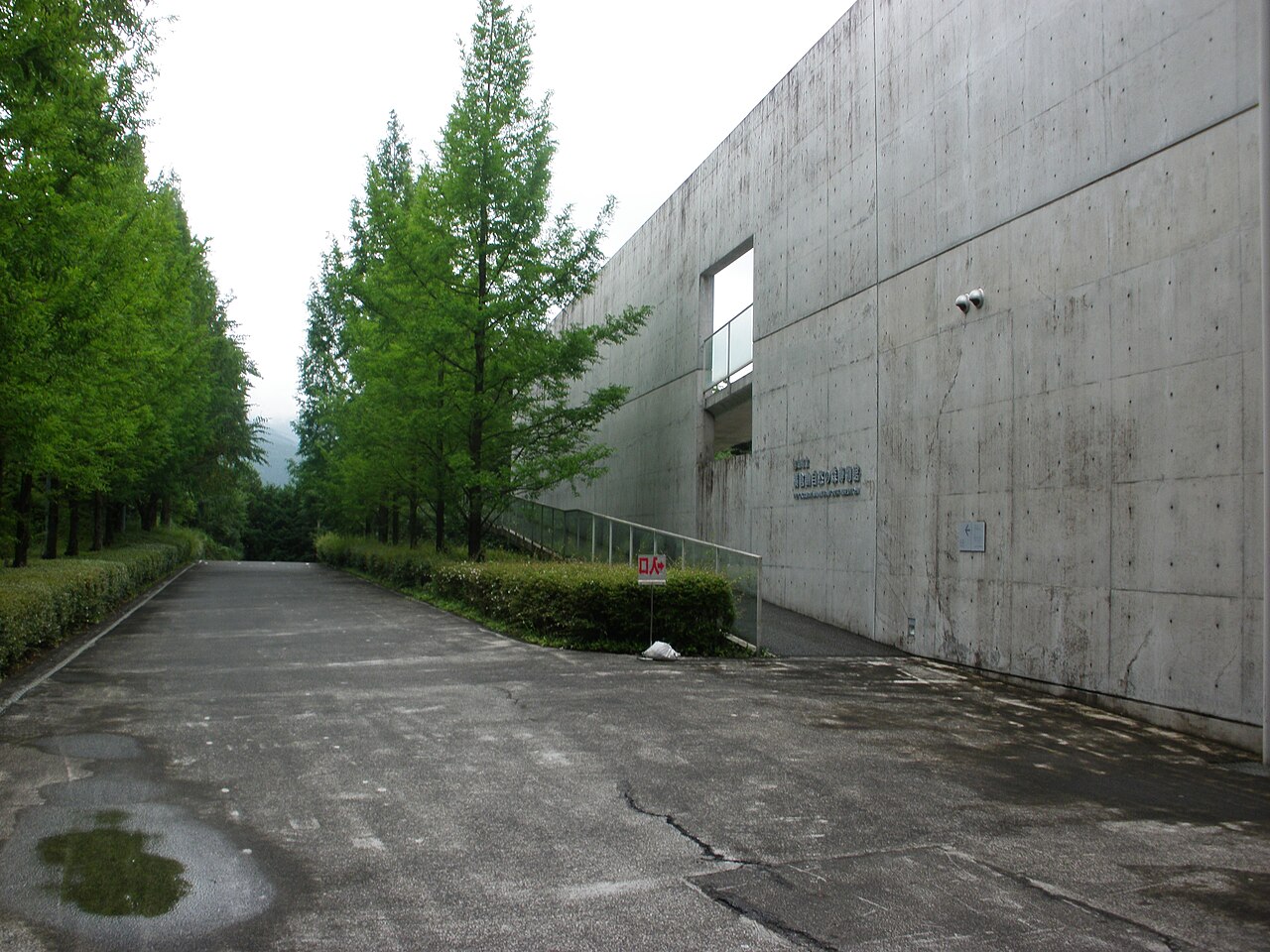
At the foot of Mount Yokogura, in a small town on Shikoku, Tadao Ando built a three-storey natural history museum in reinforced concrete. The concept announced at its opening in 1997 was a museum the forest would eventually cover: trees planted around it and a planted roof. Its galleries take in natural light. Inside are fossils more than 400 million years old, the plants of Makino Tomitarō and the legends of the mountain.
Affiliate links — booking through Verrière helps fund our research, at no extra cost to you.
History
The Yokogurayama Natural Forest Museum (横倉山自然の森博物館, Yokogurayama shizen no mori hakubutsukan) is the municipal museum of Ochi (越知町), a small town in central Kōchi Prefecture (高知県) on the island of Shikoku. It opened on 11 October 1997 at the foot of Mount Yokogura (横倉山) and serves as an introduction to the mountain, known for its fossils, its flora and the legend of Emperor Antoku. It was conceived as an "earth science museum".
The town of Ochi, as client, entrusted the design to Tadao Ando's office (安藤忠雄建築研究所). The concept announced at the opening was a museum "that the forest will eventually cover" (いずれ森に覆われる博物館): trees were planted around the building, and the roof was planted.
Architecture
The building is reinforced concrete on three storeys, with 2,093.66 m2 of floor area. The concrete is left bare, and its frames cut out the mountains and sky like framed pictures.
Visitors approach by a long gentle slope, then a gallery. Inside, natural light comes through large windows and slits: according to the museum's curator, the angle of the light changes the view over the course of the day. The primeval-forest diorama also receives daylight from the ceiling.
The ground floor holds permanent exhibition rooms, a multipurpose hall and a library; the next level more galleries, a hands-on corner and the reception; the top level a panoramic lounge overlooking the planted roof and the town of Ochi. A lift serves all floors.
Use today
It is a natural history museum devoted to the neighbouring mountain, arranged as a succession of rooms. After a diorama of Ochi's terrain, a gallery presents in dioramas the primeval akagashi oak forest (アカガシ) that covers the Yokogurayama ridge. Another tells the origin of the mountain: some 420 to 430 million years ago the area was part of the supercontinent Gondwana, in the southern hemisphere, and fossils of the reef organisms of that time are on show. The Earth history room presents fossils and meteorites, including a genuine fossil skull of Triceratops, and in the hands-on corner visitors can touch real fossils and meteorites.
Other rooms cover the history and legend of Yokogurayama: that of Emperor Antoku (安徳天皇), who after the battle of Dan-no-ura is said to have fled through the mountains of Shikoku to live on this mountain, and daily life in Ochi in the Edo period, through dolls, videos and models. One room is devoted to the botanist Makino Tomitarō (牧野富太郎), who studied this mountain with passion: the plants he discovered and named there, and his fieldwork. An insect corner shows about 150 species and 1,200 specimens donated to the museum by the family of a collector.
On the top level, a space is dedicated to the animated film "Belle" (竜とそばかすの姫, Ryū to sobakasu no hime): the film's dragon monument and panels on the Niyodo river area. Temporary exhibitions, observation outings and lectures complete the galleries. The mountain, a prefectural natural park, holds some 1,300 plant species, and the museum provides a map of its trails.
Visiting
The museum is open from 9:00 to 16:30 (last entry at 16:00) and closed on Tuesdays and Wednesdays (the next opening day if one falls on a public holiday), and from 29 December to 2 January. Admission is charged, at reduced rates for high-school and university students, primary and junior-high pupils and from age 70; payment is in cash only. Groups book by telephone, email or fax. Allow about an hour for the visit.
From Kōchi, take the train to Sakawa (about 30 minutes by limited express), then a bus to Ochi (about 15 minutes) as far as the Miya-no-mae stop, 8 minutes' walk from the museum. By car, allow about 40 minutes from the Ino interchange on National Route 33.
33.54° N, 133.24° E
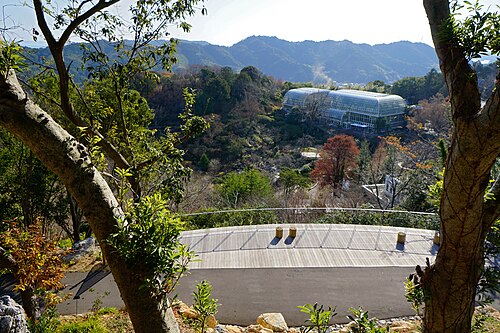
Greenhouses nearby
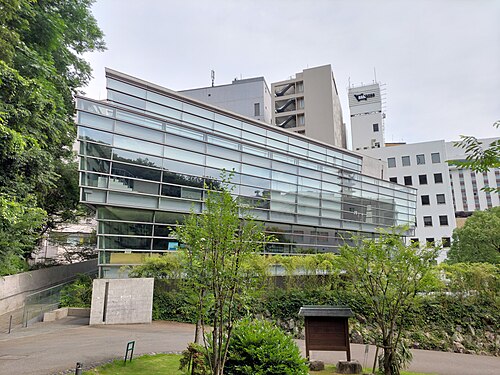
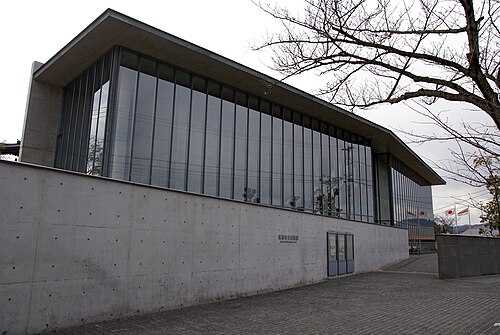
Architecture nearby
Sources (14)
- yokogurayama-museum.jp/
- yokogurayama-museum.jp/exhibition-2
- yokogurayama-museum.jp/page-540
- yokogurayama-museum.jp/walking
- discoverjapan-web.com/article/113601
- en.wikipedia.org/wiki/Tadao_Ando
- kochike.jp/column/221364/
- ochi-kankou.jp/tourist/museum/museum.html
- rurubu.jp/andmore/spot/80037526
- shikoku-tourism.com/en/see-and-do/24455
- museum.or.jp/museum/6881
- nishimatsu.co.jp/ourworks/facility/cultural/post_57.html
- town.ochi.kochi.jp/kankou/look/hakubutukan
- wikidata.org/wiki/Q123527622
Affiliate links — booking through Verrière helps fund our research, at no extra cost to you.