Garten der Schmetterlinge (Butterfly Garden), Friedrichsruh
Friedrichsruh (Aumühle), Schleswig-Holstein

Sources checked October 2026
- Year
- 1985
- Style
- Glazed tropical house in the park of the Bismarck estate
- Dimensions
- 450 m² glazed tropical house; grounds of about 10,000 m²
- Status
- Open to the public in season (2026: until 25 October; Wednesday to Sunday and public holidays)
At Friedrichsruh, in the Sachsenwald forest east of Hamburg, the Garten der Schmetterlinge keeps more than 1,000 tropical butterflies from about forty species in a 450 m² glasshouse held at around 26 °C. Founded in 1985 by Elisabeth Fürstin von Bismarck, it presents itself as Germany's first butterfly garden; according to the Sachsenwald tourism portal it occupies former greenhouses of Chancellor Otto von Bismarck. A park of roughly 10,000 m² extends the visit. The garden opens seasonally: in 2026, until 25 October.
Affiliate links — booking through Verrière helps fund our research, at no extra cost to you.
History
Friedrichsruh has been the Bismarck family seat since 1871: the Schleswig-Holstein monuments inventory records that Emperor William I gave the Sachsenwald and Friedrichsruh to Chancellor Otto von Bismarck that year, and he lived there until his death in 1898. The hamlet is older. The Schlossteich, a pond formed by damming the Schwarze Au, dates from around 1600, and brewing is documented on the spot from 1660. The butterfly garden grew up beside these buildings.
The Sachsenwald tourism portal states that Elisabeth Fürstin von Bismarck founded the garden "in the historic greenhouses" of Chancellor Otto von Bismarck. The heritage office's records for the castle ensemble list no greenhouse among the protected buildings. That part of the story remains to be documented.
The founding year is also contested. The garden's website, the broadcaster NDR and the German Wikipedia article on Aumühle give 1985, with the claim of Germany's first butterfly garden; the German Wikipedia article on Friedrichsruh says 1988, and the monuments inventory merely refers to the 1980s. The founder died in 2023. According to the Hamburger Abendblatt, the 2024 season was the first without her, and the team has carried on her work.
Architecture and engineering
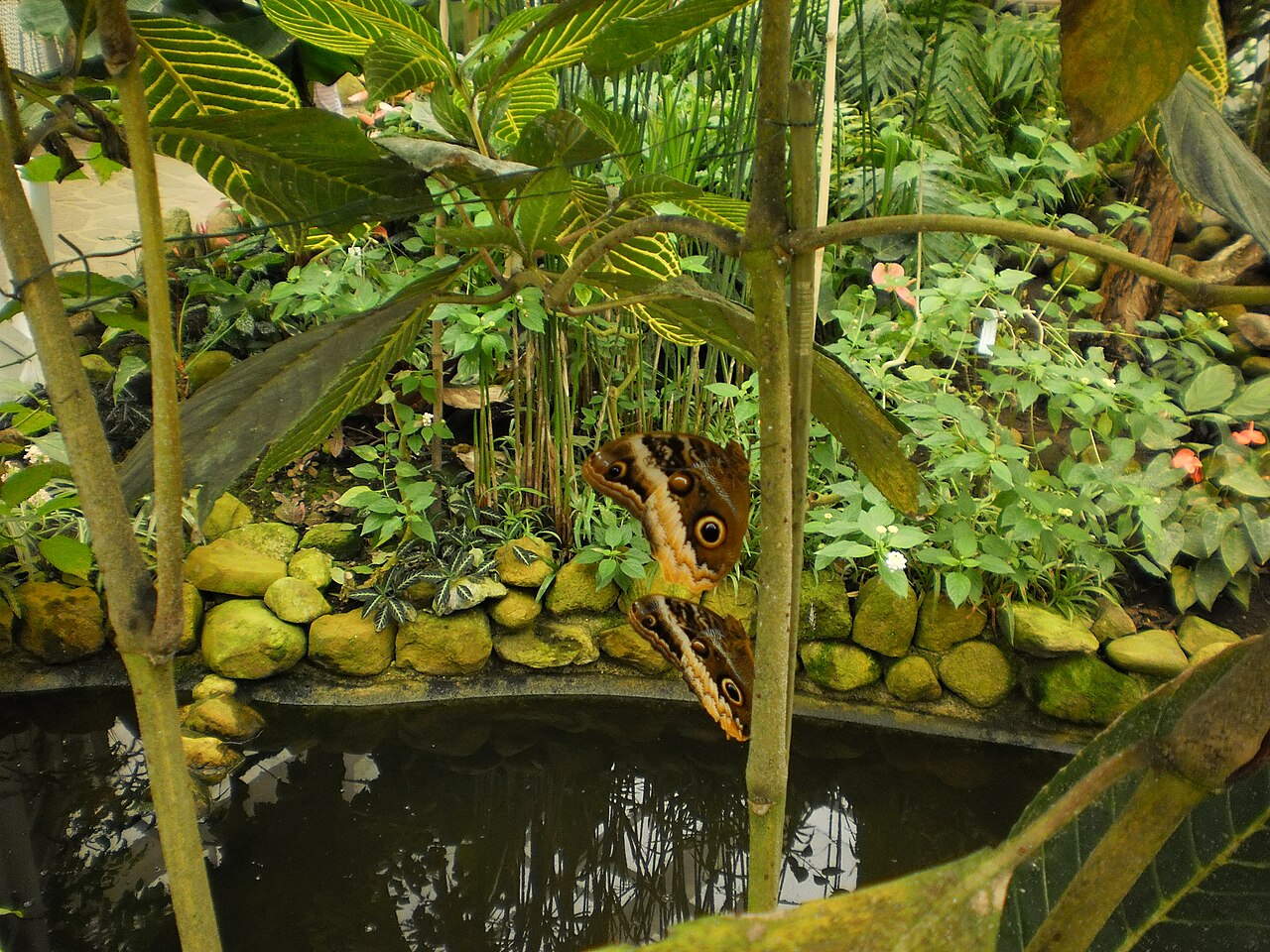
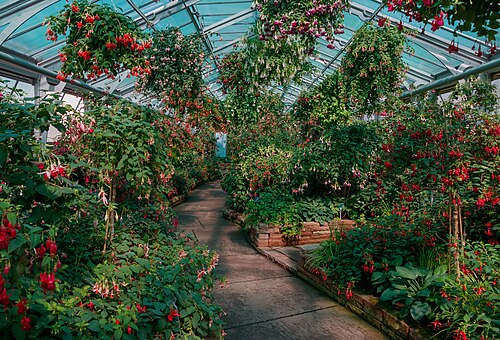
The heart of the garden is a glazed tropical house ("Tropenhaus") of 450 m², a figure supplied by the operator. Visitors walk under glass, at about 26 °C and 70 to 80 per cent humidity, among palms, planted beds and splashing water.
This hothouse atmosphere contrasts with the neighbouring buildings, protected as parts of the castle ensemble. The old brewery, a half-timbered building, dates from the second half of the 17th century; the inventory considers it the oldest surviving building in Aumühle-Friedrichsruh. The brewmaster's house, which the records date to the 18th century or to around 1800, now serves as the garden's ticket office and shop.
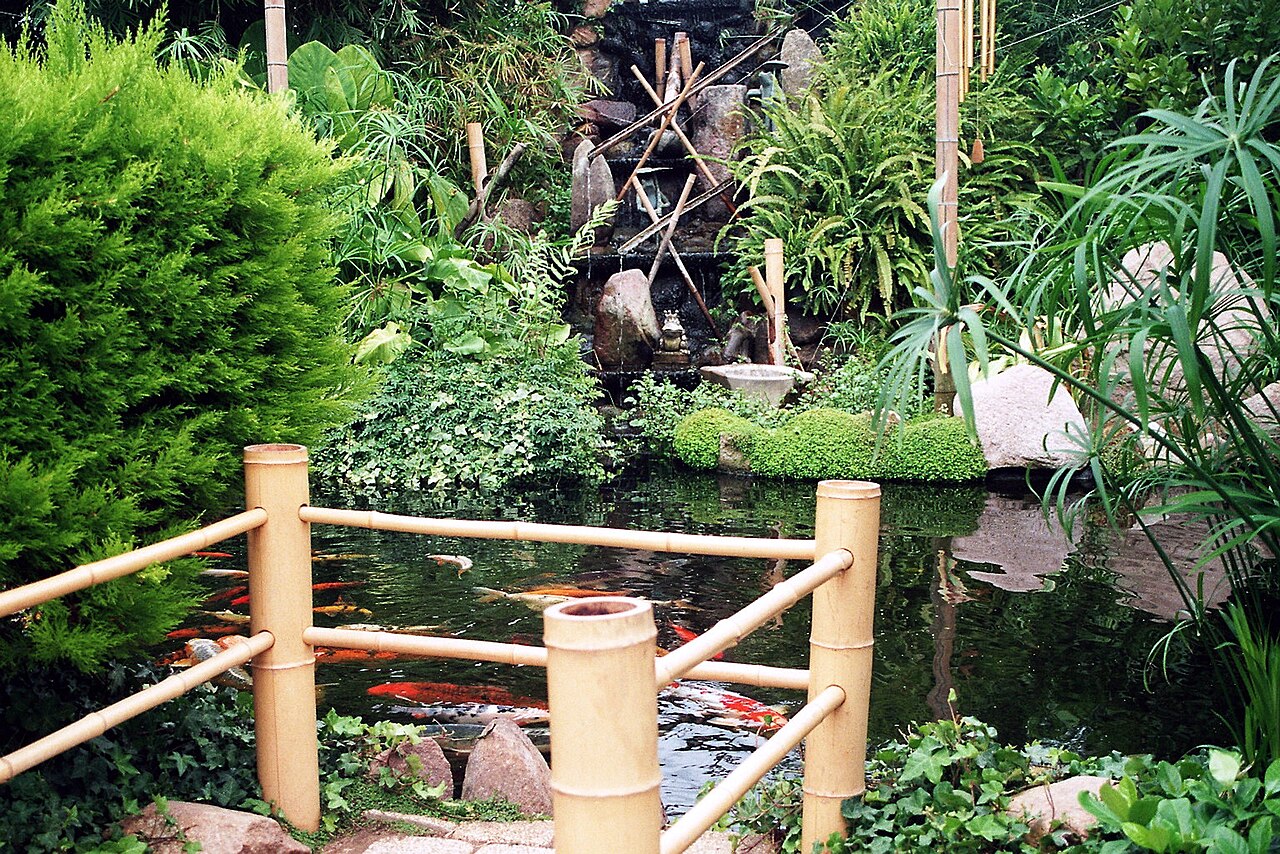
The grounds of about 10,000 m² extend the tropical house. A neighbouring "singing water garden" sends water through bamboo pipes and sets chimes ringing; there are also a bamboo house, a rose garden, a dragonfly pond, a stream, a large sequoia and two playgrounds. A bridge leads to an "island of reflection" among beech trees. All of it lies beside the Schlossteich, within the perimeter of Friedrichsruh castle.
Plant collections
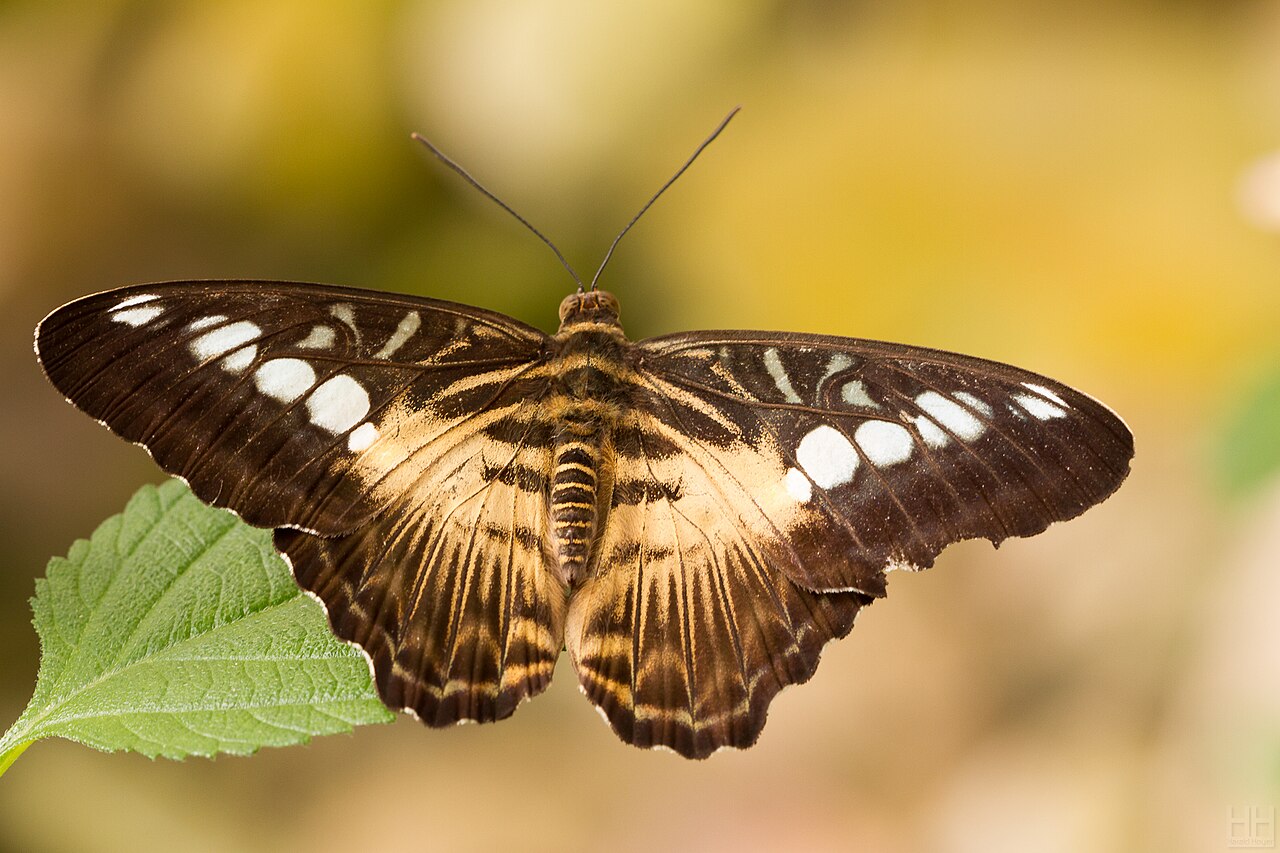
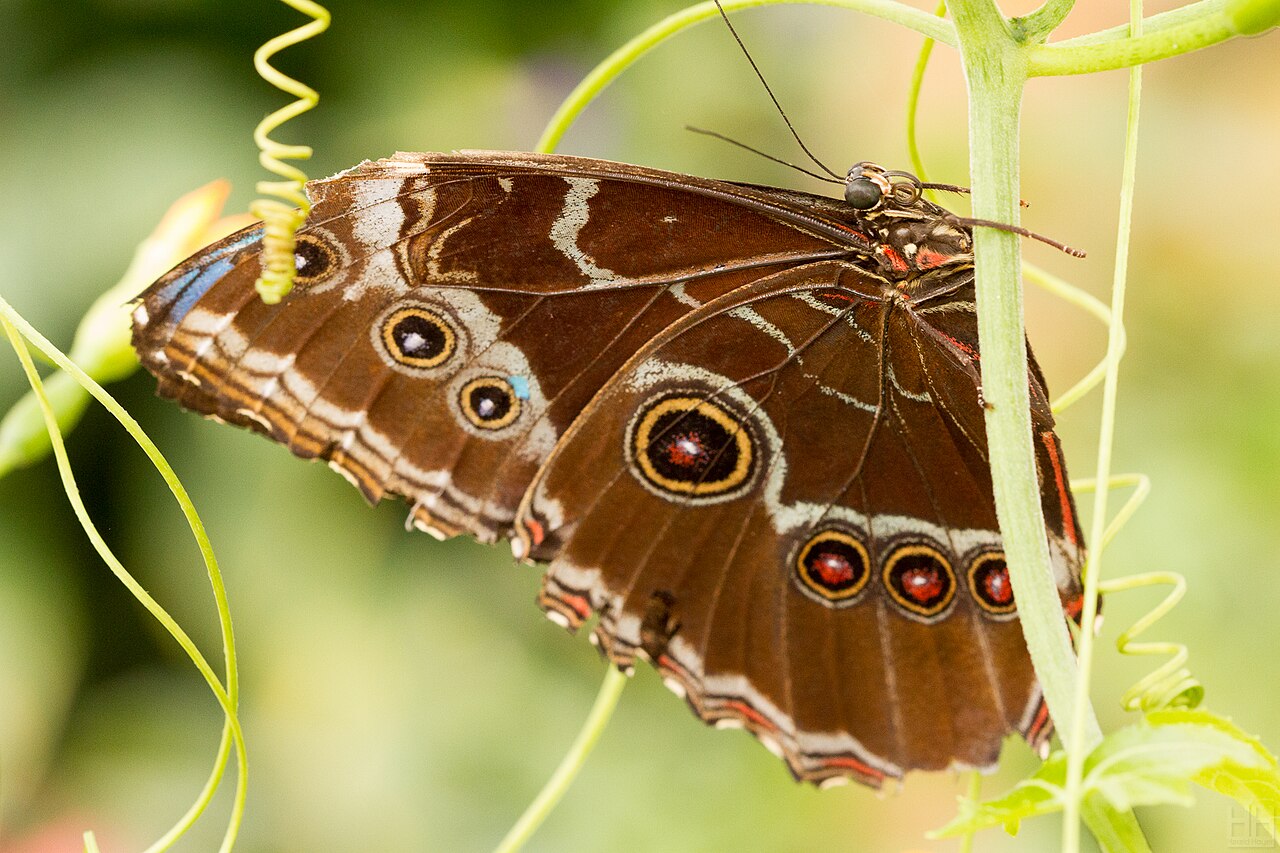
More than 1,000 tropical butterflies fly freely in the house, drawn from about 40 species from Asia, Africa and the Americas. The garden's website names the blue morpho, the Postmann, the Weisse Baumnymphe, the monarch, the Greta oto, described as one of the smallest butterflies in the world, and the giant nocturnal atlas moth, whose wingspan reaches about 30 cm according to NDR.
The butterflies are bred on farms in tropical countries and arrive by air freight as pupae; a few species are also bred on site, on host plants grown inside the house. The garden states that the atlas moth lives only a few days as an adult, the Postmann several months. The plants it names are hibiscus, cacao trees, banana plants and palms. Koi carp, turtles and dwarf quail complete the scene.
Native species are not kept under glass, because the climate does not suit them. Outside, they visit the rose garden, the scented garden and the dragonfly pond until October; in March, butterflies that overwinter as adults can be seen.
Visiting
The tropical house is the main draw. The garden advises allowing at least an hour to watch the butterflies closely, ideally in clear, sunny weather when they are most active. Photography without flash is allowed; dogs may not enter the house but are accepted on a lead in the grounds.
The grounds, the shop and the Café Vanessa invite a longer stop; the season ends in October (on the 25th in 2026). Friedrichsruh holds other traces of the Bismarcks' life: the Bismarck Museum and the chancellor's neo-Romanesque mausoleum, built in 1899 by the architect Ferdinand Schorbach. The Sachsenwald, the largest continuous forest in Schleswig-Holstein, offers walking trails beyond.
53.53° N, 10.33° E
Greenhouses nearby
More greenhouses — Germany
Do you have a good photo of this greenhouse? Suggest it for this page →
Sources (9)
- gartenderschmetterlinge.de/ueber-uns/
- gartenderschmetterlinge.de/informationen/
- sachsenwald.de/der-garten-der-schmetterlinge/
- ndr.de/ratgeber/reise/tierparks/Garten-der-Schmetterlinge-Tropenparadies-bei-Hamburg,garte
- efi2.schleswig-holstein.de/dish/dish_pdf/dish_pdfgenerate.php?id=29515
- efi2.schleswig-holstein.de/dish/dish_pdf/dish_pdfgenerate.php?id=5875
- de.wikipedia.org/wiki/Friedrichsruh
- de.wikipedia.org/wiki/Aum%C3%BChle
- abendblatt.de/region/kreis-lauenburg/article241966368/Erste-Saison-ohne-Elisabeth-von-Bism
Affiliate links — booking through Verrière helps fund our research, at no extra cost to you.