Palmarium of the French Garden, Albert-Kahn Museum and Gardens
Boulogne-Billancourt, Île-de-France

Sources checked October 2026
- Year
- Greenhouse undated (French garden: 1895)
- Architect
- Greenhouse unattributed; French garden by Henri and Achille Duchêne
- Style
- Glass-and-metal winter garden
- Status
- Visible in the publicly open gardens; access to the interior to be checked
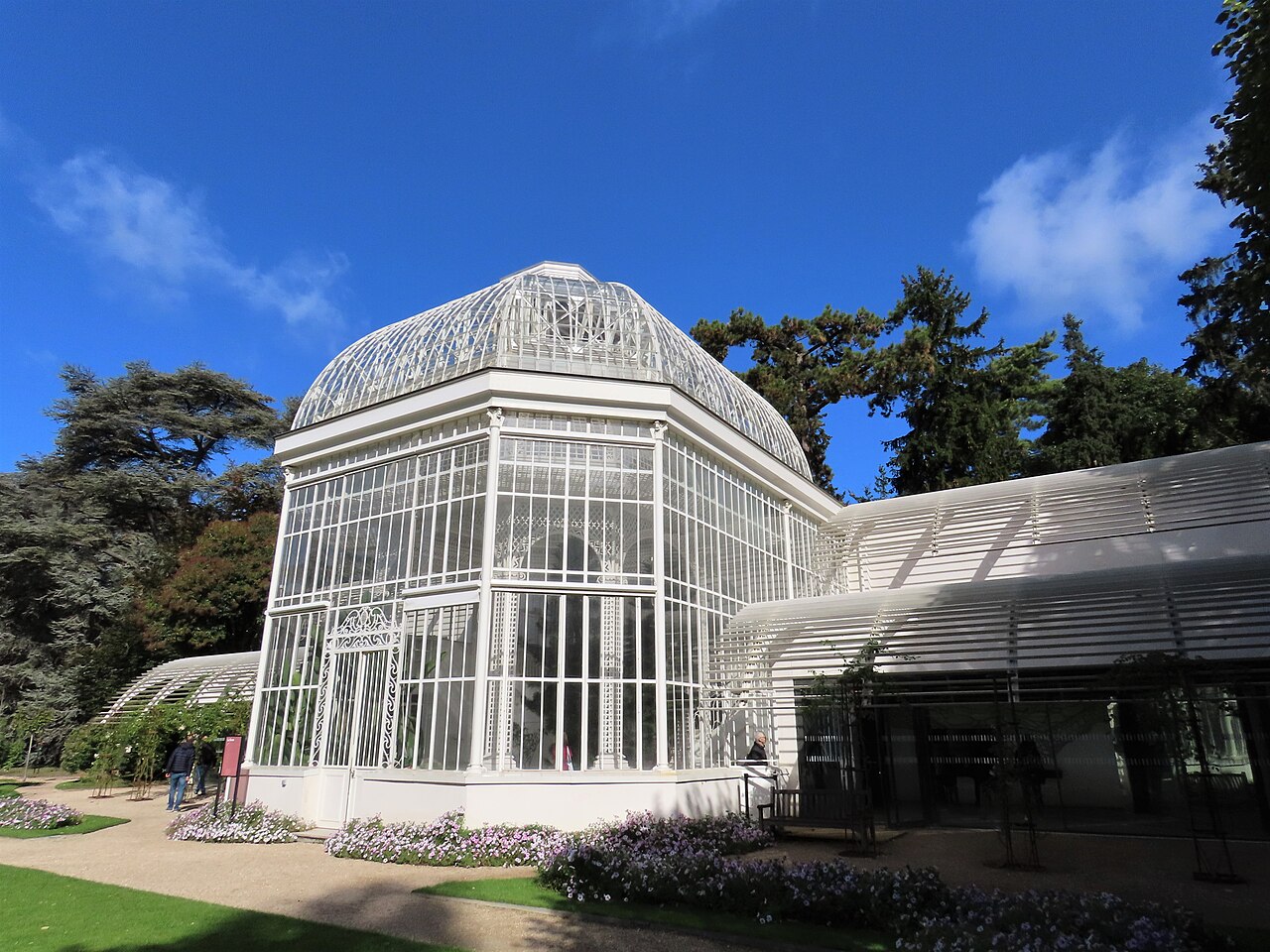
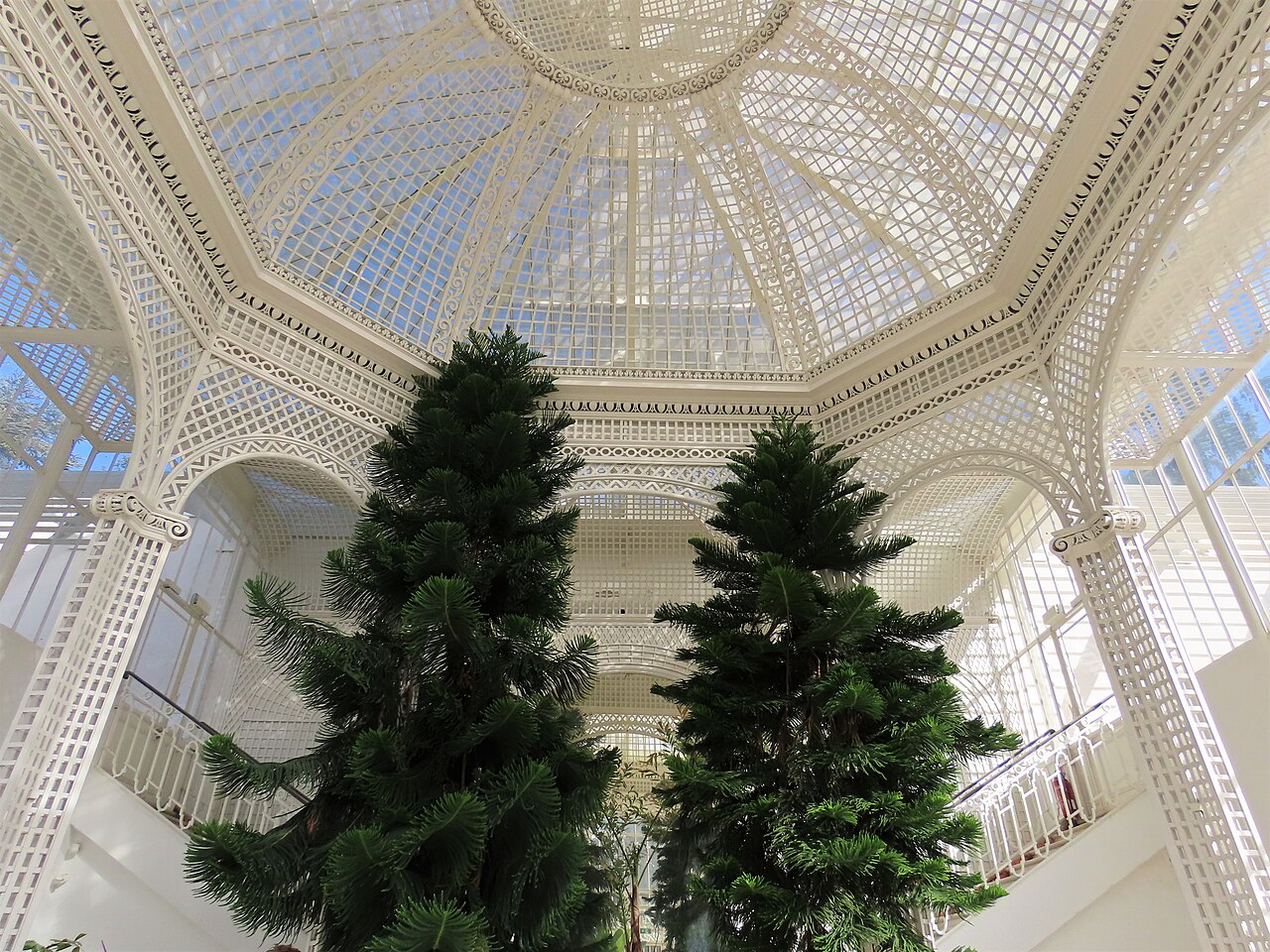
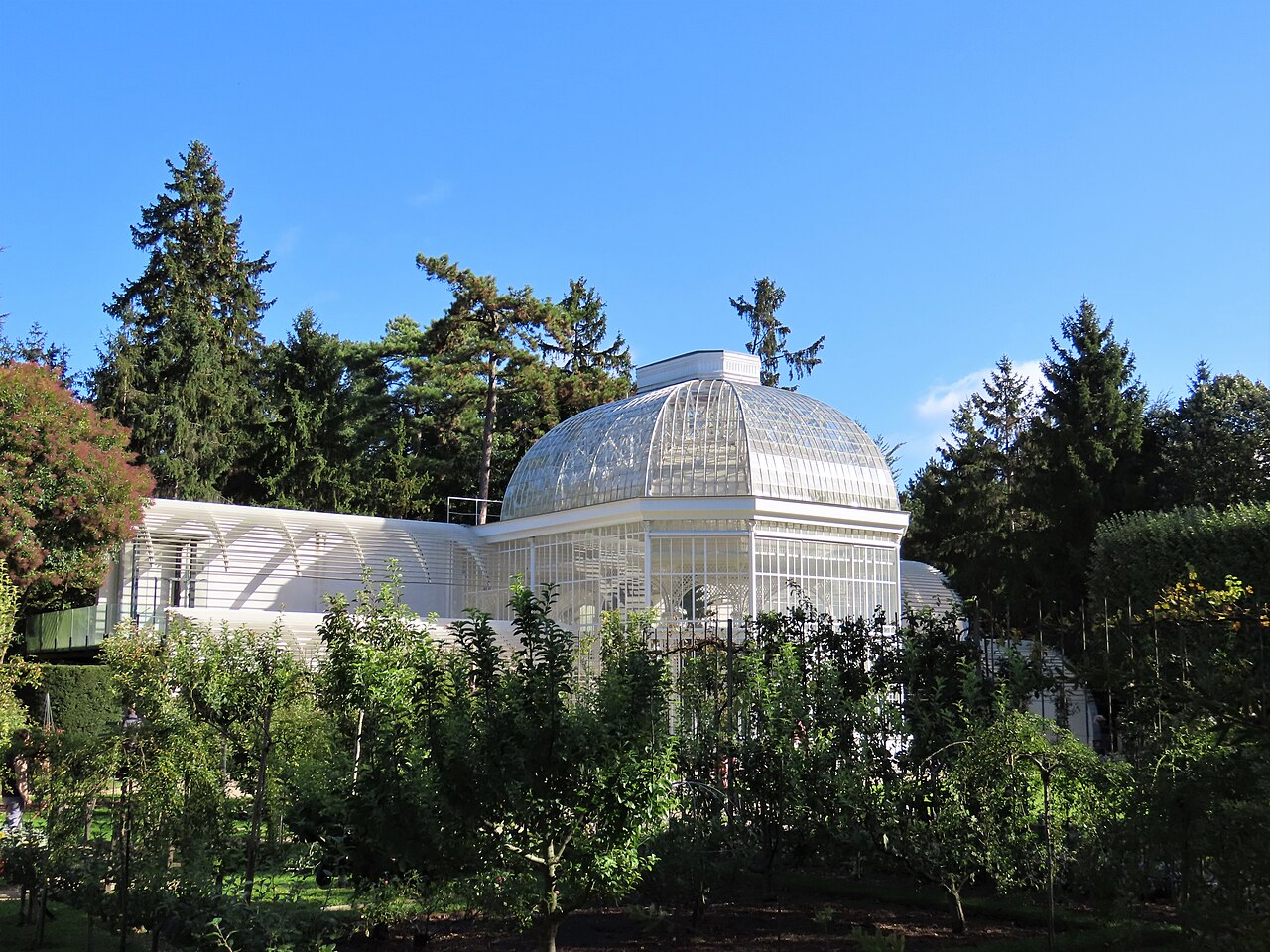
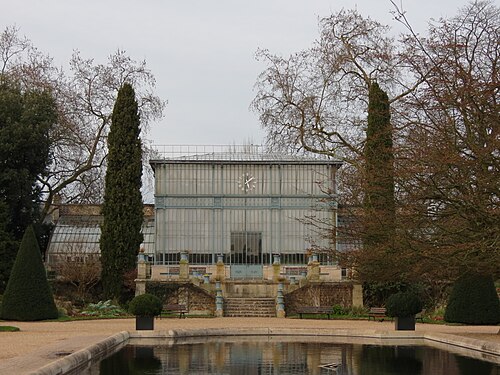
At the foot of the French garden drawn in 1895 by the landscape designers Duchêne, father and son, for the banker Albert Kahn, a large glass-and-metal greenhouse shelters a winter garden of exotic vegetation. Before 1914 two lateral span-roofed greenhouses extended it, and Kahn held concerts inside. Seized after the collapse of his bank in 1932, the estate opened to the public in 1937 and later passed to the Hauts-de-Seine département. Restoration of the greenhouse received sponsorship in 2014; the order of 16 December 2015 listed the gardens and their follies, including "the greenhouse known as the palmarium", as a historic monument.
Affiliate links — booking through Verrière helps fund our research, at no extra cost to you.
History
Albert Kahn settled in Boulogne in 1892 and, over some thirty years, enlarged his estate plot by plot: the historic-monuments record gives 1895-1908 for the laying out of the garden, Wikipedia considers the ensemble complete by 1910, and the press extends the purchases to 1920. In 1895 the landscape designers Duchêne, father and son, drew the French garden in the taste of the day; Achille Duchêne began the layout of the site. At the foot of this garden, off the axis of the house, stands the great greenhouse: a winter garden in which Kahn occasionally held concerts. Before 1914 two lateral span-roofed greenhouses completed it.
From 1909 the banker funded the Archives of the Planet, some 72,000 autochromes and about a hundred hours of film shot in around sixty countries until 1931. The collapse of the Kahn bank in 1932 led to the seizure of the estate in 1933; the Seine prefecture bought it in 1936, opened the gardens to the public in 1937 and acquired the Archives in 1939. Kahn died in 1940. The Hauts-de-Seine département, created in 1968, became owner of the site, which was constituted as a museum in 1986 and labelled a musée de France in 2002.
In 2014 the Fondation d'entreprise Total and CGPA supported, through the Fondation du patrimoine, the restoration of the greenhouse. The order of 16 December 2015 listed as a historic monument the gardens and their follies, including "the greenhouse known as the palmarium", the two Japanese houses, the tea pavilion, the Norman cottage, the Vosges barn and the banker's former residence. The garden closed from 2016 to 2019 for the construction of the new museum designed by Kengo Kuma, reopened for the heritage days on 20 September 2019, and the renovated ensemble was inaugurated on 2 April 2022.
Architecture and engineering
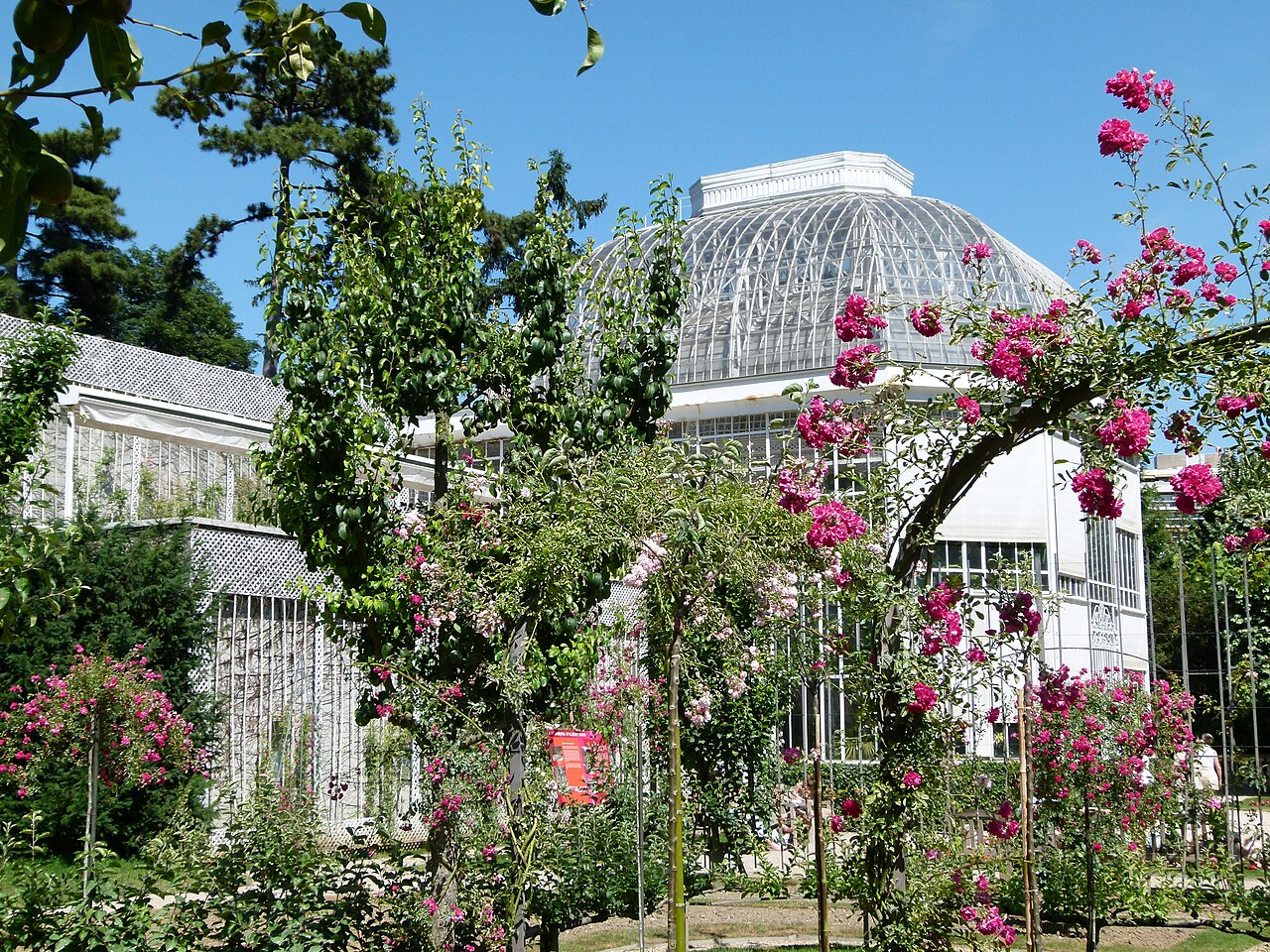
The greenhouse occupies the lower end of the French garden, off the axis of the house, behind the green parlour whose symmetrical parterres are laid out in front of it. The regional tourist board describes it as a large glass-and-metal greenhouse sheltering the winter garden; the cadastre, as carried into OpenStreetMap, records it as a building of greenhouse type under the plain name "La Serre". The museum calls it a "majestic greenhouse" and the 2015 order names it "the greenhouse known as the palmarium", ranked among the garden's follies alongside the Japanese houses, the tea pavilion, the Norman cottage and the Vosges barn.
Before 1914 the winter garden was extended by two lateral span-roofed greenhouses, since vanished: the present building is thus the core of a once larger ensemble. Its restoration received corporate sponsorship in 2014, channelled through the Fondation du patrimoine. Neither the construction date, nor the builder, nor the dimensions of the greenhouse appear in the museum pages, the Mérimée database or the encyclopaedias consulted; the full protection file can only be consulted at the Médiathèque du patrimoine et de la photographie.
Plant collections
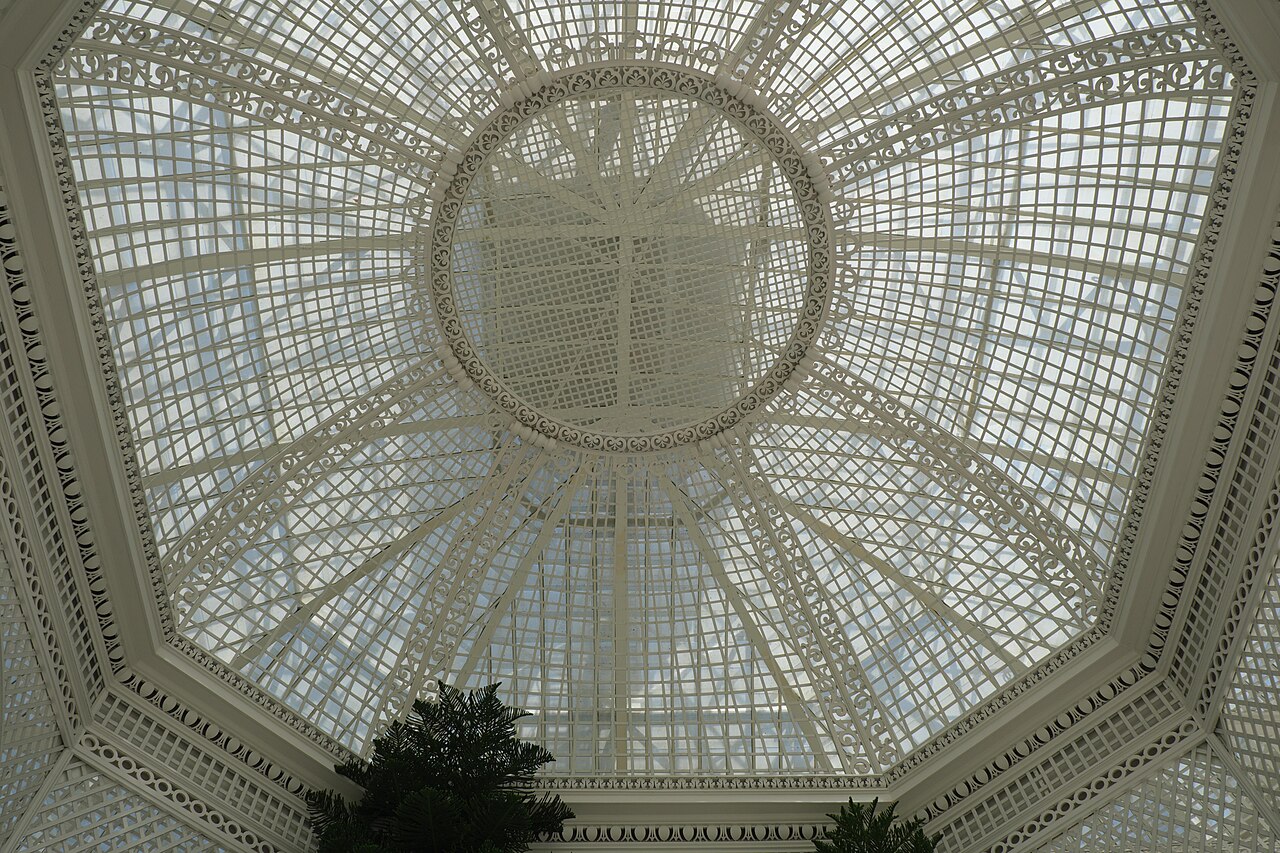
The winter garden shelters exotic vegetation, according to the museum; the greenhouse and winter garden are today an integral part of the departmental museum's collections, like the landscape scenes around them. In Albert Kahn's time the building also served, on occasion, as a concert hall.
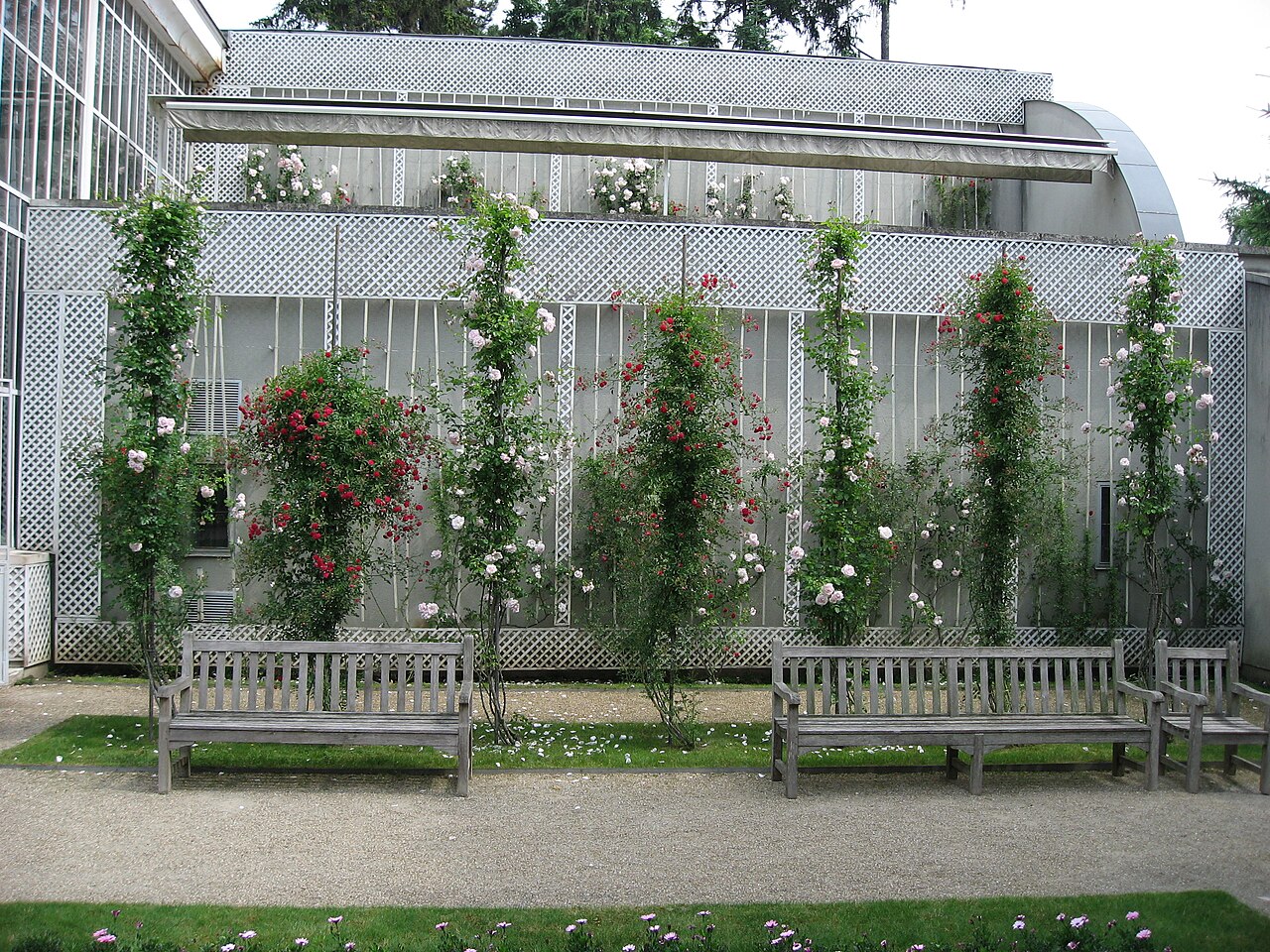
In front of the greenhouse, the green parlour lines up its symmetrical parterres. The adjoining orchard-rose garden, partitioned by espaliered trees, gathers clipped fruit trees set out symmetrically, mostly pears and apples, old roses and rose-covered arches forming a flowering arbour. The museum publishes a spring flowering calendar and, since 2021, a botanical guide offering a plant-lover's tour of the world through the garden's scenes, from the Vosges forest to the Japanese gardens.
Visiting
The greenhouse is seen from the French garden, one of the six scenes of the nearly four-hectare estate, together with the Vosges forest, the meadow and golden forest, the blue forest, the English garden and the Japanese gardens. Allow one to two hours for the gardens as a whole and for the route through Kengo Kuma's new museum, devoted to the Archives of the Planet.
Spring, documented by the museum's flowering calendar, and the rose season in the orchard-rose garden show the French garden at its best. The site is served by metro line 10 (Boulogne – Pont de Saint-Cloud); the Jardin des serres d'Auteuil lies less than two kilometres away.
48.84° N, 2.23° E
Greenhouses nearby
More greenhouses — France
Do you have a good photo of this greenhouse? Suggest it for this page →
Sources (8)
- albert-kahn.hauts-de-seine.fr/les-collections/presentation/jardin/lart-des-jardins-a-boulo
- albert-kahn.hauts-de-seine.fr/professionnels/mecenat
- albert-kahn.hauts-de-seine.fr/ma-visite/informations-pratiques
- pop.culture.gouv.fr/notice/merimee/PA92000023
- fr.wikipedia.org/wiki/Mus%C3%A9e_d%C3%A9partemental_Albert-Kahn
- en.wikipedia.org/wiki/Mus%C3%A9e_Albert-Kahn
- visitparisregion.com/fr/jardins-du-musee-albert-kahn
- openstreetmap.org/way/72677028
Affiliate links — booking through Verrière helps fund our research, at no extra cost to you.