Glasshouses of the Masaryk University Faculty of Science Botanical Garden (skleníky)
Brno, South Moravian Region
Entry updated on October 5, 2026
- Year
- 1995–1997
- Architect
- Petr Talanda
- Style
- Contemporary: five tunnel-shaped glasshouses
- Dimensions
- ≈1,100 m² under glass
- Status
- Open to the public
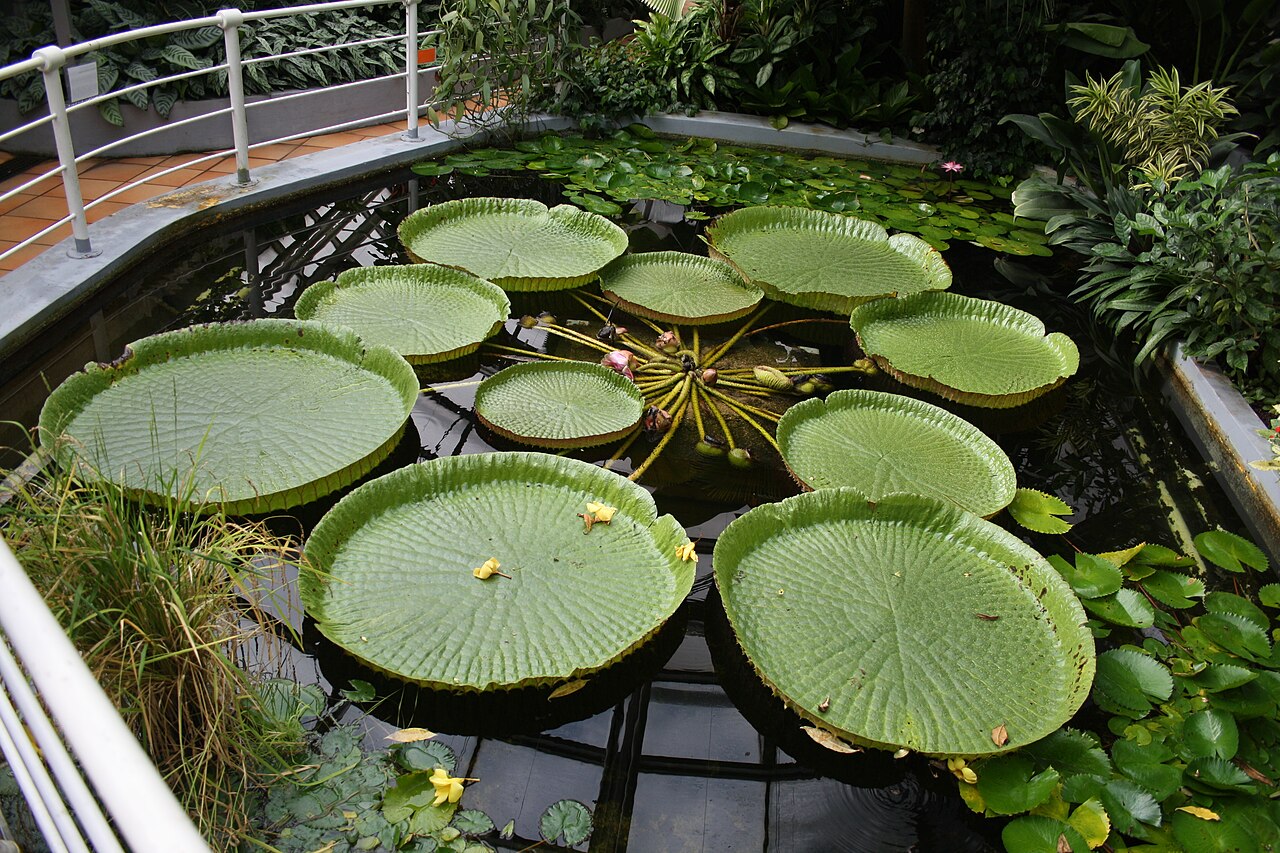
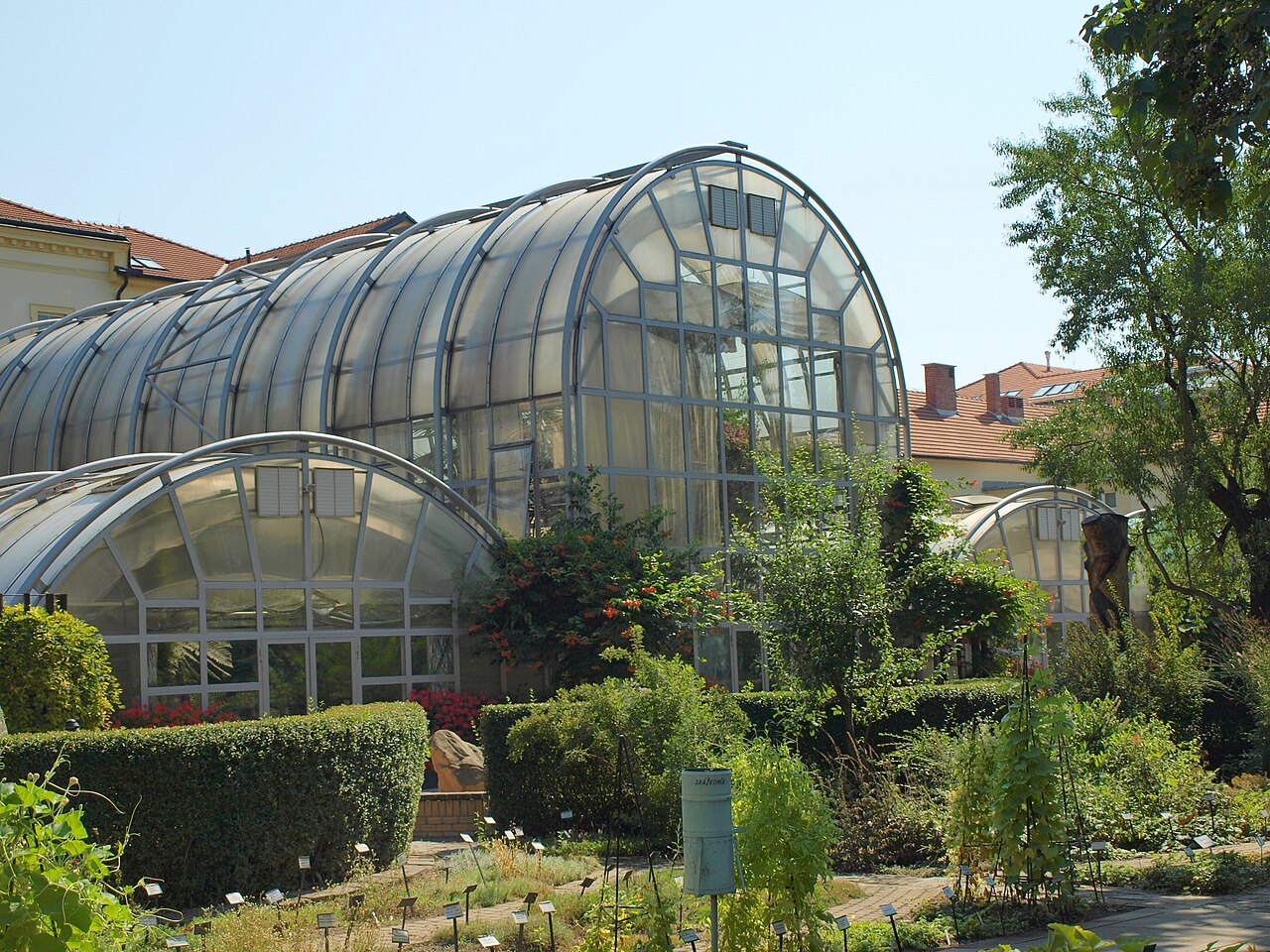
In central Brno, at the corner of Kotlářská and Veveří streets, the botanical garden founded in 1922 by Josef Podpěra for Masaryk University's Faculty of Science replaced its old glasshouses, enlarged over the decades and repaired after the war, with five tunnel-shaped houses designed by the architect Petr Talanda in 1995-1997. Opened in February 1997, they cover about 1,100 m²: a central house for palms and subtropical useful plants, a tropical house with a pool for Victoria cruziana, and houses for ferns and cycads, cacti and succulents, and bromeliads.
Affiliate links — booking through Verrière helps fund our research, at no extra cost to you.
History
1 min
The Masaryk University botanical garden was founded in 1922 by Professor Josef Podpěra, head of the Faculty of Science's botanical institute. It was laid out on the grounds of the former Emperor Francis Joseph I care institute, built in 1893 by the architect Josef Beníšek, and has never moved: it celebrated its centenary in 2022 on its original site. As early as 1926 a Victoria amazonica flowered here in a temporary sunken greenhouse.
The first glasshouses were built by the staff themselves soon after the founding. Sources differ on the dates: three houses, two for cultivation and one for the collection with a pool, are said to have been put up in 1924-26 and then rebuilt and completed in 1932, or else built in 1932-34. Enlarged over the decades, notably by two pavilions in the 1960s, they needed constant repair. At the end of the Second World War the garden was hit by bombing; trees were felled and the collections gave way to vegetables sold at the Cabbage Market (Zelný trh). The damaged glasshouses were repaired after the war.
In 1995-97 the old glasshouses were demolished and replaced by five new ones designed by the architect Petr Talanda. They were formally handed over to the university on 21 February 1997, in the garden's 75th anniversary year, in the presence of the rector Eduard Schmidt and the dean Jaroslav Jonas, and presented to the public from 22 February to 2 March 1997. The collection beds and the forecourt were remodelled at the same time.
Architecture and engineering
1 min
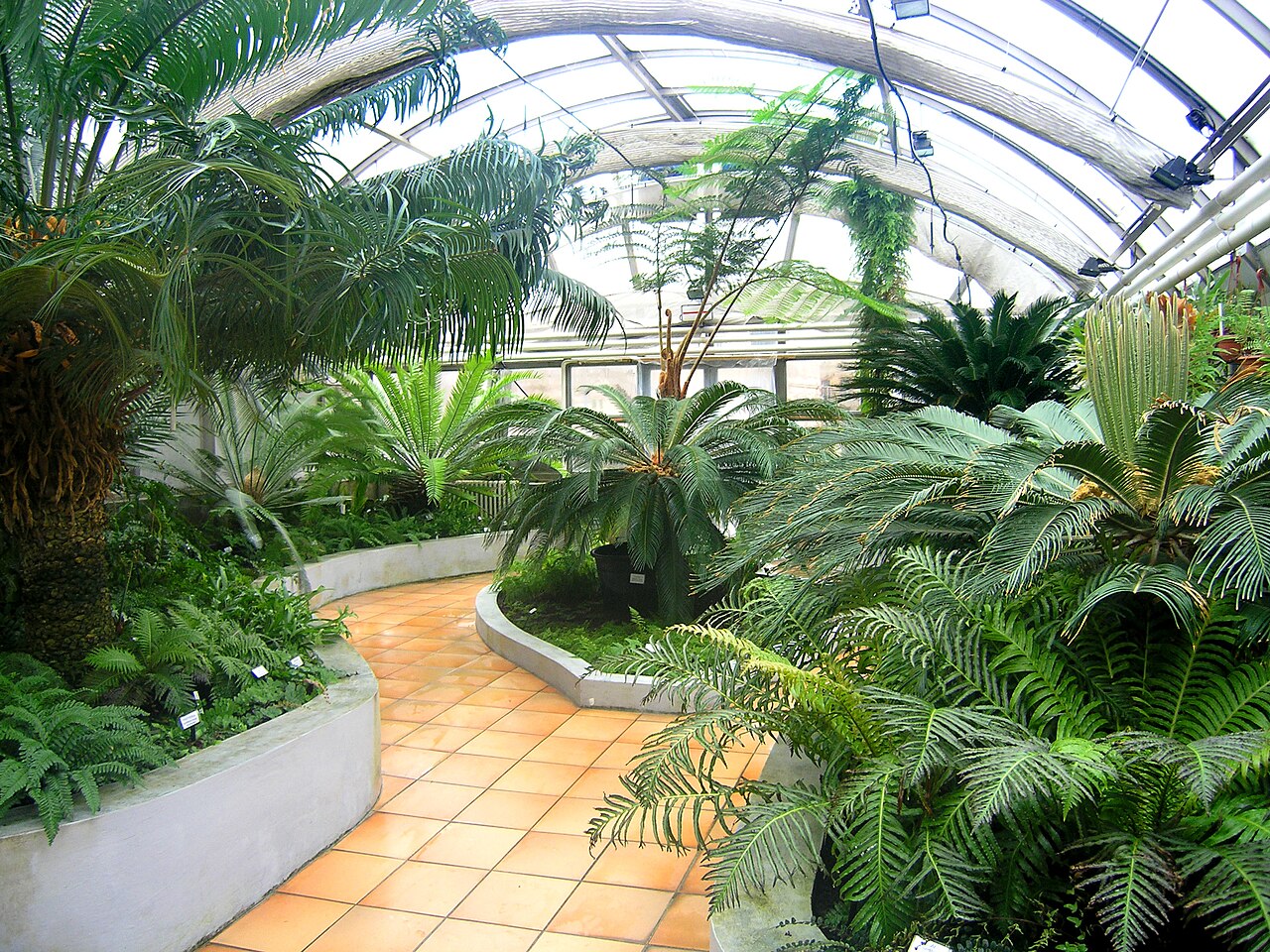
The 1997 complex consists of five adjoining tunnel-shaped glasshouses, the largest of them in the centre. Part of the covering is double-skinned polycarbonate. The area under cover is about 1,100 m². Each volume is given over to one environment: palms and subtropical useful plants in the central house, a tropical house arranged around a large pool, a house for ferns and cycads, one for cacti and succulents, and one for bromeliads.
The design took in the surroundings. A roof garden, created during the 1995-97 works, can be reached in summer by the entrance staircase, and the forecourt received sculptures and four fountains by the sculptor Jan Šimek. Most of the glasshouses are accessible by wheelchair. Described in 1997 as the most modern glasshouses of Masaryk University, they remain the garden's main exhibition space and host several temporary shows a year.
Plant collections
1 min
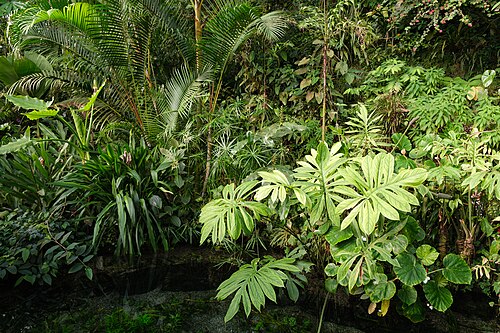
The glasshouses hold, depending on the source, about 1,800 species or 2,500 taxa. The central house shows palms and subtropical useful plants, from the date palm to the carob tree, together with a Wollemia nobilis, a rare Australian conifer. The tropical house is arranged around a large pool where Victoria cruziana, the South American giant water lily, grows among vanilla, papaya and cacao plants. The fern house gathers some 80 species of ferns, alongside cycads including Cycas revoluta.
The cactus and succulent house is a visitor favourite. The bromeliad house holds around 160 species of the pineapple family and regularly hosts exhibitions. Outdoors, the garden of about 1.5 hectares contains some 520 taxa of trees and shrubs, represented by more than 1,000 individual plants.
Visiting
1 min
The glasshouses stand in the Faculty of Science garden in central Brno, at the corner of Kotlářská and Veveří streets. Open every day, they can be seen in about an hour; the outdoor garden and, in summer, the roof garden extend the visit. Several exhibitions are held each year, notably of bromeliads, and guided tours can be booked by appointment. More than 13,000 paying visitors come to the glasshouses every year. A visit fits easily into a walk around the centre of Brno.
49.20° N, 16.60° E
Greenhouses nearby
More greenhouses — Czech Republic
Do you have a good photo of this greenhouse? Suggest it for this page →