Gondwanaland
Leipzig Zoo, Leipzig, Saxony

Sources checked September 2026
- Year
- 2011
- Architect
- Henchion+Reuter Architects (Martin Henchion and Klaus Reuter)
- Style
- Contemporary tropical hall: steel shell on a Reuleaux-triangle plan with ETFE cushions
- Dimensions
- 16,500 m² (1.65 ha); ridge about 36 m high
- Status
- Open to the public
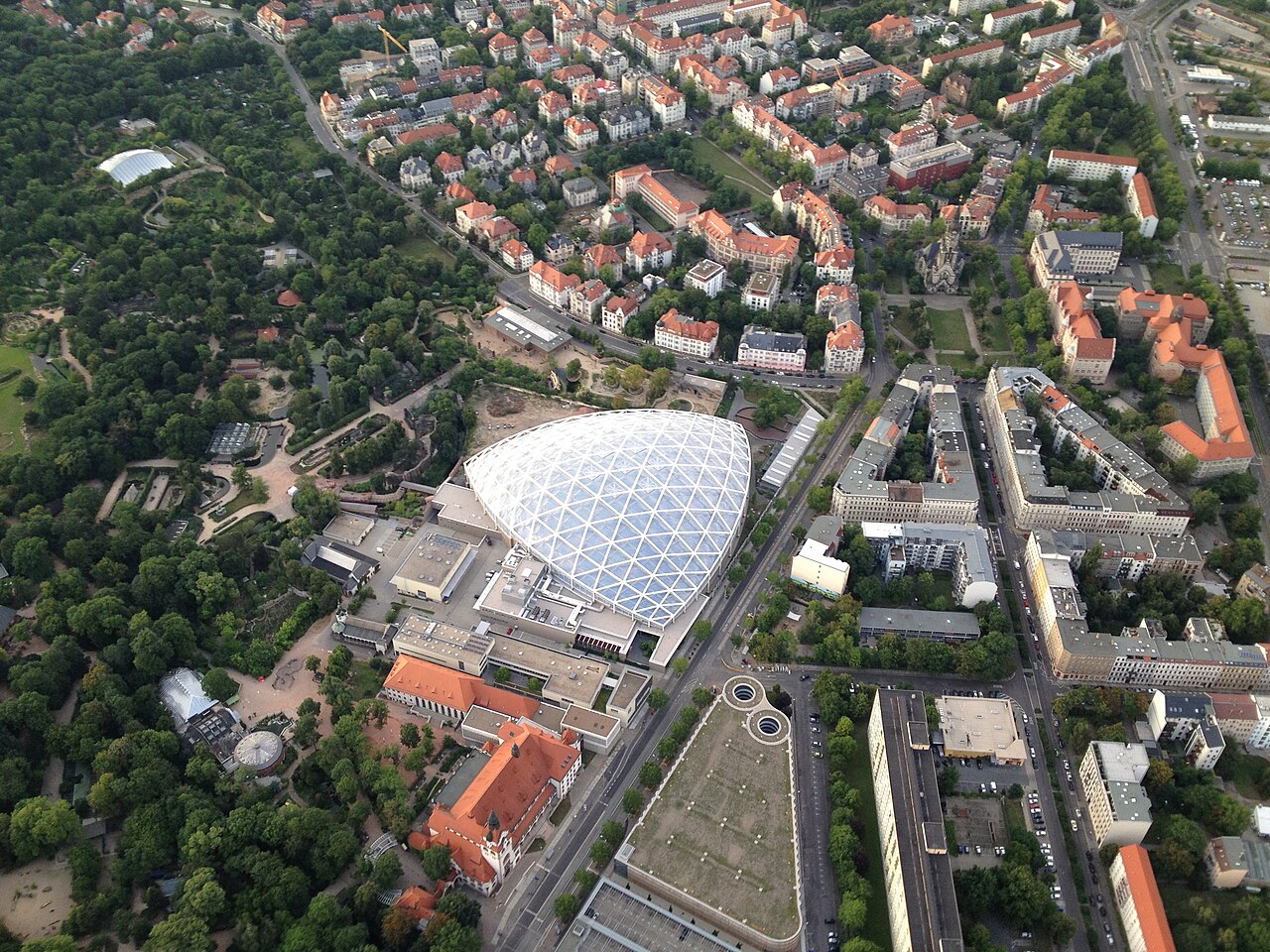
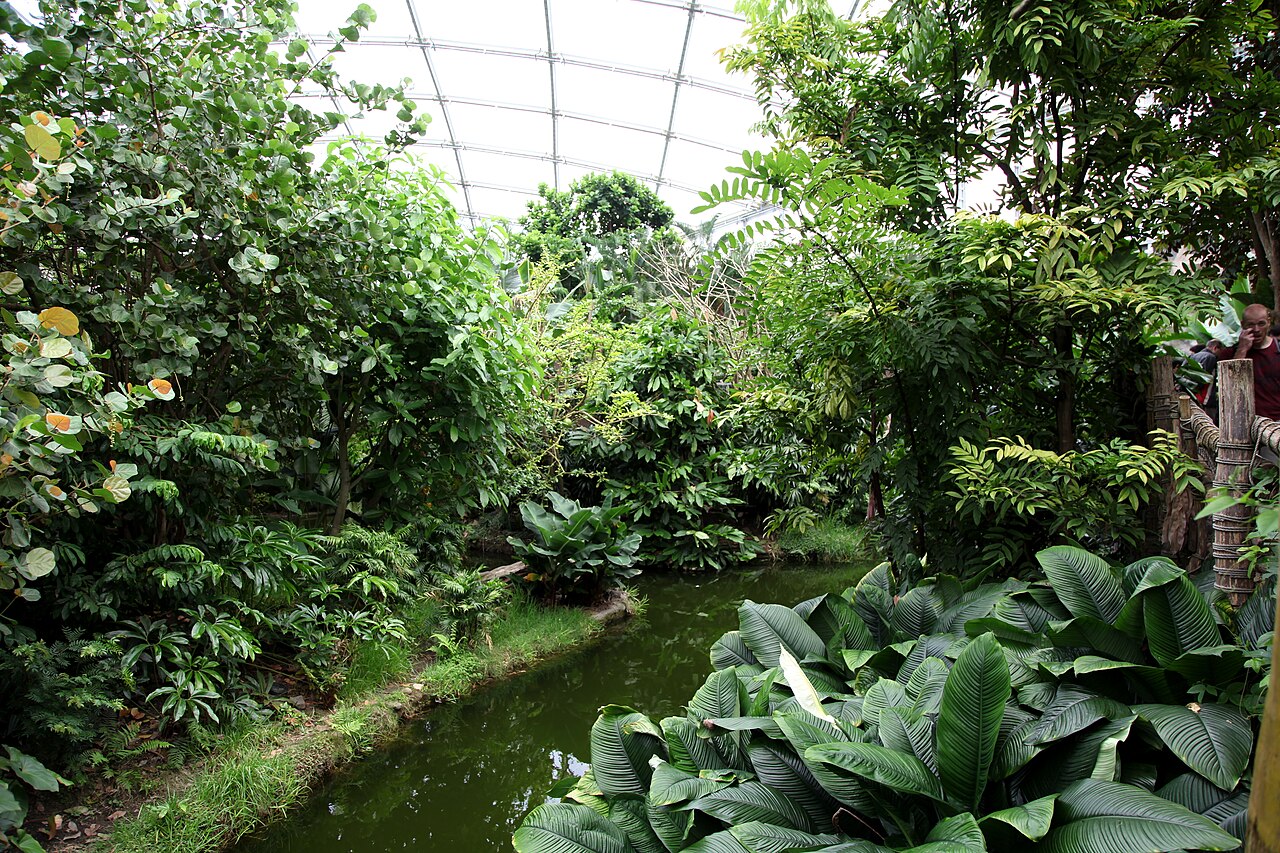
Opened on 30 June 2011 at Leipzig Zoo, on the site of a former worsted-yarn spinning mill, Gondwanaland is a 16,500 m² tropical hall designed by Henchion+Reuter Architects. Its steel shell, set on a Reuleaux-triangle plan and closed by more than 400 ETFE cushions, spans some 154 m without intermediate support and rises to about 36 m. Forests of Asia, Africa and South America bring together around 500 plant species and, according to the zoo, nearly 170 animal species, seen on foot, from a canopy walkway or by boat on the Gamanil river.
Affiliate links — booking through Verrière helps fund our research, at no extra cost to you.
History
Gondwanaland is one of the six themed worlds of Leipzig Zoo, which first opened in 1878. For its tropical hall the zoo chose the former industrial site of the Kammgarnspinnerei, a worsted-yarn spinning mill on Pfaffendorfer Straße at the eastern edge of the zoo grounds; the industrial part of the building was blown up on 24 February 2007 with 150 kg of explosives in 400 boreholes.
The competition launched in April 2006 drew 17 entrants. The design by HPP Hentrich-Petschnigg & Partner of Düsseldorf initially came out on top, but after a second selection phase the zoo opted for the runner-up, by Martin Henchion and Klaus Reuter of Henchion+Reuter Architects, Dublin and Berlin. Planning was entrusted to a consortium of Obermeyer Albis-Bauplan (Chemnitz) and the structural engineers Eisenlöffel Sattler + Partner (Berlin), and the steelwork was carried out by Eiffel Deutschland Stahltechnologie of Hanover.
After a symbolic groundbreaking on 28 November 2007, the roof trusses went up from May 2009, the topping-out ceremony took place on 30 October 2009 and the roof was finished in June 2010. The initial budget of €49.5 million was raised by €10.5 million in 2008 because of rising steel prices and by another €6 million in 2010 after a key contractor went insolvent; the total investment came to €66.8 million, shared by the State of Saxony, the city and the zoo. The hall was opened on 30 June 2011 by Saxony's Minister-President Stanislaw Tillich and Mayor Burkhard Jung, and welcomed the public the following day.
Architecture and engineering
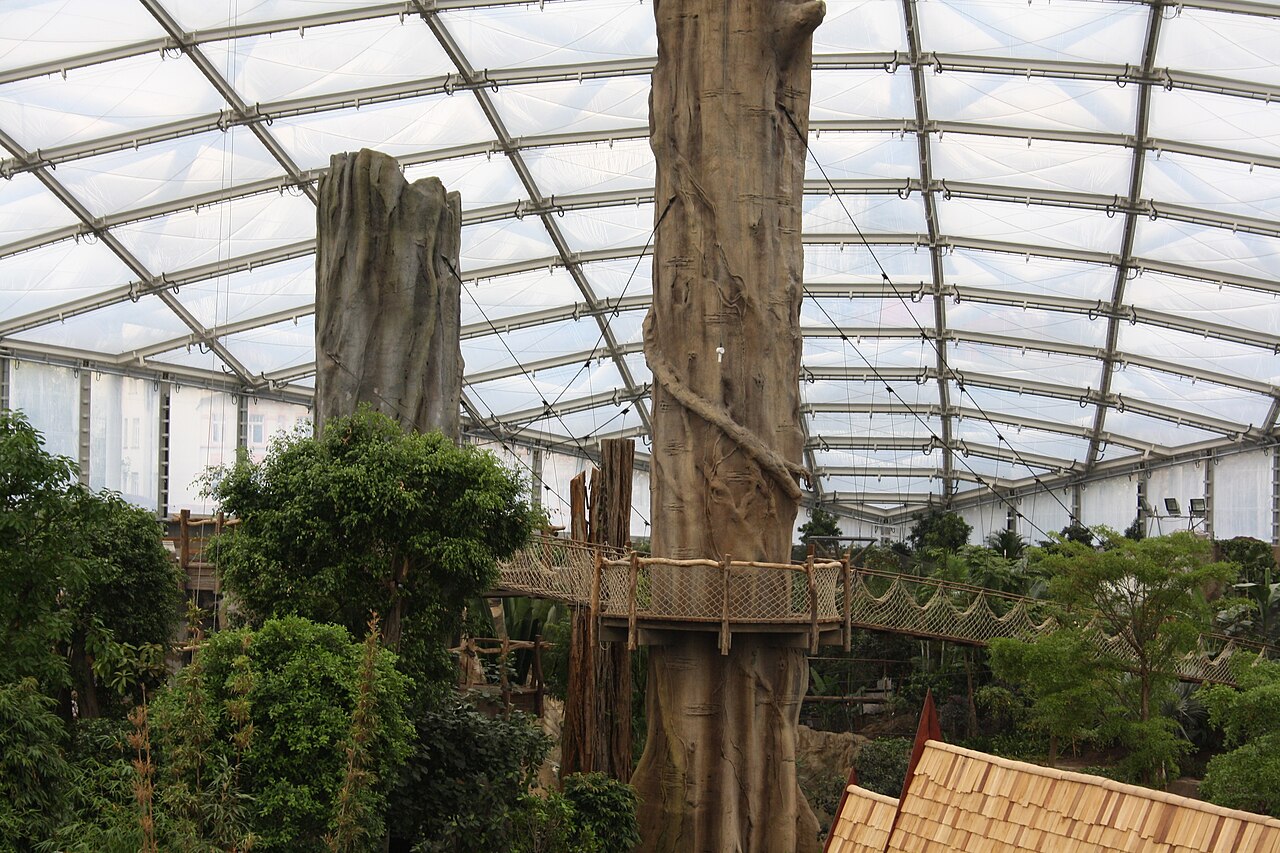
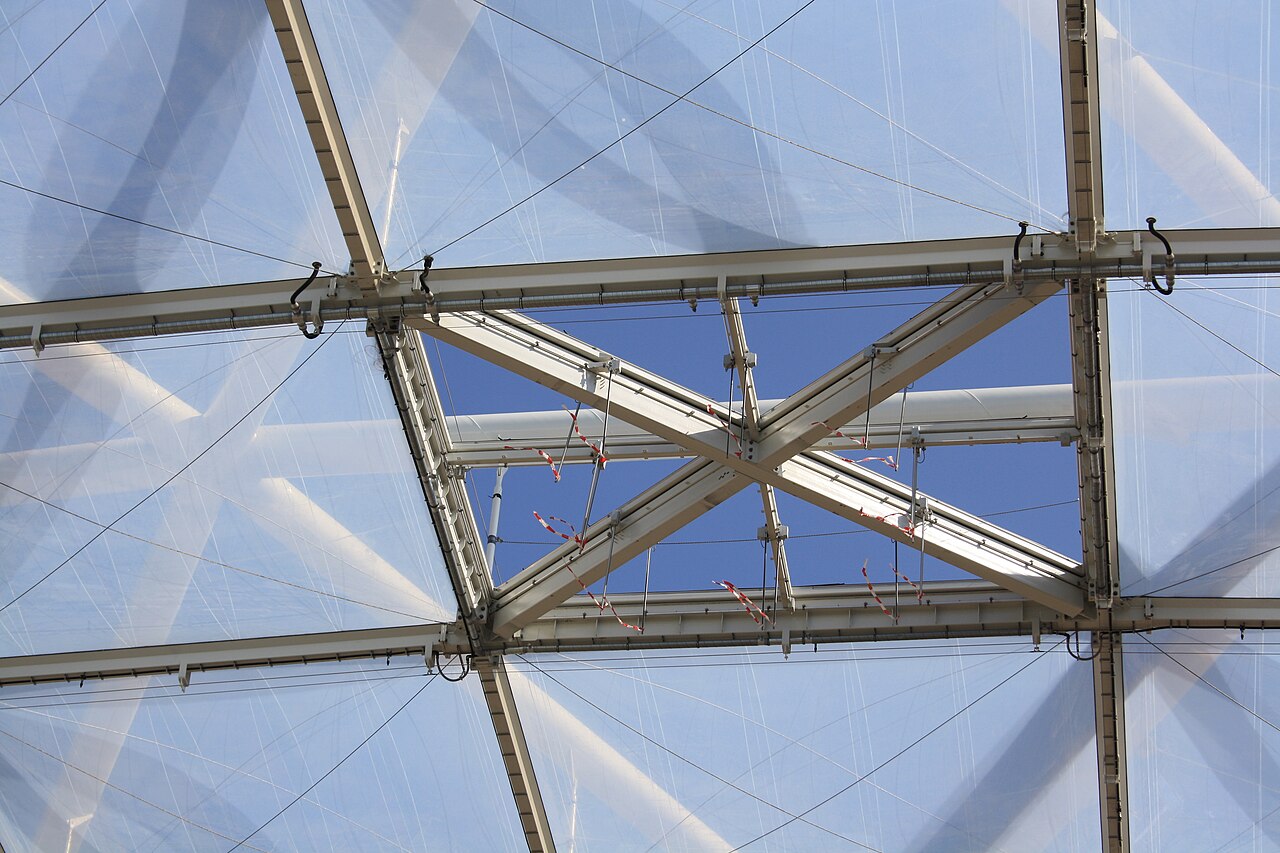
The hall is laid out on a Reuleaux triangle, a three-sided figure with curved sides, over 1.65 hectares. The roof is a steel shell shaped as a section of a sphere. The architects give a 160-metre span, a one-metre shell, 40 metres at the centre and 7.5 metres at the corners, while the zoo quotes 34 metres. Seen from below, the grid of the roof reads as an abstract pattern that blurs any sense of scale.
The roughly 17,900 m² envelope is made of triple-layer ETFE cushions, 407 according to the zoo, inflated to 250 pascals and raised to 800 under snow; the architects add that they are heated to stay clear. The climate of 24–26°C and 65–100% humidity relies on district heating, energy recovery and rooftop solar: warm air drawn from under the roof feeds a 100 m³ geothermal store through a heat pump. Roof vents open above 28°C, and rainwater collected in cisterns is used for humidification.
Plant collections
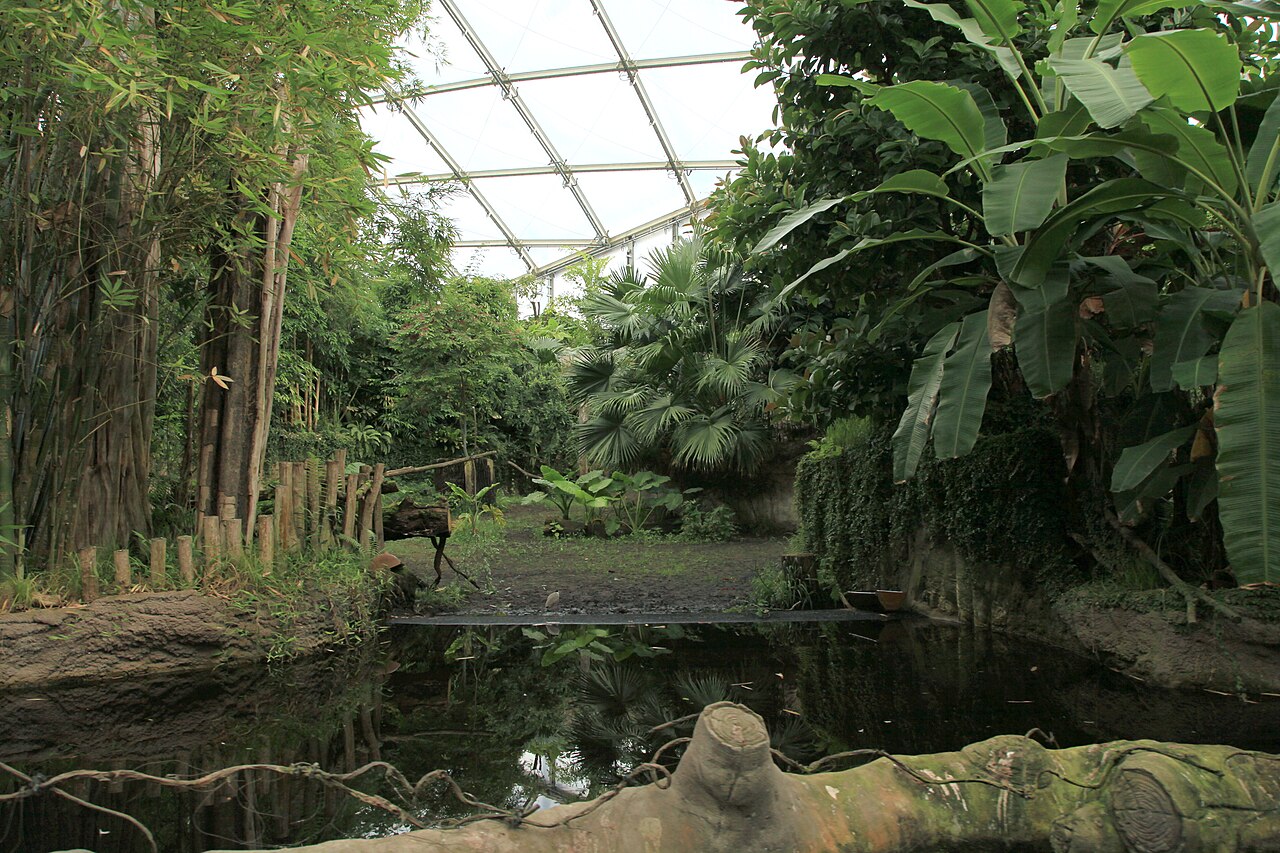
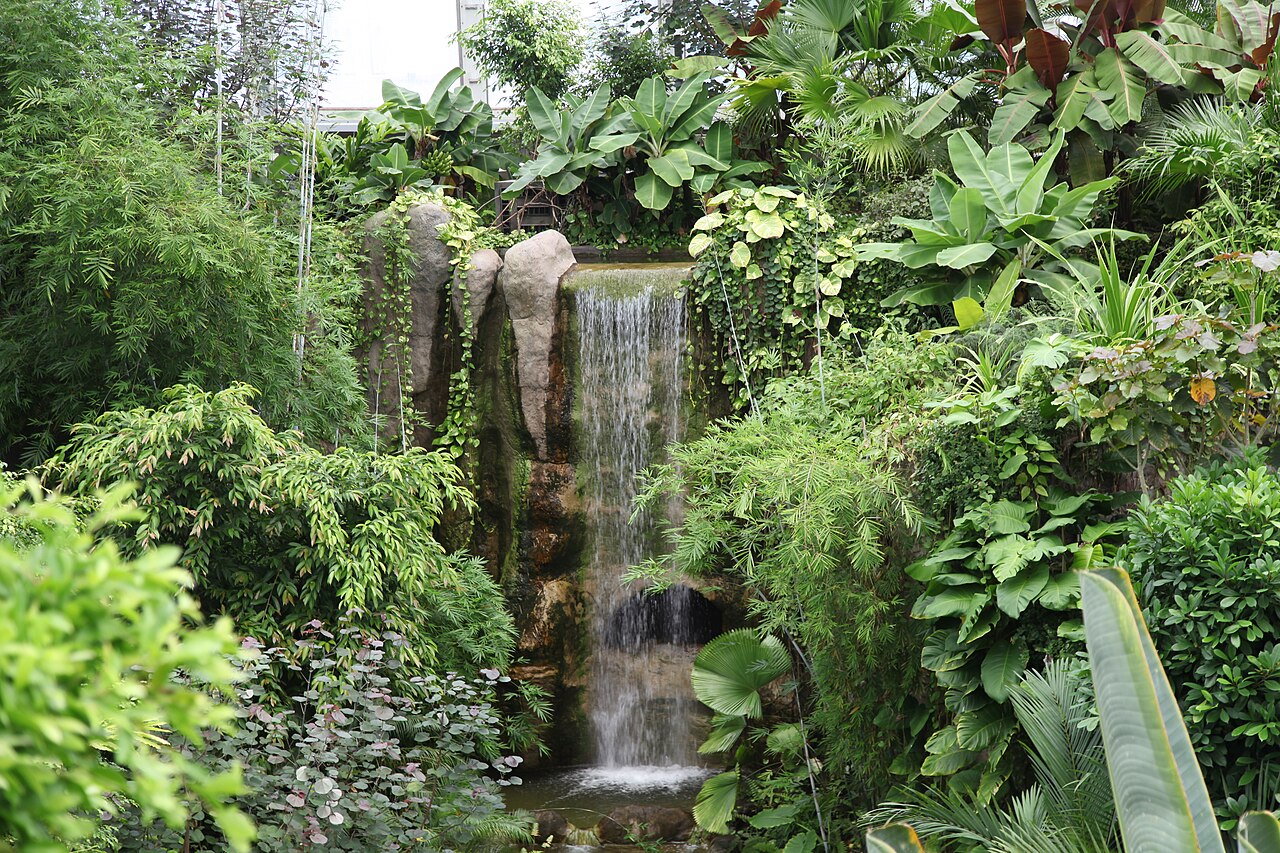
The zoo planted some 24,000 plants, supplemented by about 130 large trees from nurseries in Thailand and Florida. There are around 500 plant species, and a tropical garden gathers some sixty exotic fruits and spices.
The fauna, nearly 170 species according to the zoo, is divided among three continents. Asia has Komodo dragons, Sunda gharials, tapirs, fishing cats and Asian small-clawed otters; Africa has pygmy hippos, Diana monkeys, crowned lemurs and Kirk's dik-diks; South America has giant otters, squirrel monkeys, ocelots, sloths and tamarins, with arapaimas in the pools. The volcano tunnel shows living fossils such as the Australian lungfish and horseshoe crabs, along with nocturnal animals. In 2015 a previously unknown species of earwig was identified in the hall.
Visiting
Gondwanaland occupies the eastern edge of Leipzig Zoo, which covers about 27 hectares, and has its own public entrance with a window onto the interior. It can be explored on foot along a wheelchair-accessible jungle path, from a treetop walkway more than 90 metres long and 12 metres up, reached by suspension bridges, or by boat: thirteen 16-seat boats take eleven minutes to follow the 390-metre channel of the Gamanil, a name built from the Ganges, Amazon and Nile, four and a half minutes of it underground. The Patakan restaurant and a bamboo bar offer a break, and themed evenings are held in the hall. Covered and heated, it suits cold days well.
51.35° N, 12.37° E
Greenhouses nearby
Architecture nearby
More greenhouses — Germany
Do you have a good photo of this greenhouse? Suggest it for this page →
Affiliate links — booking through Verrière helps fund our research, at no extra cost to you.