Estufa do Jardim Botânico de Curitiba
Curitiba, Paraná

Sources checked September 2026
- Year
- 1991
- Architect
- Abrão Assad
- Style
- Iron and glass, three Art Nouveau-inspired domes
- Dimensions
- 458 m² greenhouse
- Status
- Open to the public
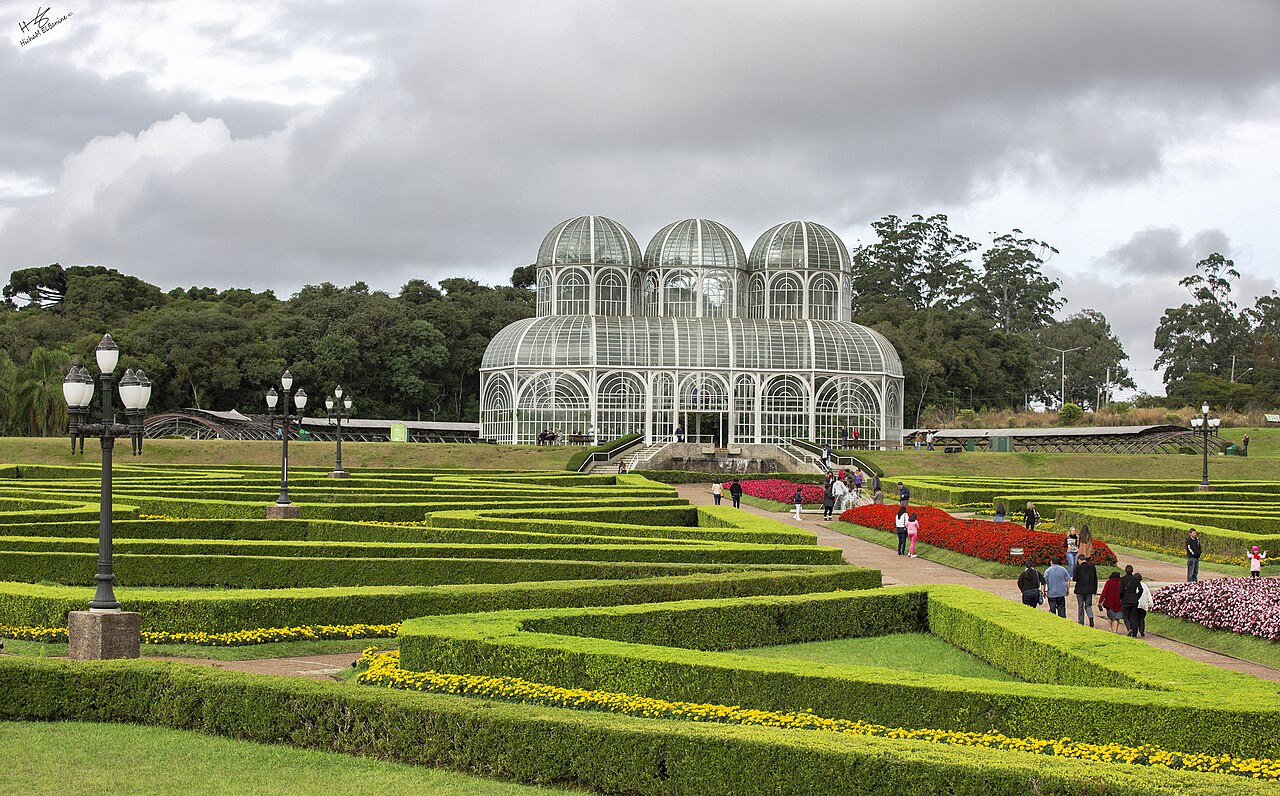
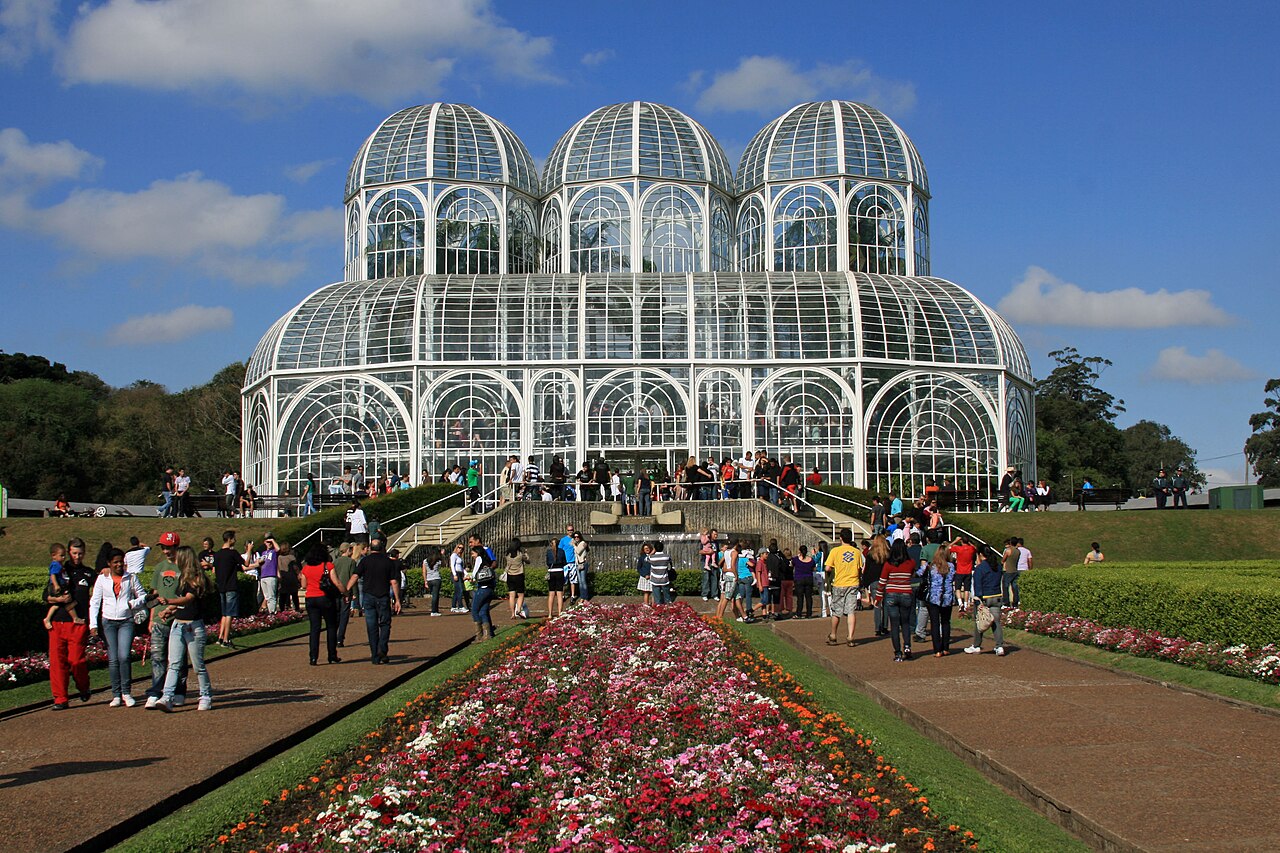
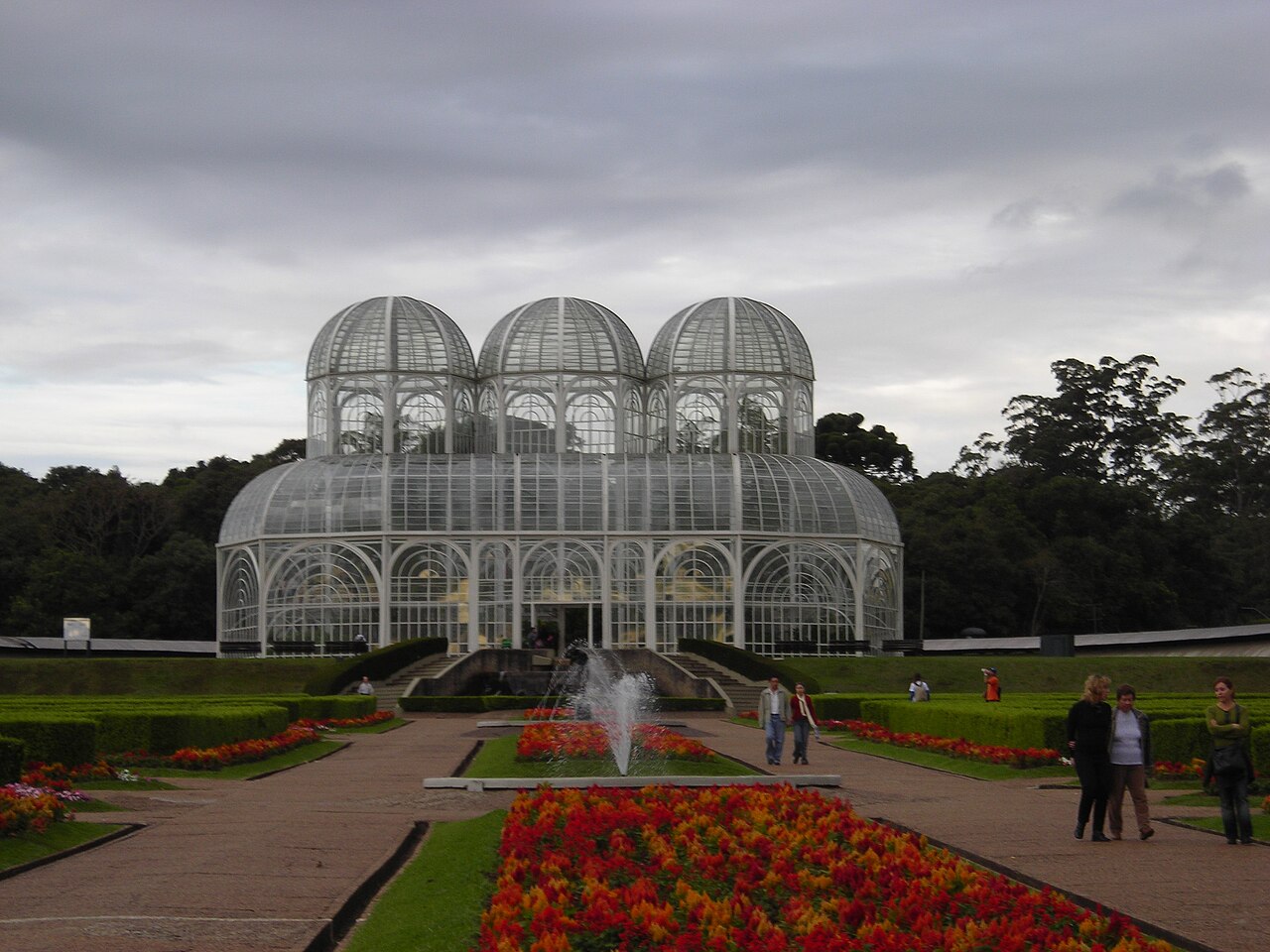
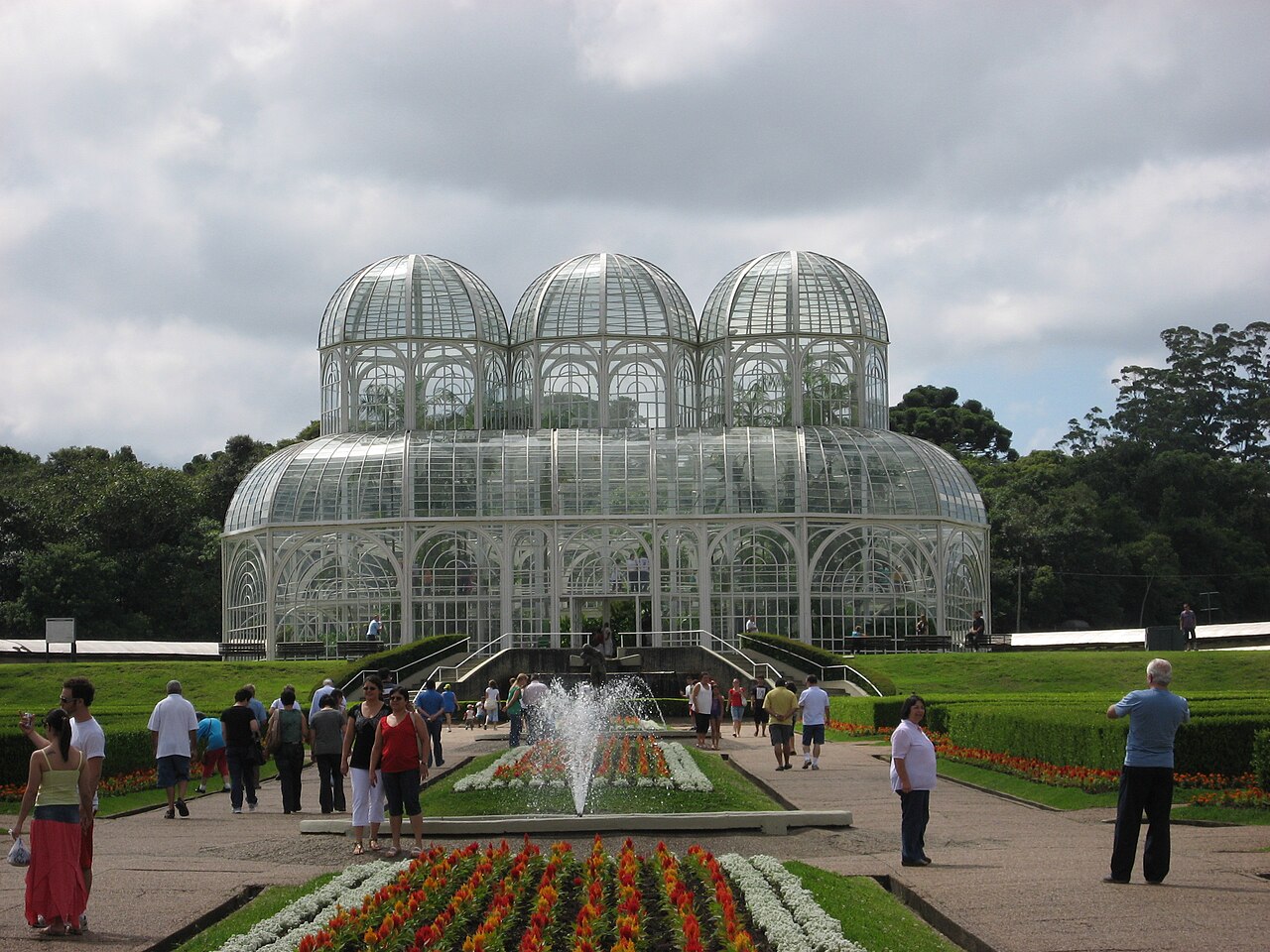
Opened with Curitiba's Botanical Garden on 5 October 1991, the greenhouse designed by the architect Abrão Assad lines up three iron-and-glass domes in an Art Nouveau-inspired idiom that recalls London's Crystal Palace. Climate-controlled, it overlooks a French-style formal garden and shelters Atlantic Forest species such as caraguatá, caetê and palmito. Together with the Botanical Museum and its herbarium, the Garden of Sensations and the Frans Krajcberg space, it forms one of the main tourist sites of the capital of Paraná, and has become the city's most recognisable image.
Affiliate links — booking through Verrière helps fund our research, at no extra cost to you.
History
Curitiba's Botanical Garden opened on 5 October 1991. Its official name honours the urban planner Francisca Maria Garfunkel Rischbieter (also called Fanchette Rischbieter), described as one of the pioneers of planning in the capital of Paraná, a city known for its urban policies. The main greenhouse was designed by the architect Abrão Assad, who at the same time designed Rua 24 Horas, a covered street opened in September 1991 by the mayor Jaime Lerner.
The garden covers between 240,000 and 278,000 m² in the Jardim Botânico district. In 1992 it took in the Municipal Botanical Museum, whose herbarium of some 400,000 dried specimens, along with wood and fruit collections, is cited as the fourth largest in Brazil. Other spaces followed, among them the Frans Krajcberg Cultural Space and, in December 2008, the Garden of Sensations.
The greenhouse soon became the image most closely associated with Curitiba; in 2007 the garden received the most votes in a poll to choose the Seven Wonders of Brazil.
Architecture and engineering
The main greenhouse consists of a metal frame, iron and glass, arranged as three Art Nouveau-style domes. Its design openly draws on London's Crystal Palace, the great glass hall of the mid-nineteenth century, borrowing its spirit rather than its scale, with a floor area of 458 m². It is therefore not a historic glasshouse but a late twentieth-century reinterpretation of the Victorian and Art Nouveau greenhouse vocabulary, by an architect who also roofed the 120-metre Rua 24 Horas with a sequence of 32 arches.
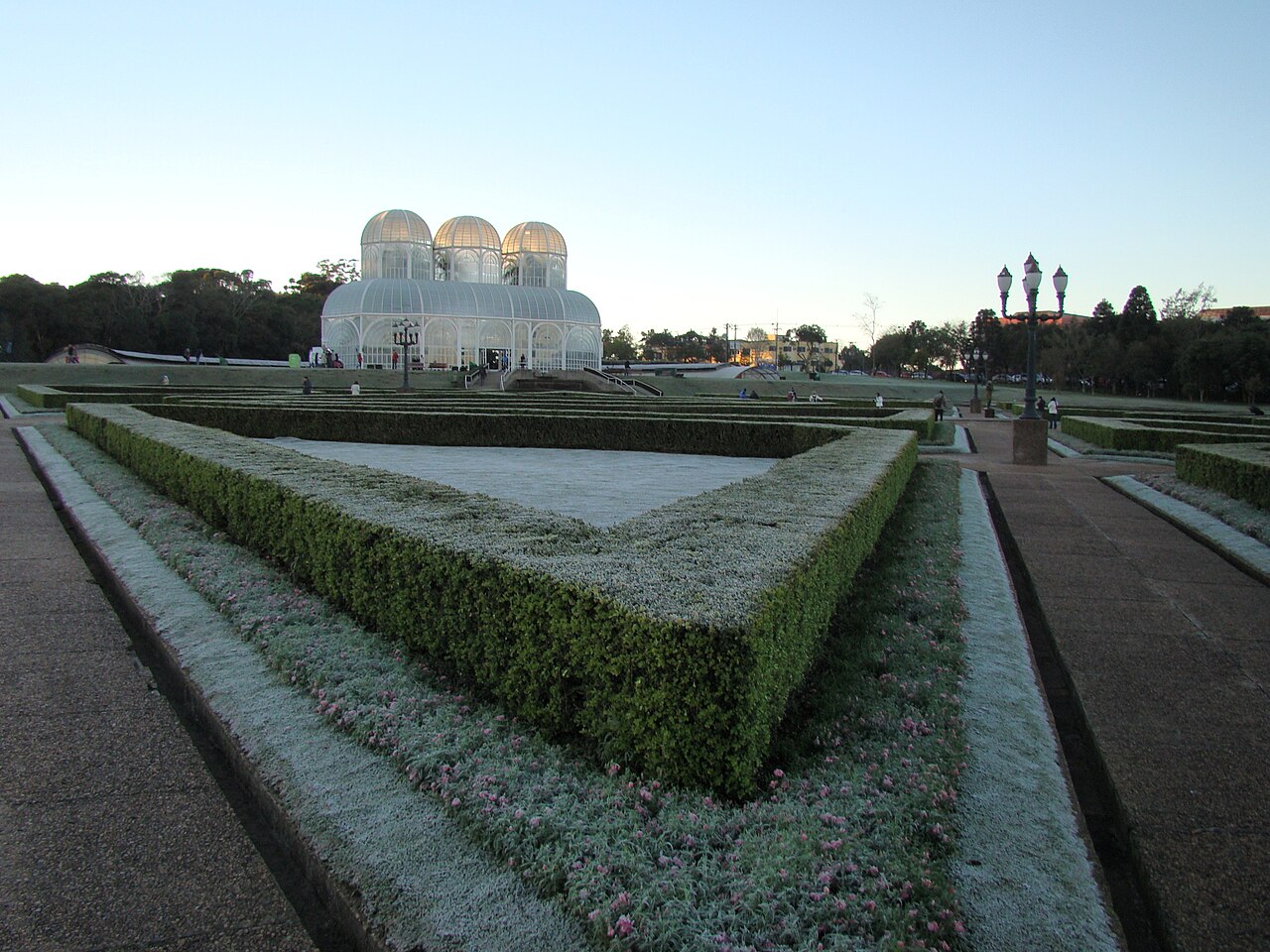
The building is climate-controlled and set above a French-style formal garden of geometric beds whose parterres, fountains and pools can be seen both from inside the greenhouse and from its surroundings. This staging, which places the greenhouse at the end of a vista, accounts for much of its power as an image.
Plant collections
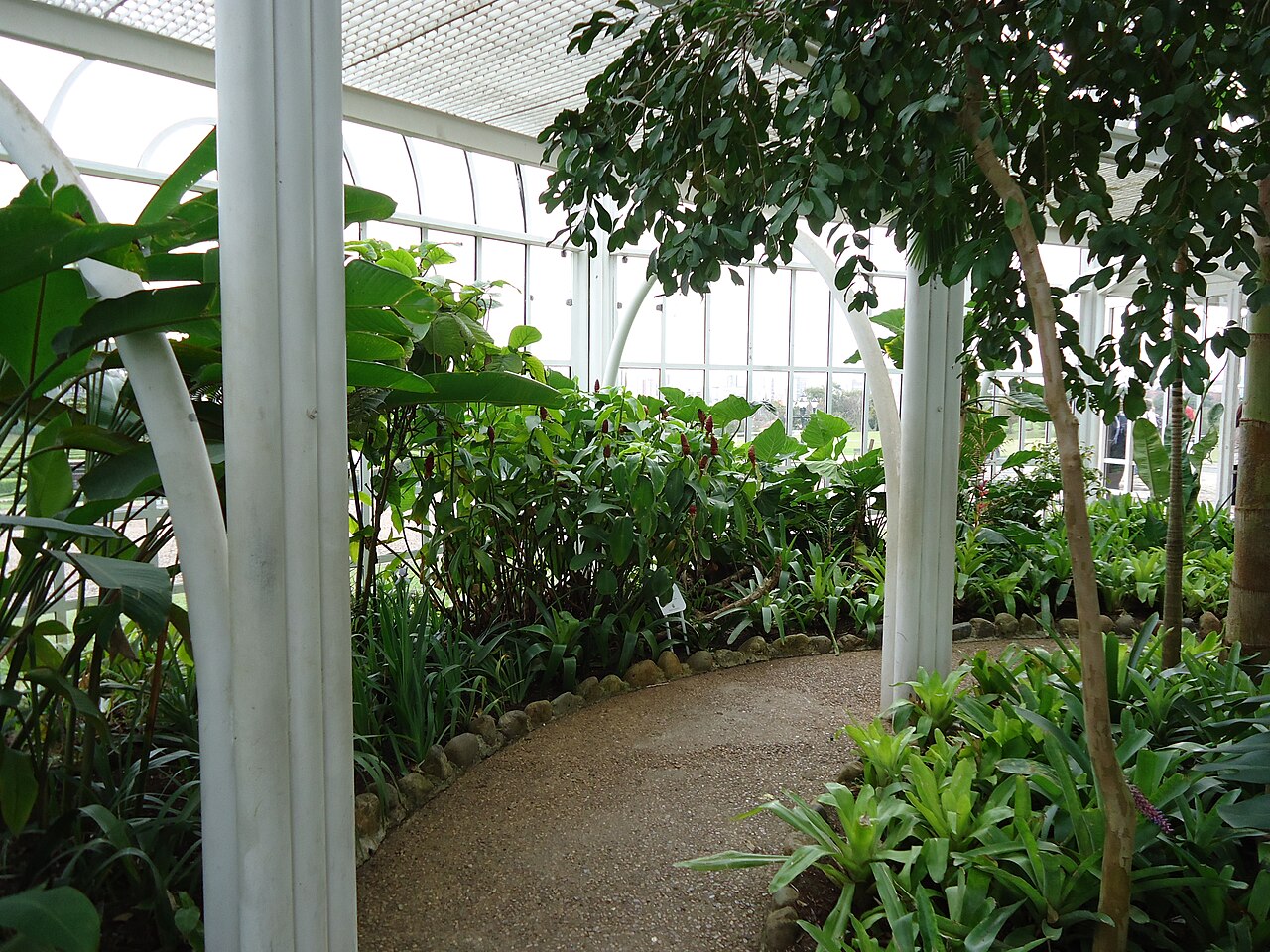
The greenhouse displays species from the Atlantic Forest, one of the Brazilian biomes most reduced by deforestation. Plants named in the sources include caraguatá (a bromeliad), caetê and palmito, the palm harvested for its heart. Together they suggest the humidity and density of the tropical understorey, extending under glass the remnant of Atlantic Forest preserved in the park.
Beyond the greenhouse, the garden offers other botanical resources: the Botanical Museum and its herbarium devoted to the flora of Paraná and Brazil; the Garden of Sensations, where plants are explored by touch and smell, blindfolded or not; and the Frans Krajcberg space, whose permanent exhibition, A Revolta, shows 110 large works by the artist made from illegally felled or burnt trees.
Visiting
The greenhouse stands in the Jardim Botânico district on Rua Engenheiro Ostoja Roguski, at the end of the French garden's long vista. The building itself is quickly seen, but its interior also gives the best view back over the parterres, fountains and pools. A full walk taking in the formal garden, the Atlantic Forest remnant, the Botanical Museum, the Garden of Sensations and the Krajcberg space needs one to two hours. As Curitiba's emblematic image, the greenhouse is a regular stop on tours of the city, and pairs well with Rua 24 Horas, by the same architect, which reopened in 2011 after four years of closure.
25.44° S, 49.24° W
Greenhouses nearby
More greenhouses — Brazil
Do you have a good photo of this greenhouse? Suggest it for this page →
Affiliate links — booking through Verrière helps fund our research, at no extra cost to you.