The Orangery, Lyme Park
Disley, Cheshire
Entry updated on October 5, 2026
- Year
- 1815 · interior altered 1862
- Architect
- Lewis Wyatt; interior: Alfred Darbyshire
- Style
- Neoclassical sandstone orangery with pitched glass roof
- Dimensions
- 11-bay front
- Status
- Open to the public (National Trust)
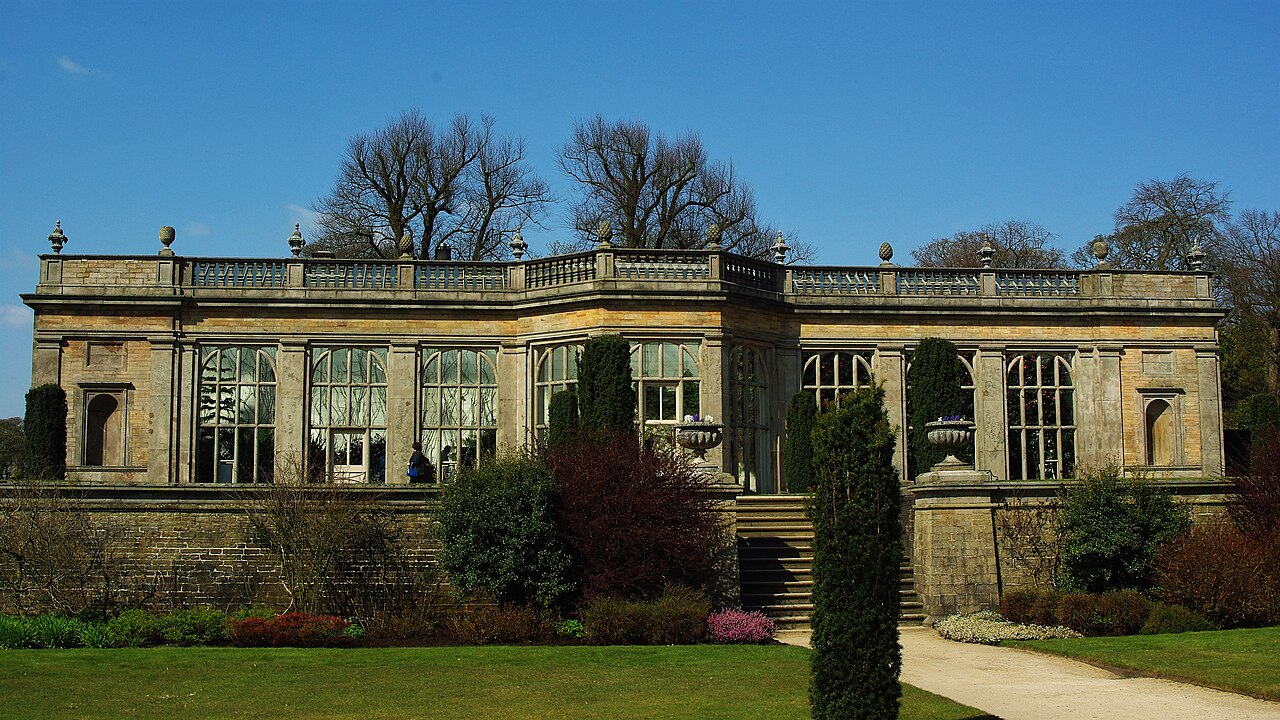
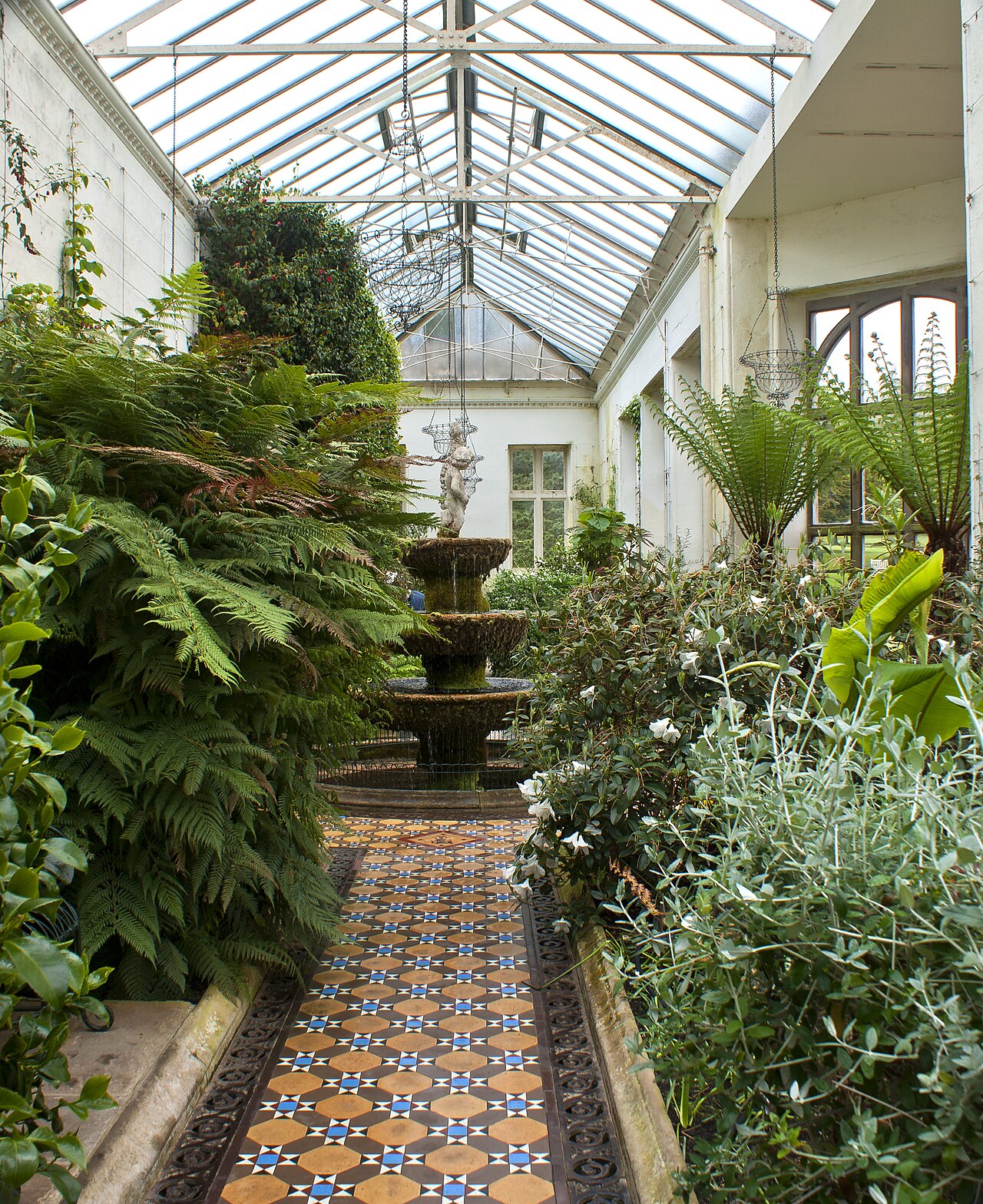
Added in 1815 by Lewis Wyatt for Thomas Legh at Lyme Park, home of the Legh family, the orangery stands about 50 metres north-east of the house. This single-storey building of sandstone ashlar, with a symmetrical eleven-bay front and a glass roof, had its interior altered in 1862 by Alfred Darbyshire for William Legh. Its listing notes a tiled floor bearing the Legh arms, a central fountain and an early use of underfloor heating fed by waste heat from the brewhouse and laundry. Two camellias over 150 years old and a fig tree grow inside.
Affiliate links — booking through Verrière helps fund our research, at no extra cost to you.
History
1 min
The Lyme estate has belonged to the Legh family since 1398. The house was remodelled in the 1720s and 1730s by the architect Giacomo Leoni; in the early nineteenth century Lewis Wyatt (1777-1853) reworked many of its interiors, remodelled the gardens for Thomas Legh (1792-1857) and added an orangery, which its listing dates to 1815.
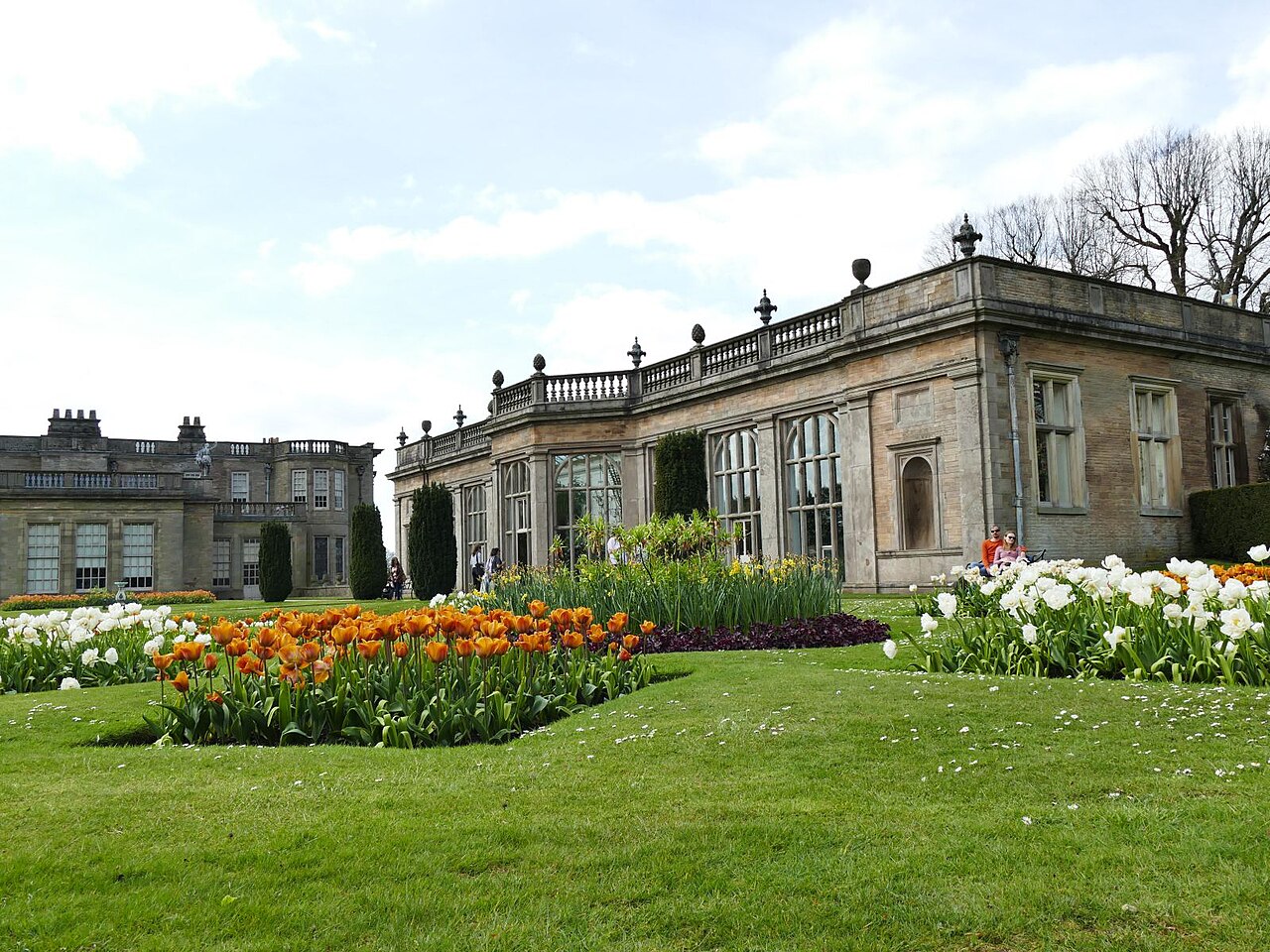
After 1857 Alfred Darbyshire reworked the interior of the orangery for William Legh; the work was completed in 1862, the date of the tiled floor bearing the family arms and William Legh's initials. To the south and east the building opens onto formal beds, and a rose garden was laid out immediately to the north-east around 1913.
In 1946 Lyme passed to the National Trust. The orangery has been listed Grade II* since 14 April 1967, and the passage linking it to the house, the Dark Passage, is listed separately. In the 1980s a tall central fountain was installed in the orangery, and the neighbouring rose garden was restored in 1995-96.
Architecture and engineering
1 min
The orangery is a single-storey building of brown sandstone ashlar, covered by a pitched glass roof and fitted with two stone chimneys. Its symmetrical front has eleven bays; the three central bays are canted forward. They are lit by tall rectangular ovolo-moulded windows divided by three mullions and two transoms, matched in the flanking bays, while the end bays hold round-headed niches containing urns.
Inside, the tiled floor of 1862 carries plaques with the Legh arms and William Legh's initials. A fountain stands at the centre: the listing describes it as three-tiered and broadly classical, while the register of parks and gardens dates the present tall central fountain to the 1980s.
Above all, the listing notes an early use of underfloor heating, fed by waste heat from the estate's brewhouse and laundry. The orangery stands about 50 metres north-east of the east end of the house, to which it is linked by the Dark Passage.
Plant collections
1 min
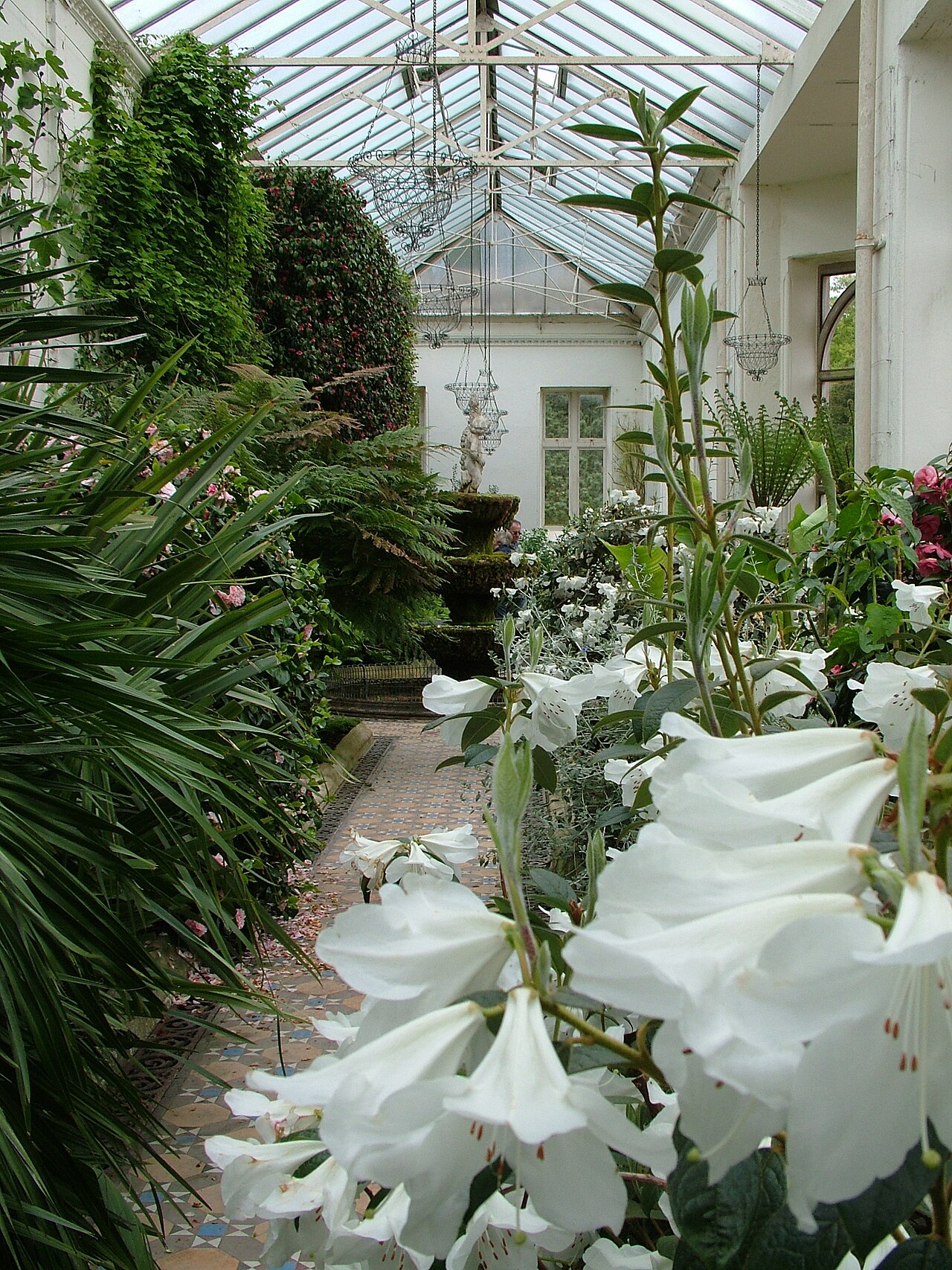
The oldest plants in the orangery are two camellias, described as rare and not yet identified to variety. Their age varies from one account to another: over 150 years for some, over 170 or even 175 years for others. A fig tree, said to be about 90 years old, grows alongside them around the central fountain, described as a cascading one.
In front of the orangery the garden continues as formal beds: sunken beds flank the path running south from the central door, while to the east lie a wheel-shaped bed and cross-shaped beds. To the north-east, the rose garden of around 1913, quartered and centred on a boy-and-fish fountain, was restored in 1995-96.
Visiting
1 min
The orangery stands about 50 metres north-east of the house at Lyme, which the National Trust opens to the public within a park of more than 1,400 acres (about 570 hectares). The garden, which the National Trust describes as the second highest of its gardens, includes an Italian Garden, herbaceous borders, the Storm border and the Vicary Gibbs area. A visit to the orangery combines with the adjoining rose garden and with the house, remodelled by Giacomo Leoni in the eighteenth century and later by Lewis Wyatt.
53.34° N, 2.05° W
Greenhouses nearby
More greenhouses — United Kingdom
Do you have a good photo of this greenhouse? Suggest it for this page →