Städtisches Palmenhaus (Palmenhaus Paradies), Konstanz
Konstanz (Paradies district), Baden-Württemberg

Sources checked October 2026
- Year
- 1922–1923
- Architect
- Friedrich Heinzmann; glass structures by Oscar Mehlhorn GmbH
- Style
- 1920s steel-and-glass show house attached to a gardener's house with pilasters and round arches
- Status
- Open to the public during the local BUND office hours; Sunday afternoons staffed by volunteers
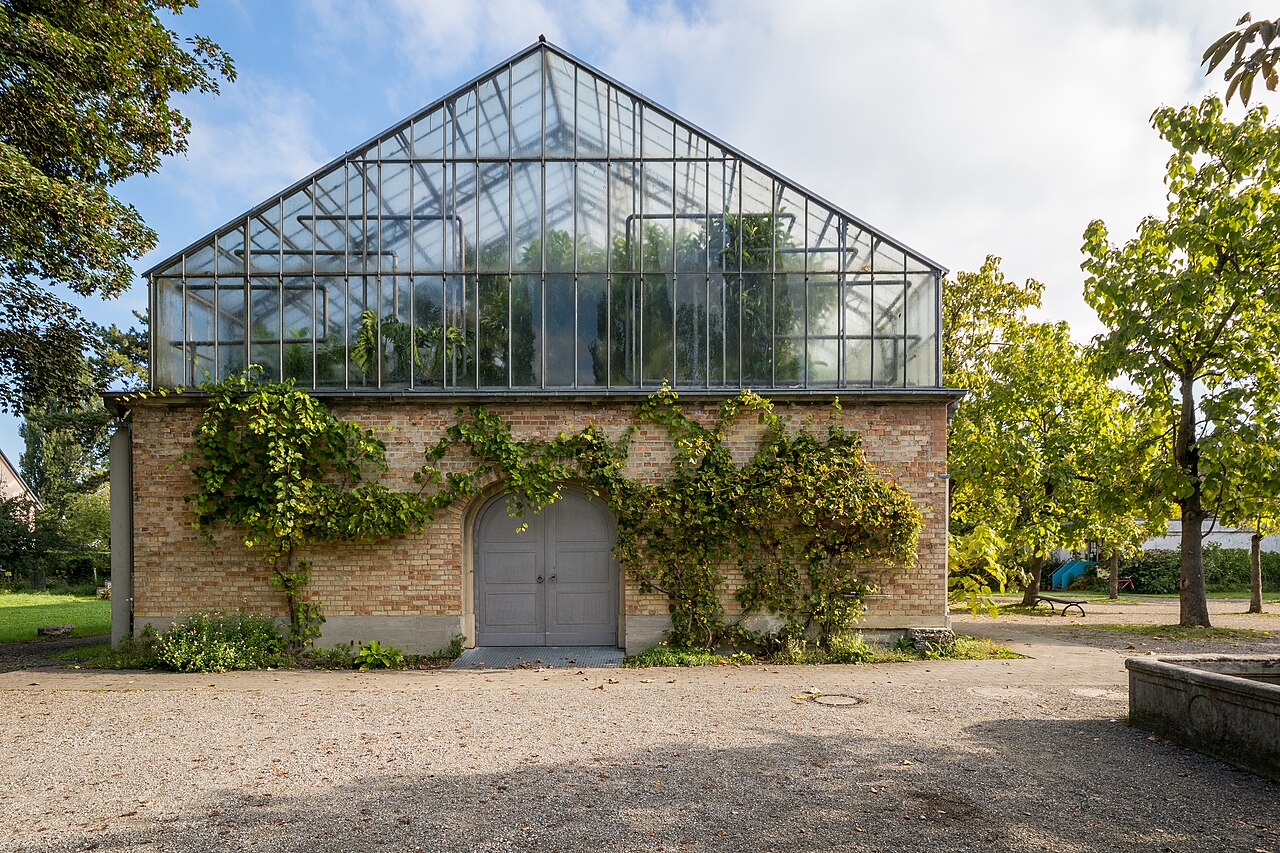
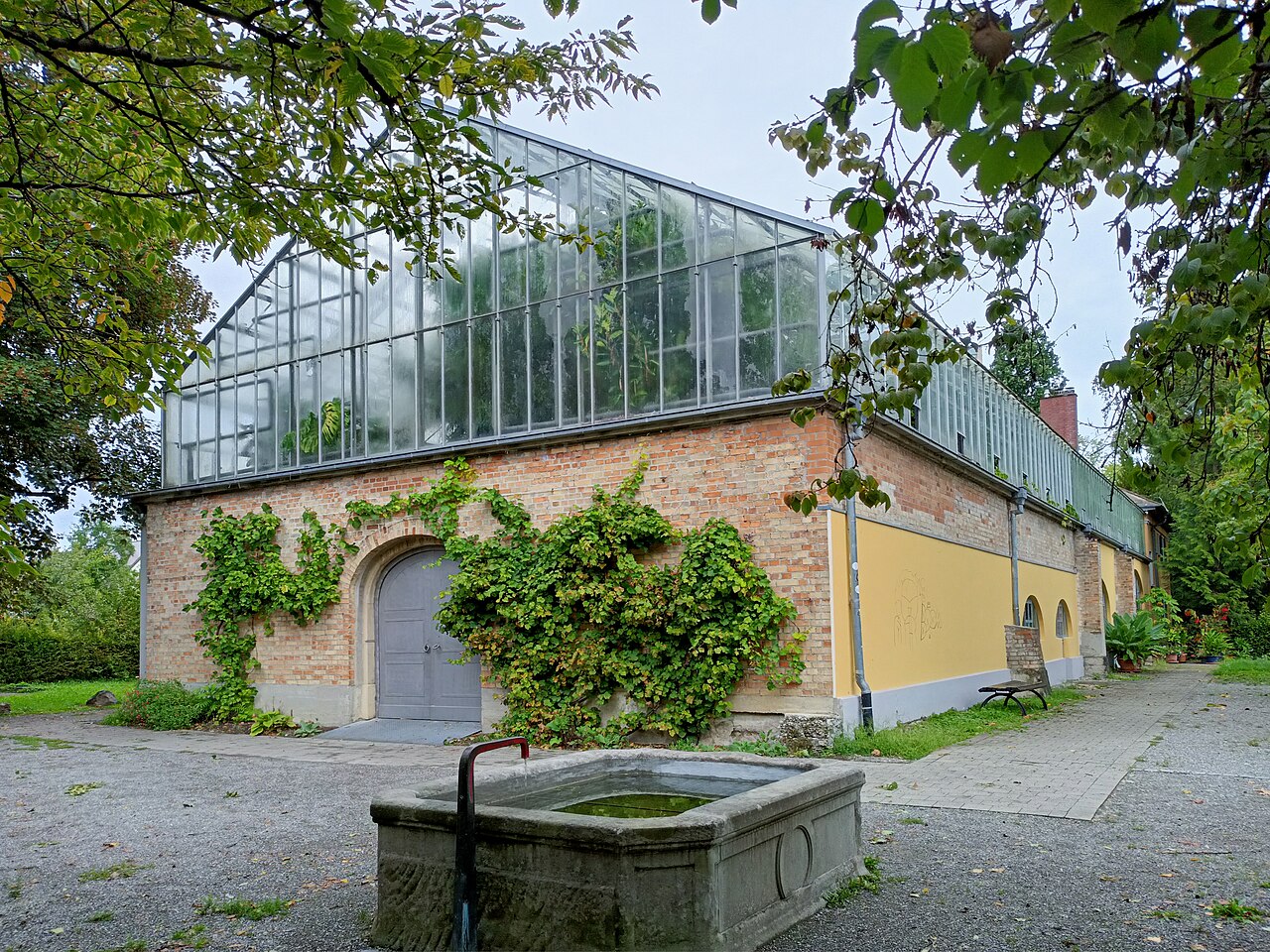
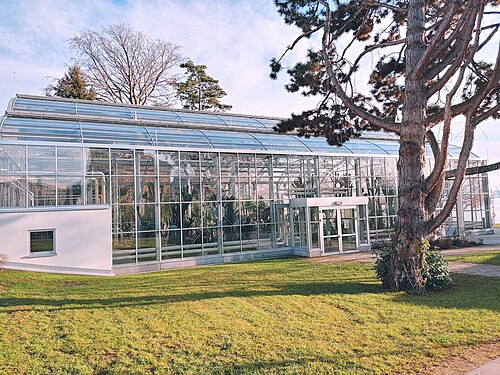
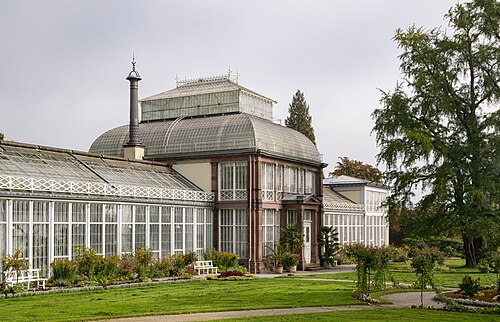
Built in 1922-1923 for Konstanz's municipal nursery (Stadtgärtnerei), the Palmenhaus in the Paradies district is a large glazed show house facing south-east and joined to a two-storey gardener's house. The Konstanz architect Friedrich Heinzmann drew up the plans, and the specialist firm Oscar Mehlhorn built the glass structures. Protected as a cultural monument under Baden-Württemberg law, the ensemble was repaired in 2005 with help from the Deutsche Stiftung Denkmalschutz. Run as a cold house, with exotic trees and shrubs, cacti and a fish pond, the glasshouse is now open to the public in the middle of a neighbourhood park.
Affiliate links — booking through Verrière helps fund our research, at no extra cost to you.
History
The Paradies district, laid out from about 1870, housed alongside its residential streets a range of city services that were then being modernised: the slaughterhouse, the municipal works yard, the gasworks and the city nursery. In 1922 an extension of the gasworks pushed the nursery further south, towards the Saubach. Its head, Emil Vollmer, won an expansion by arguing that the plants needed protection from the works' soot and that the city's valuable stock of palms deserved proper housing, which he said had no equal in the largest towns of Baden. The town council voted for the new building on 9 March 1922 and commissioned the Konstanz architect Friedrich Heinzmann to draw up the plans and run the site. The glass structures were built by Oscar Mehlhorn GmbH, a firm specialising in modern greenhouses, which the official history places in Schweinsberg (Saxony). Despite shortages of materials and criticism of what was seen as extravagance, the new nursery opened on the Saturday before Whitsun 1923.
The glazing already needed its first overhaul in 1939, sixteen years after opening. In 1963 the timber profiles were largely replaced with steel; around 1990 the south gable received an aluminium structure, and most of the side-wall profiles were later changed to steel as well. In 2001, according to the local press, panes were again at risk of falling. The nursery had moved away in 2000, leaving the plant collection in place but no defined use for the glasshouse or the gardener's house. A citizens' initiative, which grew out of a struggle begun in 1995 to protect the park when the Grenzbachstrasse was built, finally secured the repair, carried out in 2005 by the city's building department with substantial support from the Deutsche Stiftung Denkmalschutz.
Architecture and engineering
The complex joins a two-storey head building, the Kopfbau or Gärtnerhaus, which once held the nursery's offices and the head gardener's home, to the large Palmenhaus attached to it and facing south-east. The gardener's house has a façade articulated by pilasters, round arches on the ground floor and a prominent triangular gable, which the official history places within the conservative architecture of the 1920s. Smaller glasshouses that once stood at right angles to it have disappeared; the masonry they concealed was partly rendered in the strong ochre that was the gardener's house's original colour.
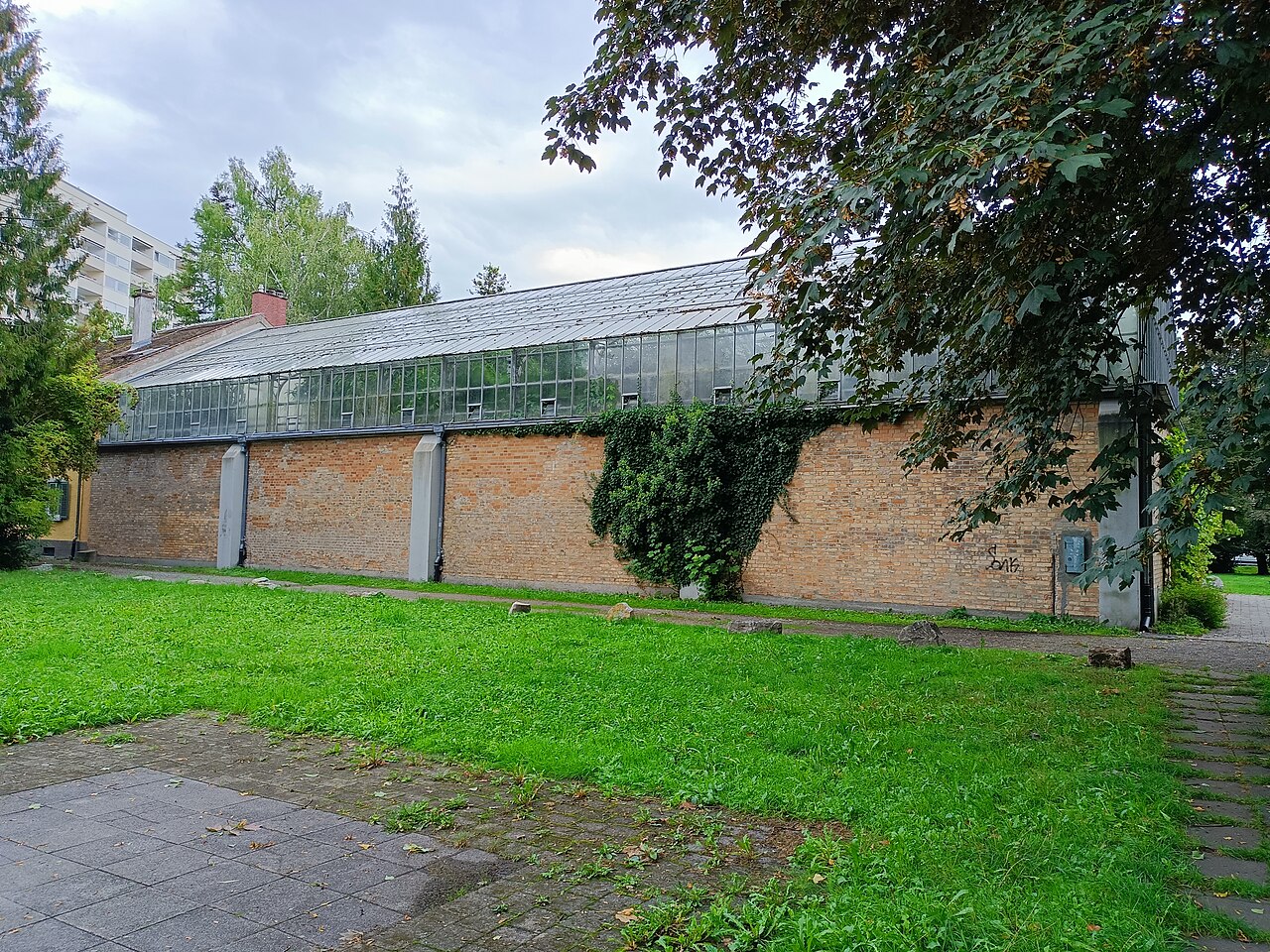
The glasshouse combines exposed masonry, interior plaster and a glazed frame. In the 2005 repair the last original timber profiles were kept and repainted green, while the load-bearing structure and the heating pipes, originally bare metal, were painted anthracite. The aluminium south gable was dismantled in favour of a steel frame following the original grid; according to the official history, the cathedral glass of the roofs and the clear glass of the walls were replaced with single-pane safety glazing, whereas the heritage foundation speaks only of partial reglazing. The ventilation flaps in the side walls were rebuilt and reconnected to the surviving mechanism, and the historic heating system could be brought back into service. The single glazing, kept in principle, limits year-round use of the house.
Plant collections
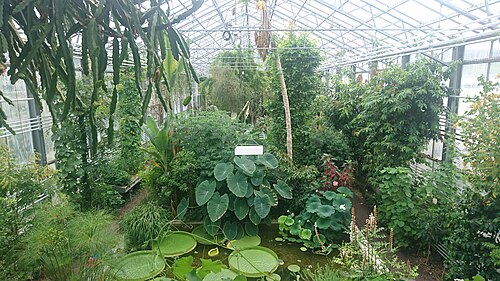
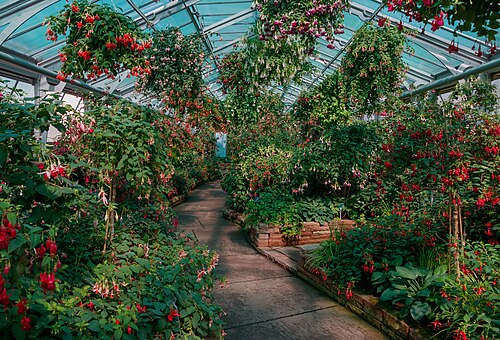
The Palmenhaus is run as a cold house (Kalthaus). In 2005 exotic trees and shrubs replaced the earlier dense arrangement of herbaceous plants, to suit present-day uses, while the cold-house regime stayed unchanged. A regional tourism portal mentions rubber plants and banana plants, cacti about 120 years old and other exotic plants with a "tropical flair", without naming species. A fish pond completes the scene.
The house was originally conceived for a collection of palms that the nursery's head considered remarkable by the standards of Baden. Today members of the support association (Förderverein Palmenhausareal/Paradies) look after the plants and fish, with some volunteers coming every Wednesday. The gardener's house hosts changing BUND exhibitions on environmental and nature topics.
Visiting
The glasshouse is open during the local BUND office hours, the office being housed in the gardener's house, and on Sunday afternoons thanks to volunteers; it may occasionally be closed and cannot be hired for parties. The surrounding public park contains an arboretum, an organic demonstration garden and a flower garden. The association usually organises one event a month, a concert, talk or reading, in the foyer of the gardener's house, as well as a small festival lasting several days.
A few metres away stands the Hussenstein, a memorial stone marking the place where Jan Hus was probably burned during the Council of Constance in 1415. The town's other glasshouse, the Mainau island Palmenhaus, has a separate entry.
47.66° N, 9.16° E
Greenhouses nearby
More greenhouses — Germany
Do you have a good photo of this greenhouse? Suggest it for this page →
Sources (6)
- palmenhaus-konstanz.de/home/geschichte/
- palmenhaus-konstanz.de/kontakt-oeffnungszeiten/
- denkmalschutz.de/denkmal/staedtisches-palmenhaus.html
- de.wikipedia.org/wiki/Liste_der_Kulturdenkmale_in_Konstanz/Paradies
- suedkurier.de/region/kreis-konstanz/konstanz/1923-eroeffnet-das-palmenhaus-im-paradies-das
- konstanz-info.com/attraktionen/bund-im-palmenhaus-konstanz-683bf95719
Affiliate links — booking through Verrière helps fund our research, at no extra cost to you.