Overbeck's Garden Conservatory (lean-to conservatory of the house)
Sharpitor, Salcombe, Devon

Sources checked October 2026
- Style
- Lean-to conservatory of timber and glass, set against the house front between its two wings
- Status
- Open to the public with the garden (March to October season, Sunday to Thursday in 2026); the house is closed for repairs, which continue through 2026 and 2027
Above Salcombe, the subtropical garden at Overbeck's, run by the National Trust, has a conservatory built against the house, marked number 2 on the visitor map. The register of historic parks and gardens describes it, in an entry written in 1998, as a single-storey timber and glass lean-to set between the two wings of the front and holding citrus plants and tender climbers. The Trust now presents a lean-to conservatory full of succulents and cacti, some of them over two metres tall, and mentions a separate small conservatory in the Banana Garden. The house is closed for repairs; the garden stays open.
Affiliate links — booking through Verrière helps fund our research, at no extra cost to you.
History
Historic England's register ties the name Sharpitor to a nearby rock, and says the site was undeveloped woodland when Albert Stumbles acquired it in the late nineteenth century. Edric Hopkins had terraces laid out on the east-facing slope. George Medlicott Vereker and his wife, owners from 1913, carried on with the garden and rebuilt the house, whose walls date from 1913-1914. Their son was killed in action in August 1914; in his memory the couple offered their new home to the Red Cross, which ran a convalescent hospital there from 23 August 1915 to 29 January 1919, treating 1,010 men according to the National Trust.
Otto Overbeck, an inventor and collector, bought the property in 1928 and died there in 1937. His obituary of May 1937, quoted in the register, praised a garden "renowned for its wealth of sub-tropical plants" and noted that the greenhouse held "an unusual display of cacti" (greenhouse not specified). By his will, the house, its contents and the garden went to the National Trust or to Salcombe Urban District Council, on condition that the garden be opened and that a museum and youth hostel be installed; the Trust accepted the bequest.
The conservatory is attached to the house. The register, in its 1998 entry, lists it among the features of the house and describes a collection of citrus plants and tender climbers. The house has since closed: the National Trust says it is shut for essential repairs, that the major structural work is largely complete and that repairs will continue through 2026 and 2027, while the garden remains open from March to October.
Architecture and engineering
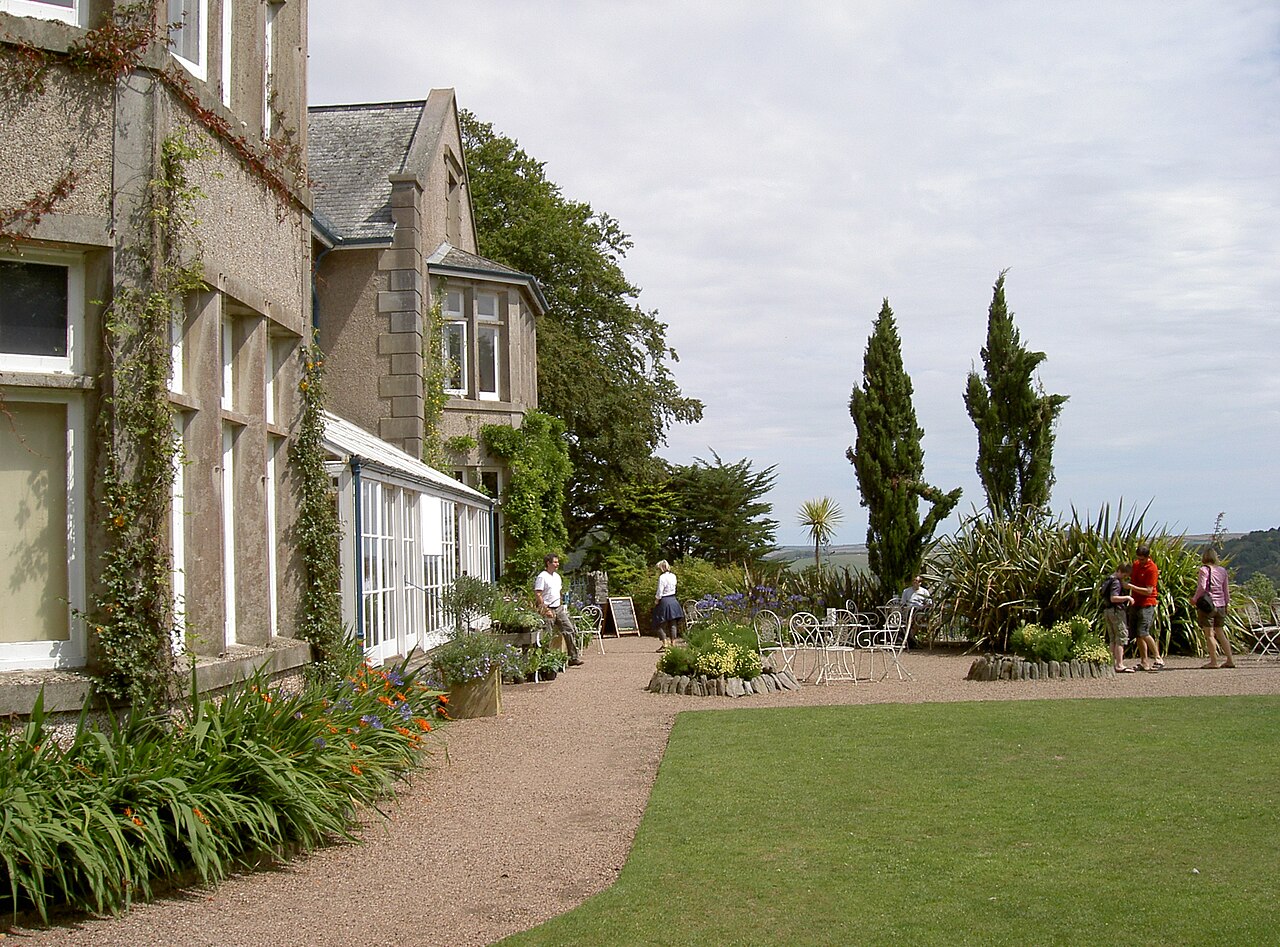
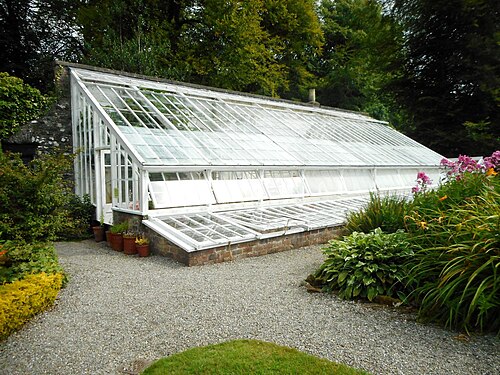
In the Historic England register entry, written in 1998 and amended until 2000, the house is a rendered two-storey building under a slate roof, its front framed by two wings with canted bay windows. Between those wings, on the ground floor, sits a single-storey lean-to conservatory of timber and glass. Photographs on Wikimedia Commons (2011 and 2022) show it against the front: a glazed roof sloping one way and, below it, tall glazed walls with slender light-coloured bars, facing a gravelled terrace where seats are set out.
The garden map published by the National Trust numbers this conservatory (no. 2) against the house, near the main entrance, and marks an "Orange Tree Store" in the west, near the Banana Garden, which Wikipedia, citing the Trust, describes as a glasshouse for overwintering the orange tree. The register separately mentions a late twentieth-century timber glasshouse beside the parterre of potted citrus trees, and the Trust cites a small conservatory in the Banana Garden.
Plant collections
According to the National Trust, the lean-to conservatory is full of sun-loving succulents and cacti, some of them more than two metres tall. The Trust's article on houseplants to see in its conservatories and glasshouses lists it alongside a second, smaller conservatory in the Banana Garden, where many air plants share space with branches draped in Spanish moss; the same text mentions kokedama, the Japanese moss balls from which succulents trail.
The 1998 register entry describes, in the conservatory against the house, citrus plants and tender climbers, and Otto Overbeck's 1937 obituary mentioned a display of cacti in an unspecified greenhouse. Around it, the garden forms, in the register's words, a specialised collection of tender Mediterranean and Australasian plants, helped by a microclimate: Chusan palms, many of them planted by Overbeck in the 1930s, bananas, and potted citrus trees on the parterre.
Visiting
The conservatory is seen with the garden, which opens from March to October: the National Trust's 2026 calendar shows opening from Sunday to Thursday, with a last day on 1 November, while the house stays closed for repairs. The Trust also offers a guided garden tour on Wednesday mornings, booking essential. Spring is a good season: the register singles out a magnolia planted in 1901 against a wall as one of the garden's great moments. The visit can be extended with the circular walk through the National Trust's coast and countryside around Salcombe; the garden lies a 1.2-mile walk from the East Soar car park.
50.22° N, 3.78° W
Greenhouses nearby
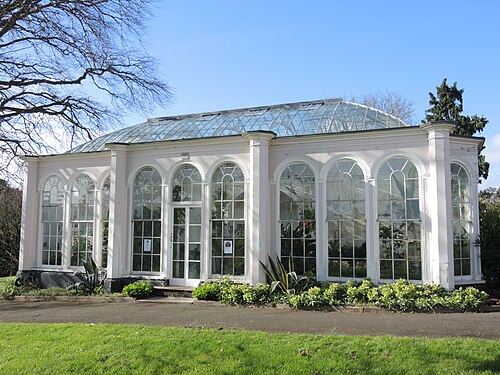
More greenhouses — United Kingdom
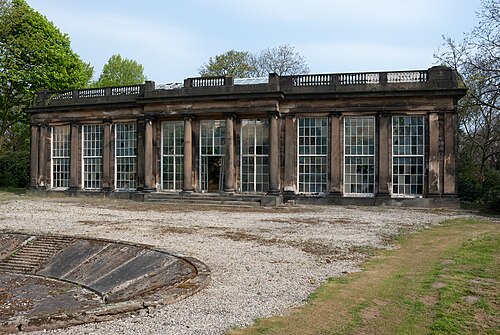
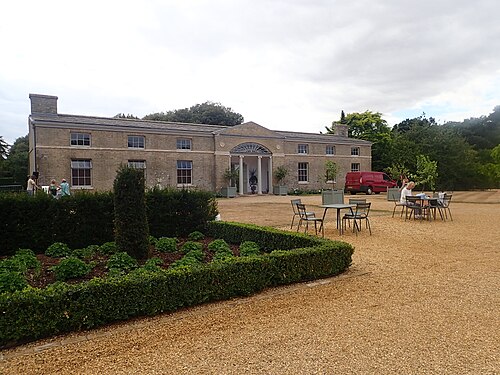
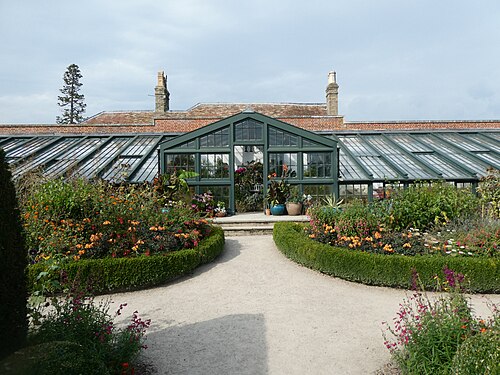
Do you have a good photo of this greenhouse? Suggest it for this page →
Sources (7)
- historicengland.org.uk/listing/the-list/list-entry/1000697?section=official-list-entry
- nationaltrust.org.uk/visit/gardens-parks/houseplants-to-see-in-our-conservatories-and-glas
- nationaltrust.org.uk/visit/devon/overbecks-garden/history-of-overbecks
- nationaltrust.org.uk/visit/devon/overbecks-garden/overbecks-house-closure
- nt.global.ssl.fastly.net/binaries/content/assets/website/national/regions/devon/places/ove
- en.wikipedia.org/wiki/Overbeck%27s
- supergardens.co.uk/gardens/overbecks-garden/
Affiliate links — booking through Verrière helps fund our research, at no extra cost to you.