The Orangery, Bitton House (Teignmouth Orangery)
Teignmouth (Devon), England

Sources checked October 2026
- Year
- 1842 (assumed date, found inscribed inside); restored 1985
- Style
- Classical orangery with a hipped glazed roof and tall round-headed sash windows
- Dimensions
- Small building
- Status
- Open to the public in summer (Tuesday, Thursday and Sunday afternoons, according to the managing Friends in 2026) and during National Garden Scheme weekends
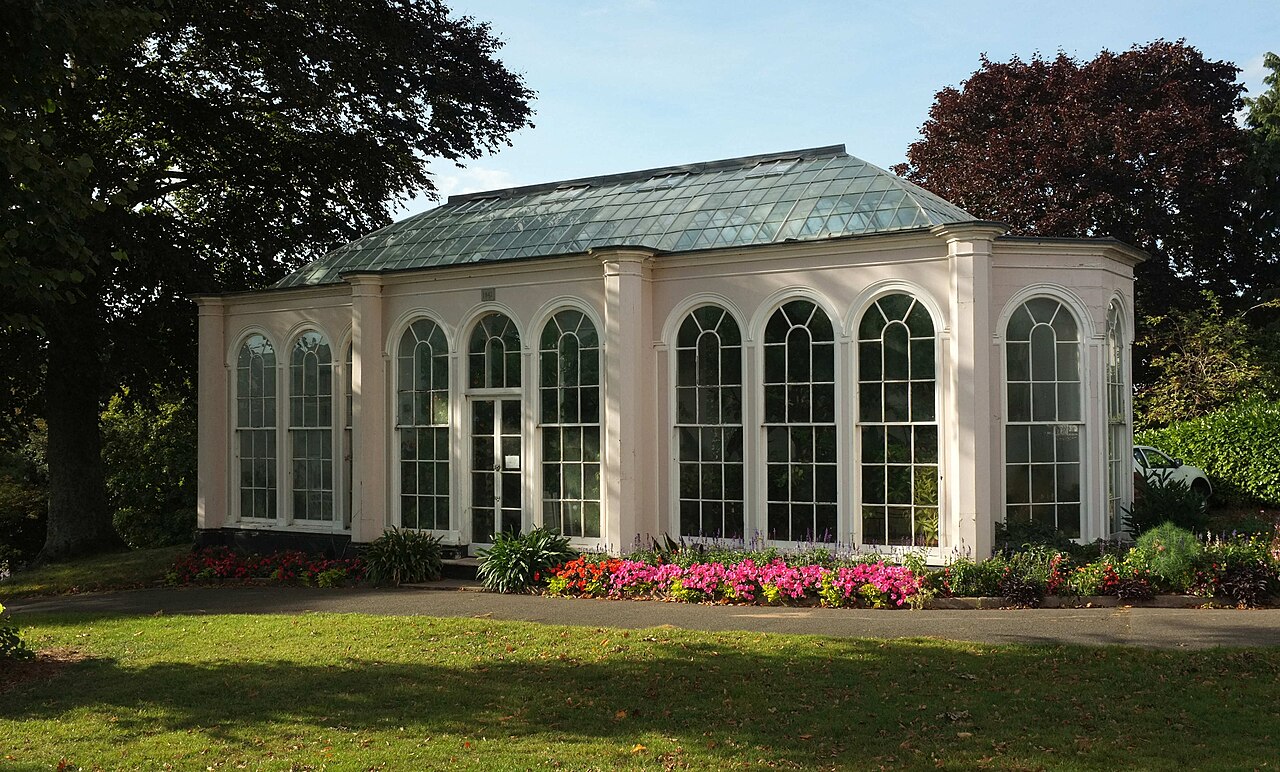
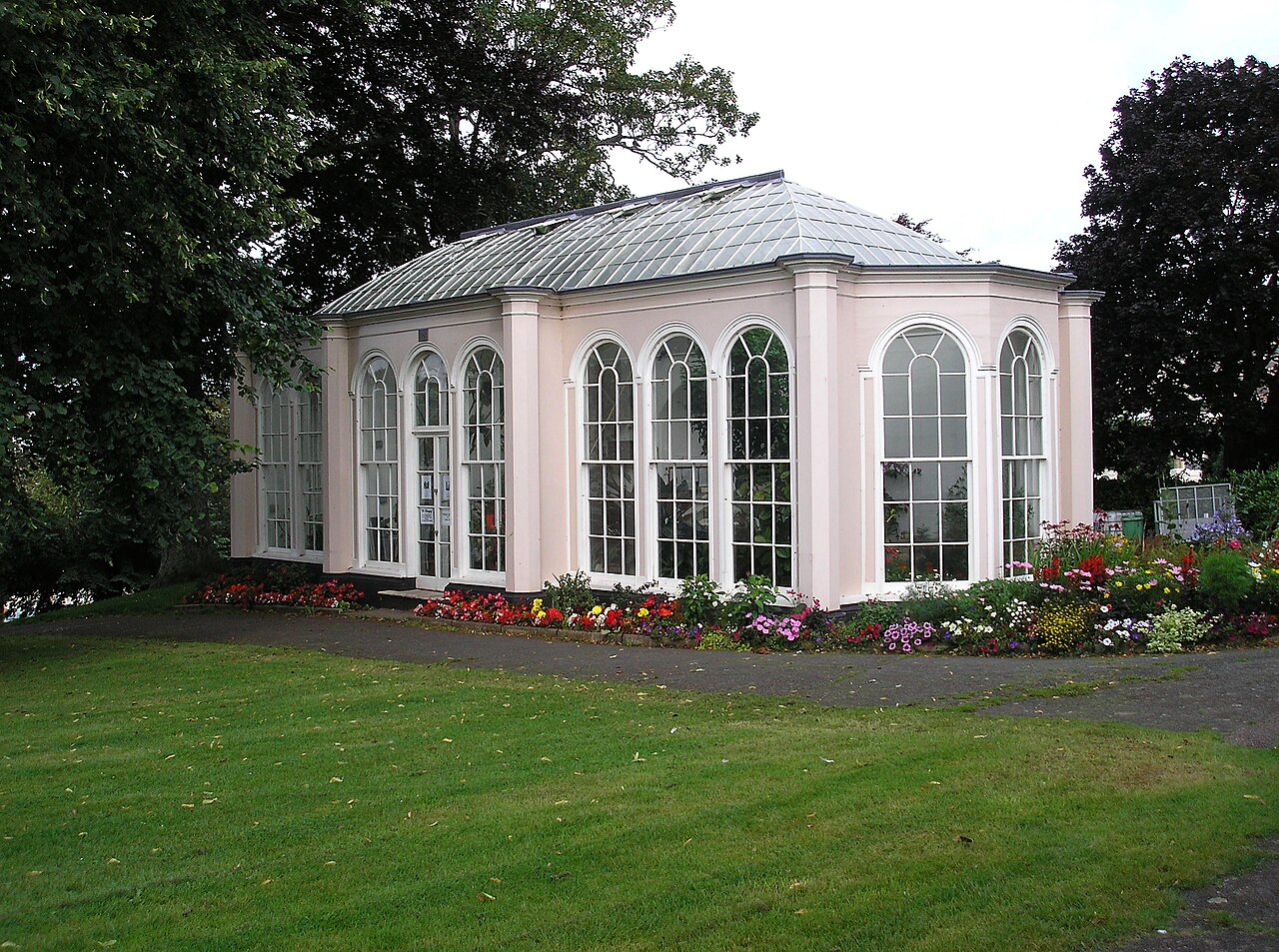
In the grounds of Bitton House in Teignmouth, the Orangery is a small classical building, listed Grade II, with a glazed roof and tall round-headed windows. It is dated to 1842 from an inscription found inside during restoration. Derelict and threatened with demolition in 1979, it survived thanks to public opposition, which gave rise to the Friends of Teignmouth Orangery and, in 1985, to a restoration by the council. Volunteers now tend plants from several climate zones, among them a brugmansia, citrus trees, bananas and strelitzias, and open the building to the public during the summer.
Affiliate links — booking through Verrière helps fund our research, at no extra cost to you.
History
The Orangery stands in the grounds of Bitton House, which now houses Teignmouth Town Council's offices. The house, long known as West Cliff, was the home of Admiral Sir Edward Pellew, later Viscount Exmouth, a naval hero and contemporary of Nelson. The date of the orangery remains approximate: Teign Heritage says it is "thought to date from 1842", a year found inscribed inside during restoration, and the Friends' website believes it was built that year as an adornment to the house, in the classical style it has kept. Historic England dates it more broadly to the early 19th century. A local event listing attributes it to Pellew, while the Friends' site cites references to Lady Exmouth's "new greenhouse".
Over time the building decayed. By 1979 it was derelict and threatened with demolition, and it was listed Grade II on 23 August 1979 (entry updated in 1996). Wide public opposition led to the formation of the Friends of Teignmouth Orangery, registered as a charity in August 1985, and the local council restored the building in 1985. Since then the Friends' volunteers have looked after the plants and opened the orangery to the public during the summer.
Architecture and engineering
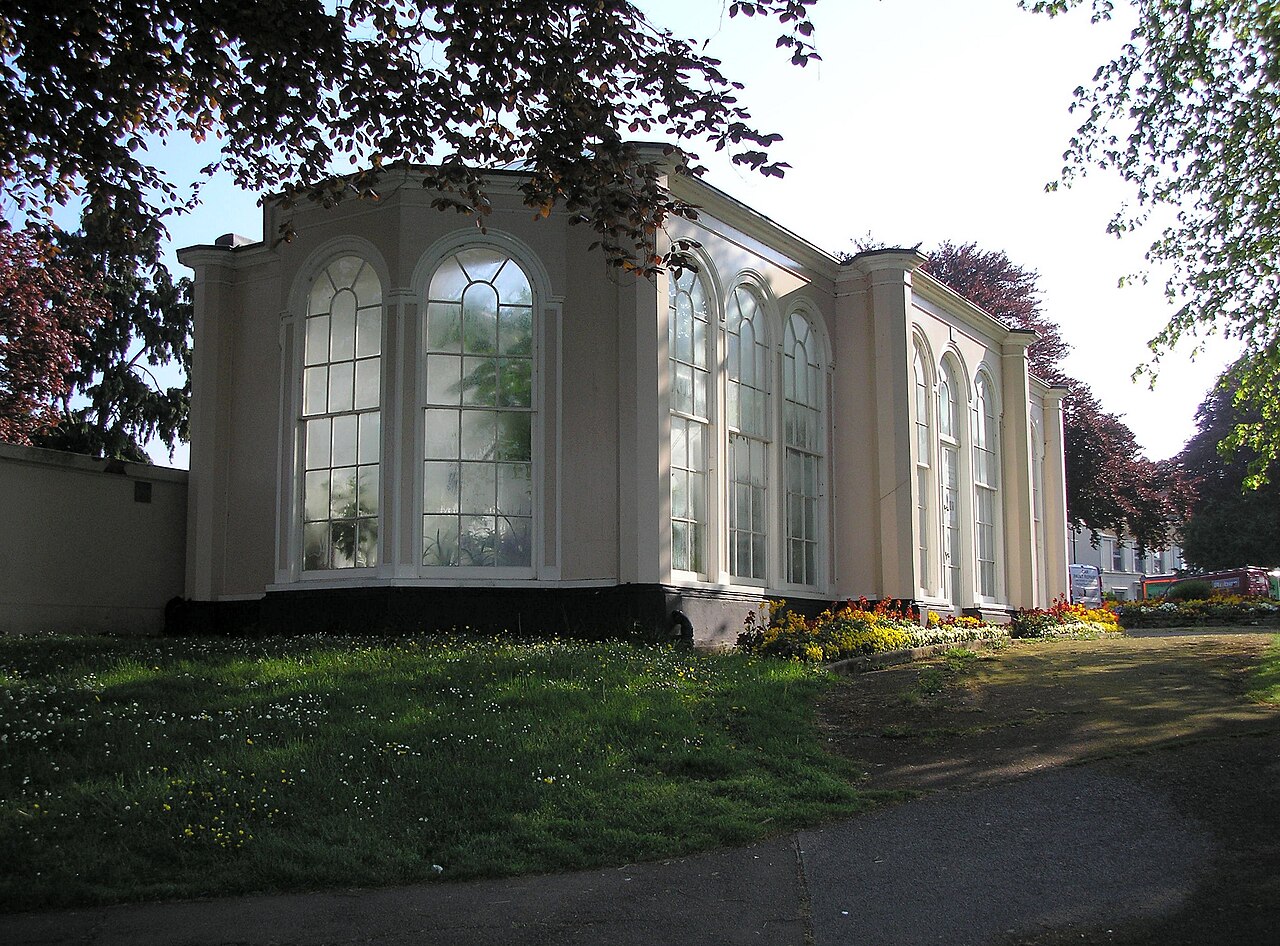
Historic England describes a single-storey building on a rectangular plan, with canted bays on the returns and a curved bay at the rear. It combines a painted stone plinth, stucco and wood beneath a hipped glazed roof. The front has a symmetrical range of nine windows, grouped in threes and separated by octagonal painted wooden pilasters, with a cornice running around the whole building. The 6/6-pane sash windows are semicircular-arched, with painted wooden spandrels on the front and sides and radial glazing bars in their upper parts; panelled pilasters carry continuous moulded archivolts. The central range steps slightly forward and has double doors below the middle window. Inside, a full-height hemispherical recess fills the curved rear bay. The listing quotes Pevsner, who judged the design distinguished and "forceful".
The Friends describe the orangery as small.
Plant collections
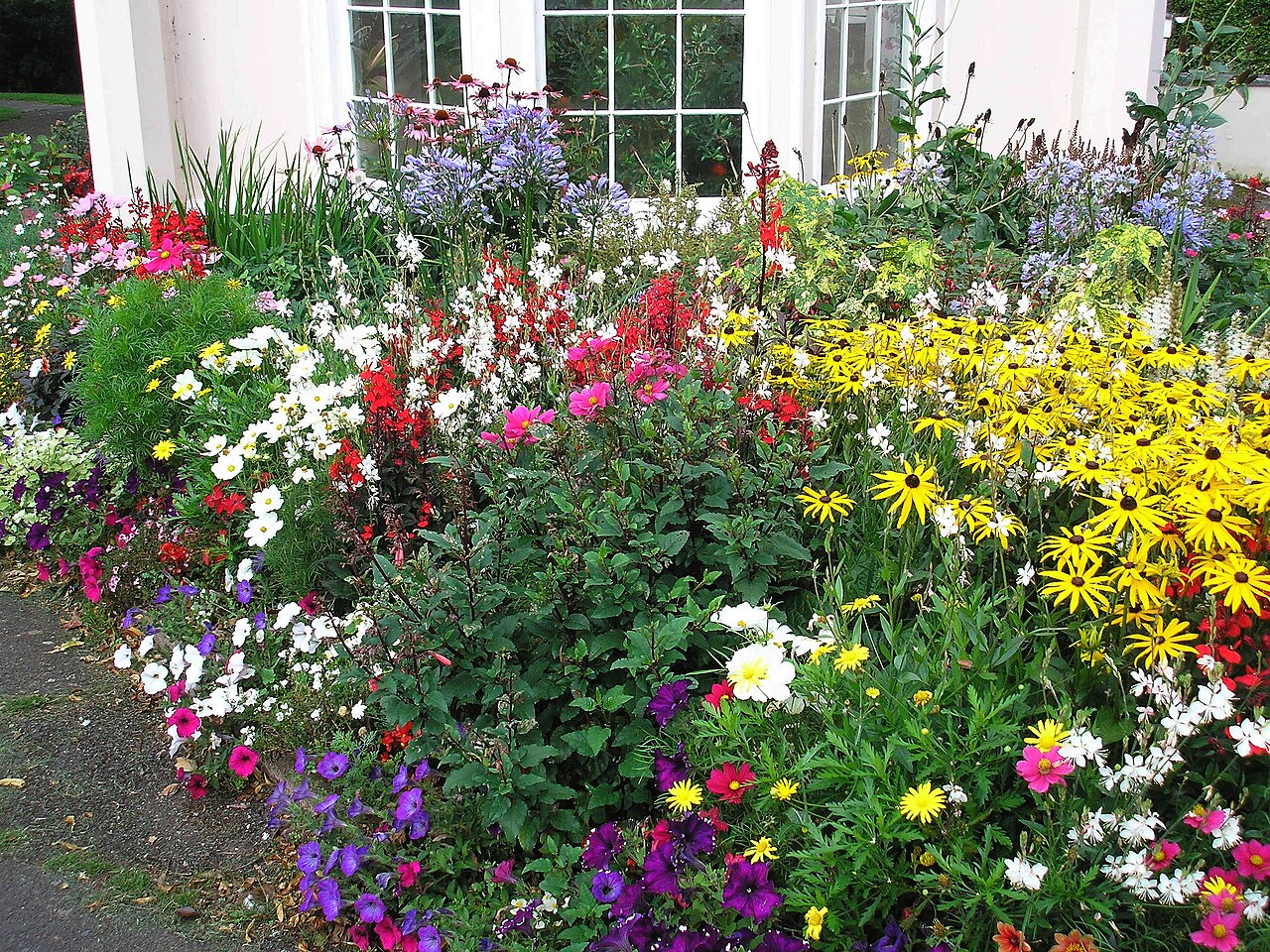
The orangery is small, but it brings together plants from several climate zones. The Friends' website points out, as one enters and turns left, an imposing brugmansia (angel's trumpet) native to the sub-tropical regions of South America, followed by a bougainvillea, ferns, hibiscus, clematis and other smaller plants. The Mid Devon Advertiser (April 2023) adds orange, lemon and kumquat trees, bananas, tropical ferns and strelitzias, with passion fruit and morning glory on the walls and orchids in hanging baskets. The Charity Commission register likewise mentions a brugmansia surrounded by citrus trees and a banana tree.
The Friends' website also devotes pages to Brunfelsia calycina, Gloriosa and Musa basjoo, the last presented in 2014 as the newest recruit. A photograph from 2002 shows a good crop of bananas; the old banana tree, which was taking over the bed, has since been replaced by a smaller variety. Plants are sometimes offered for sale, notably during National Garden Scheme open weekends.
Visiting
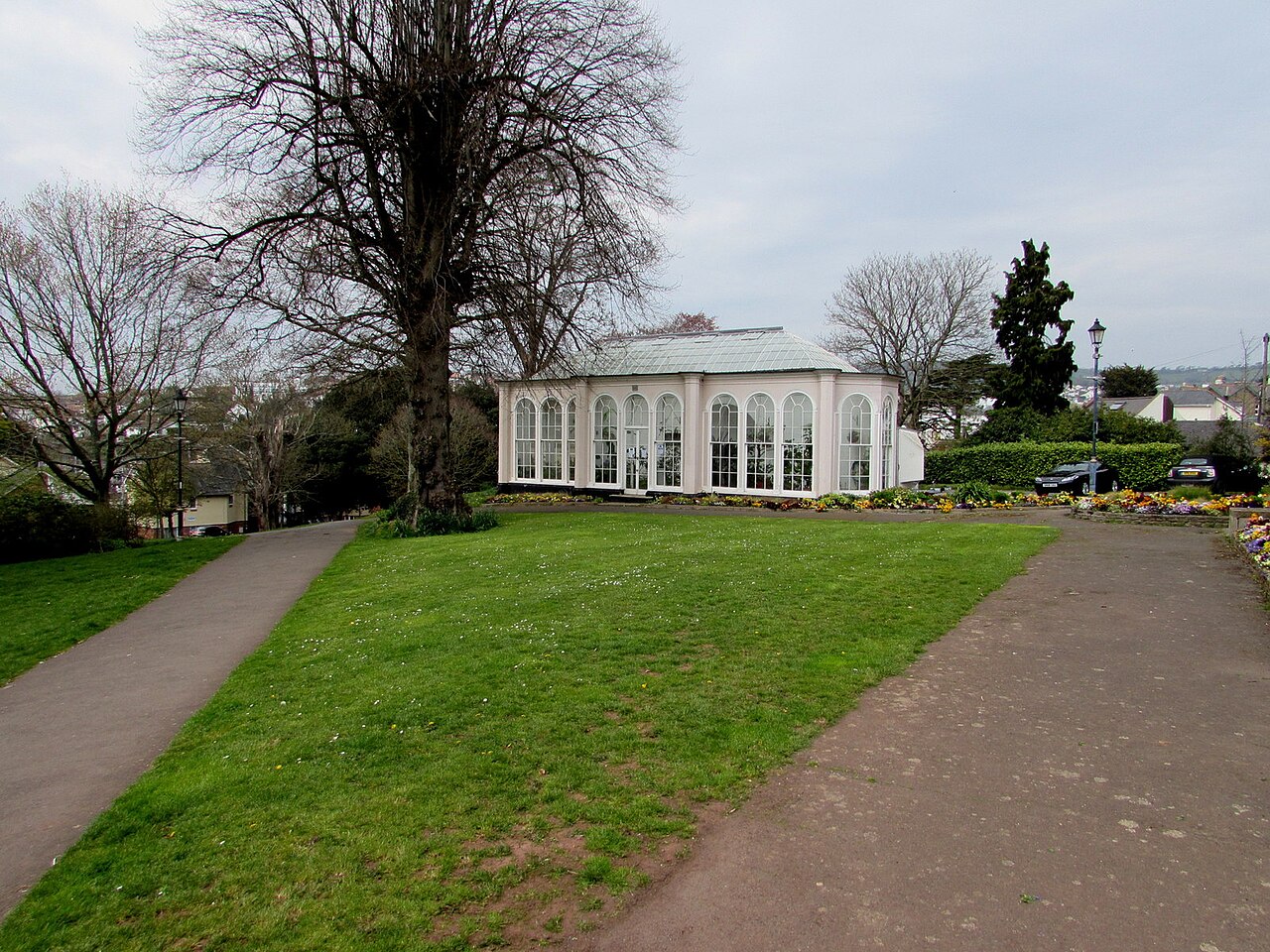
The Orangery lies in Bitton Park, next to the Bitton House car park, off Bitton Park Road. The Friends open it through the summer season on three afternoons a week (Tuesday, Thursday and Sunday, according to their May 2026 post), and during National Garden Scheme weekends, such as 13 and 14 June 2026, when a plant sale is held. Because the place is small, it combines easily with a stroll through the park and a look at the neighbouring house, outside which stand two cannon from Algiers.
According to the National Garden Scheme, a portable ramp is available and the entrance has low steps; payment is by cash, and neither dogs nor coaches are admitted.
50.55° N, 3.51° W
Greenhouses nearby
More greenhouses — United Kingdom
Do you have a good photo of this greenhouse? Suggest it for this page →
Sources (8)
- historicengland.org.uk/listing/the-list/list-entry/1269112
- teignmouthorangery.wordpress.com/about/
- teignheritage.org.uk/index.php/board-14-bitton-house
- ngs.org.uk/gardens/the-orangery-tq1/
- middevonadvertiser.co.uk/news/hard-working-volunteers-help-get-the-orangery-ready-for-open
- instagram.com/teignmouth_orangery/p/DYmZl8pIdBQ/
- opencharities.uk/ew/292480
- teignmouthorangery.wordpress.com/archive-photos/
Affiliate links — booking through Verrière helps fund our research, at no extra cost to you.