Tropics and Deserts glasshouses (Tropical Trails and Arid Lands), Paignton Zoo
Paignton Zoo, Totnes Road, Paignton, Torbay (Devon)

Sources checked October 2026
- Year
- 1934 (Tropical House); 1996 (Desert House); 2000 (Reptile Tropics, now Tropical Trails)
- Style
- Two glasshouses with translucent roofs, tropical and desert, with rockwork, pools and aviaries
- Dimensions
- A 36 m roof vent in the tropical hall (2020); 1934 Tropical House: about 200 feet (≈ 61 m)
- Status
- Open with the zoo ticket (zoo open daily); on the Welcome Route
On Paignton Zoo's Welcome Route, two glasshouses follow one another: Tropics (Tropical Trails, formerly Reptile Tropics) then Deserts (Arid Lands, also called the Desert House). The first holds sloths, reptiles and birds among tropical plants, the second cacti and arid-land plants. The zoo, which also grows some 1,600 plant species, dates its first Tropical House to 1934, the Desert House to 1996 and Reptile Tropics to 2000. The roof of the tropical hall was damaged by storms in 2020 and 2022. The visit is included in the zoo ticket.
Affiliate links — booking through Verrière helps fund our research, at no extra cost to you.
History
Herbert Whitley opened his animal collection on 1 July 1923 as the Primley Zoological Gardens. An enthusiastic horticulturist, he left the zoo a tradition of rare plants, which it still claims today with about 1,600 species grown across 80 acres. The first Tropical House dates from 1934: the Western Morning News of 4 August 1934 reports the informal opening, the previous afternoon, of an extension to Primley whose main feature was a "specially constructed" tropical house about 200 feet long, showing rare birds and plants. It had taken two to three years to prepare and stood to the left of the main entrance from Totnes Road, on rising ground that forms a sun trap. According to Wikipedia, a dispute over the extra fee charged for "the new Tropical House" contributed to the zoo's second closure, in 1937.
Today's halls are more recent: the Desert House opened in 1996 as a walkthrough habitat for desert species (today Deserts, also called Arid Lands), and Reptile Tropics in 2000, renamed Tropical Trails. In February 2020 a storm ripped open a 36-metre roof vent in Reptile Tropics: 65 reptiles and amphibians and about 200 birds were evacuated, the roof was torn off a second time during repairs, and the hall reopened only in spring 2021, with redesigned enclosures. In February 2022 Storm Eunice again blew off roof panels. The zoo came under Libéma's ownership in January 2026, and the Welcome Route of its new four-route plan runs through Tropics and then Deserts.
Architecture and engineering
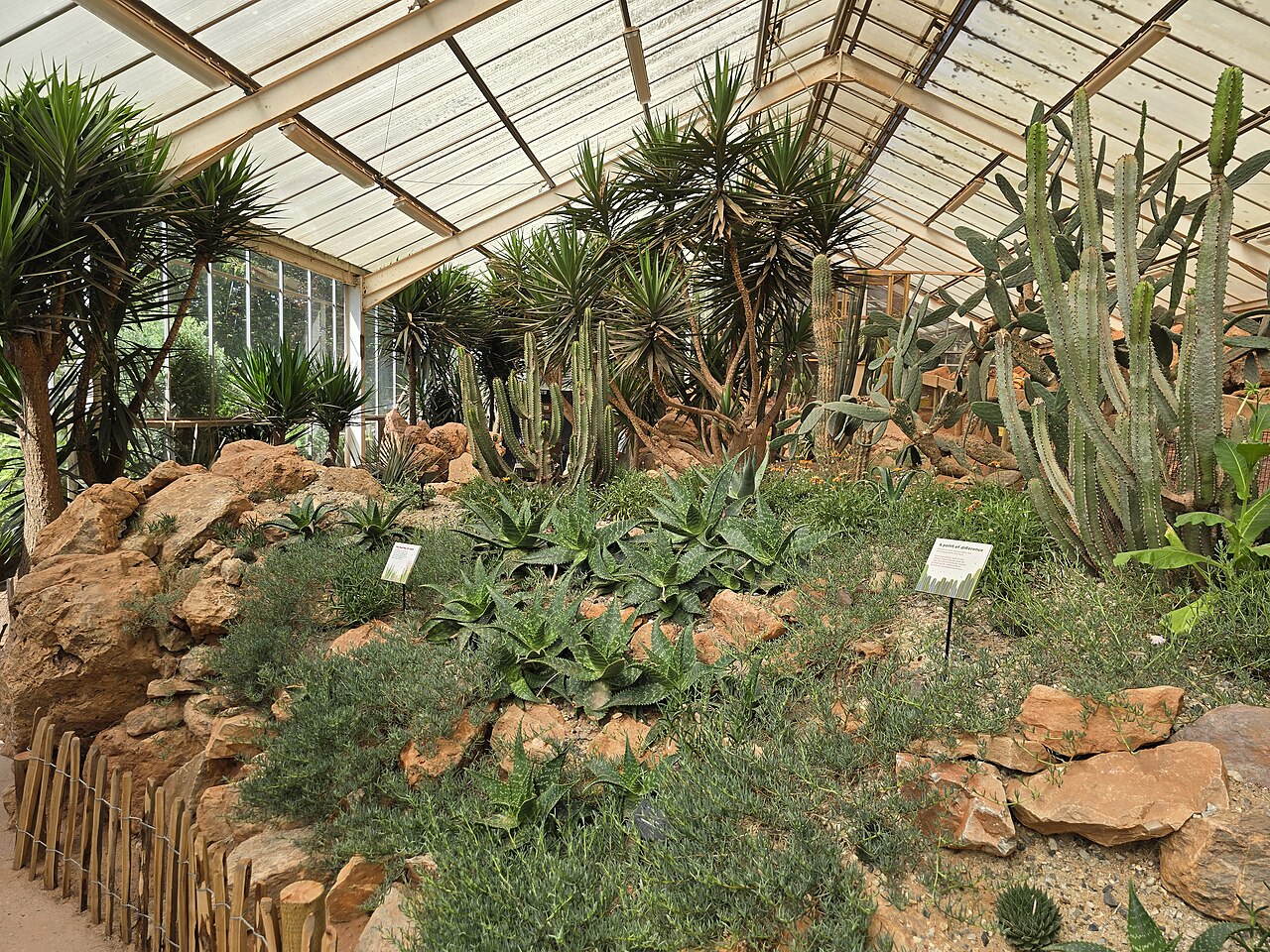
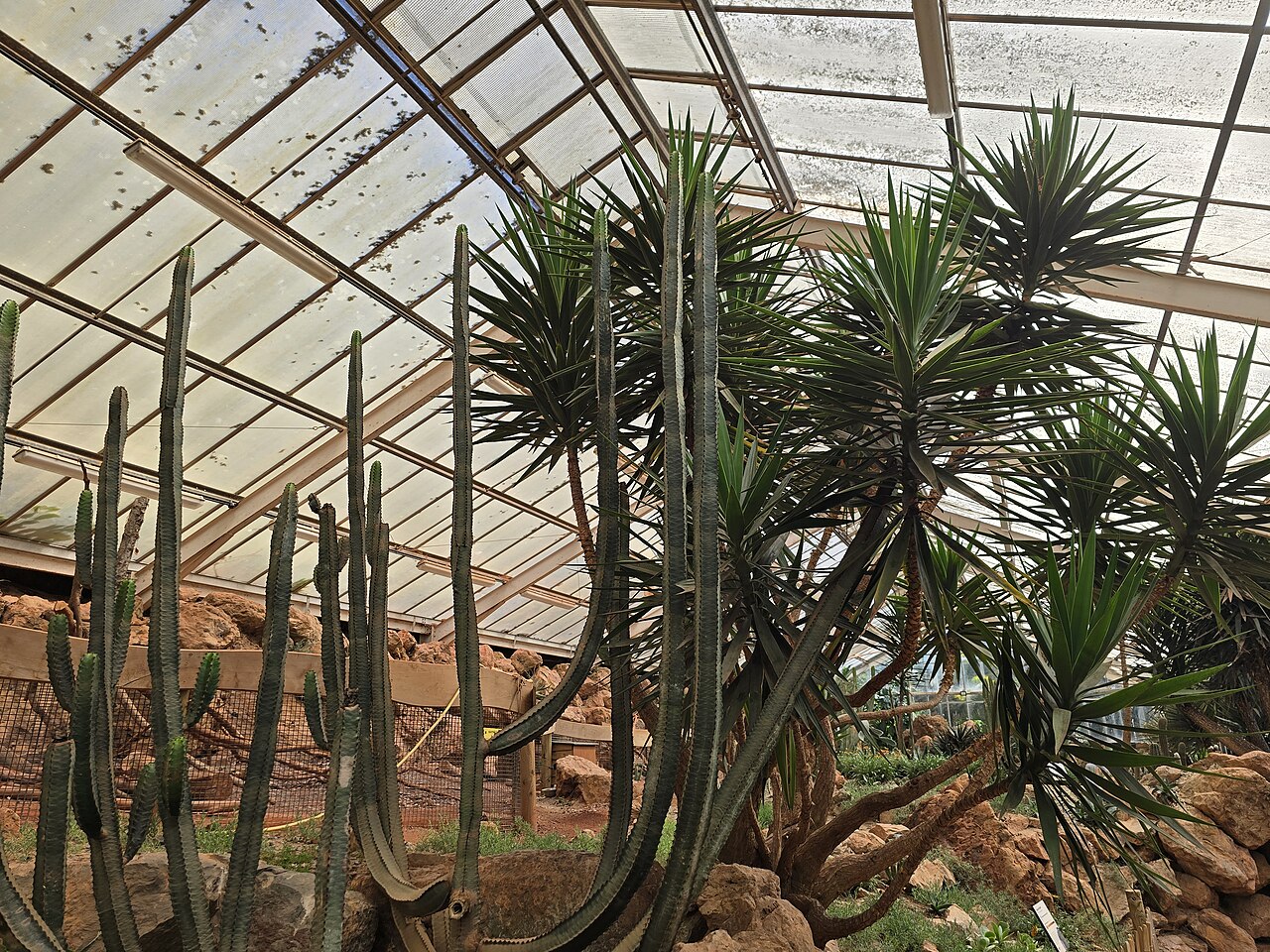
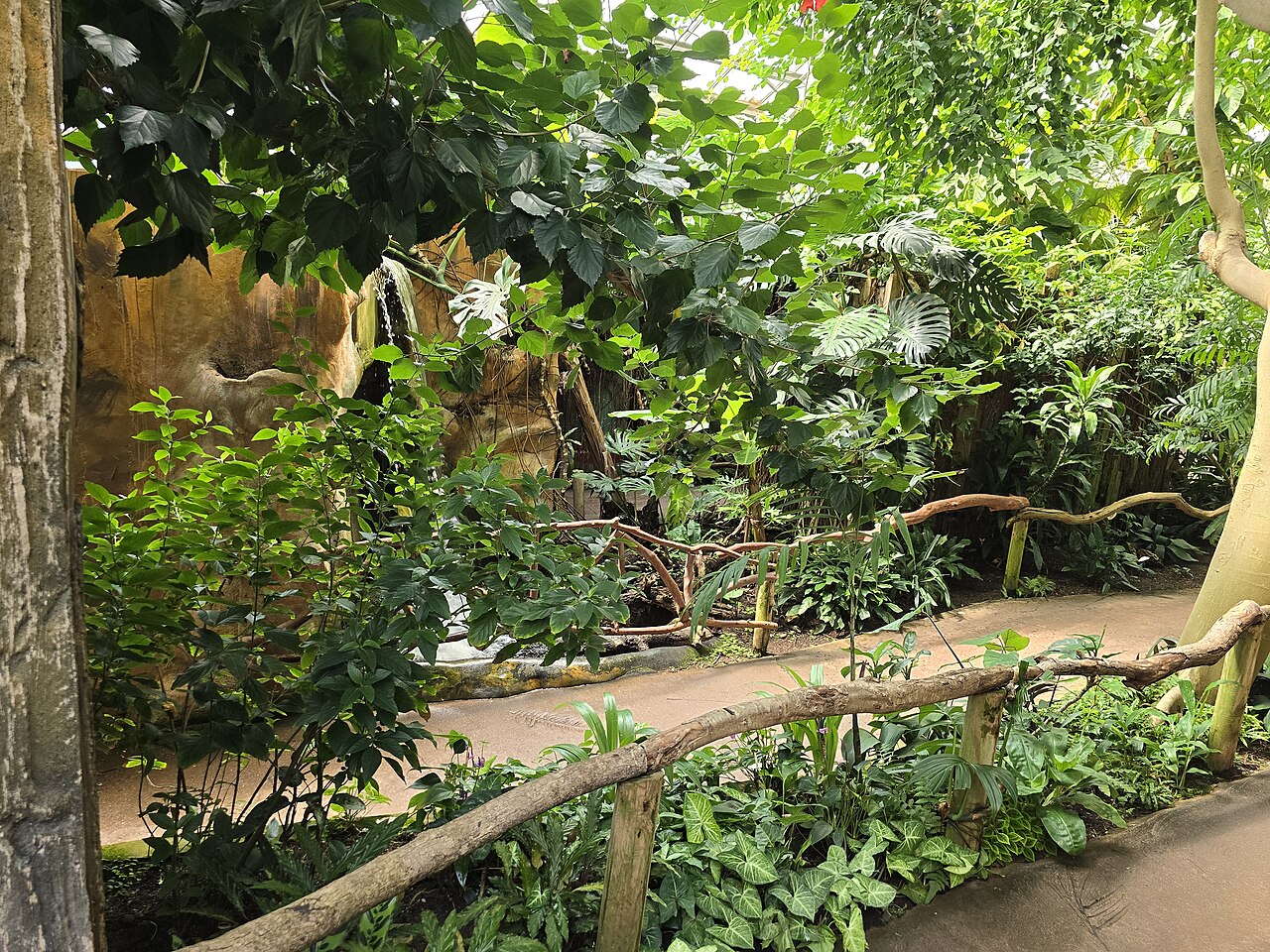
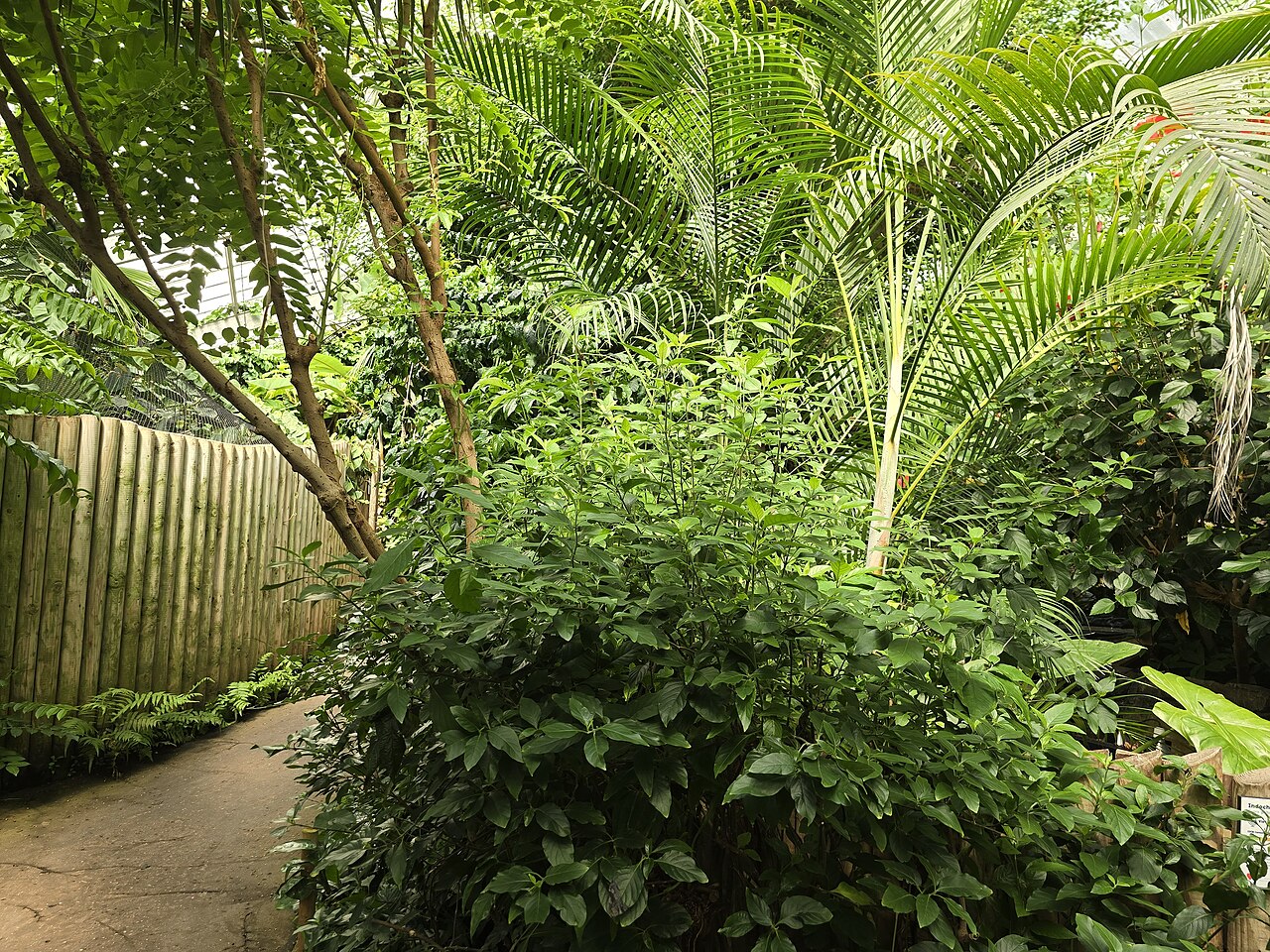
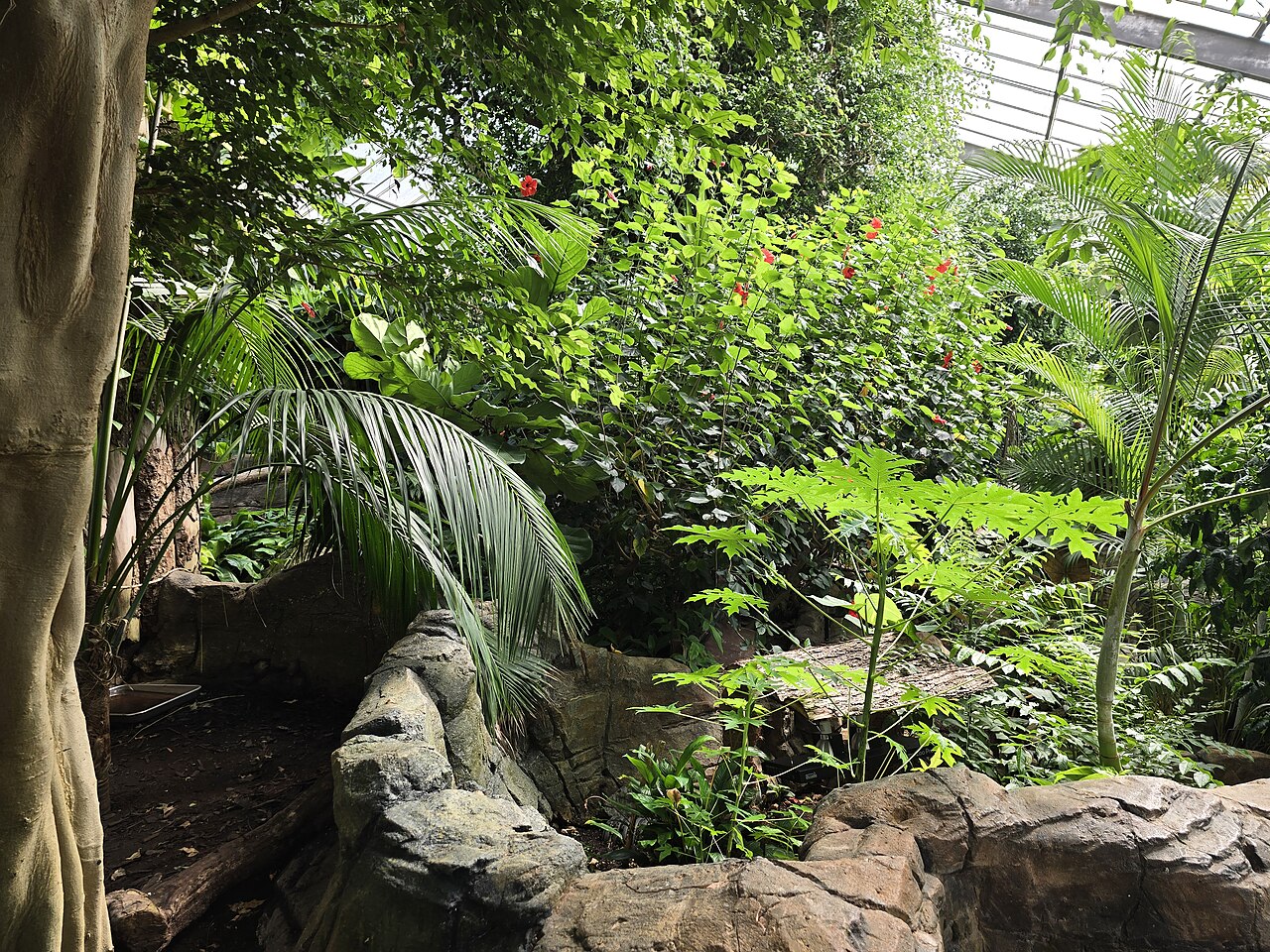
The zoo speaks of "tropical glasshouses" and of tropical and desert houses, a 2020 press article quoting the zoo of a "giant greenhouse" for Reptile Tropics; the storm accounts mention a 36-metre roof vent, then roof panels blown off in 2022: the cover therefore includes panels. Photographs on Wikimedia Commons, taken in 2025, show inside roofs of rectangular translucent panels between white bars, above rockeries with cacti and yuccas (Deserts), palms, a waterfall and paths lined with timber fences (Tropics); some areas are netted for free-flying birds.
After the 2020 damage the Tropical Trails enclosures were reworked: new staff access points, enlarged enclosures, and most had their lighting and heating renewed. The most detailed description of a Tropical House remains that of 1934: a central corridor, with aviaries of birds of paradise on one side and, over a great space on the other, plants, shrubs and cacti; a lily pond house viewed through a series of openings almost at water level; and the beginnings of an aquarium running the whole length.
Plant collections
According to the zoo, the tropical houses show giant bamboo, rainforest vegetation and specimens such as titan arum, while hibiscus fills the glasshouses in summer; Wikipedia adds giant water lilies. The Desert House presents cacti, succulents and arid-land plants, including critically endangered cacti. On the 2025 photographs, both halls show candelabra cacti and yuccas on rockeries, and palms, red hibiscus and large leaves in the tropical part.
As for animals, the zoo cites sloths and reptiles for Tropics. In 2020 it listed in the hall beaded lizards, blue tree monitors, emerald tree boas, Indochinese box turtles, Parson's chameleons and Tokay geckos, with birds such as the mousebird, Javan sparrow and Vietnam pheasant; on its reopening in 2021, Annam leaf turtles, the pink pigeon and seven Nguru spiny pygmy chameleons. In 1934 the house showed birds of paradise, bleeding-heart pigeons and alligators.
Visiting
Tropics and Deserts line the Welcome Route, which starts at the zoo entrance, passes the lake with Chilean flamingos, the gibbons and the marabou storks, runs through the two halls and comes out at the Central Plaza, where four themed routes begin. They are visited with the zoo ticket, and the zoo is open daily. It also presents its grounds as a botanical garden: magnolias in spring, hibiscus in the tropical houses in summer, Japanese maples in autumn.
50.43° N, 3.58° W
Greenhouses nearby
More greenhouses — United Kingdom
Do you have a good photo of this greenhouse? Suggest it for this page →
Sources (10)
- paigntonzoo.uk/explore/wildlife/botanical-gardens
- paigntonzoo.uk/visit/plan-your-visit/things-to-do
- paigntonzoo.uk/visit/plan-your-visit/opening-times
- en.wikipedia.org/wiki/Paignton_Zoo
- commons.wikimedia.org/wiki/File:Western_Morning_News_Sat_Aug_4_1934.jpg
- theexeterdaily.co.uk/news/uk-news/zoo-keepers-save-animals-after-storm-damage
- wildplanettrust.org.uk/tropical-trails-and-tribulations/
- wildplanettrust.org.uk/paignton-zoo-announces-biggest-changes-in-almost-10-years/
- visitdevon.co.uk/blog/post/a-new-chapter-begins-as-paignton-zoo-unveils-major-transformati
- openstreetmap.org/way/55068712
Affiliate links — booking through Verrière helps fund our research, at no extra cost to you.