Flower Garden and Melon Yard glasshouses (Lost Gardens of Heligan)
Pentewan, near St Austell (Cornwall)

Entry updated on October 5, 2026
- Style
- Victorian lean-to glasshouses set against walled-garden walls
- Status
- Open to the public (gardens restored from 1990)
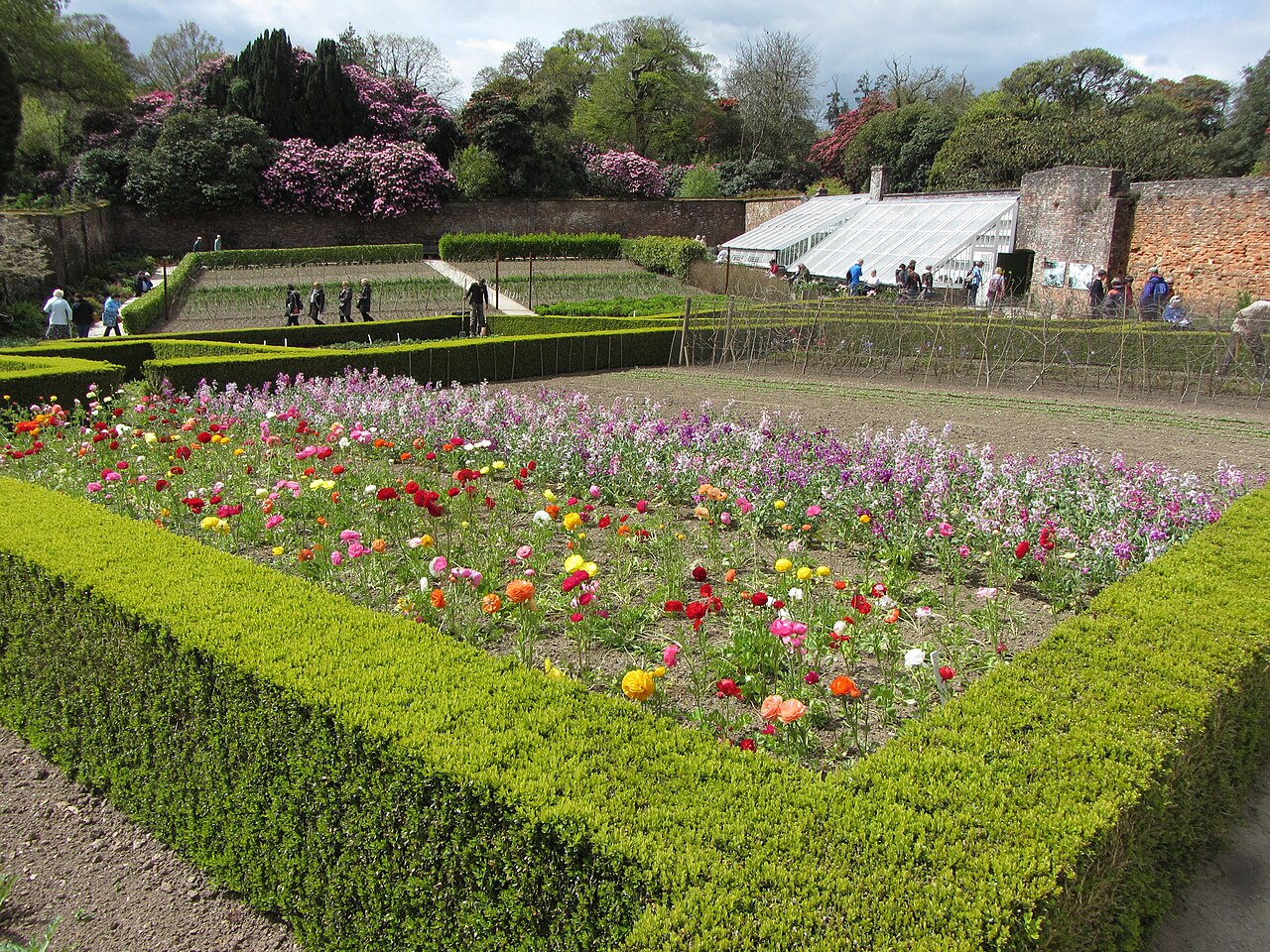
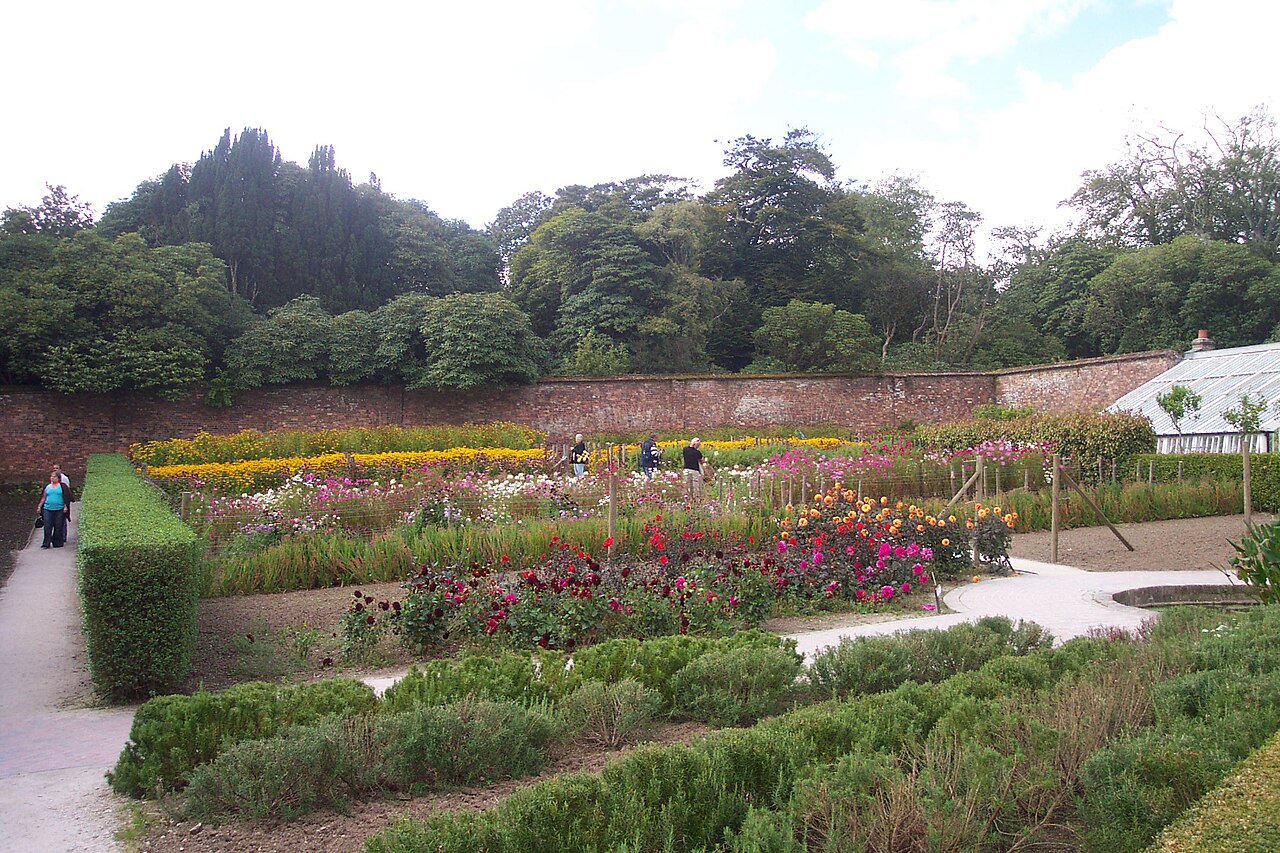
North of Heligan House, two gardens enclosed by brick walls about 5 m high hold a group of nineteenth-century productive glasshouses: in the Flower Garden a citrus house, a vinery of 'Paxtonian' form, a peach house and a small banana house; in the Melon Yard a melon house and a pineapple pit heated with manure. Left derelict in the mid-twentieth century, the gardens were rediscovered in 1990 and restored, the Melon Yard from 1992 and the Flower Garden in 1994. They now produce heritage fruit and vegetables using Victorian methods.
Affiliate links — booking through Verrière helps fund our research, at no extra cost to you.
History
1 min
Heligan passed to the Tremayne family in 1569, when Sampson Tremayne acquired the estate. The walled gardens north of the house go back to the late eighteenth century: after Henry Hawkins Tremayne inherited in 1766, Thomas Gray supplied a plan of intended alterations that already shows an enclosure matching today's Flower Garden and the curved wall of the later Melon Yard. The 1839 tithe map shows both gardens in their present form. Under John Hearle Tremayne, between 1829 and 1851, the pineapple pit was in use, and the estate dates the glasshouse known as the Paxton House to 1855.
The First World War marked a break. In August 1914 members of staff signed the wall of the Thunderbox Room; in 1916 the house became a convalescent home for officers, and shelter-belt trees were felled for the war effort. During the Second World War the house was used by American troops training for the Normandy landings. The productive gardens fell out of cultivation in the mid-twentieth century, and around 1970 the house was divided into flats.
In 1990 Tim Smit and John Willis, a Tremayne descendant, came upon the derelict gardens, and restoration went ahead under Tim Smit and John Nelson. The gardens opened to visitors at Easter 1992, the year the Melon Yard structures were restored. The Flower Garden followed in 1994, pineapples fruited again in 1997, and the Pencalenick glasshouse, acquired and restored in 1998, now stands beside the Flower Garden. The gardens are registered at Grade II on England's Register of Parks and Gardens.
Architecture and engineering
1 min
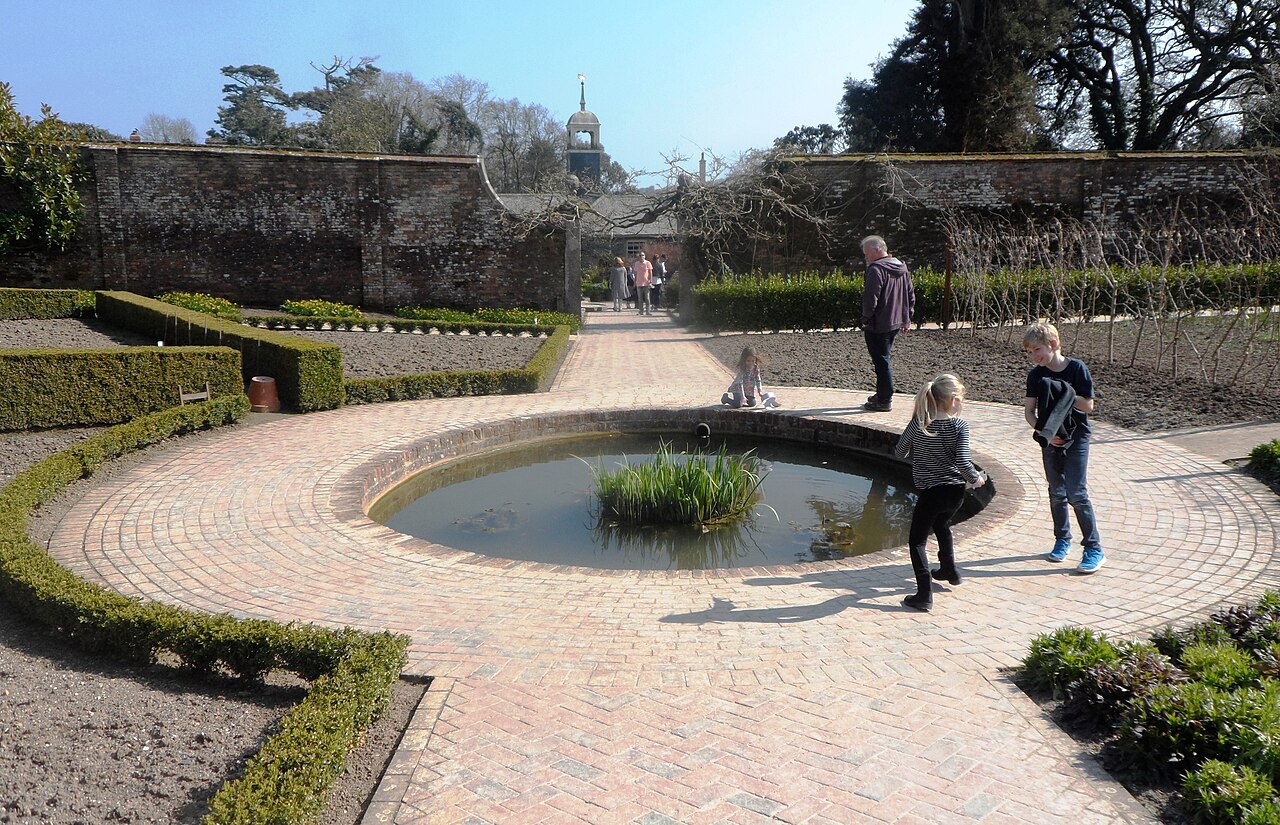
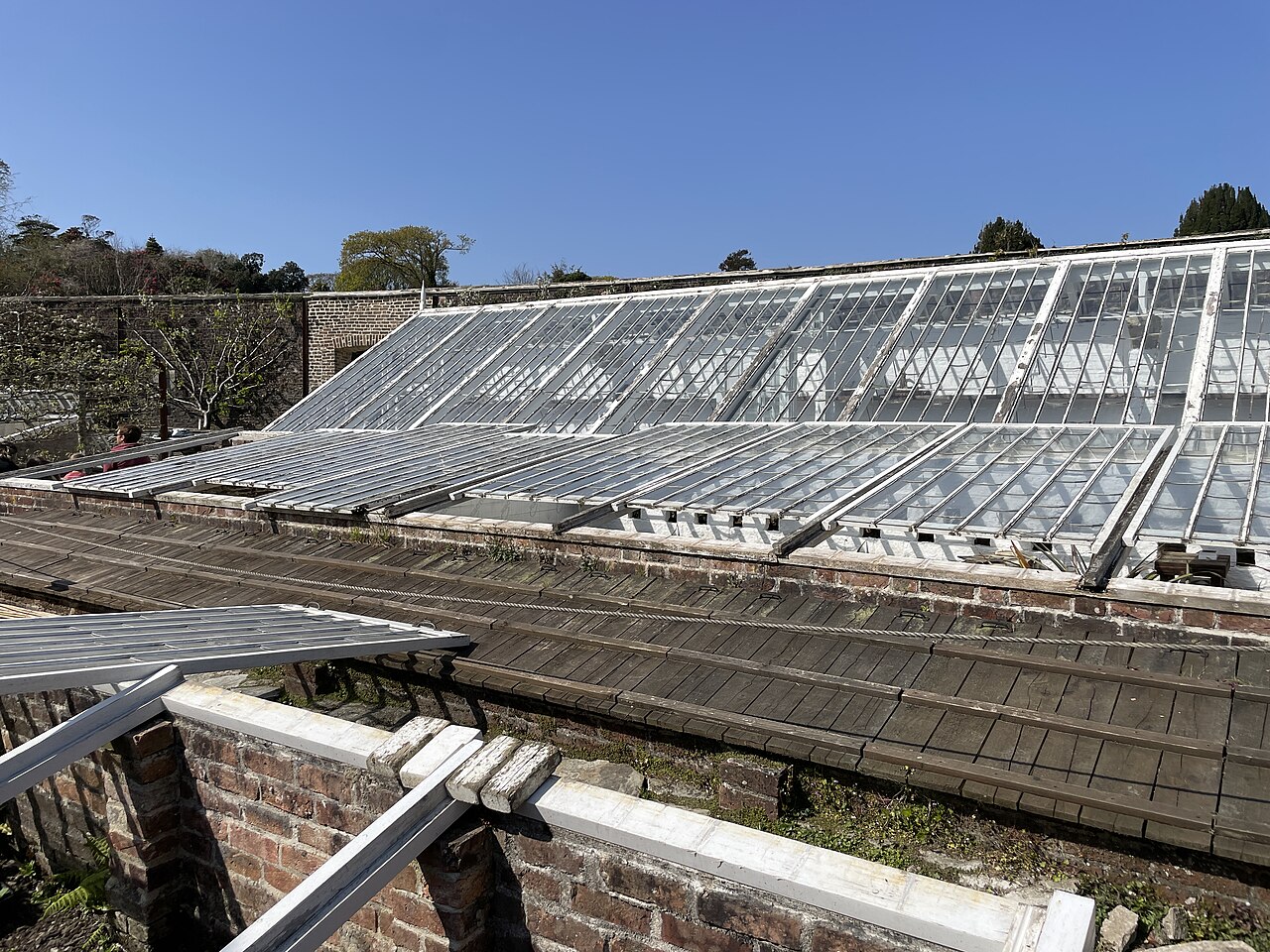
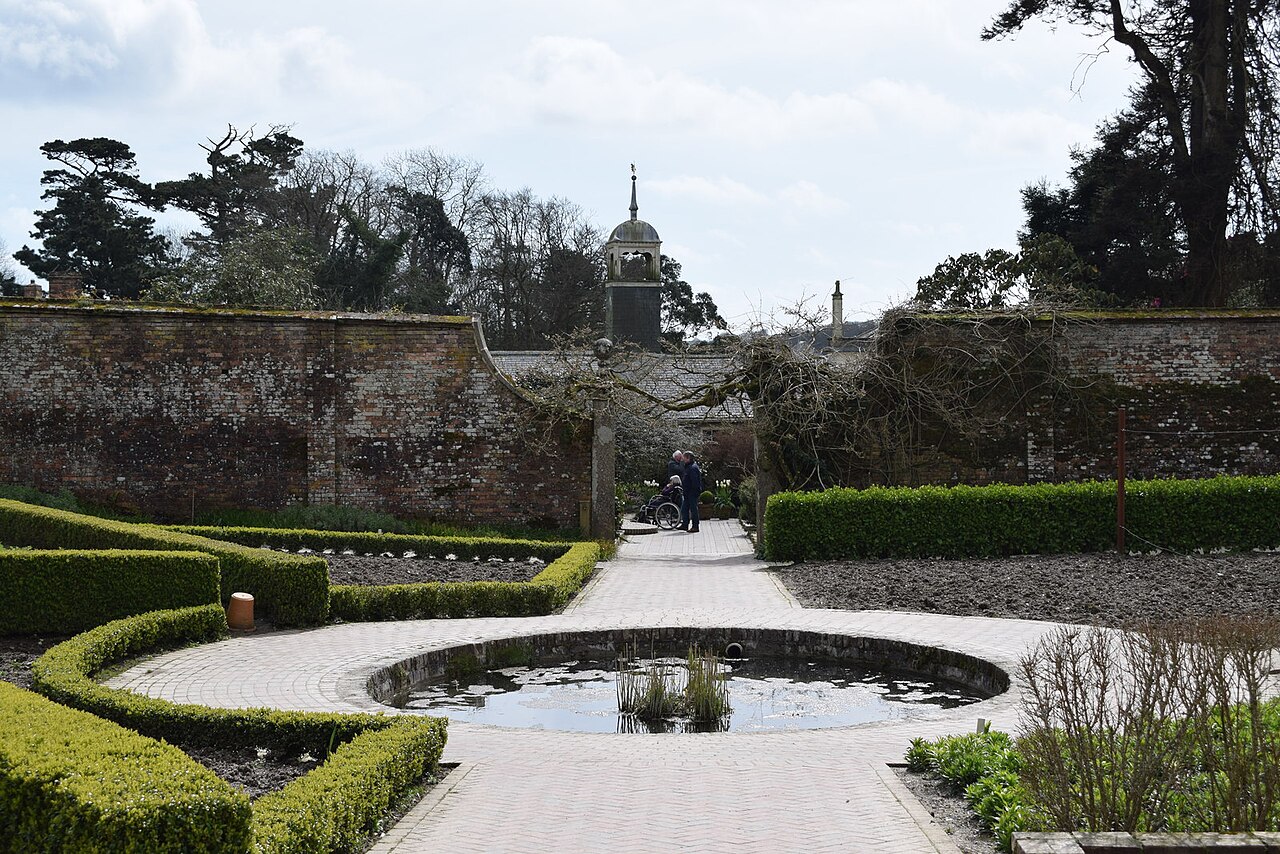
The Flower Garden is a trapezoid enclosed by late eighteenth-century walls of imported brick, about 5 m high, with a central brick-paved walk leading to a circular dipping pool. Its glasshouses have lean-to glass roofs and rest against the masonry: a citrus house and a vinery of 'Paxtonian' form line the inner face of the north wall, and a peach house runs along the east wall. On the outer face of the north wall stand the gardeners' bothy, an office and a small square glasshouse built for bananas. One local account describes the Paxton House as a Paxton patent type, a standard design delivered in parts and put together on site.
The Melon Yard to the north is segmental on plan, closed by a curved brick wall of similar height. Along its central walk the pineapple pit and the melon house stand to the east, with three ranges of cold frames to the west. The pit is heated by fresh horse manure heaped into trenches beside it, its fermentation keeping up the warmth pineapples demand. A nearby early nineteenth-century wall holds three tiers of arched recesses made for straw bee skeps.
Plant collections
1 min
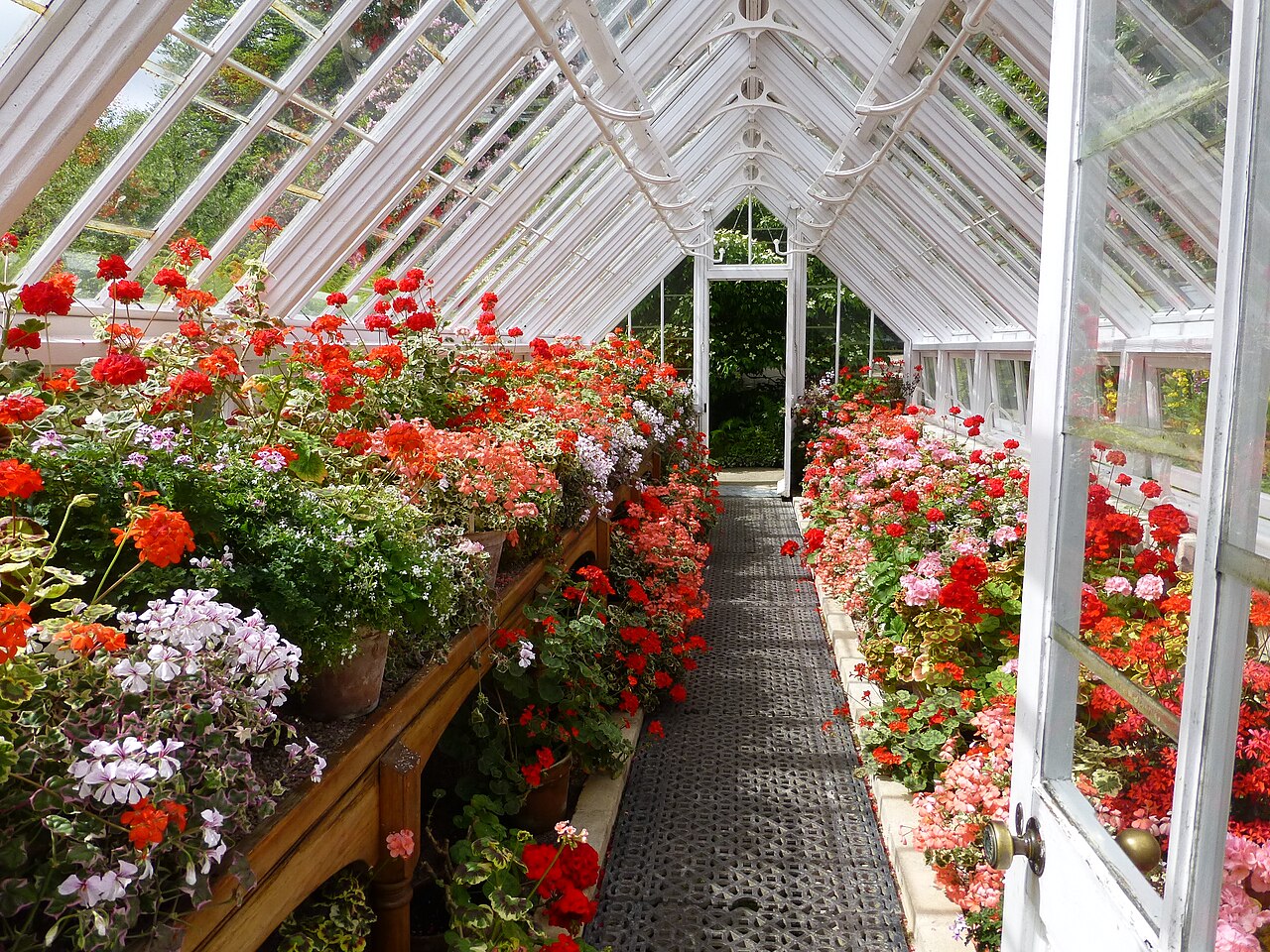
These glasshouses remain working spaces rather than showcases. The peach house holds trained peach and apricot trees, the vinery pairs grape vines with heritage tomatoes, and the historic houses also display rare succulents and scented pelargoniums. Melons, cucumbers and citrus are grown under glass as well, while the pineapples in the Melon Yard ripen over the summer months.
Taken together with the Kitchen Garden, the productive gardens grow more than 300 varieties of fruit, vegetables, salad and herbs through the year, most of them heritage kinds, to supply the estate's kitchen. The gardeners follow nineteenth-century practice, from Victorian crop rotation to double digging with generous amounts of well-rotted manure.
Visiting
1 min
The productive gardens lie in the north of the estate, about 200 m from the visitor centre. The Melon Yard, Kitchen Garden and Flower Garden can be walked in sequence, taking in the potting shed, still in daily use, and the Thunderbox Room, recognised by the Imperial War Museum as a living memorial to the gardeners of Heligan House. Summer is the best season to see pineapples and other fruit ripening under glass. The visit continues naturally to the Italian Garden, laid out in 1906-1907, and the Sundial Garden, and the Eden Project, also in this atlas, lies about 10 km to the north-east.
50.28° N, 4.81° W
Greenhouses nearby

More greenhouses — United Kingdom

Do you have a good photo of this greenhouse? Suggest it for this page →
Sources (6)
- heligan.com/explore-heligan/our-story/timeline/
- heligan.com/explore-heligan/gardens/productive-gardens/
- heligan.com/plan-your-visit/when-to-visit/heligan-in-the-summer/
- parksandgardens.org/places/lost-gardens-of-heligan-the
- cornwallincolours.blog/2018/11/03/six-on-saturday-lost-gardens-of-heligan/
- openstreetmap.org/way/161870923