Eden Project
Bodelva, Cornwall

Sources checked October 2026
- Year
- 2001
- Architect
- Grimshaw Architects
- Style
- Geodesic ETFE domes
- Dimensions
- Tropical Biome: 50 m tall, about 16,000 m² (according to Eden)
- Status
- Open to the public
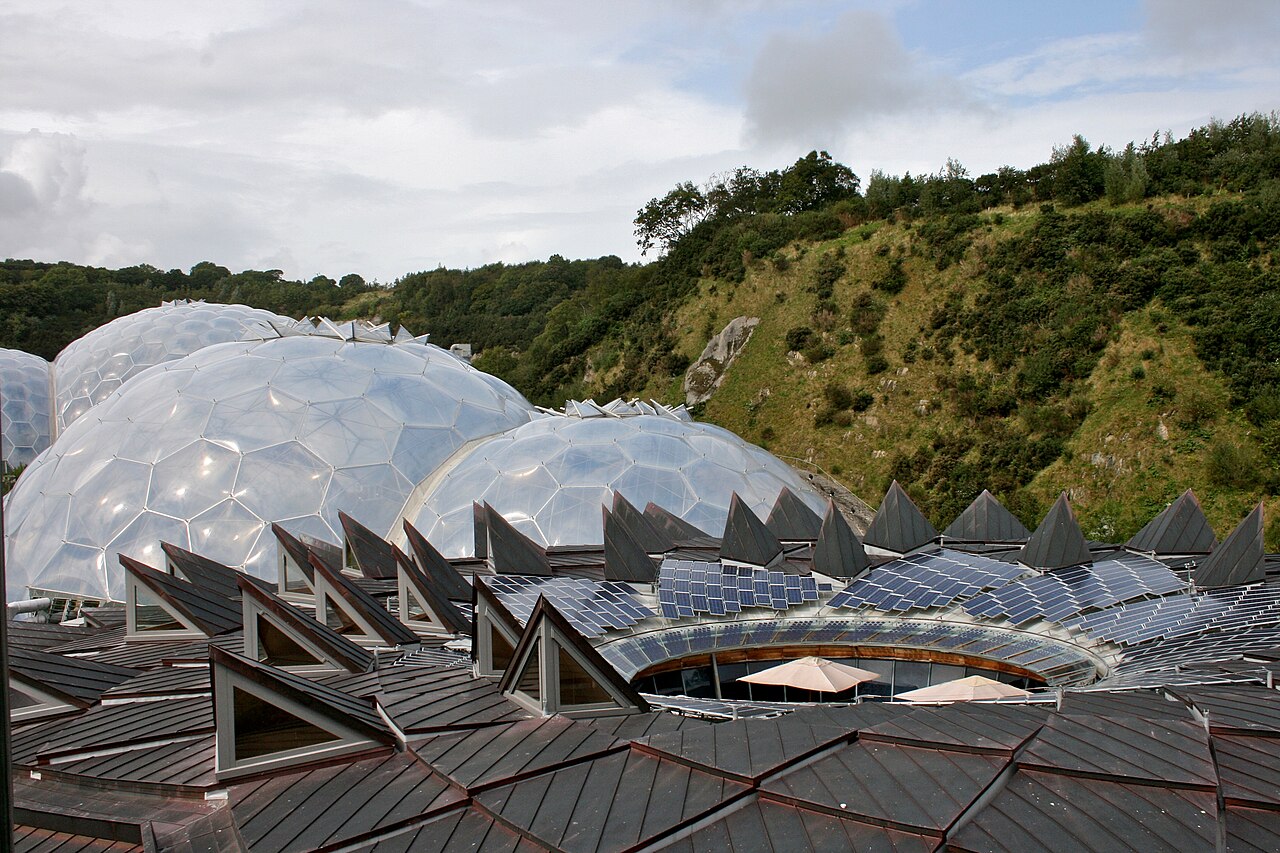
Built at the bottom of a former china clay pit exhausted after more than 160 years of mining, the Eden Project replaces glass with inflated ETFE cushions, a plastic a hundred times lighter. Two geodesic biomes recreate a humid rainforest and a Mediterranean climate beneath the same skyline of bubbles. The project, conceived by Tim Smit, transformed a spent industrial site into one of Europe's most visited botanical attractions.
Affiliate links — booking through Verrière helps fund our research, at no extra cost to you.
Practical info
- Tickets
- General ticket valid for a year (October 2026 prices): adult £35.50 online, £39.50 on the door; child 5-15 £12.50 online, £15 on the door; student £32; under 5s free. Biomes and Gardens included.
- Opening hours
- 2-19 Nov: 10am-4pm on weekdays (last entry 2.30pm); 10am-5pm on the weekends of 7-8 and 14-15 Nov (last entry 3.30pm). 20 Nov-2 Jan: 10.30am-8.30pm on selected dates (Christmas Lights, last entry 7pm), 10am-4pm on other days. Biomes open from 10.30am. Closed 25 Dec and 12-13 and 26-28 Jan 2027 (staff training and maintenance).
- Getting there
- Eden Project, Bodelva, St Austell, Cornwall PL24 2SG. Nearest station: St Austell (London Paddington main line), with a direct bus to the site; buses 28 and 31. Free parking, free park and ride at peak times.
Frequently asked questions
Are both Biomes included in the ticket?
The general ticket gives unlimited entry for a year to the Biomes, Gardens, many seasonal events, art exhibits and free daily tours. Christmas experiences cost extra.
Do I need to book?
Entry is not guaranteed without a booking: reserving a time slot is strongly encouraged, especially in school holidays (except for Members). Tickets can be booked up to 31 March 2027.
How long should I allow?
Eden suggests about 1 hr 30 for the Rainforest Biome and 1 hr for the Mediterranean Biome; a full day leaves time for the Outdoor Gardens and the Core.
Do young children pay?
Up to four under-5s per accompanying adult get in free. A child ticket is needed from 5 to 15; children aged 0 to 13 must be accompanied by an adult.
History
The Eden Project fills a former china clay pit near Bodelva in Cornwall, worked for more than 160 years and exhausted by the mid-1990s. The idea of turning this industrial crater into a global garden, championed by Tim Smit, dates from 1996. Construction began in 1998 and took two and a half years, at a cost of around £141 million.
The early stages were testing. The floor of the pit lay some 15 metres below the water table, and torrential rain fell on the site during the first three months of work, so engineers had to devise a dedicated drainage system. A visitor centre opened in May 2000, and the full site, with its two biomes, opened on 17 March 2001.
The Core, an education building, followed in September 2005, and the Eden Sessions concerts have been held each summer since 2002. In December 2020 landslips caused by heavy rain forced a temporary closure, followed by a pandemic shutdown; the site reopened in May 2021. Since 2023 a deep geothermal well has supplied heat to the site. The model has spread, with Eden projects under way in Morecambe and Dundee.
Architecture and engineering
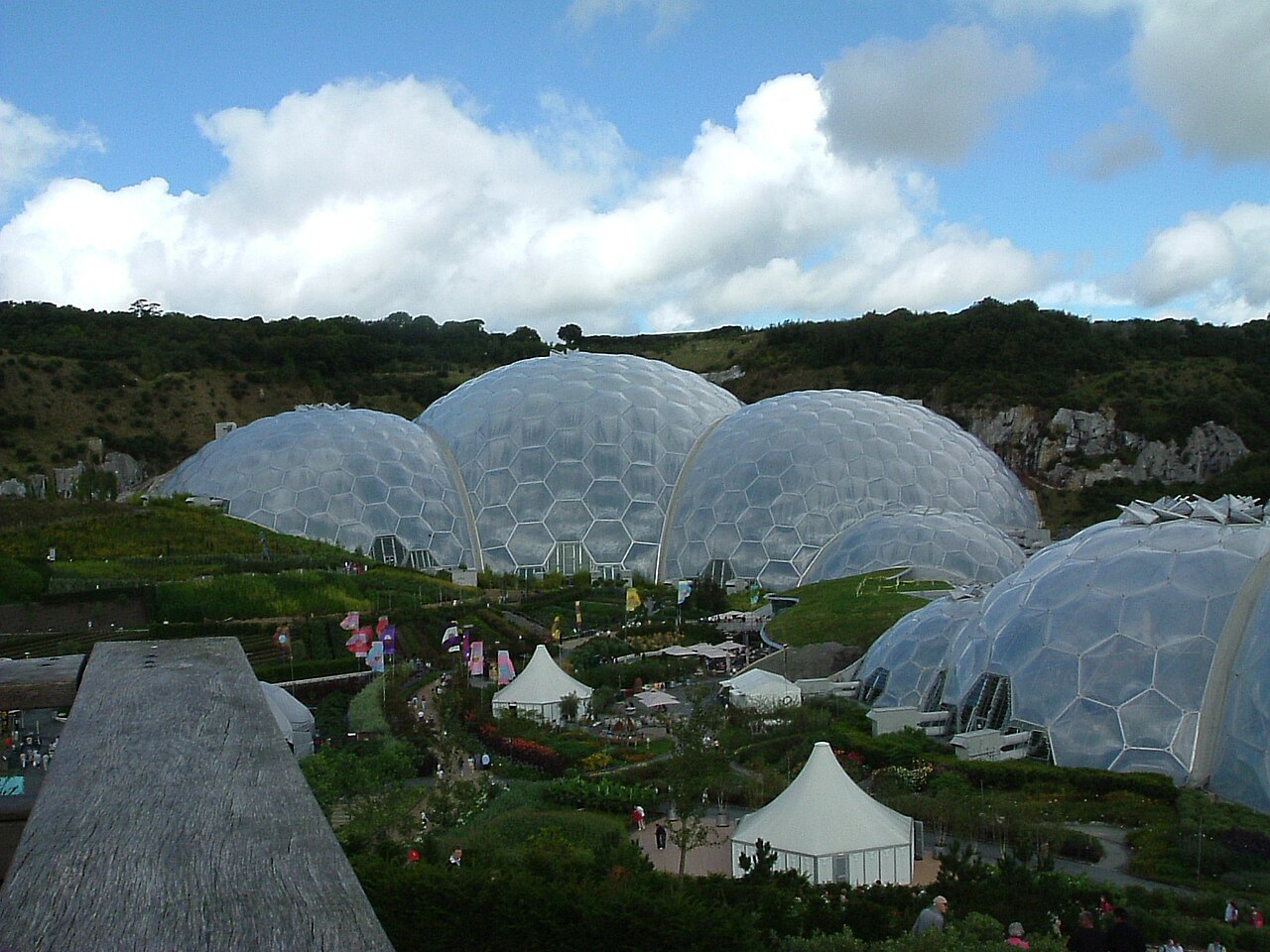
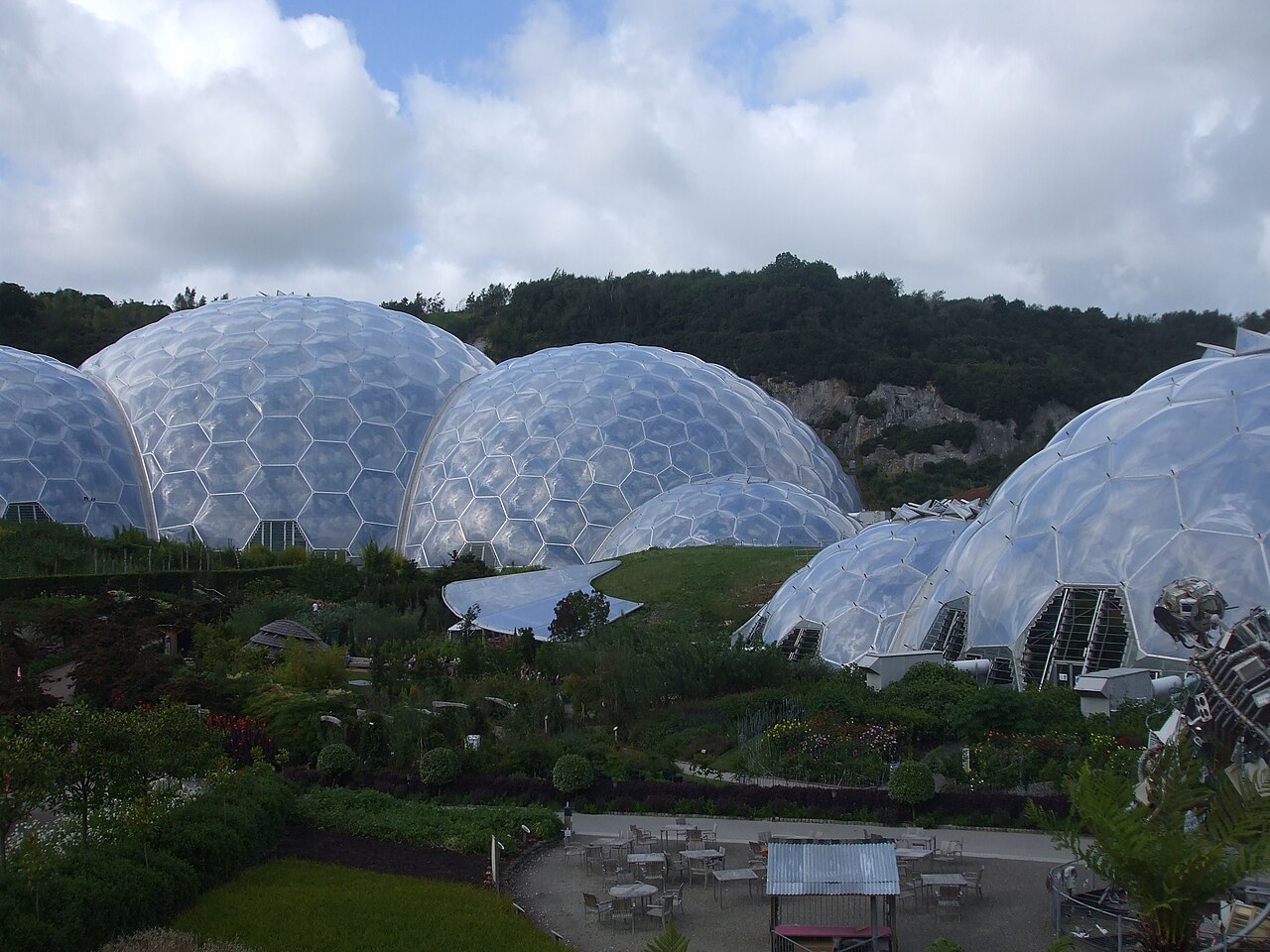
Designed by Grimshaw Architects with structural engineers Anthony Hunt and Associates and services engineers Arup, the biomes draw on Buckminster Fuller's geodesic domes and on the way soap bubbles settle over uneven ground. This geometry lets the interlocking domes adapt to the broken terrain of the pit.
The frame is a two-layer tubular steel space frame of hexagons and pentagons, the largest hexagons spanning up to 11 metres. Instead of glass, the cells are filled with three-layer cushions of inflated ETFE that weigh less than 1% of an equivalent area of glass, transmit ultraviolet light and are partly self-cleaning. Ground anchors stop the very light structures from lifting.
According to Eden, the Rainforest Biome covers about 16,000 square metres and stands 50 metres high; the Institution of Civil Engineers gives its height as 55 metres. The Mediterranean Biome covers some 6,540 square metres and is 30 to 35 metres high. Building them required 230 miles of scaffolding, a Guinness world record.
Plant collections
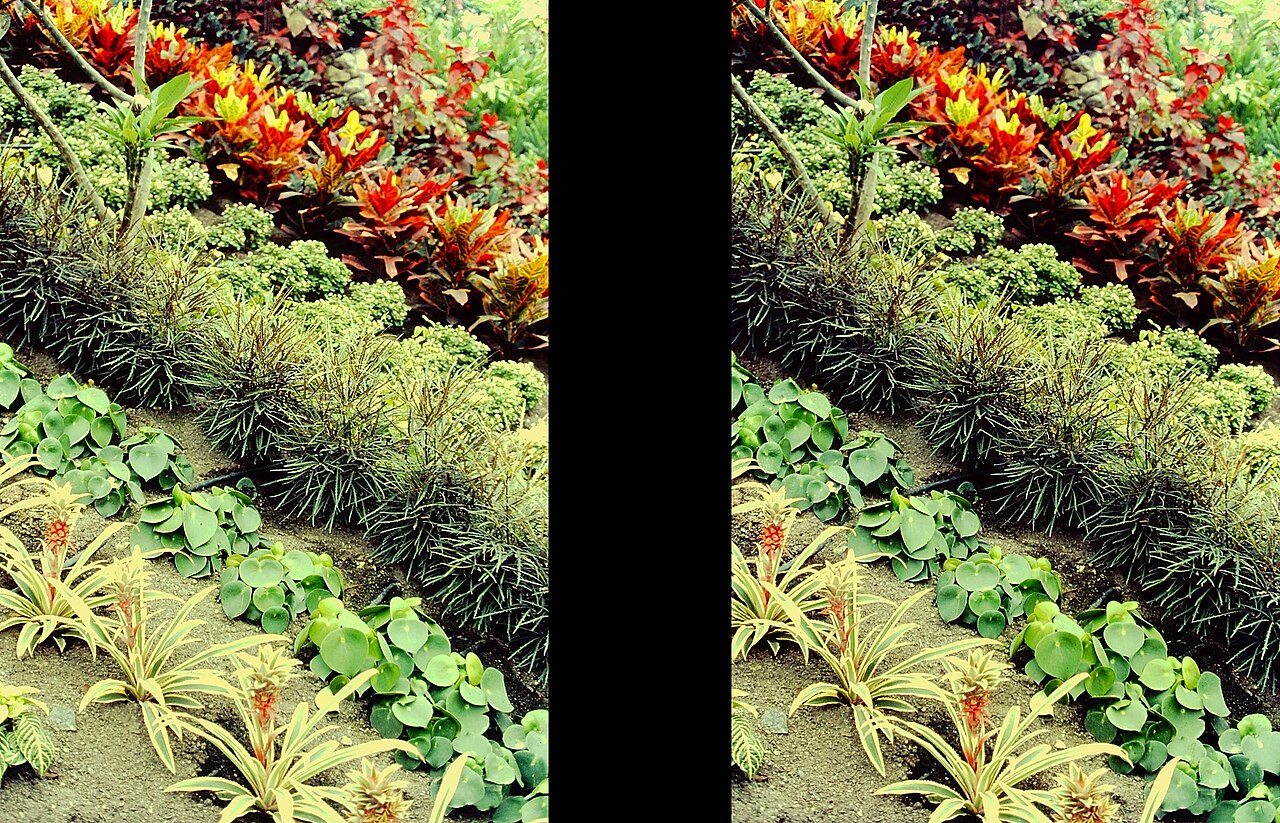
The Rainforest Biome, billed as the largest indoor rainforest in the world, holds more than 1,000 plant varieties from Southeast Asia, West Africa, South America and tropical islands. The emphasis is on useful plants: cacao, rubber, bananas, vanilla, Arabica coffee, sugar cane and oil palm. Rarities such as jade vine and titan arum appear from time to time. Temperatures range from 18 to 35 °C, and roul-roul partridges roam freely.
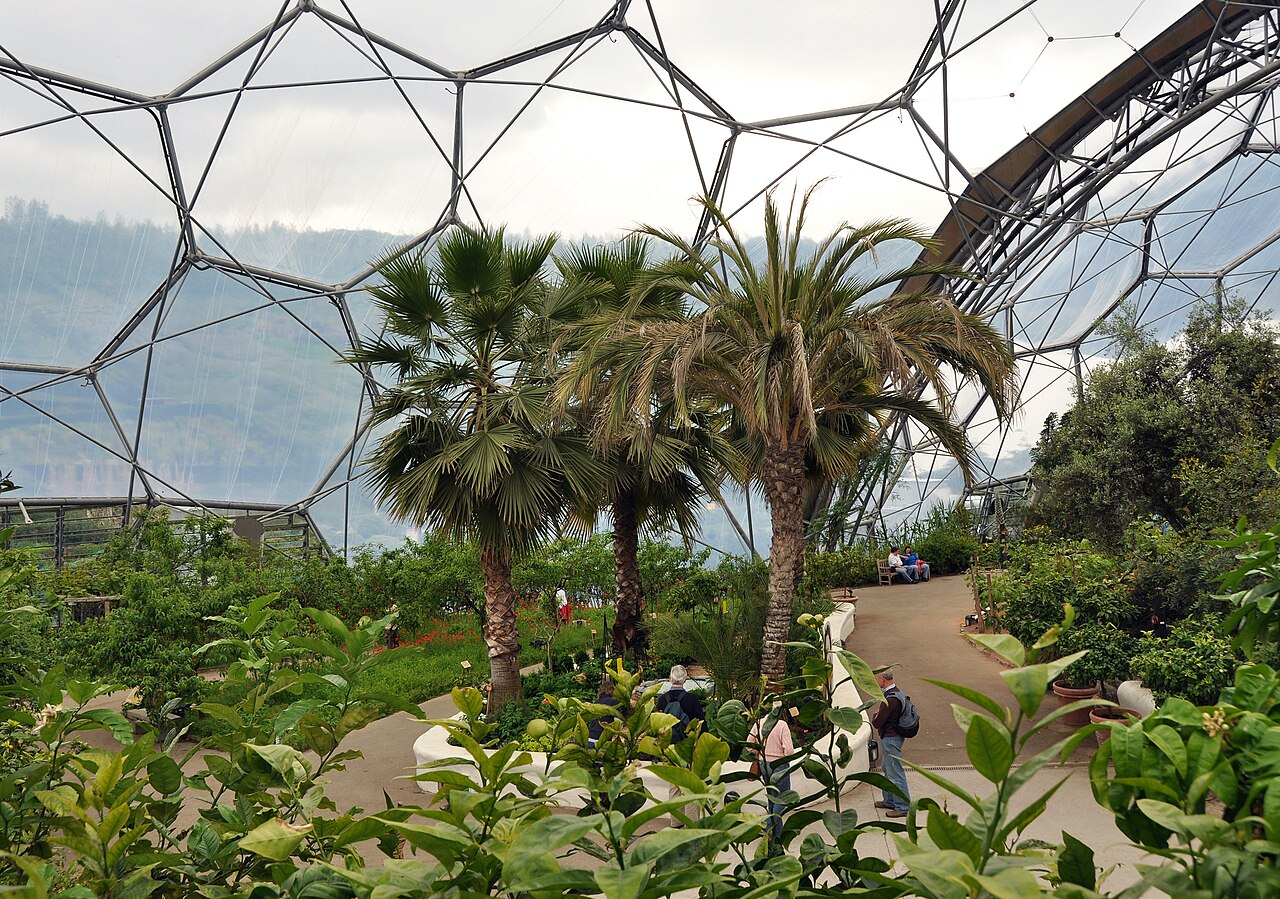
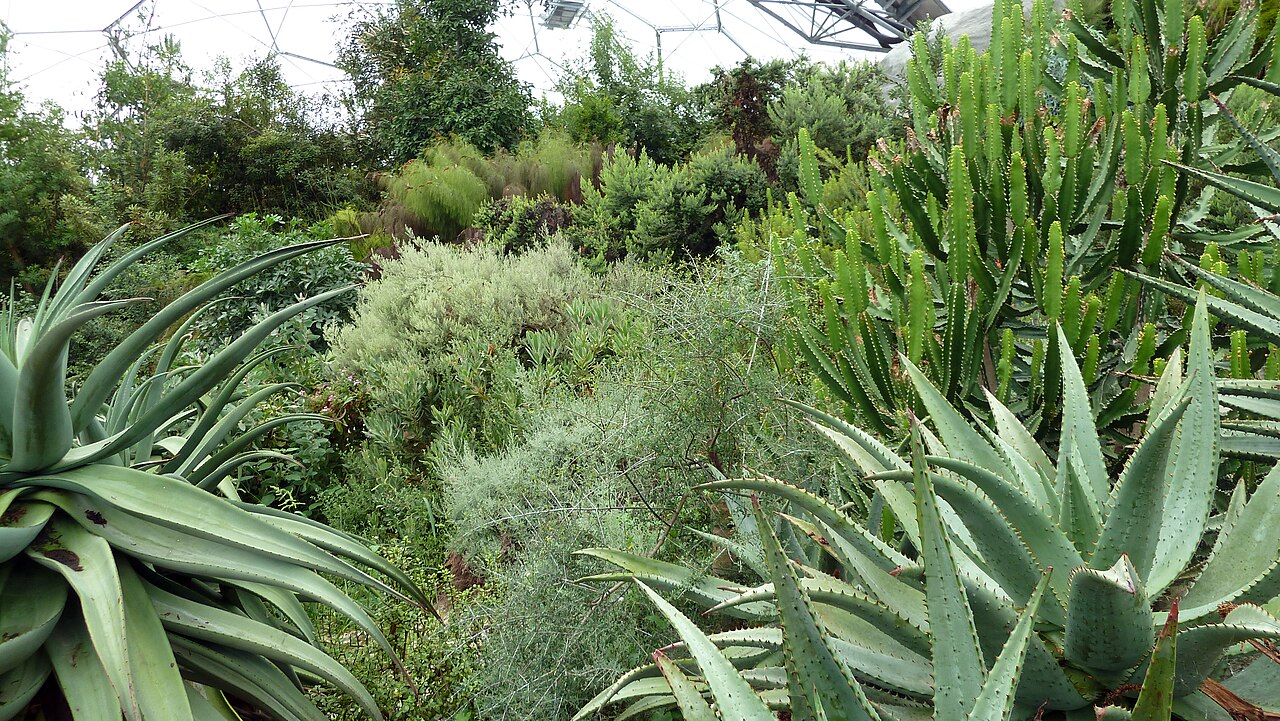
The Mediterranean Biome, kept between 9 and 25 °C, also holds over 1,000 varieties, drawn from the Mediterranean basin, California, South Africa and Western Australia: ancient olives, cork oaks, grapevines, bougainvillea, citrus including Buddha's hand, the proteas and aloes of a recreated fynbos, and a perfume garden. Sculpture shares the space with the plants, notably Tim Shaw's The Rites of Dionysus.
Visiting
The biomes sit at the bottom of the pit, reached by paths that wind down through the outdoor gardens. Eden suggests allowing about an hour and a half for the Rainforest Biome and an hour for the Mediterranean; a full day leaves time for the outdoor gardens and the Core as well.
In the rainforest a walkway crosses the canopy and a lookout rises above it, although access depends on how hot the biome is that day. In summer the Eden Sessions concerts bring the site to life.
50.36° N, 4.74° W
Greenhouses nearby
More greenhouses — United Kingdom
Do you have a good photo of this greenhouse? Suggest it for this page →
Affiliate links — booking through Verrière helps fund our research, at no extra cost to you.