Osher Rainforest (California Academy of Sciences)
San Francisco, California
Entry updated on October 5, 2026
- Year
- 2008
- Architect
- Renzo Piano Building Workshop with Stantec Architecture
- Style
- Glass sphere within a museum with a living roof
- Dimensions
- Glass dome 27 m (90 ft) in diameter; rainforest on four levels
- Status
- Open to the public (as part of a museum visit)
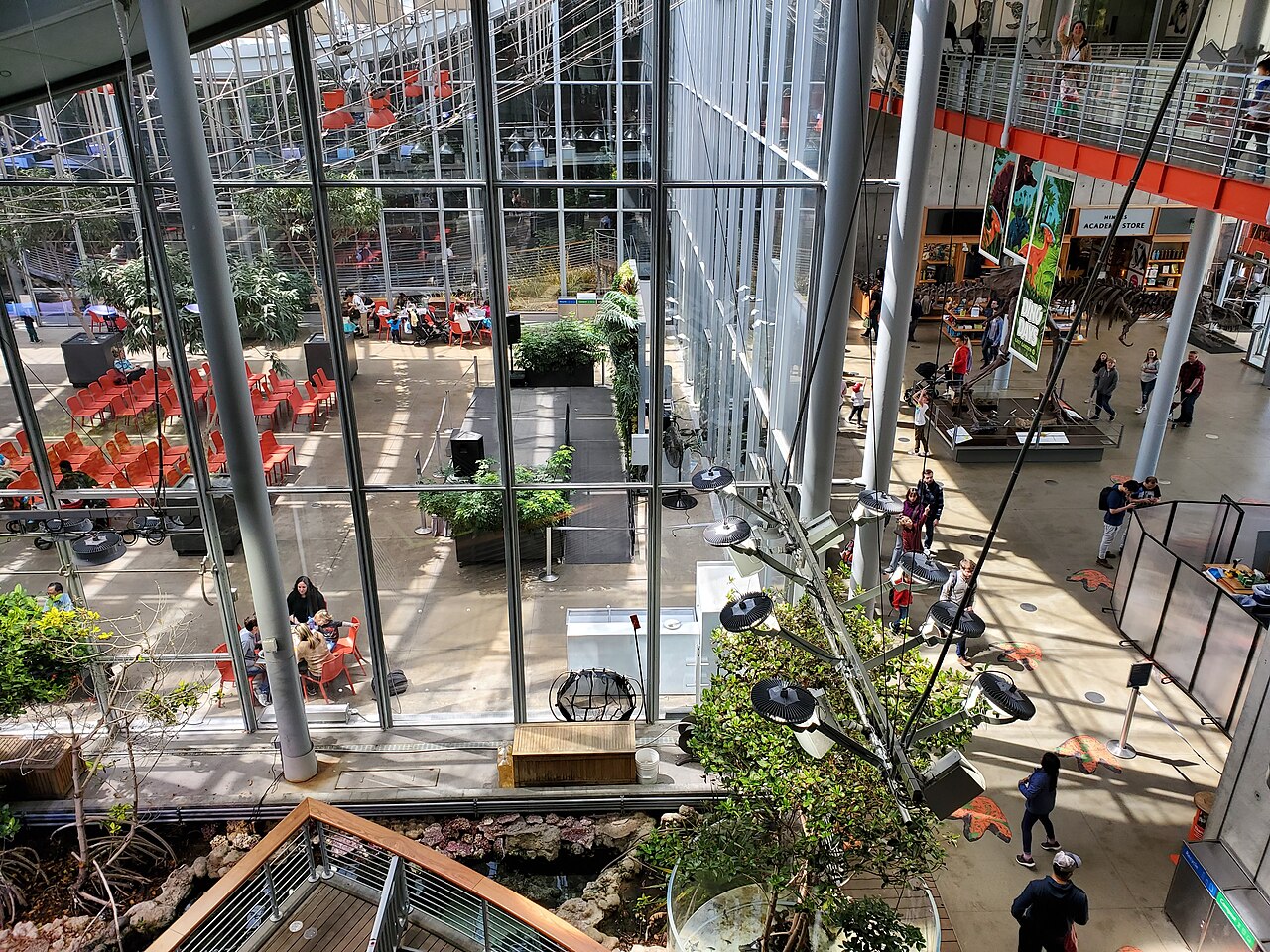
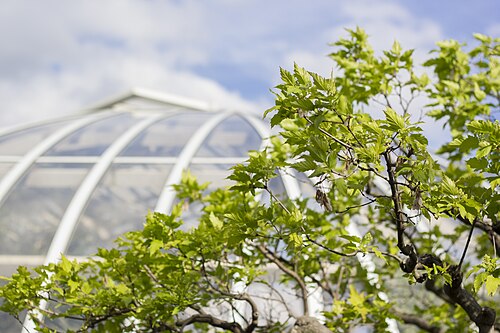
At the heart of the building Renzo Piano designed for the California Academy of Sciences, reopened in 2008 in Golden Gate Park, a glass sphere 90 feet (27 m) across encloses a four-storey tropical rainforest. Kept at 82–85 °F (28–29 °C) with humidity of 75 percent or more, it houses over 1,600 live animals, including 250 free-flying birds and butterflies. From the canopy, a lift descends to an Amazonian flooded forest, seen from an acrylic tunnel submerged in a 100,000-gallon (≈380,000-litre) tank.
Affiliate links — booking through Verrière helps fund our research, at no extra cost to you.
History
1 min
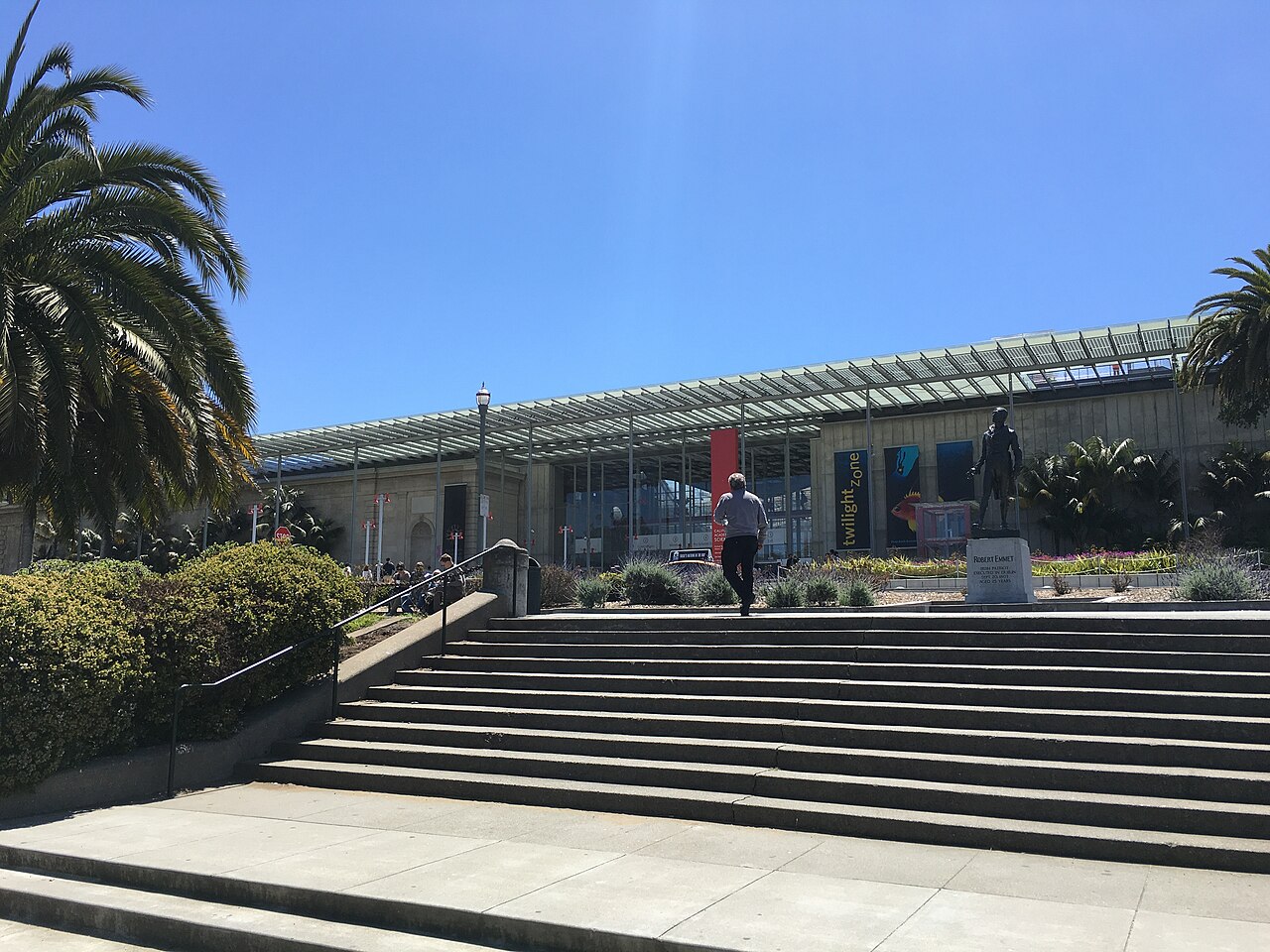
Founded in 1853, the California Academy of Sciences lost its Market Street building in the 1906 earthquake and then settled in Golden Gate Park. In 1989 the Loma Prieta earthquake caused severe damage to the Steinhart Aquarium. The Academy eventually chose to replace its buildings: from 2000 to 2008 the Renzo Piano Building Workshop led the project with Stantec Architecture of San Francisco, with engineering by Ove Arup & Partners, landscape design by SWA Group and the living roof by Rana Creek.
During the works, the exhibits moved temporarily to 875 Howard Street. Construction of the new building, put at 500 million dollars, began on 12 September 2005. According to Piano's studio, three older buildings were retained and incorporated: African Hall, North American Hall and the Steinhart Aquarium.
The museum reopened on 27 September 2008. The rainforest occupies one of the new building's two large domes, the other housing the Morrison Planetarium. The building achieved LEED Platinum certification, which the architects describe as a first for a museum. The Academy now presents its rainforest as the largest exhibit of its kind in the world, and announces short closures for maintenance from time to time.
Architecture and engineering
1 min
The rainforest is enclosed in a glass sphere 90 feet (27 m) in diameter, inside which the neotropical forest rises 90 feet. It is arranged on four levels: from the canopy, a lift descends four storeys to the Amazonian flooded forest, where an acrylic tunnel passes through a 100,000-gallon (≈380,000-litre) tank. The temperature is held at 82–85 °F (28–29 °C) and the humidity at 75 percent or above.
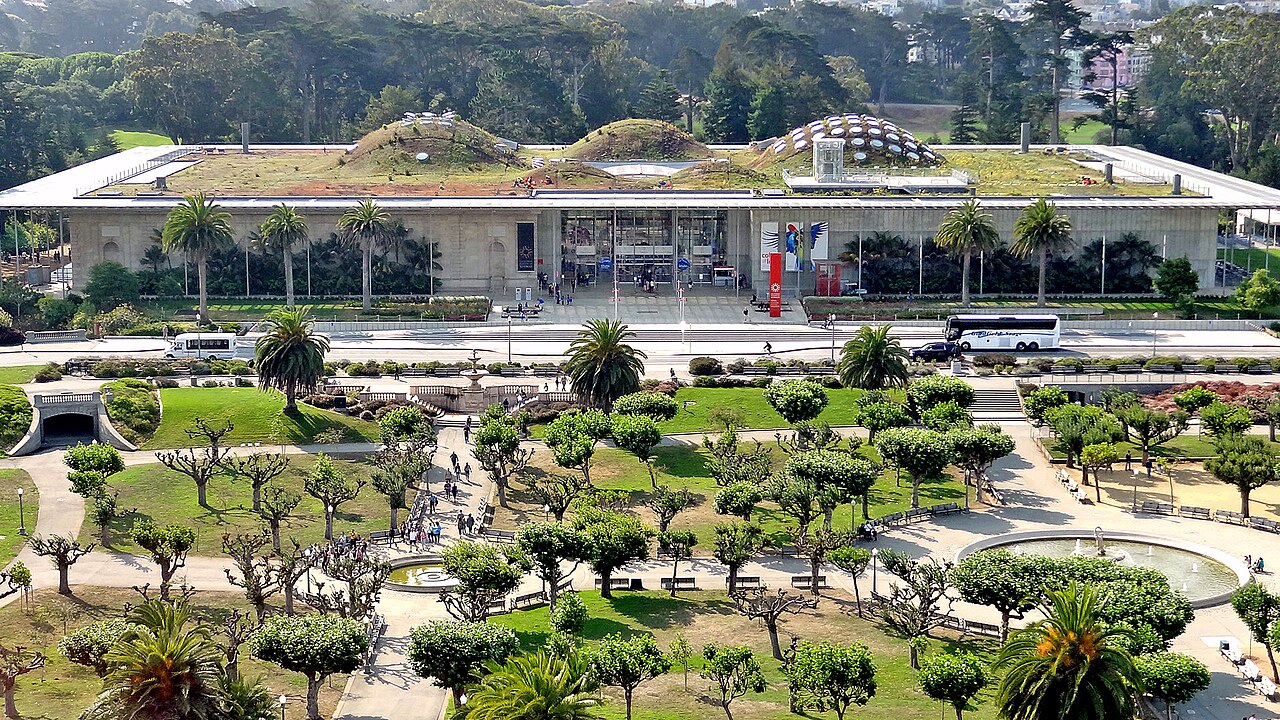
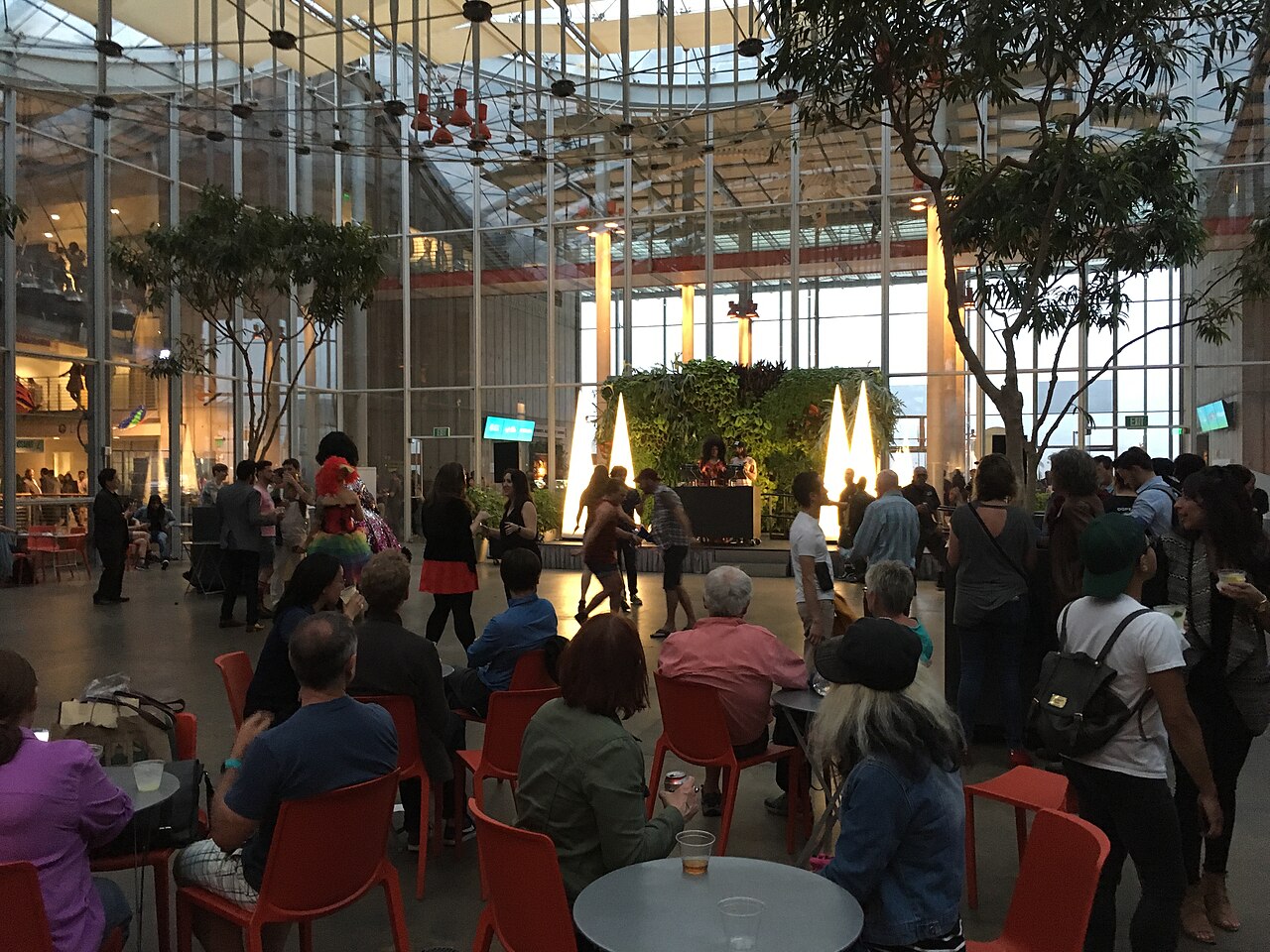
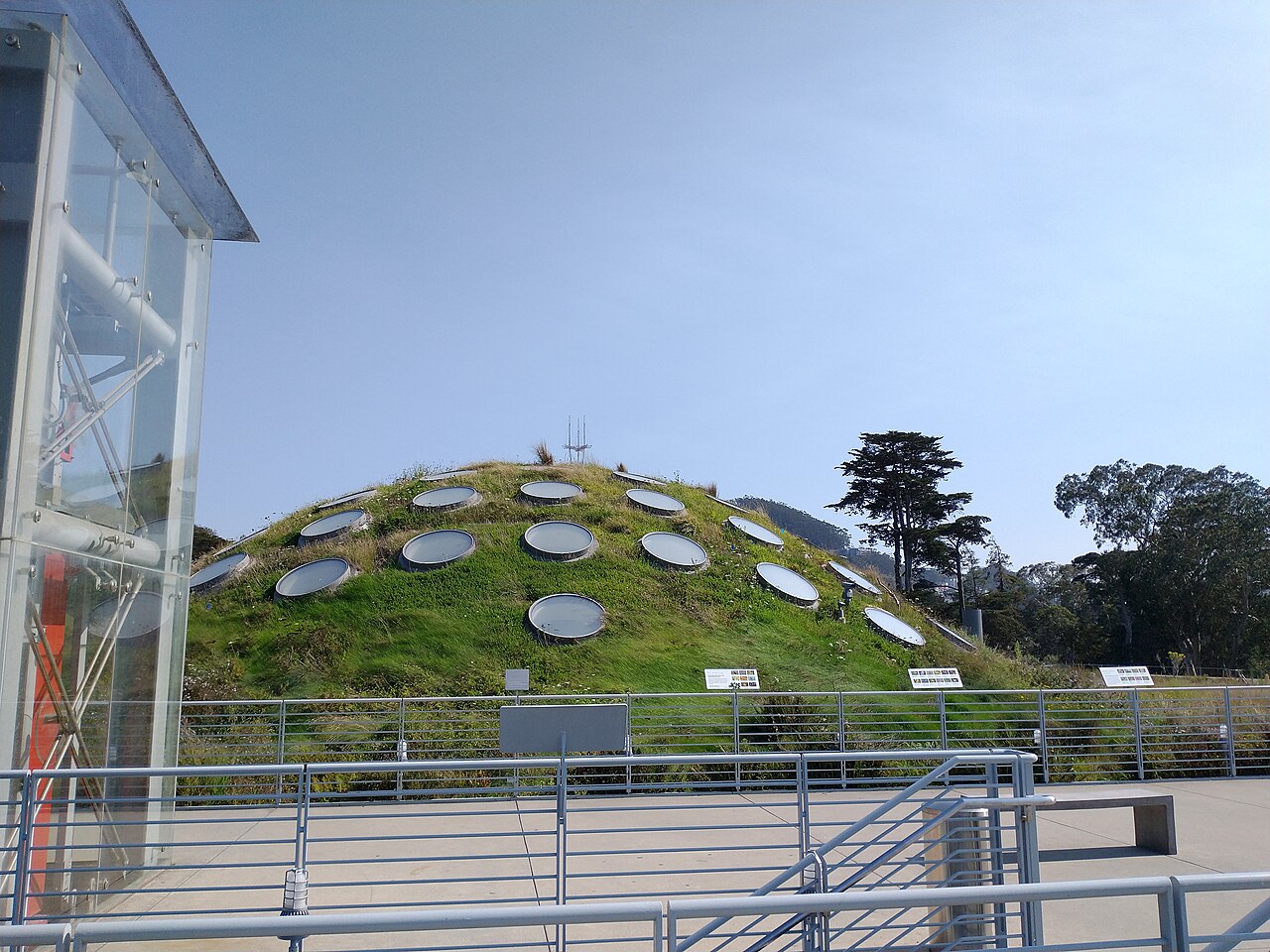
The sphere sits within Renzo Piano's 37,000 m² building. Its 2.5-acre (≈1 ha) living roof, planted with 1.7 million California native plants in biodegradable coconut-fibre containers, undulates over the domes, which are pierced by automated skylights that open and close to ventilate the interior. The central piazza is covered by a concave glass canopy with a web-like lattice, open at its centre to let in air and light. The roof's 60,000 photovoltaic cells meet more than 5 percent of the museum's electricity needs, and construction used 20,000 cubic yards of recycled concrete and 11 million pounds of recycled steel.
Plant collections
1 min
More than 1,600 live animals inhabit the dome, including 250 free-flying birds and butterflies and close to 100 exotic reptiles and amphibians. Leafcutter ants, golden silk orb-weaver spiders, an Amazonian tree boa, poison-dart frogs and blue morpho butterflies are among them; on the top level, an emergence chamber shows butterflies leaving their chrysalises.
The neotropical planting combines trees such as the Brazilian beauty leaf and West Indies mahogany with cacao, philodendrons, begonias, orchids and bromeliads. In the flooded forest, cichlids dart through the roots of a cluster of mangroves while turtles, arowanas, arapaima, catfish and pacus glide overhead.
Visiting
1 min
The rainforest is on the main floor of the California Academy of Sciences, across from the Academy Café, in Golden Gate Park, and is seen as part of a museum visit. Allow an hour to climb to the canopy, pause at the butterfly emergence chamber and ride the lift down to the flooded-forest tunnel. The same visit takes in the Steinhart Aquarium and the Morrison Planetarium.
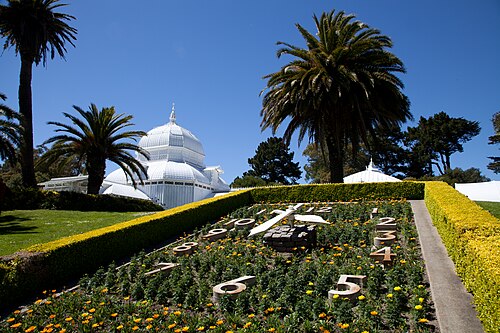
Less than 600 metres to the north-east, the Conservatory of Flowers, the park's great Victorian glasshouse, completes the day.
37.77° N, 122.47° W
Greenhouses nearby
More greenhouses — United States
Do you have a good photo of this greenhouse? Suggest it for this page →