Tropical Butterfly House, Pacific Science Center
Seattle, Washington
No freely licensed photo of this greenhouse yet. Do you have one? Suggest it for this page →
Sources checked October 2026
- Year
- 1998
- Architect
- Science centre campus: Minoru Yamasaki, 1962
- Style
- Climate-controlled butterfly house with glass wall and skylight, inside a museum building
- Dimensions
- 4,000 sq ft (≈ 370 m²)
- Status
- Open to the public (permanent exhibit included in general admission to Pacific Science Center)
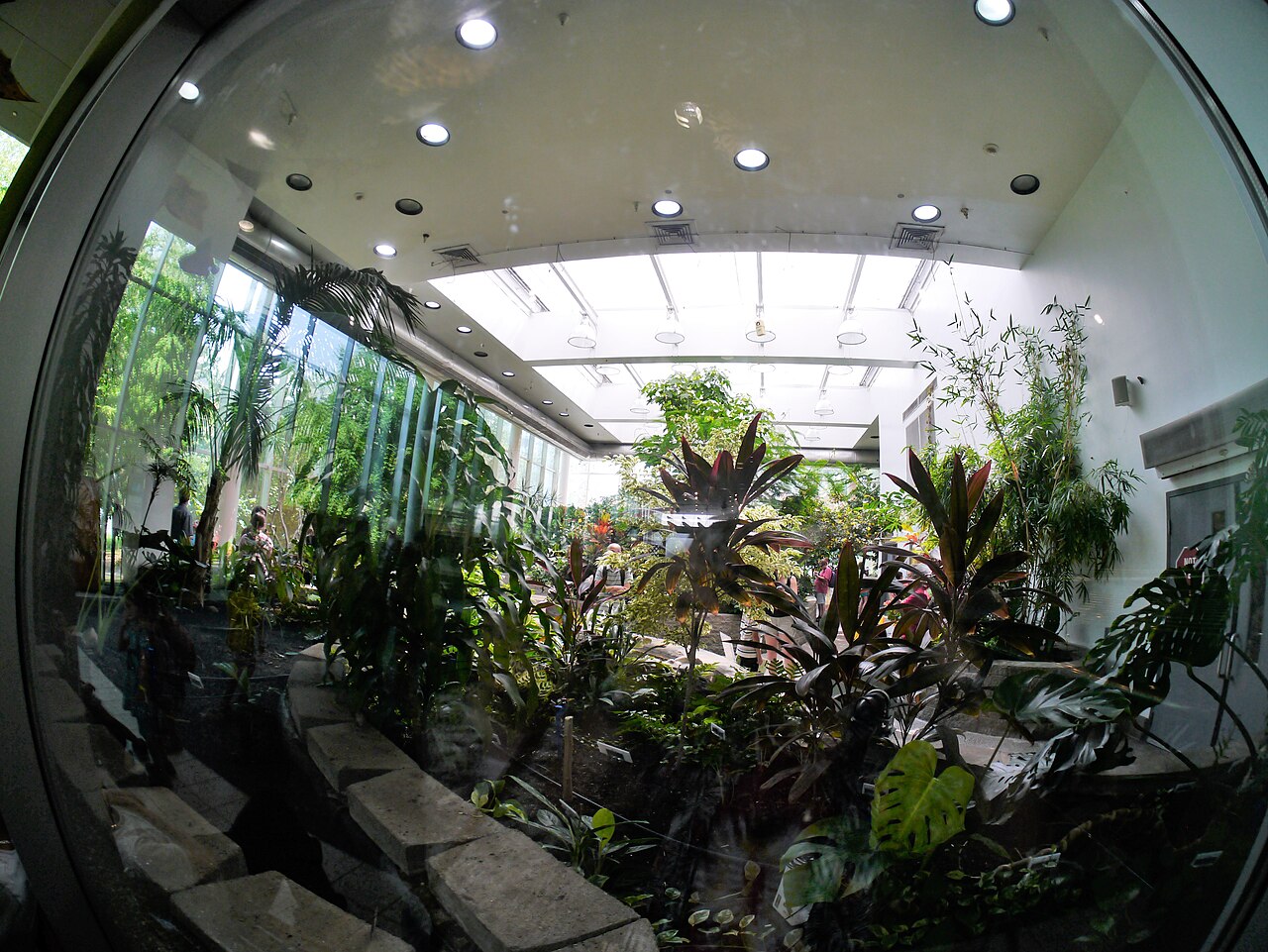
Opened in 1998 inside Seattle's Pacific Science Center, the Tropical Butterfly House covers 4,000 square feet (about 370 m²) of climate-controlled space where around twenty species at a time fly freely, some 1,100 butterflies according to The Seattle Times (March 2026), among about 575 tropical plants. A free-licence photograph from 2017 shows a floor-to-ceiling glass wall and a skylight above the vegetation; the press notes that the butterflies liven up when the sun comes out. The permanent exhibit is included in general museum admission, and the butterflies arrive as chrysalises from tropical breeding farms.
Affiliate links — booking through Verrière helps fund our research, at no extra cost to you.
History
The Tropical Butterfly House stands inside Pacific Science Center, founded in 1962 by reusing the United States Science Pavilion built for the Century 21 Exposition, Seattle's world's fair. The pavilion was designed by Minoru Yamasaki, and the campus has been a City of Seattle Landmark since 2010.
The butterfly house opened in 1998 according to The Seattle Times (March 2026); a visitor's blog of 2015 gives December 1998. The Pendleton & Elisabeth Carey Miller Charitable Foundation says it supported the house in 2006 and calls it the only one of its kind in Washington State; it is still among the supporters thanked on the official page. In 2024 the museum explained that its plants come from local suppliers with greenhouses, from growers elsewhere in the United States, including Florida, and from donations by the Woodland Park Zoo and the Amazon Spheres.
In February 2026 the centre announced the sale of the north-east corner of its campus to the Space Needle company: Building 1, the Carnevali Pavilion, the Boeing IMAX Theater and part of the Ackerley gallery. The butterfly house is not in that list, and The Seattle Times described it as operating the following month.
Architecture and engineering
A free-licence photograph of 10 August 2017 shows, on one side, a floor-to-ceiling glass wall and, overhead, a skylight lighting the vegetation, with blocks of stone in the foreground. The press notes that the butterflies liven up when the sun comes out and that the room reached 85 °F on a fine day.
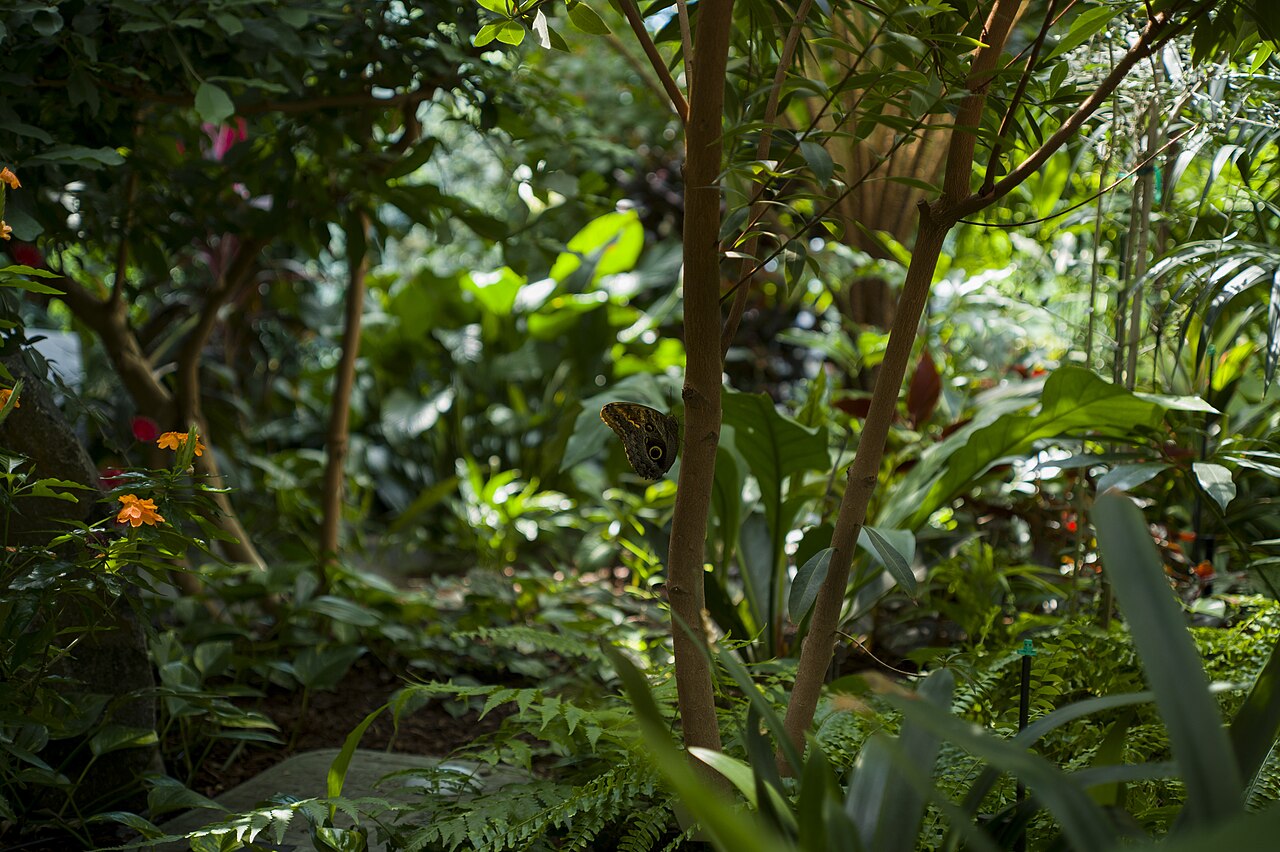
The climate is fully controlled: 78 to 83 °F (about 26 to 28 °C) according to the museum's blog, around 80 °F and 60 to 70 per cent humidity according to the teachers' guide. Misters, ponds with fountains and, in winter, industrial fans against dry air keep the humidity up; full-spectrum lamps, ultraviolet and infrared included, run twelve hours out of twenty-four. A vestibule at the entrance and exit keeps the butterflies in, and the walkways are too narrow for strollers. The guide adds that the room was planned without plants that caterpillars can eat, which is why egg-laying remains very rare; a viewing window shows the chrysalises.
Plant collections
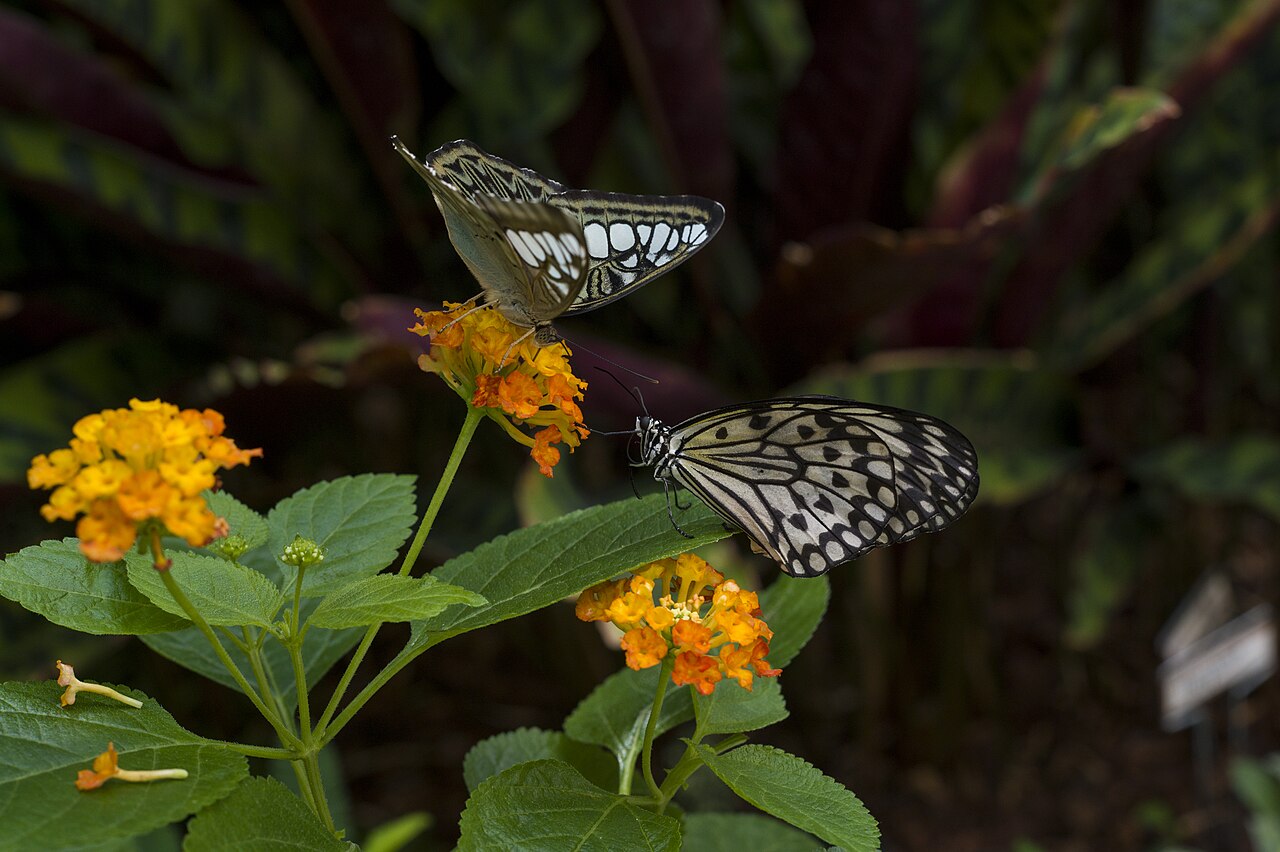
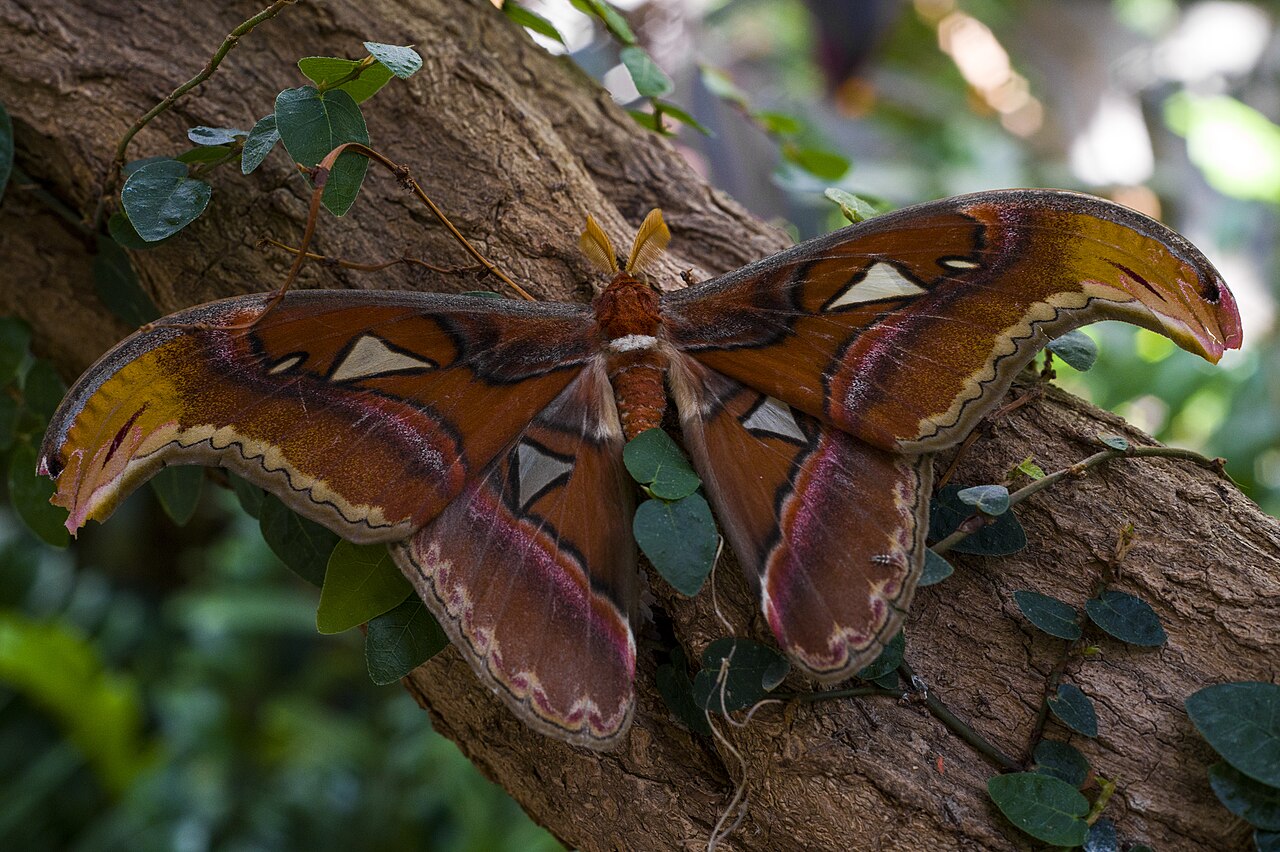
According to The Seattle Times, about twenty species are on show on any given day: paper kites, which taste foul to predators, swallowtails, longwings and transparent glasswings. The official page names the Atlas moth (Attacus atlas), presented as the world's largest moth, Parthenos sylvia and Caligo memnon, and publishes the week's list of emergences, which includes Morpho peleides, Morpho polyphemus, Heliconius hecale and Papilio cresphontes. The butterflies arrive as chrysalises from tropical breeding farms; the museum states that none is taken from the wild. They also feed on sliced oranges and organic fruit bought in shops.
The greenery numbers about 575 plants. The museum names pineapple (Ananas comosus), Begonia ferox and Duranta erecta, chosen for their nectar or as perches, and The Seattle Times mentions a powder puff tree. Part of the plant stock comes from growers elsewhere in the United States, some of them in Florida.
Visiting
The hall is inside Pacific Science Center, at 200 Sue Bird Court N in Seattle Center, and is included in general admission. Strollers stay outside, no organic material goes in, and each visitor checks on leaving that no butterfly has hitched a ride. The Seattle Times' advice: stay still in a sunny spot rather than hold out a finger.
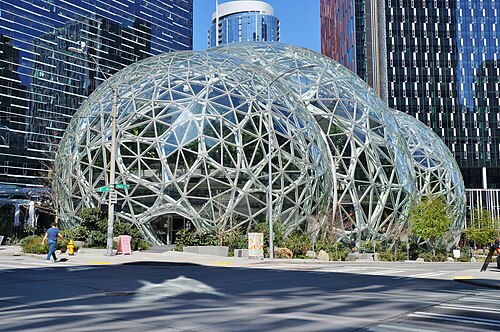
The museum promotes the hall in every season, including the Pacific Northwest winter, when it stays at a tropical temperature. The Space Needle, next to the 1962 pavilion, and the rest of Seattle Center are close by; the Amazon Spheres, already in the catalogue and a plant donor to the hall, are about a kilometre away.
47.62° N, 122.35° W
Greenhouses nearby
More greenhouses — United States
Do you have a good photo of this greenhouse? Suggest it for this page →
Sources (9)
- pacificsciencecenter.org/exhibit/tropical-butterfly-house/
- seattletimes.com/pacific-nw-magazine/escape-to-the-tropics-at-the-pacific-science-center-b
- pacificsciencecenter.org/blog/tropical-butterfly-house-year-round/
- pacificsciencecenter.org/wp-content/uploads/2022/05/butterfly-pre-visit-guide.pdf
- millercharitablefoundation.org/gallery/pacific-science-center-tropical-butterfly-house/
- pacificsciencecenter.org/press/pacsci-real-estate-transaction/
- commons.wikimedia.org/wiki/File:Pacific_Science_Center_Seattle-_Tropical_Butterfly_House.j
- en.wikipedia.org/wiki/Pacific_Science_Center
- divinemrsdiva.com/blog//2015/07/seattle-trip-tropical-butterfly-house.html
Affiliate links — booking through Verrière helps fund our research, at no extra cost to you.