Tropical Greenhouses of the Liberec Botanical Garden
Liberec

Sources checked September 2026
- Year
- 1996–2000
- Architect
- Pavel Vaněček
- Style
- Contemporary organic architecture, floor plan evoking a crystal geode
- Dimensions
- Nine interconnected pavilions, each with its own climate
- Status
- Open to the public
Liberec Botanical Garden, open to the public since 1895, is the oldest of the Czech botanical gardens. A century later, between 1996 and 2000, engineer Pavel Vaněček designed a radically new complex of nine interconnected greenhouses, whose layout evokes "a crystal geode or a cluster of plant cells." Each pavilion recreates a different climate, from humid rainforests to desert environments; in 2014, an additional pavilion devoted to lotuses and tropical waterlilies completed the complex.
Affiliate links — booking through Verrière helps fund our research, at no extra cost to you.
History
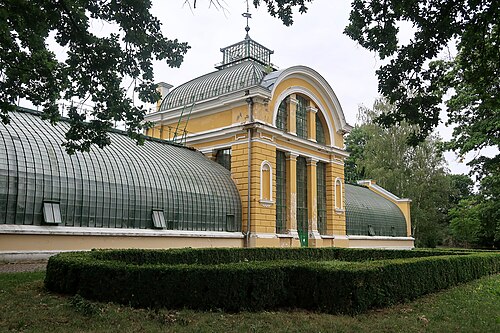
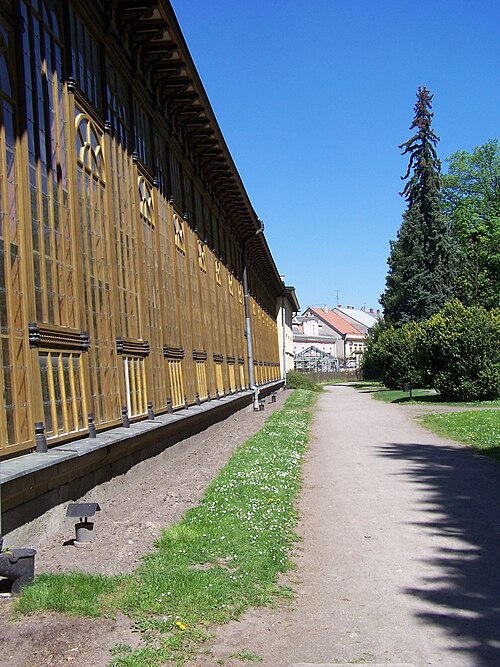
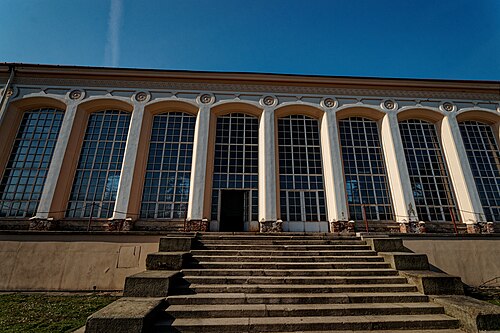
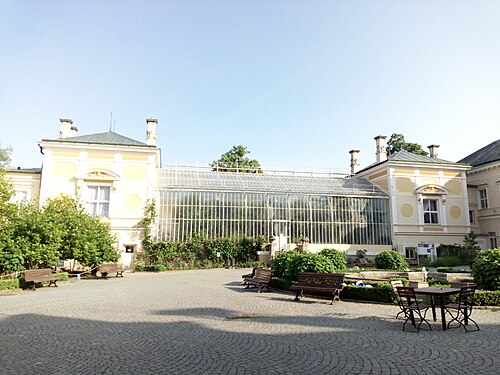
Liberec's botanical garden dates back to 1876, when the Society of Friends of Nature (Verein der Naturfreunde) laid out a first garden near today's North Bohemian Museum. In 1893 the society bought a new site on Purkyňova Street, and the garden opened there to the public on 5 September 1895, making it the oldest botanical garden in the Czech Republic. A first display glasshouse, the Palmenhaus, opened in 1930 with fifteen palm species and 360 kinds of plants.
During both world wars the garden grew vegetables for local residents. After 1945 it became a scientific institution; under director Pavel Smrž (1954–1970) new glasshouses were built, and in 1956 Victoria amazonica flowered for the first time in Czechoslovakia. A second phase of glasshouse construction followed between 1973 and 1981, and marine aquaria were shown to the public from 1965.
The major rebuilding began in 1996 (1995 in some sources) to designs by the architect Pavel Vaněček, and the new nine-pavilion complex was completed in 2000. A summer pavilion for giant water lilies and lotuses was added in 2014. The garden celebrated its 130th anniversary in 2025.
Architecture and engineering
Pavel Vaněček's complex breaks with the traditional nave-shaped glasshouse. Its glass pavilions are grouped in a plan the garden likens to a crystal druse or a cluster of enlarged plant cells. Each pavilion is a self-contained climate unit, so humid rainforest, arid habitats and cooler houses can sit side by side.
The national tourism agency gives about ten display pavilions covering some 3,000 square metres, plus nine growing houses closed to the public covering 1,400 square metres, while the botany.cz portal cites 4,500 square metres in total. The complex also includes an aquarium pavilion with an underwater tunnel, continuing a local aquarium tradition that goes back to the 1950s.
Plant collections
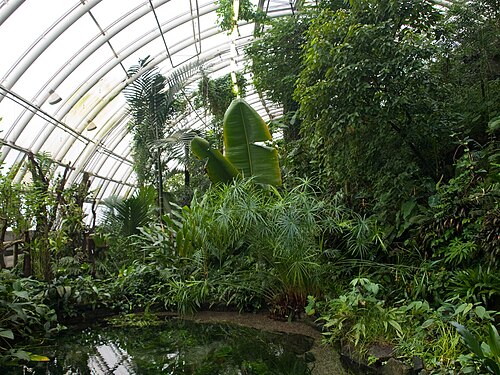
The garden holds roughly 8,000 to 9,000 taxa, mostly tropical and subtropical. The pavilions cover tropical Australia, the Old and New World tropics, the drylands of Africa and Madagascar, and a prehistoric section with cycads, tree ferns, clubmosses and fossils. Further spaces are devoted to carnivorous plants, cacti and succulents (about 500 taxa) and tillandsias. The orchid, fern and carnivorous plant collections are among the richest in the country.
Curiosities include camellias described as the oldest in Europe, a bonsai with an unusually long history in cultivation, and a large cross-section of fossil tree trunk. The summer pavilion holds three giant water lilies: Victoria amazonica, Victoria cruziana and Euryale ferox.
Visiting
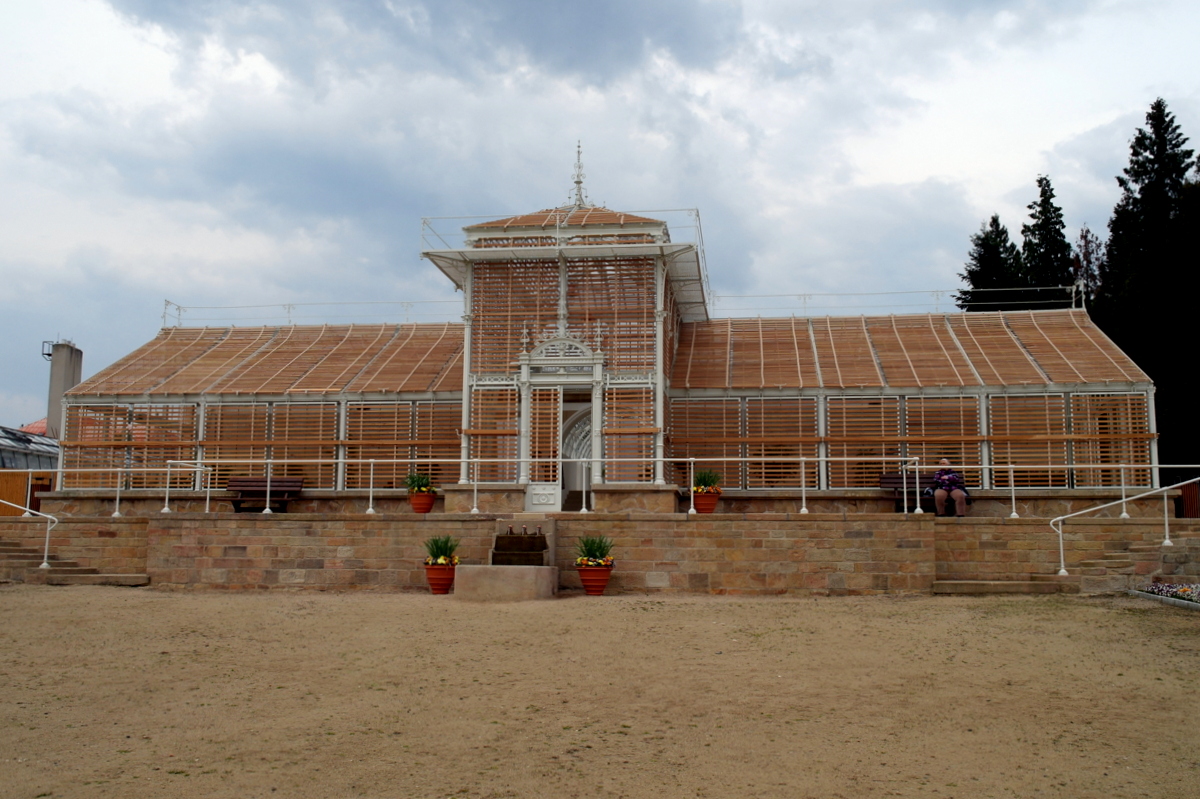
The garden, under two hectares in size, is on Purkyňova Street in the Lidové sady area, close to Liberec Zoo, and the two are easily combined. The glasshouses form a continuous route; allow one to two hours for the pavilions and aquaria. The giant water lily pavilion is open only from May to October, and the plants flower from mid-June to late September, which makes summer the best season. Outdoors, the alpine garden, rhododendrons and rose garden extend the walk.
50.77° N, 15.06° E
Greenhouses nearby
Architecture nearby
More greenhouses — Czech Republic
Do you have a good photo of this greenhouse? Suggest it for this page →
Affiliate links — booking through Verrière helps fund our research, at no extra cost to you.