Wintertuin (Winter Garden)
Antwerp Zoo

Sources checked September 2026
- Year
- 1897
- Architect
- Émile Thielens
- Style
- Eclectic iron-and-glass architecture with wide-span metal structures
- Status
- Restored, used for events and as a seasonal butterfly garden
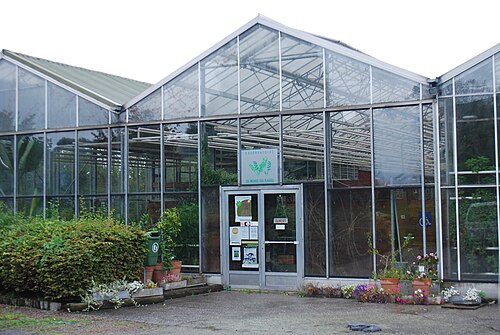
Built between 1895 and 1897 by architect Émile Thielens, the Wintertuin at Antwerp Zoo, the one of the world's oldest zoos still in operation, reflects the pioneering use of large metal structures at the end of the 19th century. Designed in an eclectic style paired with a ballroom and a grand ceremonial staircase, the building originally combined a winter garden, reading room, restaurant, and billiard room for the zoo's wealthy visitors. Damaged during the Second World War and then by a fire in 1947, it has been restored and altered several times since. Today, its glass hall hosts events and, seasonally, a tropical butterfly garden that brings plant life back to this iron-and-glass architecture. The Wintertuin remains a rare surviving example of Belle Époque winter gardens in Belgium.
Affiliate links — booking through Verrière helps fund our research, at no extra cost to you.
History
Antwerp Zoo was founded on 21 July 1843 by the Royal Zoological Society of Antwerp (KMDA), on the initiative of Jacques Kets and Jan Frans Loos, on grounds that now run alongside Central Station. By the late nineteenth century the society wanted to give its members social rooms worthy of its standing. The architect Émile Thielens, who designed several buildings at the zoo, created a large complex between 1895 and 1897 that combined a festival hall, a promenoir (the Marble Hall), a grand staircase leading to the natural history museum upstairs, a reading room, a restaurant, a café, a billiard room and a winter garden. The last served, among other things, as a quiet retreat during concert intervals.
The building was badly damaged in the Second World War, particularly its roofs, domes and stained glass. In 1947 a fire destroyed two halls of the complex. A new festival hall was built in 1958-1960 to designs by Rie Haan, and between 2014 and 2016 the Queen Elisabeth Hall, by SimpsonHaugh, restored the historic link between the zoo and its halls. The complex has been a protected monument since 1983, within a zoo protected as a landscape since 1974.
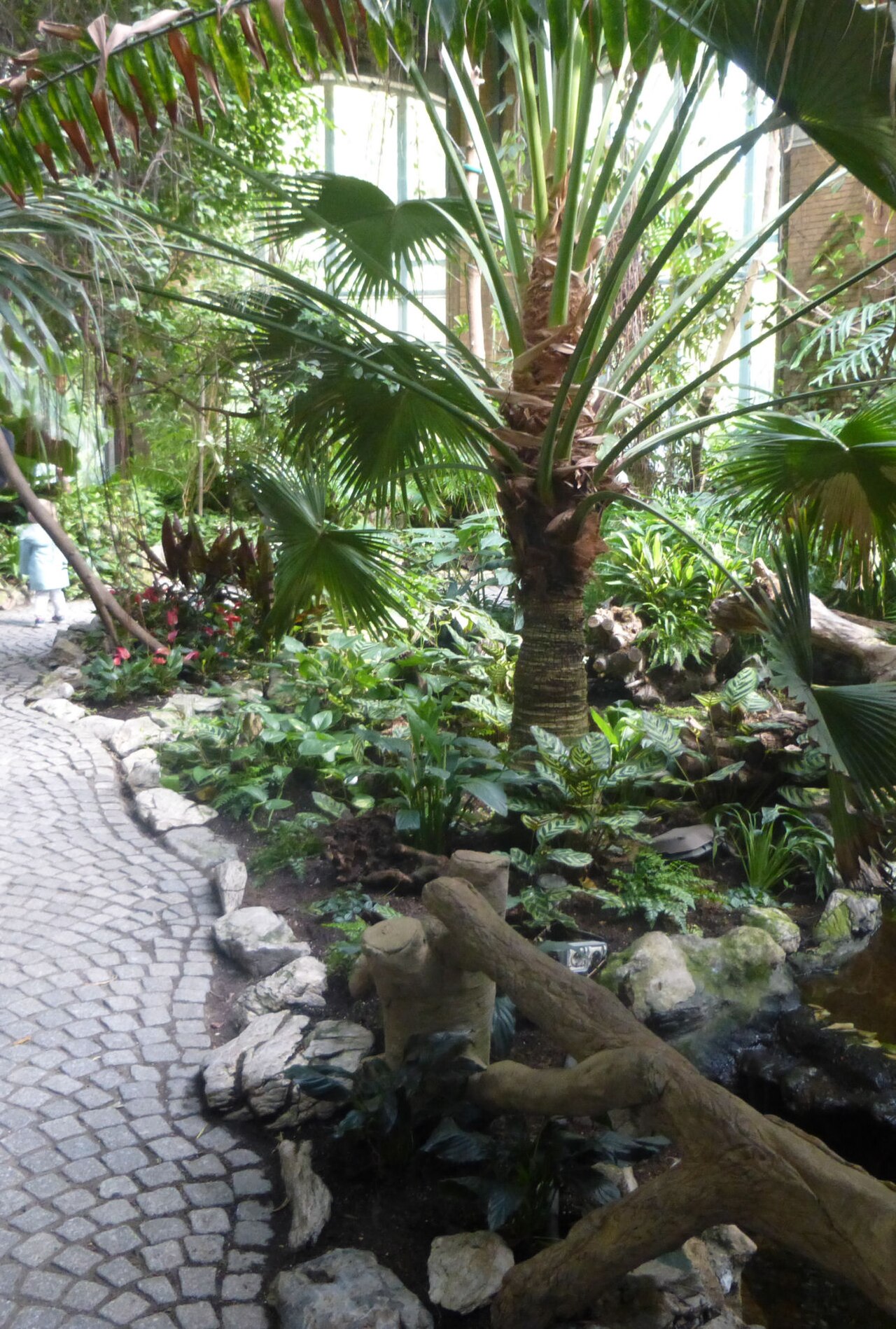
For a number of years now the winter garden has been turned each spring into a tropical butterfly garden, while in the off-season and in the evenings it serves as a venue for receptions.
Architecture and engineering
The winter garden occupies the ground floor of the historic wing of the hall complex, on the garden side, at the heart of the zoo. Thielens used an iron frame to achieve wide spans within an eclectic, richly decorated building. The glasshouse has a glazed mansard roof on an iron structure, with a dome that admits generous daylight.
The adjoining buildings share the same vocabulary: a covered gallery with iron trusses on cast-iron columns, a front faced in white stone, and the Marble Hall, whose heavy oak ceiling rests on twenty marble columns with bronze-trimmed bases and capitals, set off by friezes and panels of English alabaster.
For the butterflies, the space has to be kept at no less than 18 °C at night, around 25 °C in the afternoon and above 70 percent humidity, conditions the old glass roof can only reach in the warmer months.
Plant collections
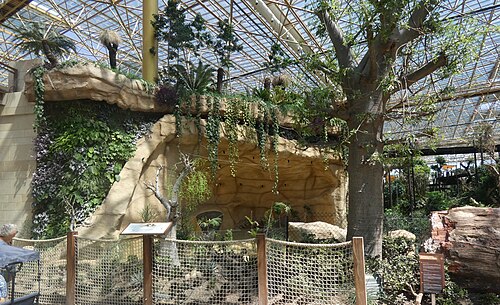
The planting evokes a tropical forest: palms, date palms, tree ferns, dragon trees, bananas, figs, philodendrons and mosses, together with the larval and nectar plants the butterflies need, such as passion flowers, lantanas and bromeliads.
During the season several hundred butterflies fly freely inside; in 2023 the zoo reported more than 600. Pupae are delivered regularly from Costa Rica, where small-scale breeders raise them in gardens laid out to mimic rainforest. In some years around forty species have been shown, including blue, bright green and glasswing butterflies, as well as a paper butterfly from Penang in Asia.
Visiting
The winter garden lies at the heart of Antwerp Zoo, in the historic wing of the festival halls, a short walk from the entrance beside Central Station, and is reached with ordinary zoo admission. The butterfly garden usually opens from Easter until late summer or autumn; in winter the glasshouse cannot reach the warmth required. The visit pairs well with the zoo's other historic buildings, such as the Egyptian Temple of 1856 and the Bird Palace, and with the station district beyond.
51.22° N, 4.42° E
Greenhouses nearby
More greenhouses — Belgium
Do you have a good photo of this greenhouse? Suggest it for this page →
Sources (6)
- zooantwerpen.be/nl/erfgoed/gebouwen/
- inventaris.onroerenderfgoed.be/erfgoedobjecten/7029
- inventaris.onroerenderfgoed.be/erfgoedobjecten/127085
- vrt.be/vrtnws/nl/2023/04/03/honderden-vlinders-nemen-intrek-in-exotische-serre-van-zoo-ant
- themeparkfreaks.eu/2017/04/wintertuin-weer-prachtige-vlindertuin-in-zoo-antwerpen/
- aroomwithazoo.com/nl/zalen/winter-garden/
Affiliate links — booking through Verrière helps fund our research, at no extra cost to you.