Royal Greenhouses of Laeken
Brussels

Sources checked September 2026
- Year
- 1874–1905
- Architect
- Alphonse Balat
- Style
- Iron and glass, an early precursor of Art Nouveau
- Dimensions
- 2.5 ha · Winter Garden: 57 m in diameter
- Status
- Open to the public for a few weeks each spring; Winter Garden rotunda closed for restoration from 2026
Commissioned by Leopold II from Alphonse Balat, later the mentor of Victor Horta, these greenhouses mark a pivotal step between Victorian metal architecture and the emerging Art Nouveau. The Winter Garden, a 57-meter rotunda crowned with a glass cupola, still hosts state banquets and royal receptions today. Still owned by the royal family, the complex of ten greenhouses linked by galleries opens to visitors for only two to three weeks a year.
Affiliate links — booking through Verrière helps fund our research, at no extra cost to you.
History
A passionate plant lover, Leopold II had dreamt of a glass estate ever since seeing the Crystal Palace at London's Great Exhibition of 1851. For the park of Laeken Palace he rejected an initial design by the botanist Jean Linden as too timid and turned instead to the architect Alphonse Balat. The first major structure, the Winter Garden, was built between 1874 and 1876. The complex was inaugurated in 1880 and kept growing thereafter.
Between 1885 and 1887 Balat designed the Palm House, the Congo House, the Diana House and the Embarcadère. Contemporary with the creation of the Congo Free State, the king's personal possession, these buildings were also meant to display his colonial power through the Central African plants they held. The Iron Church, originally the royal chapel, was completed in 1893. After Balat's death in 1895, Henri Maquet and then Charles Girault continued the extensions until 1905. Following the king's death in 1909, the Iron Church became a private bathing house for the royal family.
Since 2021 about 90 percent of the heating has come from the Neder-Over-Heembeek waste incinerator, via some 4.5 km of pipes. The Winter Garden, never thoroughly restored since it was built, is undergoing a major campaign run by the federal Buildings Agency and Beliris to designs by the Ma² practice (Francis Metzger). It closed to visitors in 2026 for at least two years, with its plants left in place.
Architecture and engineering
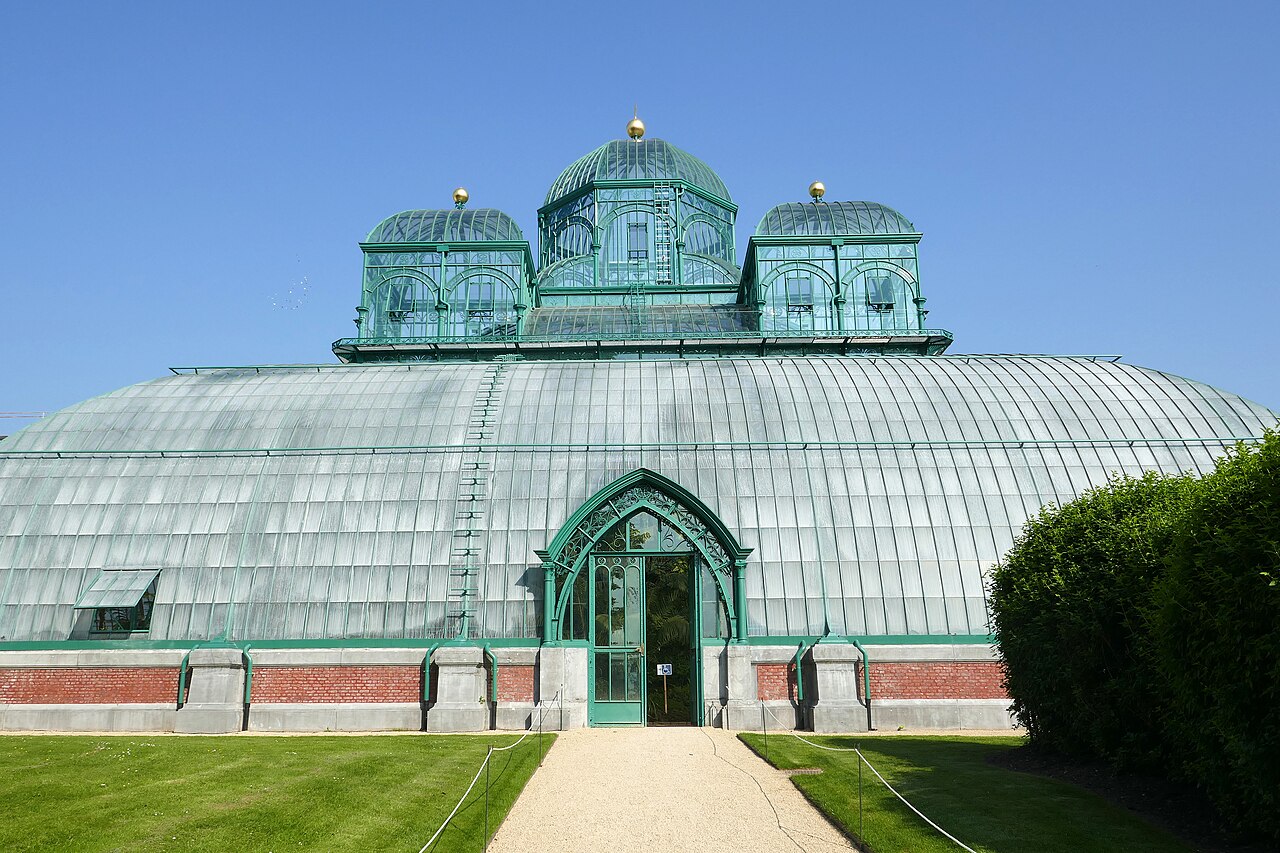
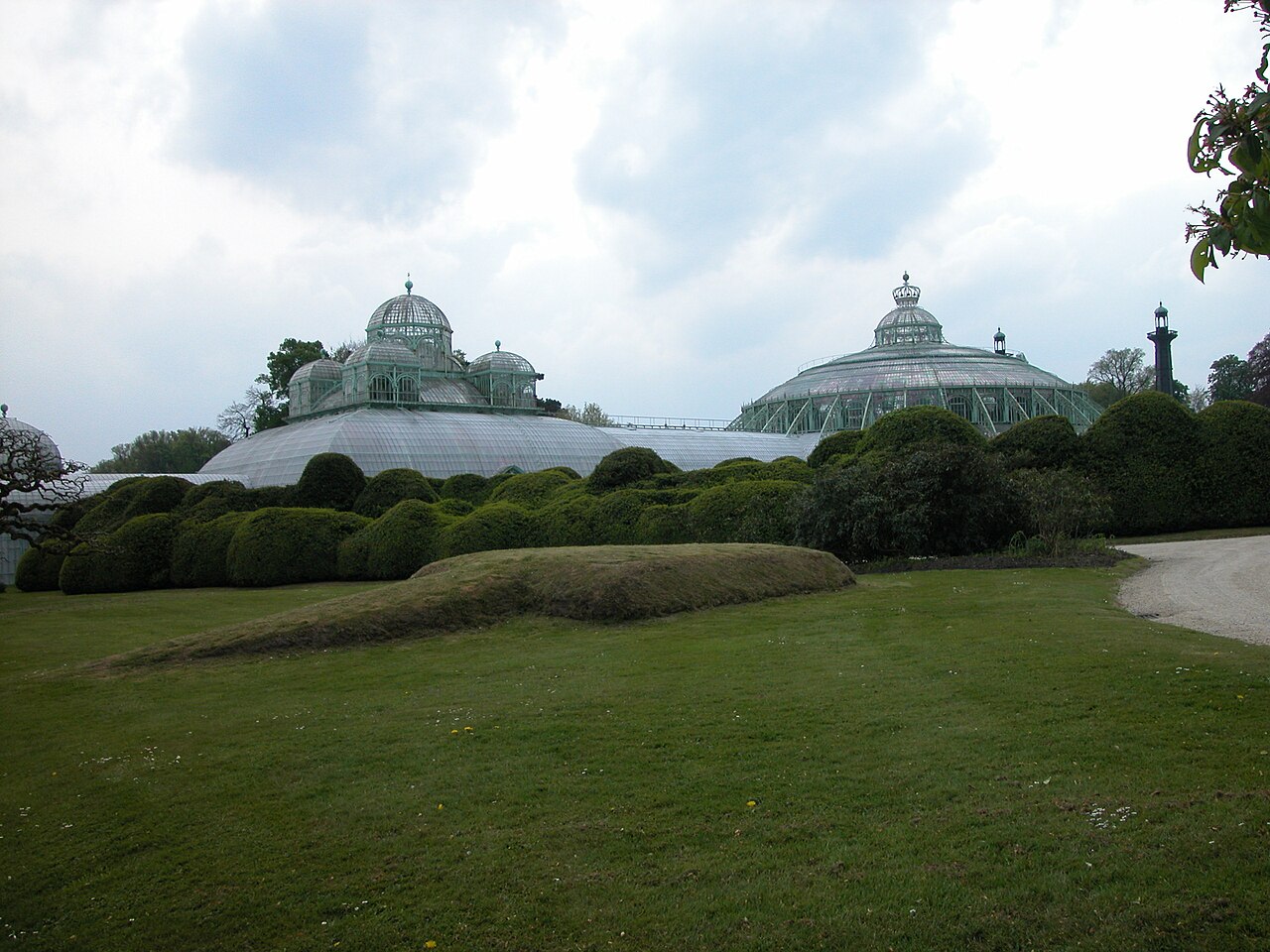
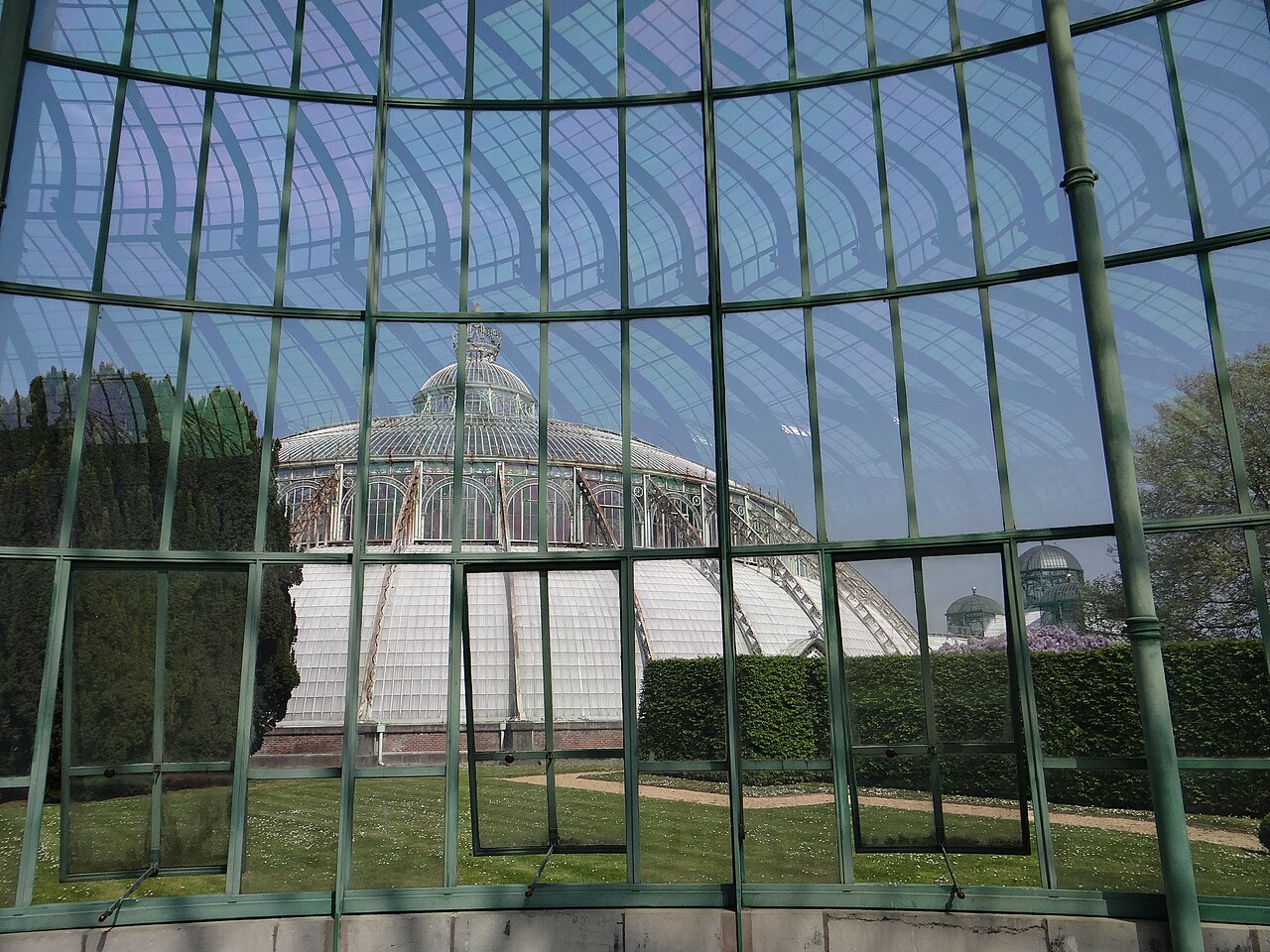
Built entirely of iron and glass, the complex covers between 1.5 and 2.5 hectares. Rather than a single glasshouse, Balat created a city of glass: monumental pavilions, domes and covered galleries, about 700 metres long in total, that cross the grounds like streets.
The Winter Garden is its centrepiece, a rotunda 57 metres across and about 25 metres high. Its glazed crown rests on concentric cast-iron trusses and 36 arches carried by a circular Doric colonnade, and its walls are dressed with rockwork cast in cement over an iron armature. The Embarcadère sets two parallel naves under a barrel vault, with a dome on iron Corinthian columns, decorated with Chinese vases and statues by Charles Van der Stappen. The neo-Byzantine Iron Church is ringed by radiating chapels, its dome resting on twenty columns of Scottish granite. The neoclassical Orangery of 1817-1819, which predates Balat's scheme, is 97 metres long.
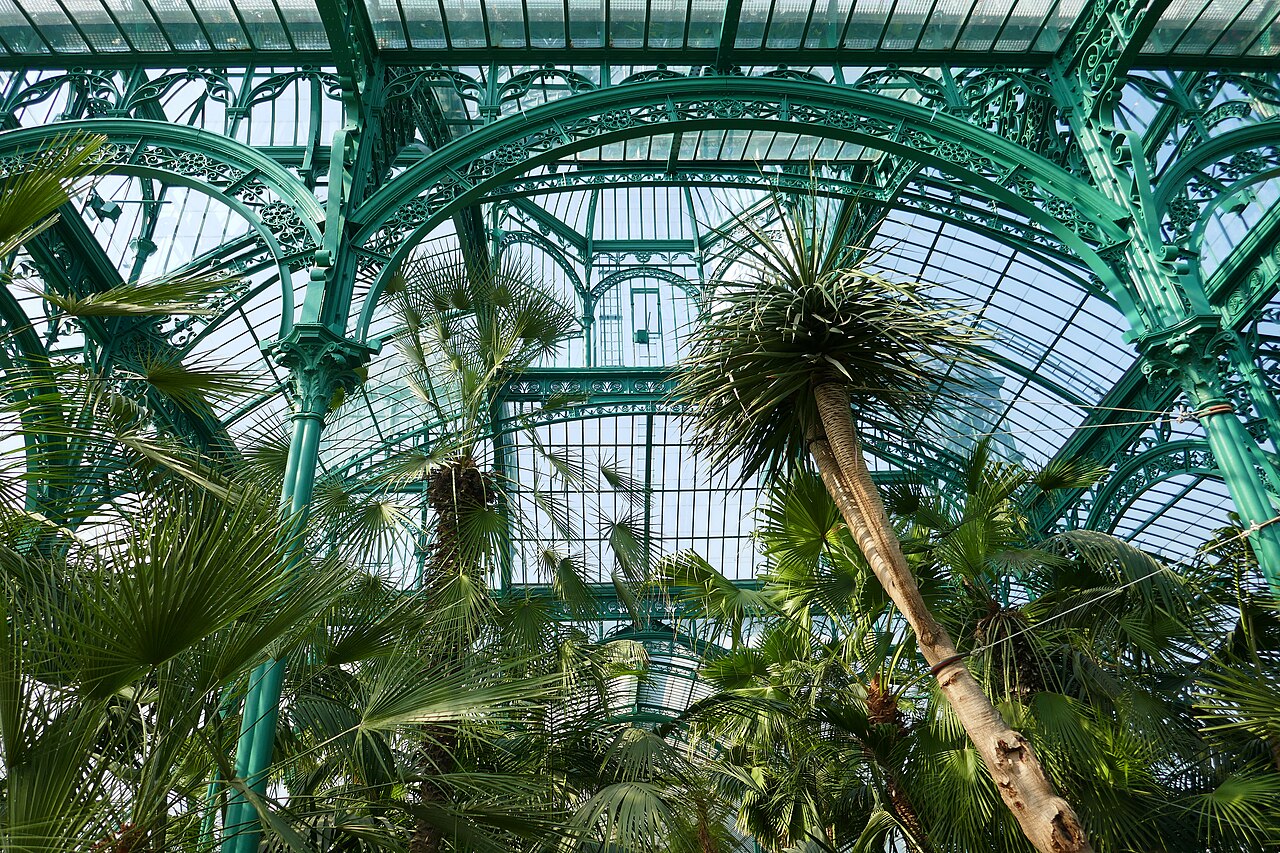
The plant motifs Balat worked into his ironwork foreshadow the Art Nouveau later developed by Victor Horta, who had been his apprentice.
Plant collections
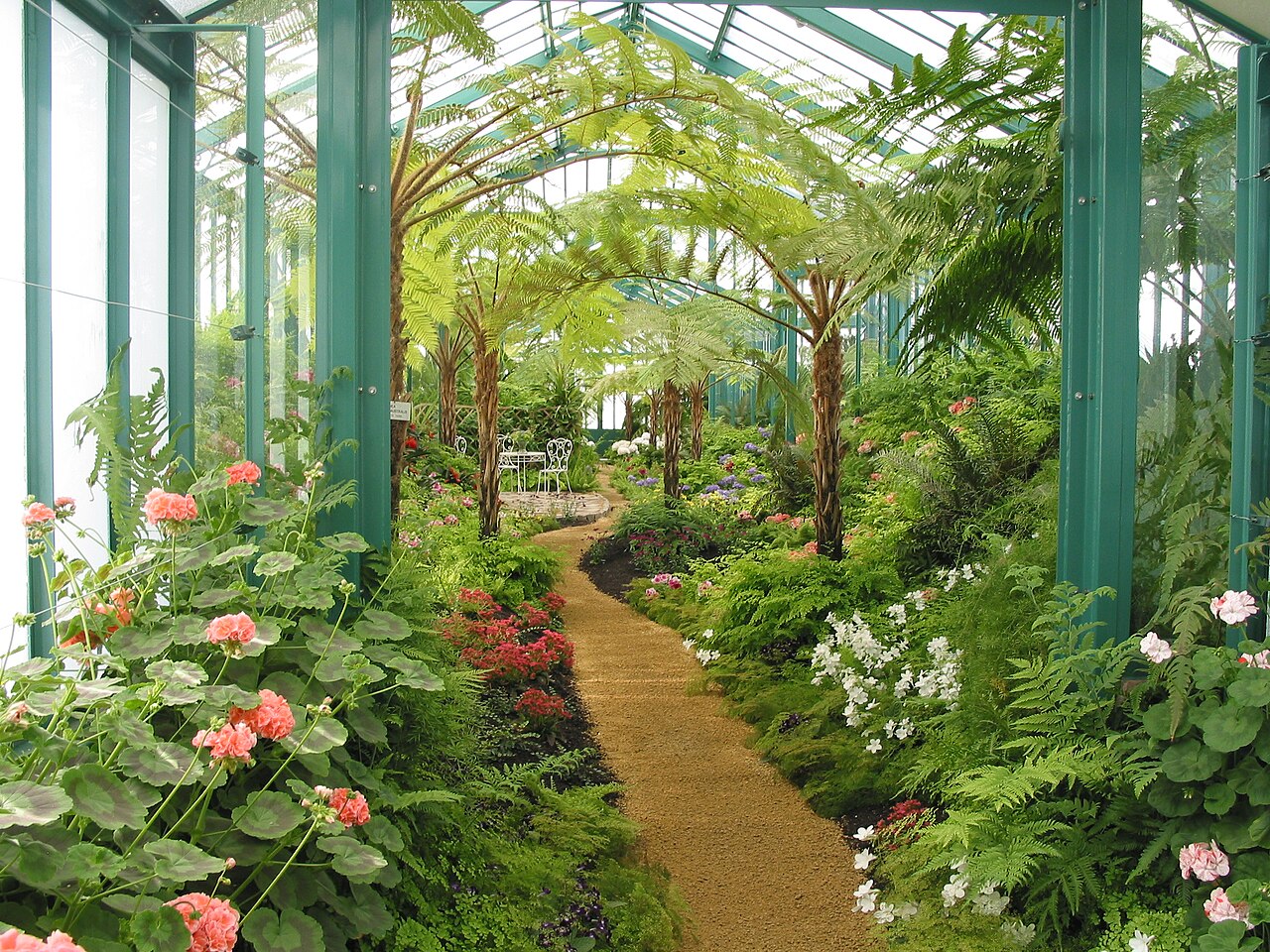
The Royal Botanical Collection combines Central African plants, ornamental plants for court use and large tropical species: palms, date palms, tree ferns, bananas and medinillas. Camellias are its historic treasure. In 1909 there were 314 varieties and more than a thousand plants; around three hundred survive, making this one of the oldest camellia collections under glass anywhere, with some specimens over two centuries old.
Leopold II also owned about 130 orange trees, some two or three hundred years old; only about forty-five were left by the 1970s, displayed in the Orangery alongside laurels, rhododendrons and camellias. Among the more recent treasures is a Wollemi pine (Wollemia nobilis), a conifer thought extinct until its rediscovery in Australia in the 1990s.
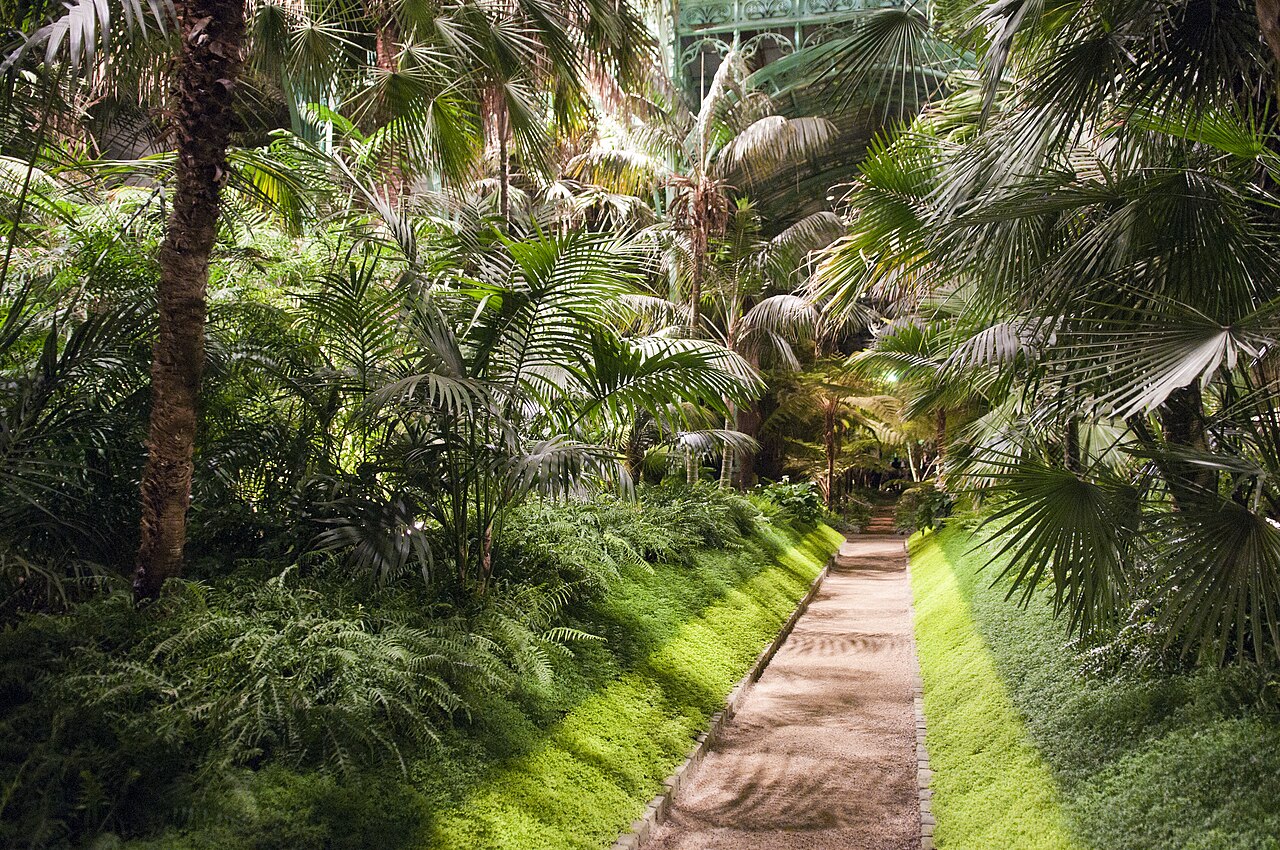
Visiting
The greenhouses belong to the private estate of Laeken Palace, home of the royal family, and open only for a few weeks each spring, usually from mid-April to mid-May (17 April to 10 May in 2026). Tickets are sold in advance through the Belgian Monarchy's website. The route leads through the galleries from one house to the next. While the Winter Garden is under restoration the circuit lacks its rotunda, and in 2026 access to a few rooms of the palace was offered in compensation. The visit extends naturally into Laeken Park, towards the Monument to the Dynasty, the Chinese Pavilion and the Japanese Tower.
50.89° N, 4.36° E
Greenhouses nearby
More greenhouses — Belgium
Do you have a good photo of this greenhouse? Suggest it for this page →
Sources (9)
- regiedesbatiments.be/fr/projects/serre-jardin-dhiver
- fr.wikipedia.org/wiki/Serres_royales_de_Laeken
- en.wikipedia.org/wiki/Royal_Greenhouses_of_Laeken
- vacancesweb.be/article/jardin-hiver-serres-fermeture
- lavenir.net/actu/belgique/2026/04/12/la-minute-locale-inedit-aux-serres-royales-de-laeken-
- bx1.be/categories/news/le-jardin-dhiver-des-serres-de-laeken-va-etre-totalement-restaure/
- welovebrussels.org/2022/08/amazing-royal-greenhouses-brussels/
- noblesseetroyautes.com/ouverture-2026-des-serres-royales-de-laeken/
- wikidata.org/wiki/Q1644661
Affiliate links — booking through Verrière helps fund our research, at no extra cost to you.