Orangery, Peckover House
Wisbech, Cambridgeshire, England

Sources checked October 2026
- Year
- 2013 (rebuilt)
- Style
- Victorian orangery with a rebuilt timber-and-glass covering
- Status
- Open to the public with the National Trust garden, on a seasonal calendar
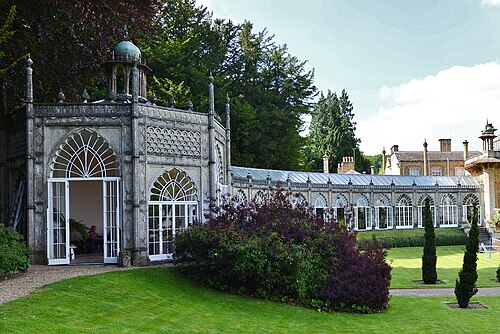
In the Victorian walled garden of Peckover House, a Georgian town house in Wisbech given to the National Trust, the orangery closes the central path, set against the north boundary wall. Historic England's register dates it to the mid-19th century. Too decayed to repair, it was faithfully recreated, with a few minor changes, and opened in September 2013: the original tiled floor, walls and walled containers were kept beneath a new covering of timber and glass. It houses three orange trees that the National Trust says are over 300 years old, with a seasonal plant collection.
Affiliate links — booking through Verrière helps fund our research, at no extra cost to you.
History
Peckover House, built in 1722 on North Brink in Wisbech and also known as Bank House, was bought in 1794 by the Peckovers, a Quaker family. They laid out the gardens from the early 19th century, then adopted the Gardenesque style late in the century. Historic England's register, written in 1999, places the orangery in the mid-19th century, on the north boundary wall, at the end of a path whose mixed borders date from the late 20th century and were laid out under National Trust direction; to the west lie workshops, a propagating house, a fernery and frames, also from the mid-19th century. The house and garden passed to the National Trust in the 1940s, the sources giving 1944 or 1948.
The National Trust speaks of three orange trees over 300 years old. A website on citrus in Britain observes that the only historical mention it found, in a book published in 1898, concerns one tree bought at the sale of Hagbeach Hall and at least two centuries old: the three-century age therefore rests on little evidence.
Early in 2013, according to a gardening blog, it was not yet certain that the original orangery, decaying fast, would be saved. It was finally recreated rather than repaired, thanks to local fundraising, additional funds and the National Trust's decision; the project cost over 200,000 pounds, and the new orangery was opened in September 2013.
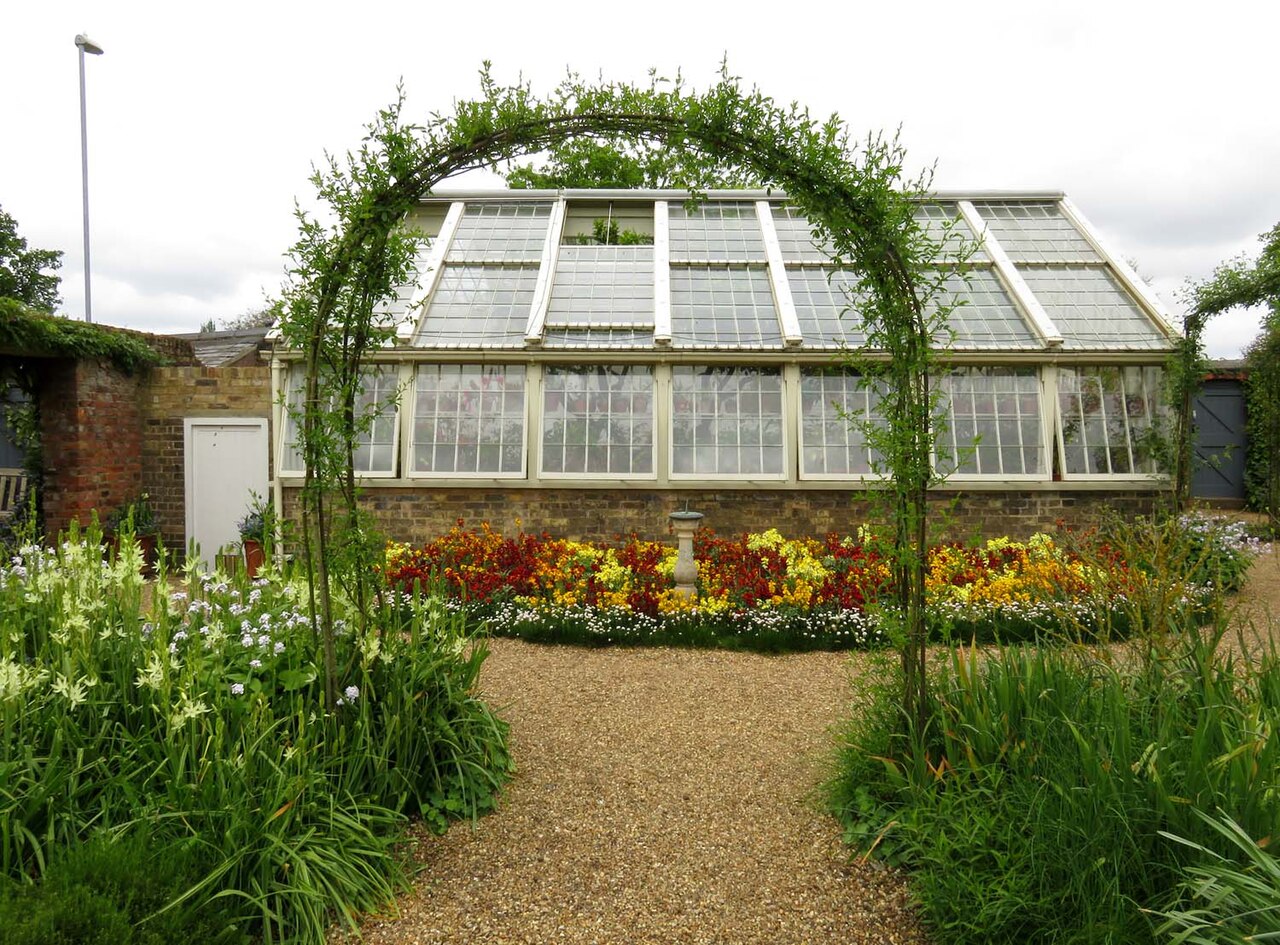
Architecture and engineering
The orangery is set against the garden's brick north boundary wall and faces the central path. The 2013 rebuilding kept the original tiled floor, the surrounding walls and the walled containers in which the orange trees grow, and added a new covering in timber and glass, as the old one had been, with sash windows for ventilation and roller blinds to control temperature and light. A 2019 photograph published on Wikimedia Commons (CC BY-SA 2.0) shows a glazed front with white frames on a brick base, under a glazed roof one end of which is hipped; in front are a flower bed and a sundial.
The 2013 blog describes the old orangery as gloomy, shaded by mature plants, and the new one as light and open. Along the same wall, to the west, the register also mentions a propagating house, which completes the garden's group of glasshouses.
Plant collections
The three orange trees grow in walled containers. The National Trust says they are over 300 years old. A specialist website classes them as sweet oranges, without a variety name. The 2013 blog reports that they stayed in the open air during the works, through one of the best summers in recent years, from which they visibly benefited.
According to the National Trust, a seasonal plant collection completes the orangery. The same blog describes the sunny side filled with terracotta pots holding many tender plants, set on benches and shelves in the spirit of the Victorian passion for the unusual and the exotic. The National Trust also sells plants grown at Peckover, and the borders of the path leading to the orangery are credited, in the register, to Graham Stuart Thomas.
Visiting
The orangery stands at the far end of the walled garden, at the end of the central path, well away from the house that fronts North Brink. The 0.8-hectare garden is toured by a serpentine path: a rose garden of more than 70 varieties, in flower mainly in June and July, a croquet lawn, summer-houses, an autumn border that takes over in September, and the Reed Barn, a 17th-century thatched barn that houses the tea-room.
The garden runs on a seasonal calendar: the 2026 one closes it from 2 November to the end of December. A visit combines with the house, open on fewer days than the garden, and with North Brink, which faces, across the Nene, the birthplace of Octavia Hill, one of the founders of the National Trust.
52.67° N, 0.15° E
Greenhouses nearby
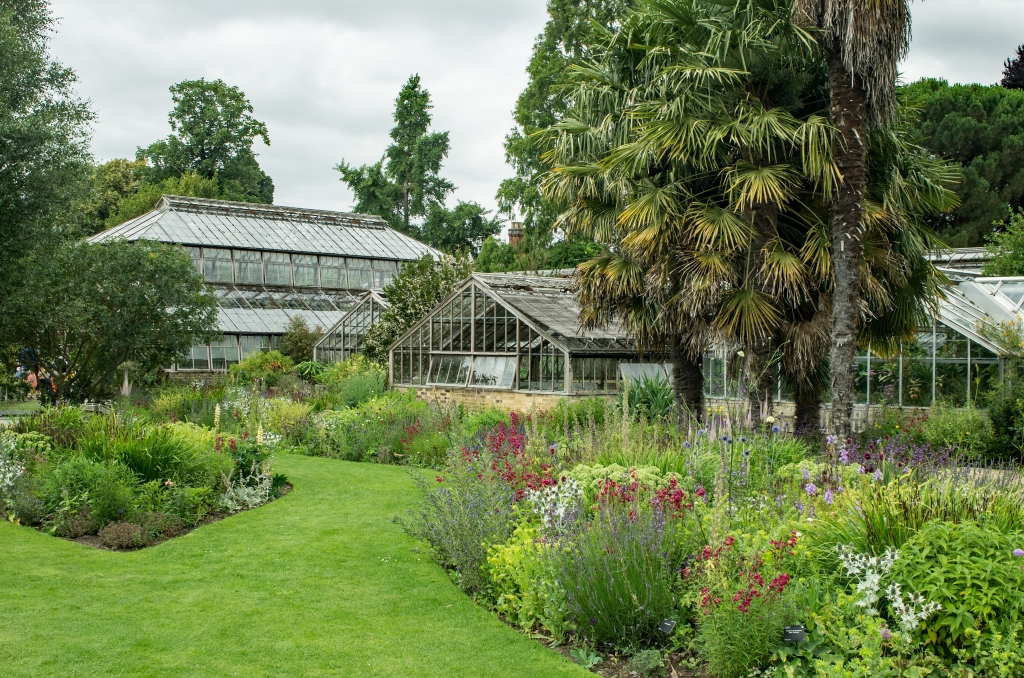
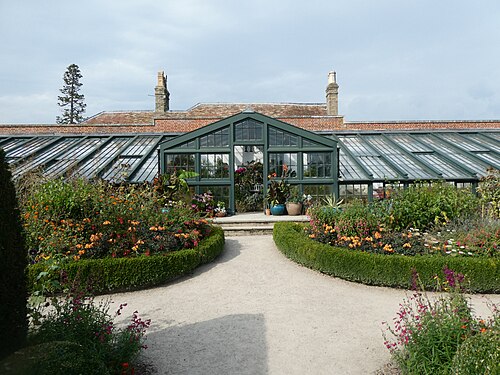
More greenhouses — United Kingdom
Do you have a good photo of this greenhouse? Suggest it for this page →
Sources (9)
- nationaltrust.org.uk/visit/cambridgeshire/peckover-house-and-garden/explore-the-garden-at-
- nationaltrust.org.uk/visit/cambridgeshire/peckover-house-and-garden
- historicengland.org.uk/listing/the-list/list-entry/1000629
- audaxdesign.org/2013/09/16/oranges-in-the-fens/
- nationaltrust.org.uk/visit/cambridgeshire/peckover-house-and-garden/the-history-of-peckove
- gardensheritageandplanning.com/2024/11/29/the-gardens-of-peckover-house-wisbech/
- homecitrusgrowers.co.uk/citrusplaces/peckoverhouse.html
- parksandgardens.org/places/peckover-house
- v2-api.nationaltrust.org.uk/places/258/opening?lang=en
Affiliate links — booking through Verrière helps fund our research, at no extra cost to you.