Possagno Gypsotheca: Scarpa wing
Possagno, province of Treviso
Sources checked November 2026
- Year
- 1955-1957
- Architect
- Carlo Scarpa
- Type
- Museum (wing added to a 19th-century gypsotheca)
- Access
- Open to the public with the Gypsotheca Antonio Canova museum (official website, November 2026)
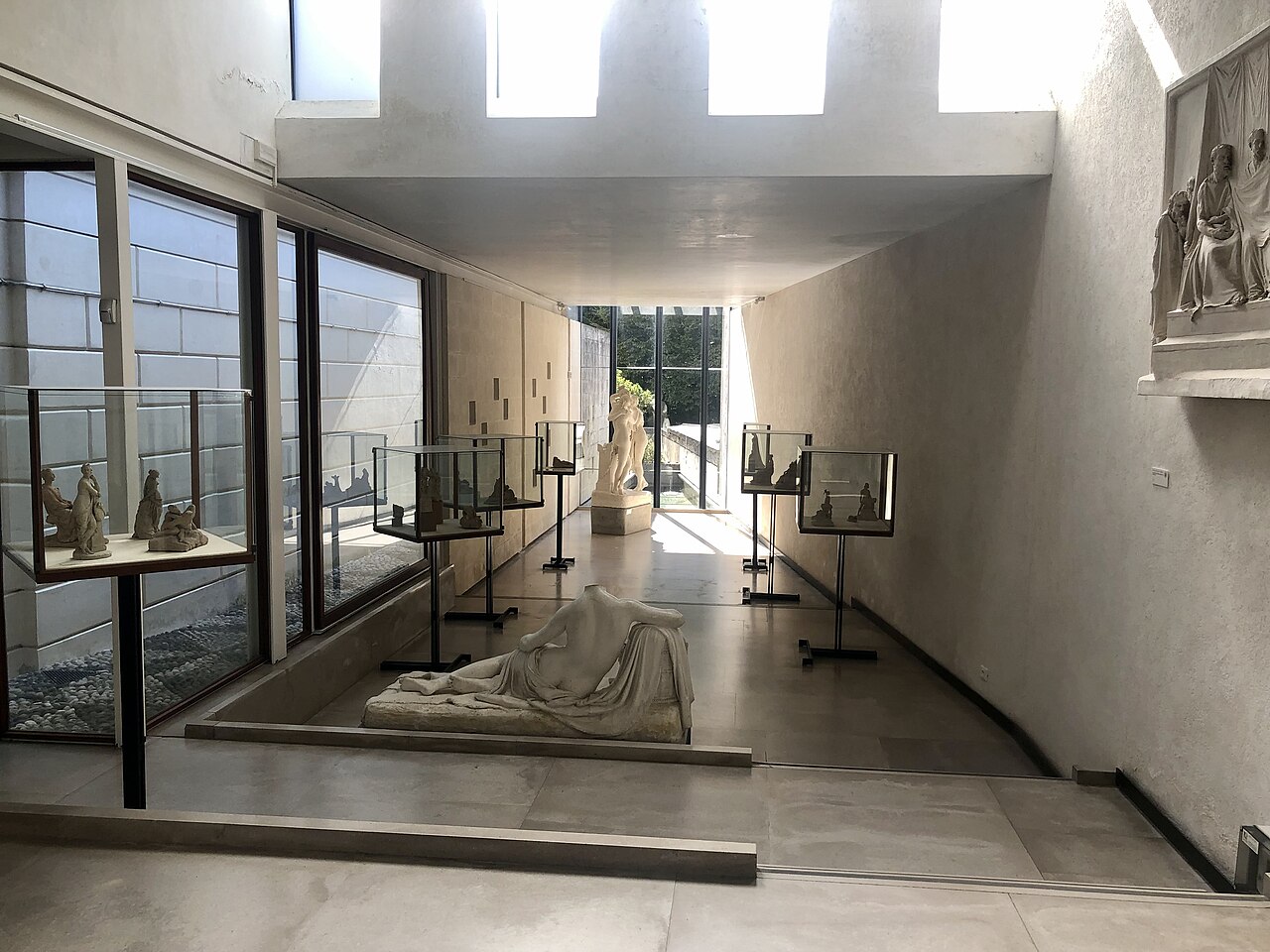
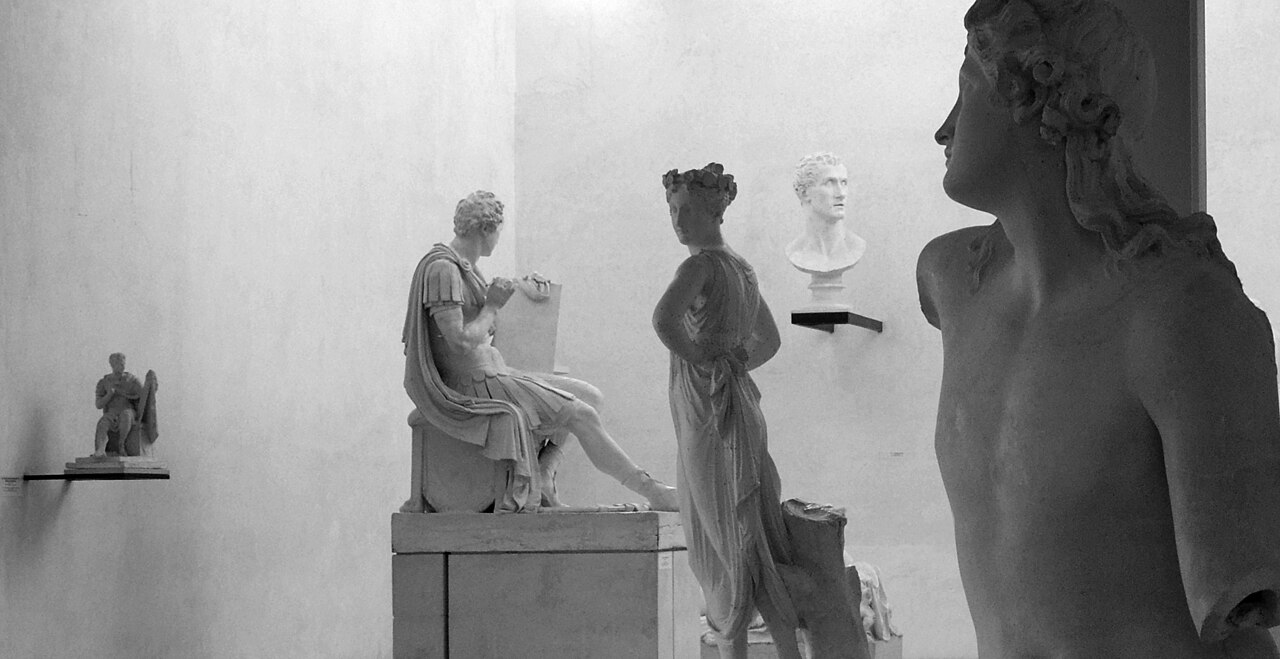
Between 1955 and 1957 Carlo Scarpa designed this wing to enlarge Possagno's neoclassical gypsotheca, home to the plaster casts of Antonio Canova, and he also rearranged how the works are displayed. A square-plan hall and a lower trapezoidal volume work like a telescope trained on the group of the Three Graces, in front of which a pool of water reflects the light. Corner glazing and natural light tie the interior to the green hills; the wing was inaugurated on 15 September 1957.
Affiliate links — booking through Verrière helps fund our research, at no extra cost to you.
History
Possagno's gypsotheca came about because Giovanni Battista Sartori, Antonio Canova's half-brother, wanted a building fit to hold the works from the sculptor's Roman studio on via delle Colonnette; they began leaving Rome in 1829. The Venetian architect Francesco Lazzari designed it as a large basilica, with building work running from 1834 to 1836. A shell struck the gypsotheca in 1917, and after extensive restoration it reopened in 1922. During the Second World War some of the plasters were taken to safety in the Temple of Possagno and came back only in 1946.
The premises grew too small. As early as 1848 the municipality of Possagno had decided to enlarge them, and two rooms, built to a design by Fausto Scudo and Giuseppe Fantuzzo, were used to restore and show some plasters and sketches, but they could no longer hold the works. The Superintendency for Monuments of the Veneto, acting on the State's behalf, entrusted Carlo Scarpa with the extension and the new display of the works. Room had to be found for the large plaster arriving from Venice, Theseus Victorious over the Centaur, the Canova holdings lying in storage had to be brought out, and the plaster and terracotta sketches needed a suitable display. Scarpa designed the first entrance hall and the new wing that bears his name, which took in monumental plasters already lent by Venice, such as Hercules and Lichas, still on show in the museum.
From the start Scarpa decided to pull down the Scudo and Fantuzzo rooms, and he wanted to "bring the Asolo hills into the Gipsoteca". Work began on 21 January 1957 with a building firm from Gorizia, run by the surveyor Pietro Protto, joined later by local craftsmen. Scarpa mostly worked from sketches on makeshift paper, often altered a few days later, which forced the workers to keep changing course as they went. Many details struck the community as eccentric: the mayor, Aldo Zulian, recalled the criticism aimed at the corner windows, the glazing opened in the ceiling and the pool at the end of the hall; Scarpa regarded these criticisms as "human remarks".
The wing was inaugurated on 15 September 1957, to mark the bicentenary of Canova's birth. Canova's clay and plaster models, brought out of the storerooms, were then set on the new bases and supports Scarpa had created. Work nevertheless went on, and for two more years further improvements were made.
Architecture
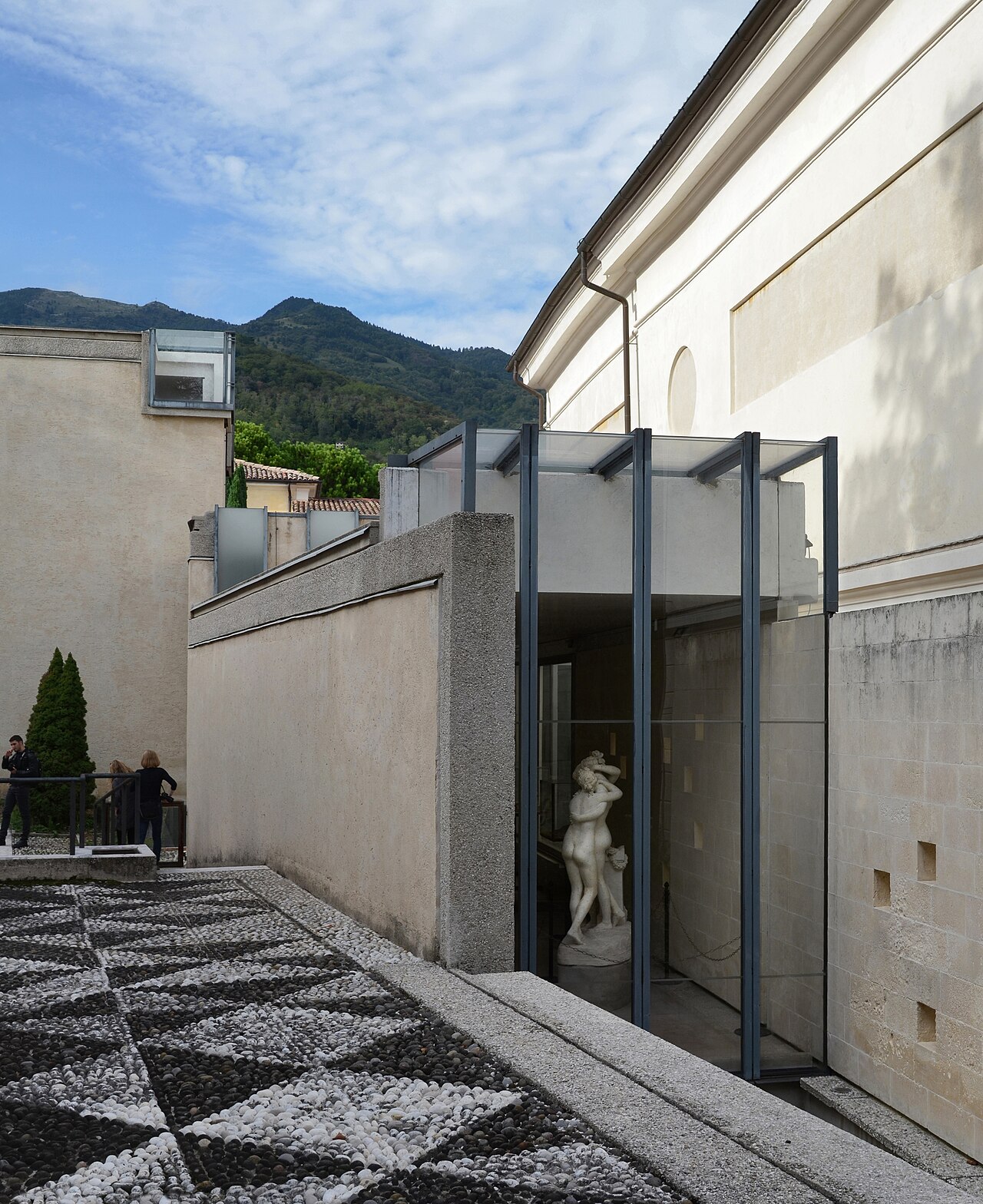
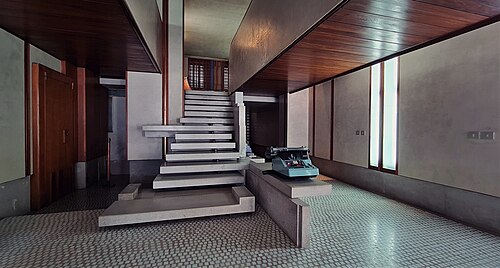
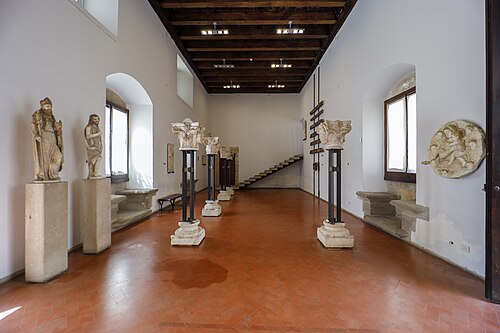
The wing rests against Lazzari's gypsotheca, which was designed as a large basilica divided into three sections lit from above by three large skylights. Scarpa drew a square-plan hall, at first meant only for the big model of Theseus, then added a lower trapezoidal volume with one side parallel to that of the basilica. Together they work like a telescope trained on the group of the Three Graces at the far end of the hall.
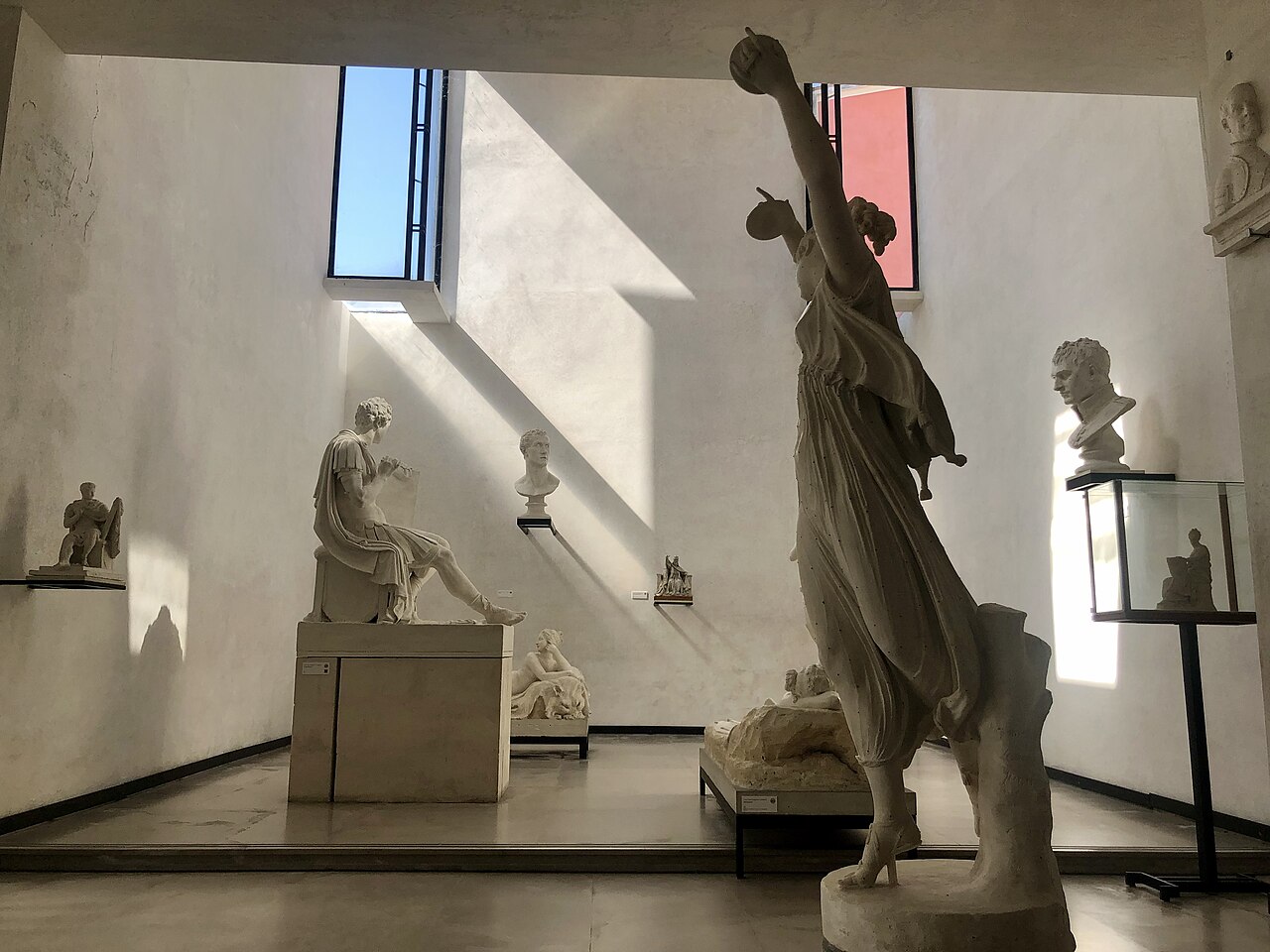
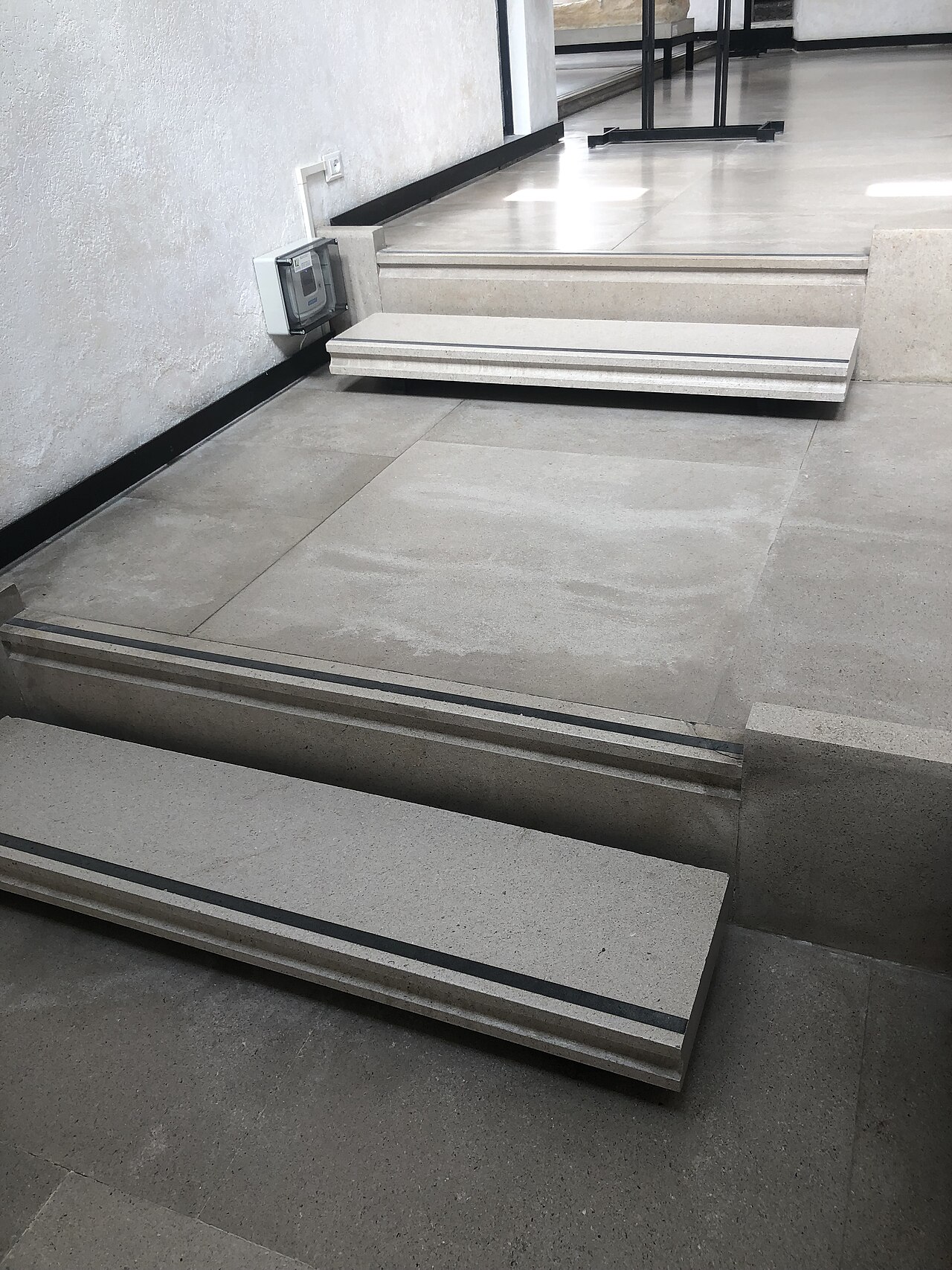
Natural light and corner windows put the interior in touch with the green hills, and light also comes from above, through glazing opened in the ceiling, bringing out the white of the plasters. Scarpa arranged the works as a staged composition on staggered levels and showed the terracotta sketches in newly designed cases. Of the gypsotheca he wrote that the problem to solve was light: he was dealing not with paintings but with sculptures, and with sculptures made not of marble or wood but of plaster; nothing makes works of art look marvellous like strong sunlight.
At the feet of the Three Graces a pool of water catches the sun. The light that the water throws back onto the plaster shapes the forms, and the three figures seem to move at every moment of the day, casting shadows that break up against the landscape seen beyond the large glazed surface.
On the doorpost of the gypsotheca's main entrance, Scarpa left a pencil self-portrait.
Use today
The wing is part of the Gypsotheca Antonio Canova museum, which the sculptor's birthplace, the Casa natale, completes. It shows Canova plasters: the model of the Three Graces, Cupid and Psyche standing, the dancers, the reclining figures and terracotta sketches.
Visiting
The museum is open Tuesday to Sunday; it is closed on Mondays other than public holidays, on Christmas Day, on 1 January and at Easter. Children up to 6 enter free, and bookings are made by email to the museum.
The museum is at 74 via Canova in Possagno.
Photos
45.85° N, 11.88° E
Greenhouses nearby
Architecture nearby
By the same architect
Sources (12)
- museocanova.it/museo/il-complesso/gypsotheca/ala-scarpa/
- museocanova.it/en/museum/the-complex/gypsotheca/scarpa-wing/
- museocanova.it/museo/il-complesso/gypsotheca/
- museocanova.it/en/museum/the-complex/gypsotheca/
- museocanova.it/museo/il-complesso/gypsotheca/ala-ottocentesca/
- museocanova.it/museo/il-complesso/
- museocanova.it/visita/informazioni/
- museocanova.it/en/visit/info/
- museocanova.it/2022/wp-content/uploads/2023/07/ALA-SCARPA.pdf
- treccani.it/enciclopedia/carlo-scarpa_%28Dizionario-Biografico%29/
- api.openstreetmap.org/api/0.6/way/158961097
- api.openstreetmap.org/api/0.6/relation/46314
Affiliate links — booking through Verrière helps fund our research, at no extra cost to you.