Ca' Foscari: Aula Mario Baratto (former Aula Magna)
Venice (Dorsoduro, Ca' Foscari)
Sources checked November 2026
- Year
- 1935-1937; 1955-1956
- Architect
- Carlo Scarpa
- Type
- Fit-out of a room in the university's palazzo (former Aula Magna)
- Access
- Free guided tours on Saturday mornings, depending on the room's availability (official website, November 2026)
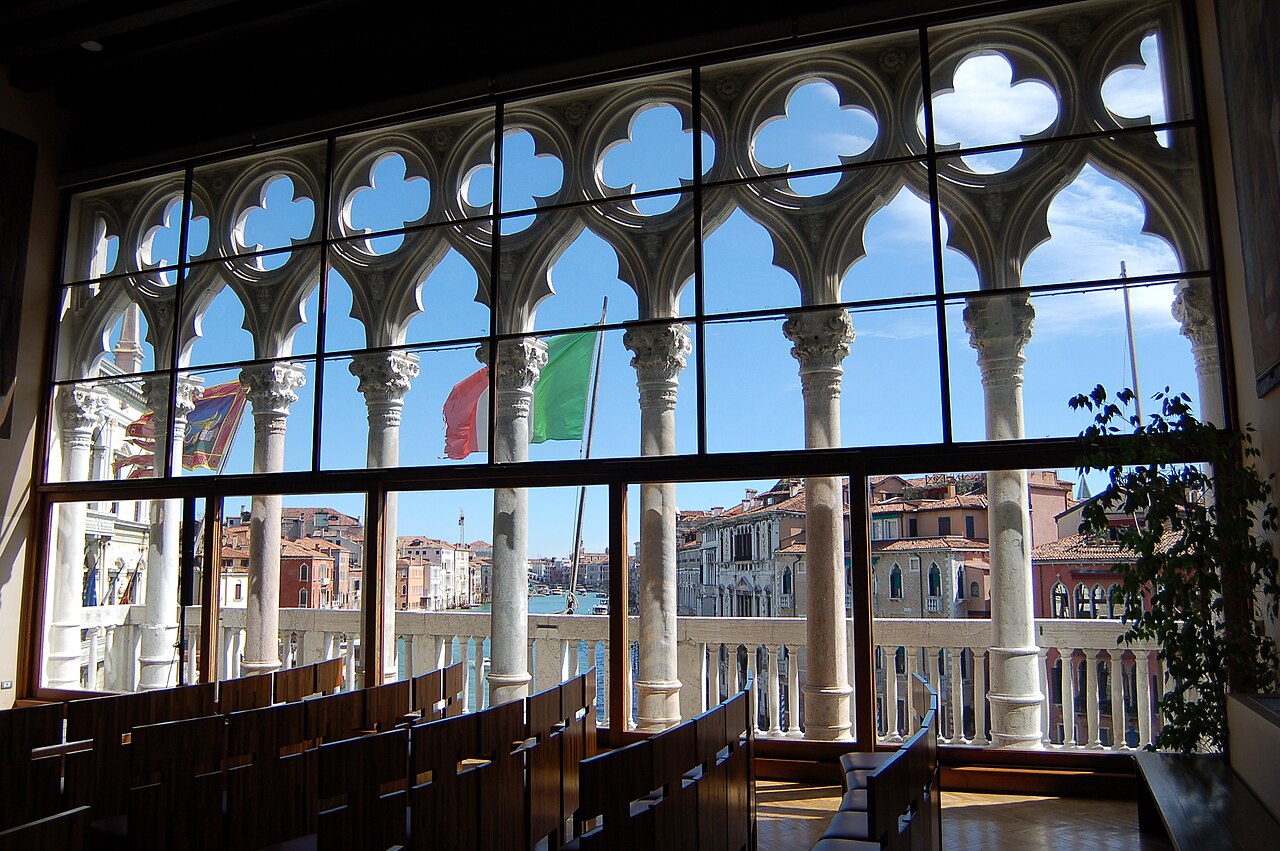
In Ca' Foscari, the palazzo that houses the university, Carlo Scarpa created the first Aula Magna from 1935 and turned it into a lecture hall in 1955-1956. He designed the wooden frame closing the Gothic mullioned window, the wooden platform, the marble frame and the boiserie of wood and glass; two murals, by Mario Sironi and Mario De Luigi, decorate the room.
Affiliate links — booking through Verrière helps fund our research, at no extra cost to you.
History
Ca' Foscari is a late Venetian Gothic palazzo, built in the 15th century for Doge Francesco Foscari. In 1868 it became the seat of the Regia Scuola Superiore di Commercio (Royal Higher School of Commerce), which would later become Ca' Foscari University.
In 1935 Agostino Lanzillo commissioned Carlo Scarpa to restore parts of the palazzo and to create its first Aula Magna, in place of the university's commodities museum (Museo Merceologico). The project, carried out between 1935 and 1937, covered a frame closing the Gothic mullioned window, a students' tribune, a wooden platform carrying the professor's desk, a marble frame and two marble pedestals.
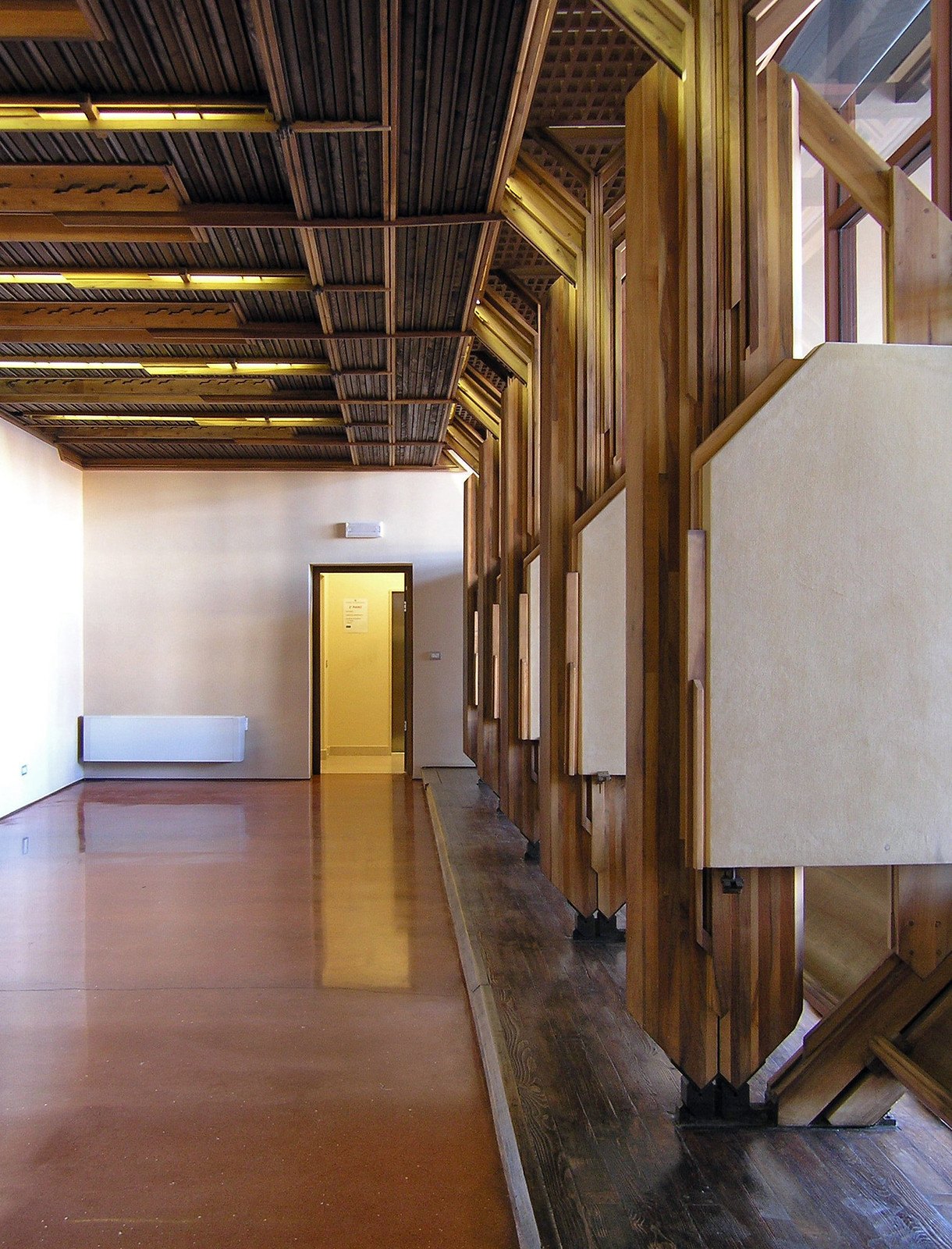
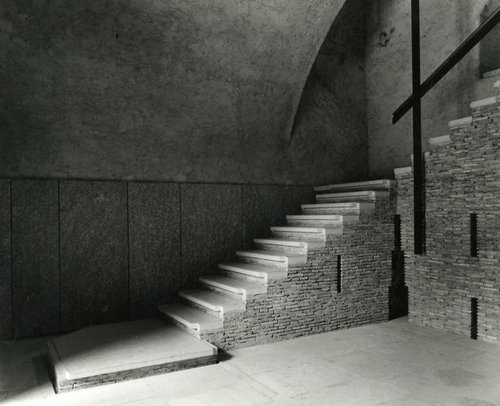
The rector Italo Siciliano later called Scarpa back to turn the Aula Magna into a lecture hall: in 1955-1956 the architect removed the old students' tribune and drew up the boiserie, a scenographic structure of wood and glass that separates the room from the outer corridor.
The room is named after Mario Baratto, a theatre specialist who held the chair of Italian literature at Ca' Foscari.
Architecture
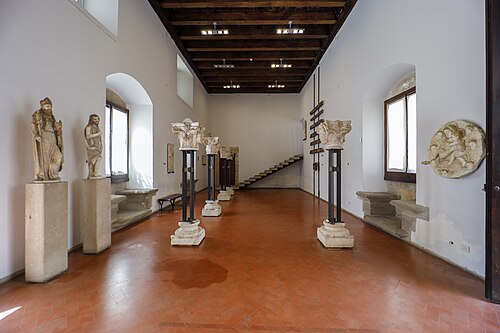
The room is on the second floor of the palazzo. The long Gothic mullioned window in white marble, closed by a wooden frame in horizontal lines that Scarpa designed, is the true centre of the composition: it frames the Grand Canal as seen between the Rialto and Accademia bridges.
The wooden platform is made of sliding blocks. A Latin inscription stands on the marble frame and its pedestals; it urges the reader to consult books in order to learn from those who reflected before us, then to close them and reflect on one's own.
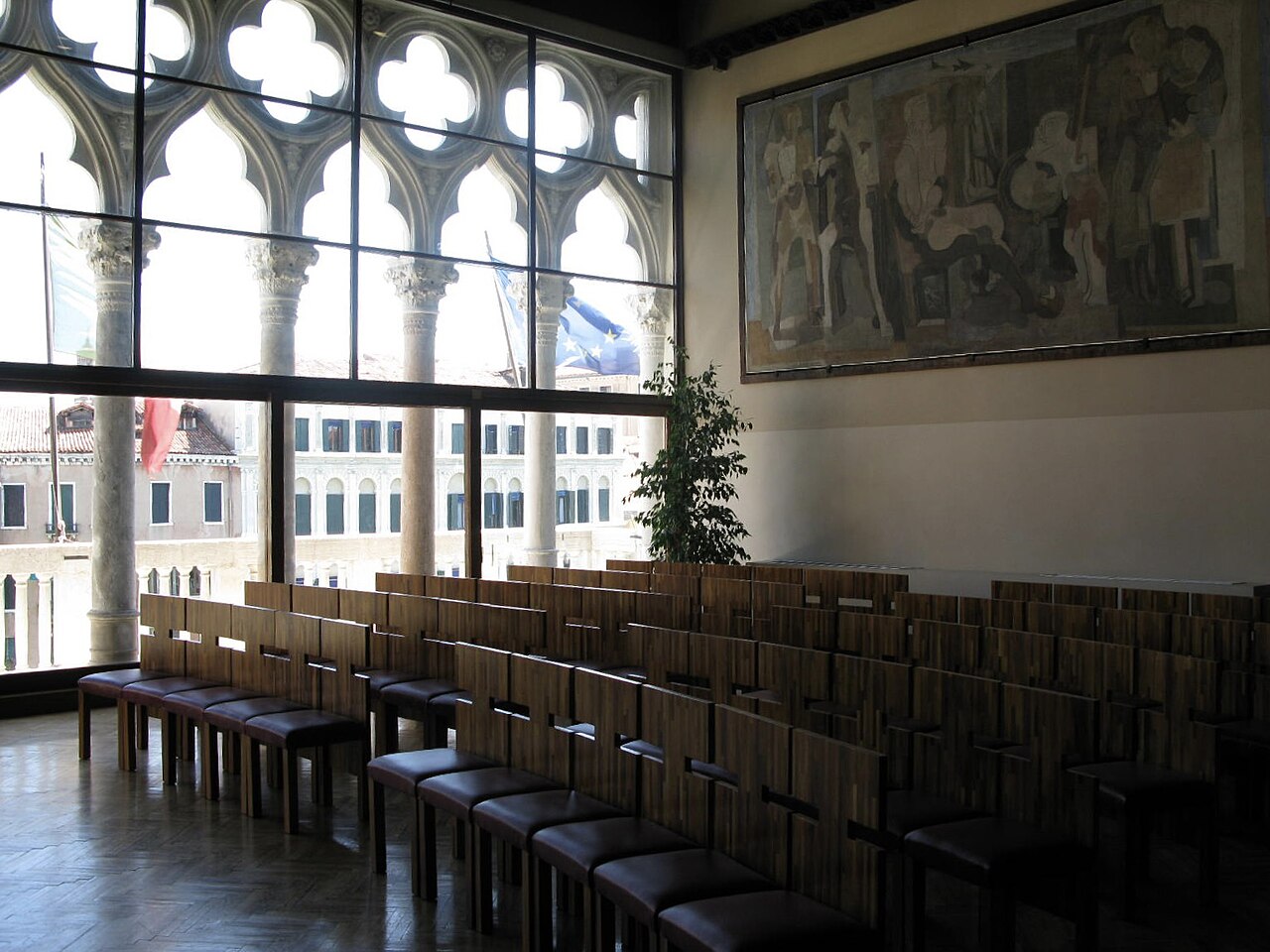
Two murals decorate the room: "Venezia, l'Italia e gli studi" (Venice, Italy and Learning) by Mario Sironi and "La scuola" (The School) by Mario De Luigi.
Use today
The Aula Baratto can now be booked for institutional and cultural events; it seats 70 in 120 square metres. The boiserie that separates it from the corridor can host a small buffet.
The university's guided-tour service was launched on 16 March 2009 with a first route through the palazzo that passed through this room.
Visiting
The university's free guided tours (Ca' Foscari Tour), led by students, take place on Saturday mornings from the Ca' Foscari courtyard (Dorsoduro 3246). They last 40 minutes, in Italian or English, and need no booking: visitors go to the Ca' Foscari Tour desk in the courtyard at least 10 minutes before the departure time.
Which rooms are shown depends on what is free at the university: the route covers either Ca' Foscari with the Aula Baratto, or Ca' Dolfin with the Aula Magna Silvio Trentin.
Photos
45.43° N, 12.33° E
Greenhouses nearby
Architecture nearby
By the same architect
Sources (11)
- unive.it/web/it/17290/carlo-scarpa
- unive.it/web/en/18412/carlo-scarpa
- unive.it/web/it/17287/home
- unive.it/web/en/18414/home
- unive.it/web/it/17289/chi-siamo
- unive.it/web/en/18413/about-us
- unive.it/pag/30119/
- unive.it/pag/31156/
- unive.it/pag/fileadmin/user_upload/ateneo/spazi/schede-storiche/scheda_cenni_storici_barat
- unive.it/pag/fileadmin/user_upload/ateneo/spazi/schede-storiche/scheda_cenni_storici_barat
- treccani.it/enciclopedia/carlo-scarpa_%28Dizionario-Biografico%29/
Affiliate links — booking through Verrière helps fund our research, at no extra cost to you.