Pavillon Le Corbusier
Zürichhorn, Zurich
Sources checked October 2026
- Year
- 1967
- Architect
- Le Corbusier
- Type
- Exhibition pavilion, museum
- Access
- Open to the public from April to November, Tuesday to Sunday; closed in winter (official website, October 2026)
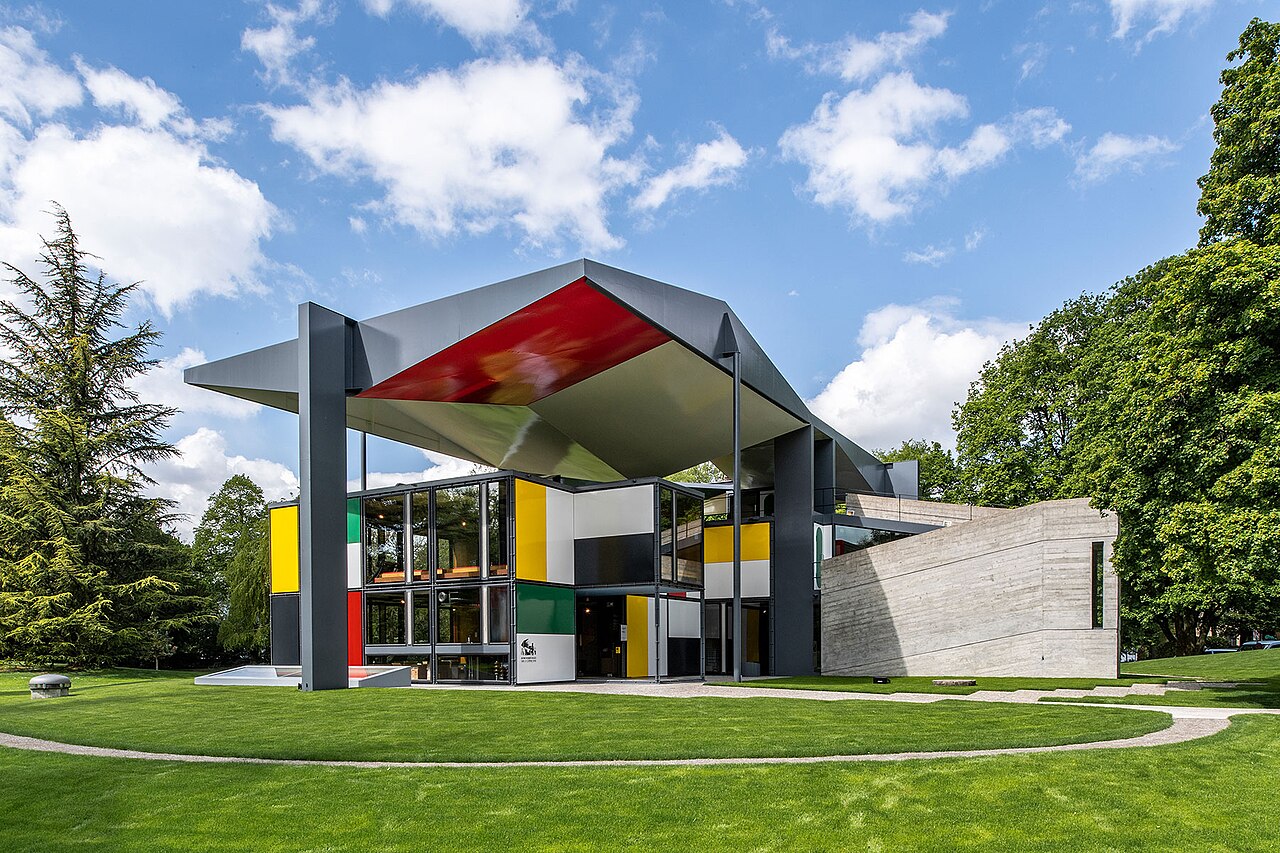
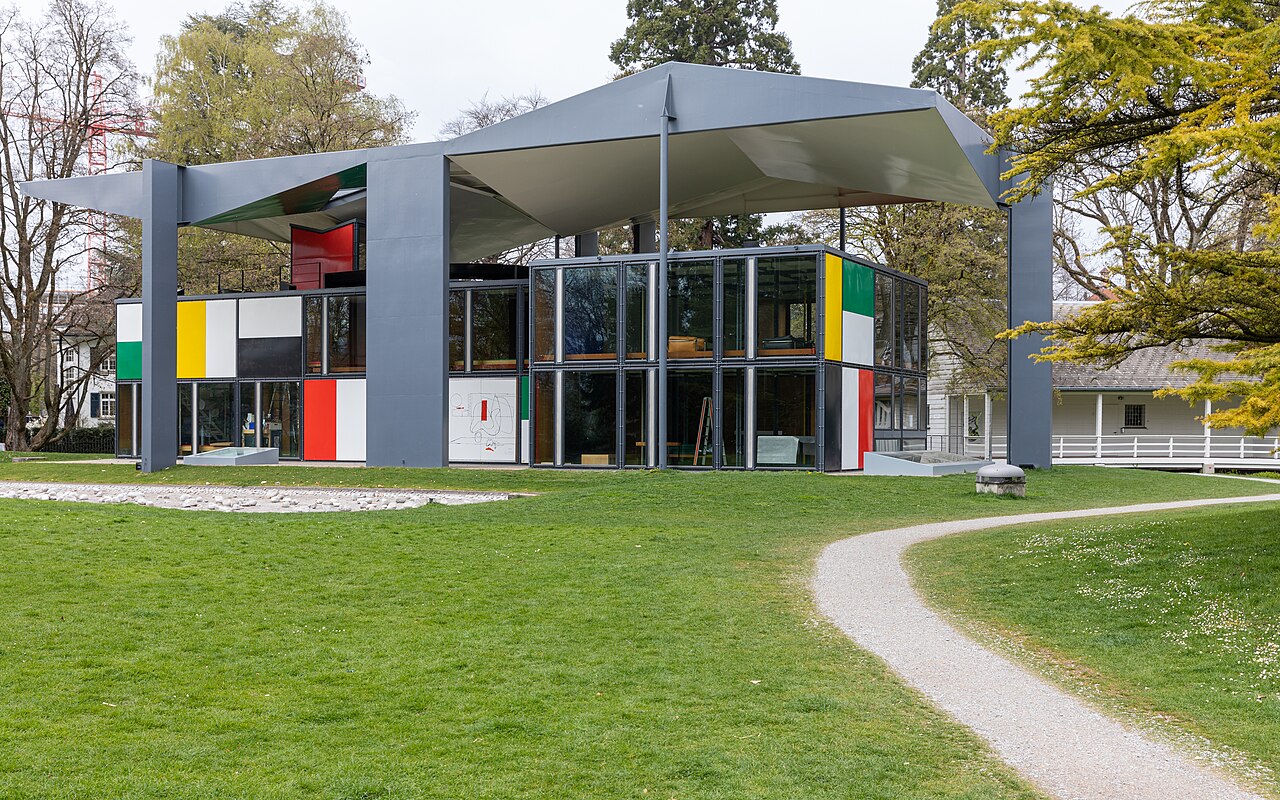
In the Zürichhorn park, on the shore of Lake Zurich, Le Corbusier designed a “House of Man” for Heidi Weber, inaugurated in July 1967. An independent metal roof on nine steel pillars shelters a body of prefabricated steel plates; a stair and a ramp lead to a terrace under the roof. Since 2019 the Museum für Gestaltung Zürich has run it on behalf of the City of Zurich and presents an exhibition devoted to Le Corbusier every year.
Affiliate links — booking through Verrière helps fund our research, at no extra cost to you.
History
Heidi Weber, an interior designer, gallerist and patron who owned the Mezzanin gallery in Zurich, organised in February 1959 the first of many exhibitions she devoted to Le Corbusier: furniture, reissues of the four armchairs of 1928, drawings and paintings. In January 1960 she gave him the commission for the House of Man (Maison de l'Homme), which was meant to be a living centre of contemporary culture in central Zurich. She financed the building, which stands in the Zürichhorn park on land the City granted her for fifty years.
The project was long and eventful. Le Corbusier's first scheme was in concrete; the final design was conceived in steel, at Heidi Weber's request. In 1965 Le Corbusier signed the last plans and entrusted the execution to his friend, the architect Willy Boesiger. After his death, the direction of the project passed to his collaborators Alain Tavès and Robert Rebutato, who had Ernst Iten's help on site; Lisbeth Sachs led the end of the construction. The building was inaugurated in July 1967 as the Heidi Weber Museum – Centre Le Corbusier.
Heidi Weber ran the museum as its director and curator. The building hosted exhibitions, talks and meetings dealing with architecture, the environment and contemporary art until it was handed over to the City of Zurich in 2014, at the end of the lease. A restoration funded by the municipality, the canton and the Confederation treated the structures damaged by rust, made the roof and the façades watertight and repaired the underfloor heating. Since 2019 the Museum für Gestaltung Zürich has run the monument on behalf of the City, under the name Pavillon Le Corbusier.
Architecture
Le Corbusier conceived the building from the outset as an exhibition pavilion: he wanted to build the ideal place for exhibitions, where art, architecture and life would merge into a new unity, in keeping with his vision of a “synthesis of the arts”. Sketches and plans bear witness to a long gestation from the mid-1950s.
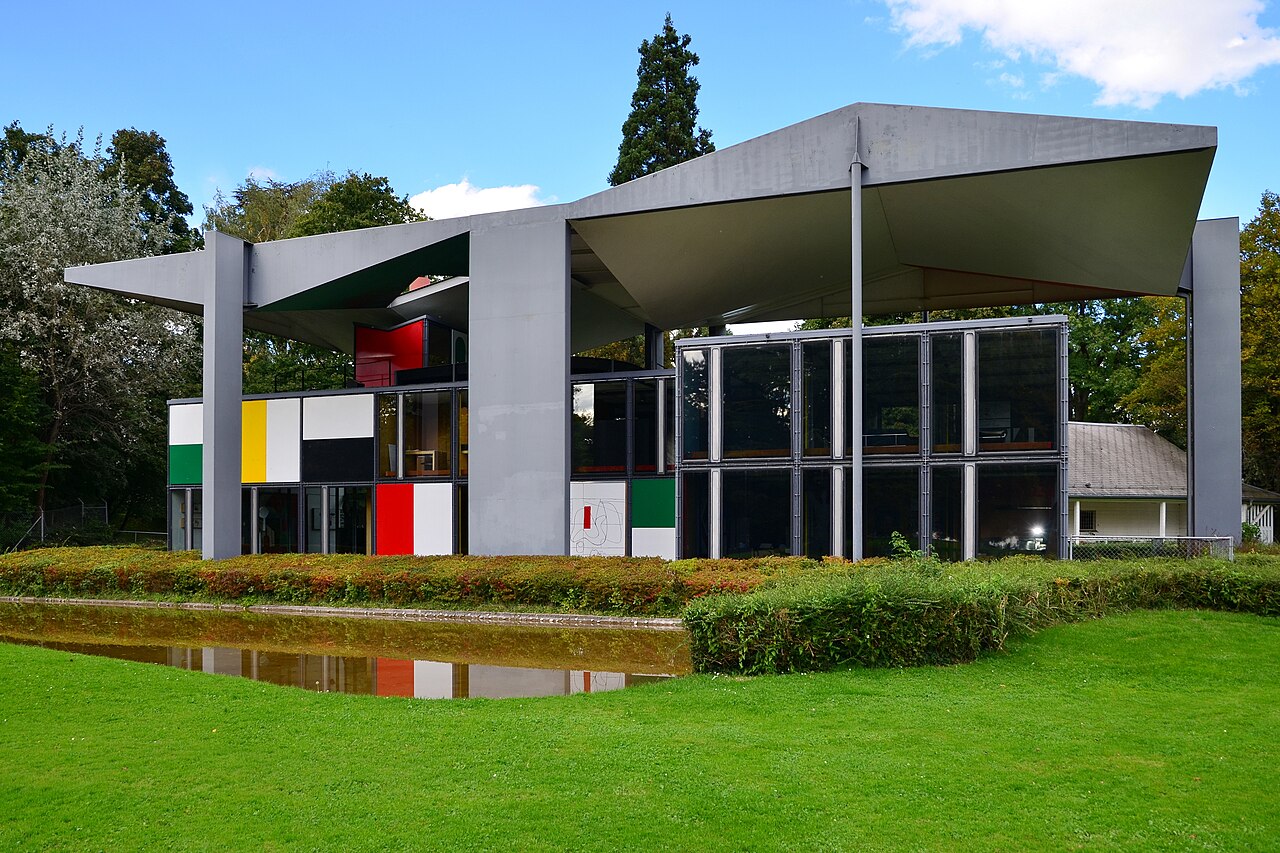
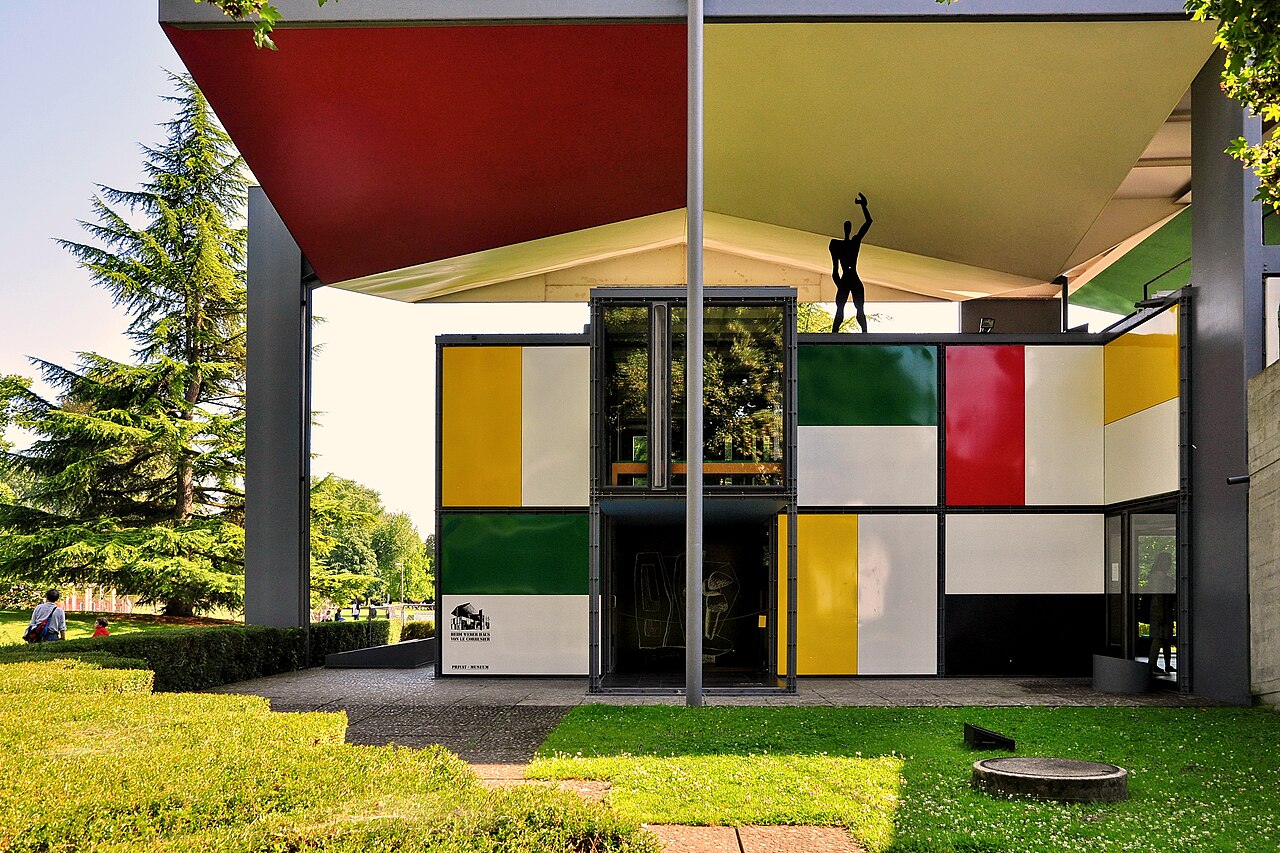
The building has two parts. The first is a large independent metal roof carried by nine steel pillars, which protects permanently from rain and sun; it was the first element built, and it shelters the main body. That body, independent of the roof, is made of cubic elements, namely steel plates that were prefabricated, bolted together and assembled at the site. The cubes, 226 cm on a side, follow the measurements of the Modulor, Le Corbusier's system of proportions. The façade combines glazed bays with enamelled steel panels in vivid colours (red, green and yellow).
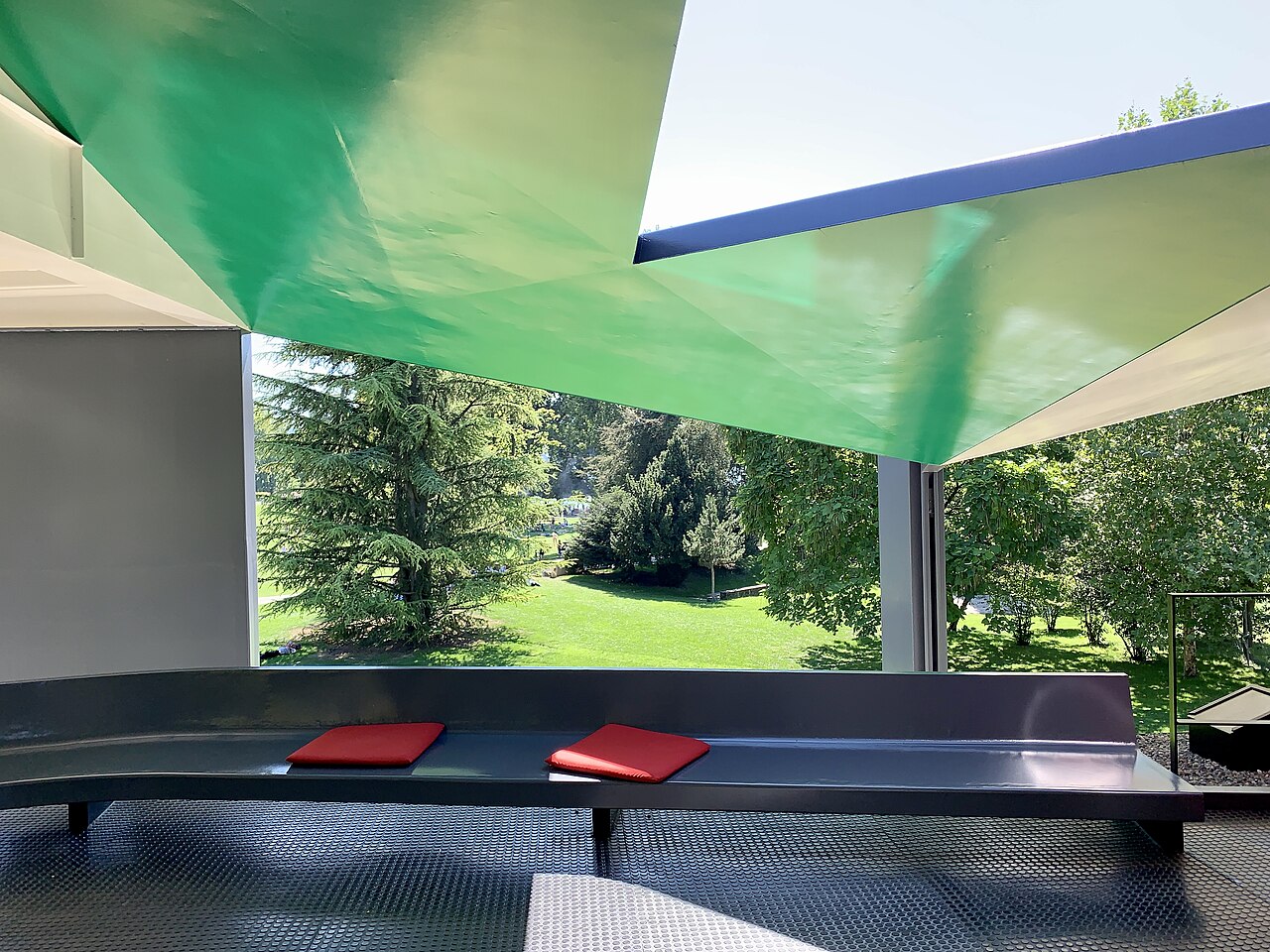
Inside, a vast open space with a stair and a ramp invites the “architectural promenade” over several levels and leads to a terrace sheltered under the roof. This ship-like construction takes up elements dear to the architect: prefabrication, the ramp, which is expressed on the façade, the small roof garden, and the pivoting doors already used at the Maison Cook and in his studio apartment on rue Nungesser-et-Coli.
Use today
The pavilion is a public museum. Every year a new temporary exhibition presents a facet of the work of Le Corbusier, who was also a painter, draughtsman, sculptor and furniture designer. Guided tours, talks around the exhibitions, workshops and a series of concerts complete the programme. A creative table is open to everyone, an architecture trail, “Ma Promenade”, is aimed at young people from the age of 9, and an audio guide with 18 stations explains the building and its place in Le Corbusier's work. In season, outside opening hours, it can be hired for events of up to 100 people.
Visiting
The pavilion is open from April to the end of November, Tuesday to Sunday from 12 noon to 6 pm, and until 8 pm on Thursday; it is closed on Monday and on some public holidays. In winter, from December to April, it is closed, but the exterior can be seen at any time. Admission is free for visitors under 20 and for everyone on Thursday from 5 pm. Tickets are bought on site: the museum does not offer online ticketing. Groups of ten or more should register a week in advance.
The address is Höschgasse 8; the tram (lines 11 and 15) or the bus (33 and 916) stops at Höschgasse, and there is no car park. The building, protected as a monument, is not fully accessible: the lower floor and the upper floor are only partly usable in a wheelchair, the roof terrace is not accessible to people with reduced mobility, and pushchairs are not allowed.
Photos
47.36° N, 8.55° E
Greenhouses nearby
Architecture nearby
By the same architect
Sources (8)
- pavillon-le-corbusier.ch/de
- museum-gestaltung.ch/de/entstehung-und-geschichte-des-pavillon-le-corbusier
- museum-gestaltung.ch/de/besuch
- fondationlecorbusier.fr/oeuvre-architecture/realisations-pavillon-dexposition-zhlc-maison-
- fondationlecorbusier.fr/visiter/autres-sites-le-corbusier/
- openstreetmap.org/way/101932547
- wikidata.org/wiki/Q65243902
- fondationlecorbusier.fr/en/work-architecture/achievements-zhlc-exhibition-pavilion-maison-
Affiliate links — booking through Verrière helps fund our research, at no extra cost to you.