Sukkulenten-Sammlung Zürich (Zurich Succulent Plant Collection)
Zurich, Canton of Zurich

Entry updated on October 5, 2026
- Year
- 1947-1948
- Architect
- Unknown
- Style
- Group of functional display glasshouses, extended between 1948 and 1985
- Dimensions
- 4,750 m² site with six or seven display houses depending on the source
- Status
- Open to the public (replacement building planned)
Founded when the merchant Julius Brann bought the cactus grower Jakob Gasser's collection and gave it to the city in 1931, Zurich's municipal succulent collection occupies a group of glasshouses on Mythenquai, in the Enge district, inaugurated in 1948 and extended until the mid-1980s. On a 4,750 m² site it grows some 6,500 species and varieties from more than eighty families. Home since 1950 to the International Organization for Succulent Plant Study, it is listed in the Swiss inventory of cultural property of national importance.
Affiliate links — booking through Verrière helps fund our research, at no extra cost to you.
History
1 min
In the late 1920s the cactus grower Jakob Gasser tried to sell his collection of succulent plants, some 1,500 specimens according to English Wikipedia, to the city of Zurich, which turned it down. The department-store owner Julius Brann bought it in 1929 and gave it to the city two years later. As the municipal cactus collection, it opened to the public in 1931 on Mythenquai, on the former site of the city's nursery.
Hans Krainz, director from 1931, expanded the holdings and built up international contacts that led in 1950 to the founding of the International Organization for Succulent Plant Study (IOS), with its seat in Zurich; the IOS reference collection was set up there in 1955. According to English Wikipedia, the main building was put up in 1947, inaugurated in 1948 and enlarged in 1954, 1961 and 1984; the city dates the last phases of extension and renovation to 1979-1985, when a new administration building was also built.
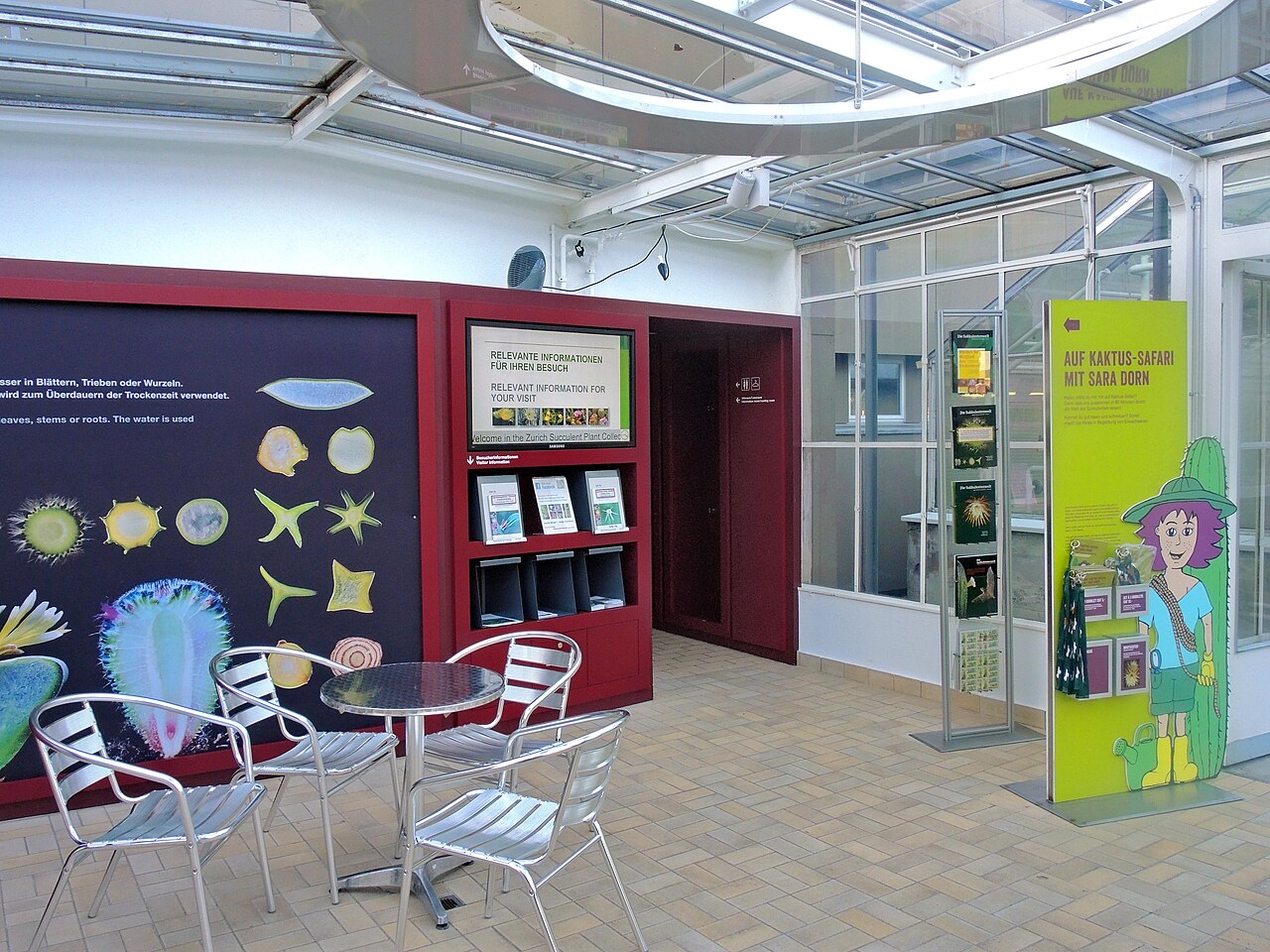
In the early 1990s municipal budget pressures raised the threat of closure or outsourcing, which was finally lifted in 1999; a support association had been formed in 1996. For its eightieth anniversary in 2011 the collection renovated its entrance area. With the facilities now judged to be in very poor condition, the city is planning a compact new building.
Architecture and engineering
1 min
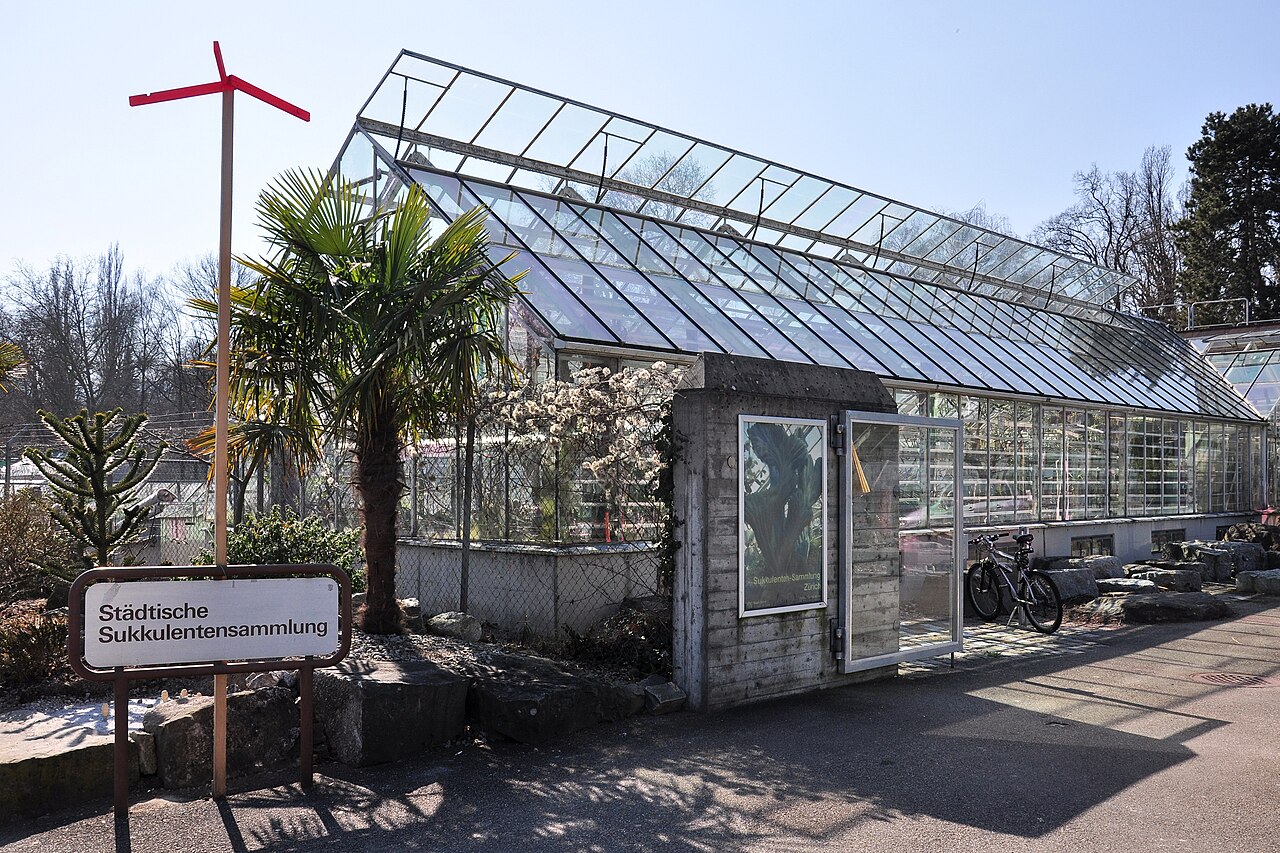
The site covers 4,750 m², under half a hectare, beside Mythenquai, the road that separates it from the lake shore. It brings together public display glasshouses, six according to Wikipedia and seven according to the ausflugsziele.ch visitor portal, a stone garden and an outdoor area planted with hardy succulents. Behind them are propagation glasshouses and heated cold frames used for acclimatisation and overwintering; the quoted areas vary from 538 to 700 m² for the glasshouses and from 400 to 550 m² for the frames.
The buildings are the result of successive extensions, from the inauguration of 1948 to the works of 1979-1985, which explains their functional rather than architectural character. The city of Zurich describes them as in very poor structural and energy condition. Even so, it counts the large glasshouse and the stone garden among the objects worthy of protection, and the collection is a Class A entry in the Swiss inventory of cultural property of national importance. The planned replacement is to rise behind the lake police station and the rowing clubs' boathouses.
Plant collections
1 min
The collection holds about 6,500 species and varieties from more than eighty families and over 25,000 individual plants, according to English Wikipedia; a city document gives a more cautious figure of over 4,400 species. Cacti grow alongside Crassulaceae, Euphorbiaceae, Aizoaceae, Apocynaceae and even orchids, from North and South America, Africa and Madagascar. A herbarium of 20,000 to 30,000 specimens depending on the source, largely digitised, and a specialist library support the scientific work, as does a seed exchange run since 1947 with more than two hundred botanical gardens.
When the queen of the night comes into flower, the collection stays open through the night so that visitors can watch the flowers open.
Visiting
1 min
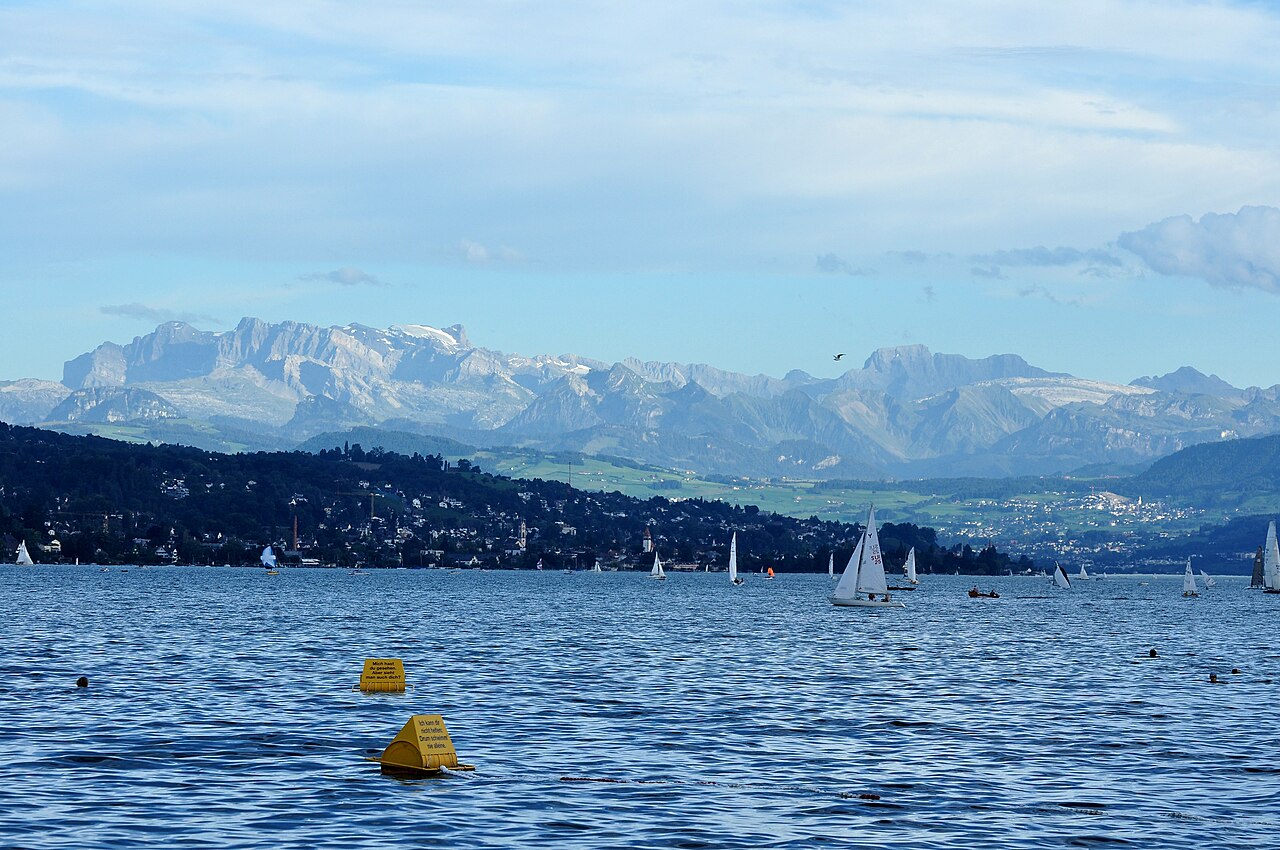
The collection lies on the left bank of Lake Zurich, in the Enge district, within the lakeside promenades along the south-western shore. Admission is free and the route is wheelchair accessible; an hour is enough for the glasshouses and the outdoor garden, part of which stays open in winter. A visit pairs well with a walk along the lake towards the Mythenquai lido or the neighbouring Belvoirpark. The collection receives about 50,000 visitors a year, and counted 63,000 in 2023.
47.36° N, 8.54° E
Greenhouses nearby
More greenhouses — Switzerland
Do you have a good photo of this greenhouse? Suggest it for this page →