Teshima Art Museum (豊島美術館)
Teshima, Tonosho, Kagawa Prefecture
Sources checked November 2026
- Year
- 2010
- Architect
- Ryue Nishizawa
- Type
- Art museum (concrete shell)
- Access
- Open to the public, by ticket for a set date and time (official site, November 2026)
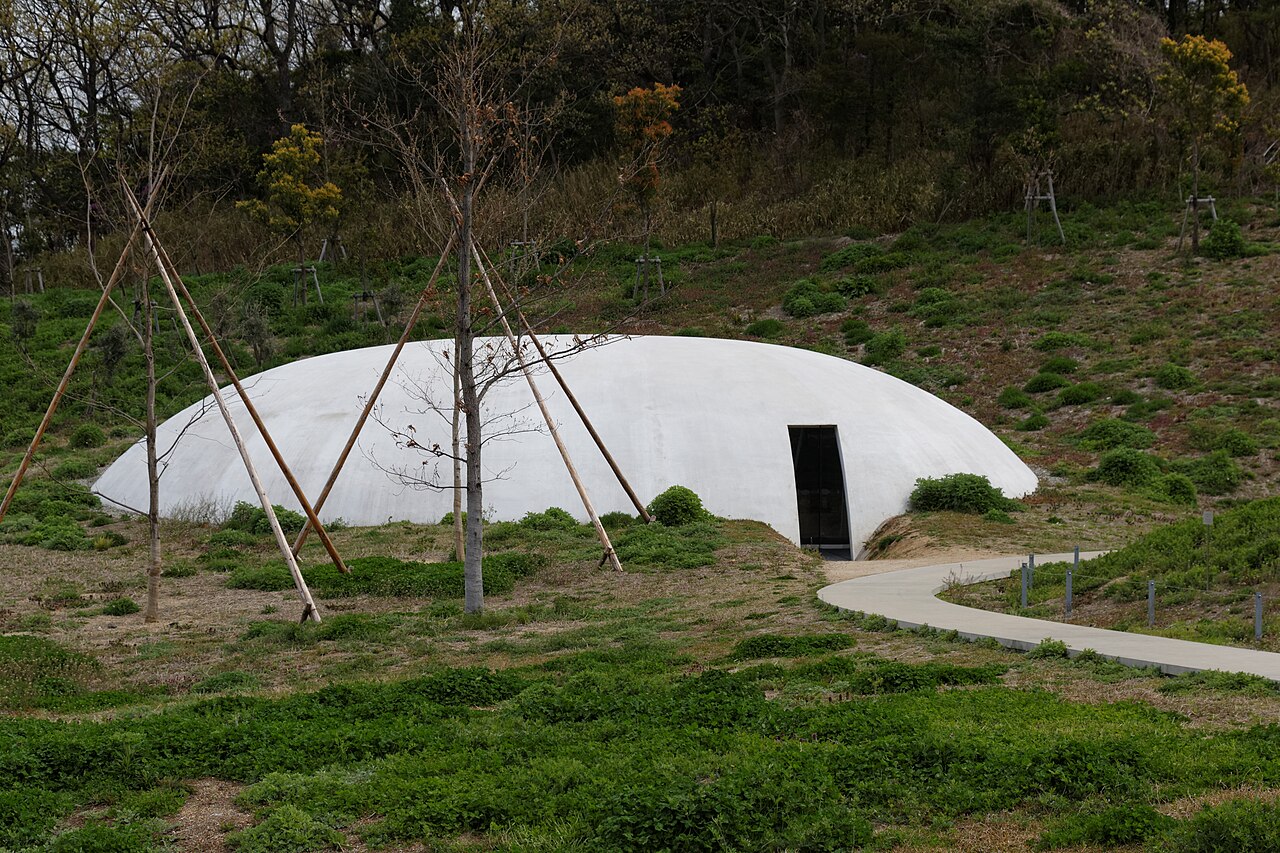
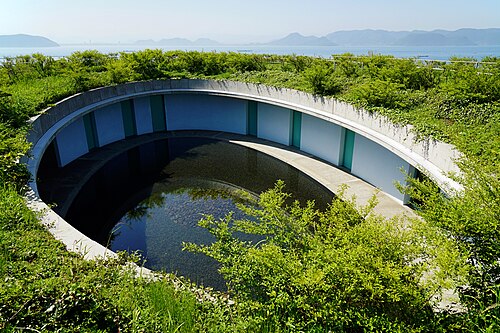
Ryue Nishizawa designed this museum for the brow of a hill on Teshima island, beside terraced paddies that had gone fallow and were revived with the help of residents. Its concrete shell, roughly 40 by 60 metres and free of pillars, takes the form of a water drop, and two openings admit wind, sounds and light. It houses "Matrix", a permanent work by the artist Rei Naito: a spring whose water wells up in many places. The museum opened in 2010.
Affiliate links — booking through Verrière helps fund our research, at no extra cost to you.
History
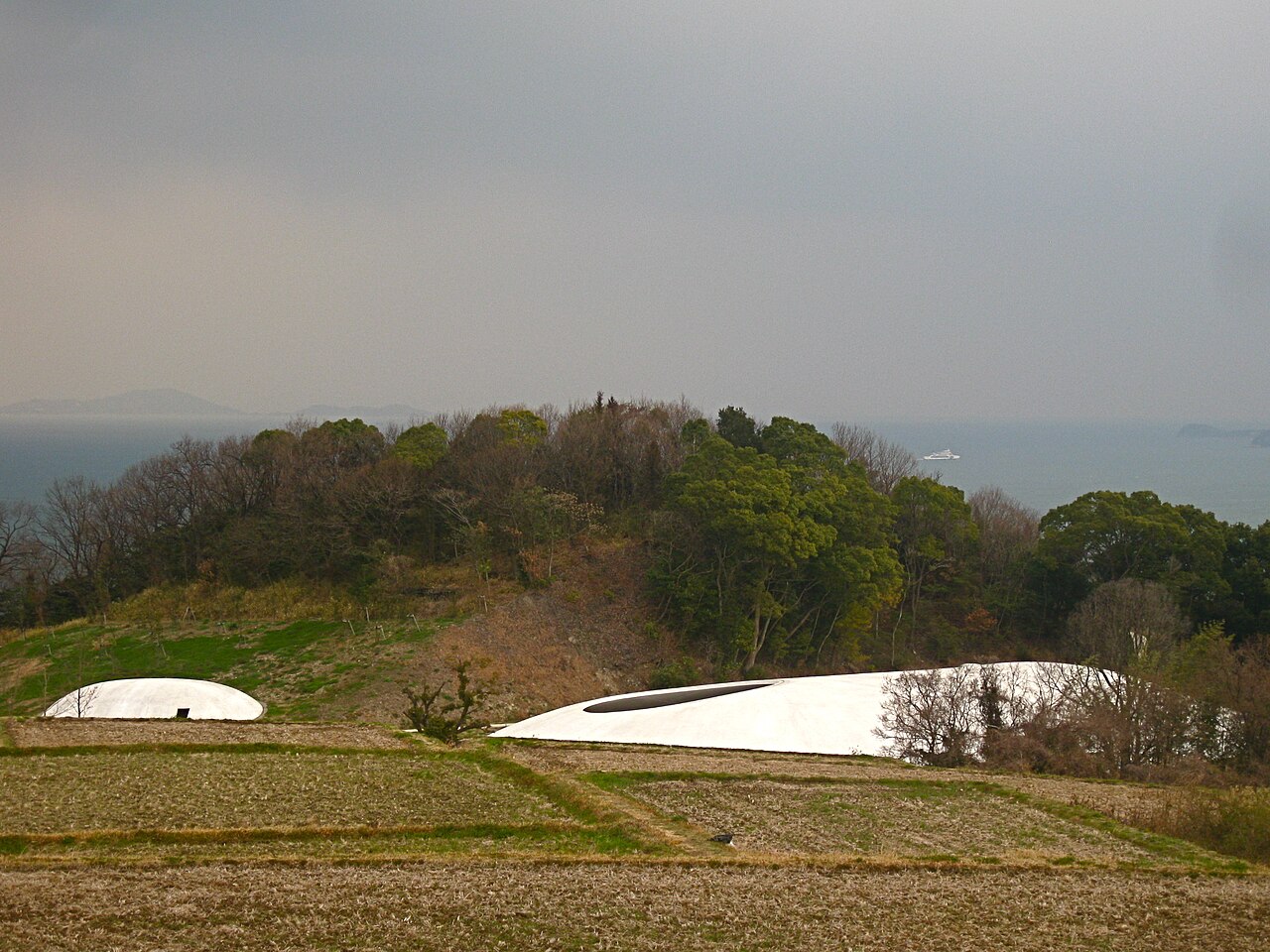
The site is the tip of a hill looking out over the Seto Inland Sea on the island of Teshima, with rice terraces behind it and a forest beside it. A spring once stood here that supplied water for farming; the terraces declined and the spring fell out of use. The fallow terraces were brought back to life together with local residents.
The idea came from the then chairman of the Naoshima Fukutake Art Museum Foundation, who wanted a place where architecture, art and the environment would be one. What he asked of Ryue Nishizawa was a place in which art, nature and architecture could be felt as merged and in harmony; the artwork would be by the contemporary artist Rei Naito. The project ran from 2004 to 2010, the year the museum opened.
Making Nishizawa's idea real called for a low, thin shell roof with no seams. The roof concrete was therefore placed in a single continuous pour, from the morning of 11 March 2010 until around noon the next day, since any pause would have left a construction joint. More than 150 workers were on site; two pump trucks delivered 20 to 30 cubic metres an hour towards the roughly 600 cubic metres the roof needed. As the concrete went in, plasterers smoothed the surface by hand, watchful even of fallen leaves so as not to mark it. Islanders gathered around the site to watch.
Architecture
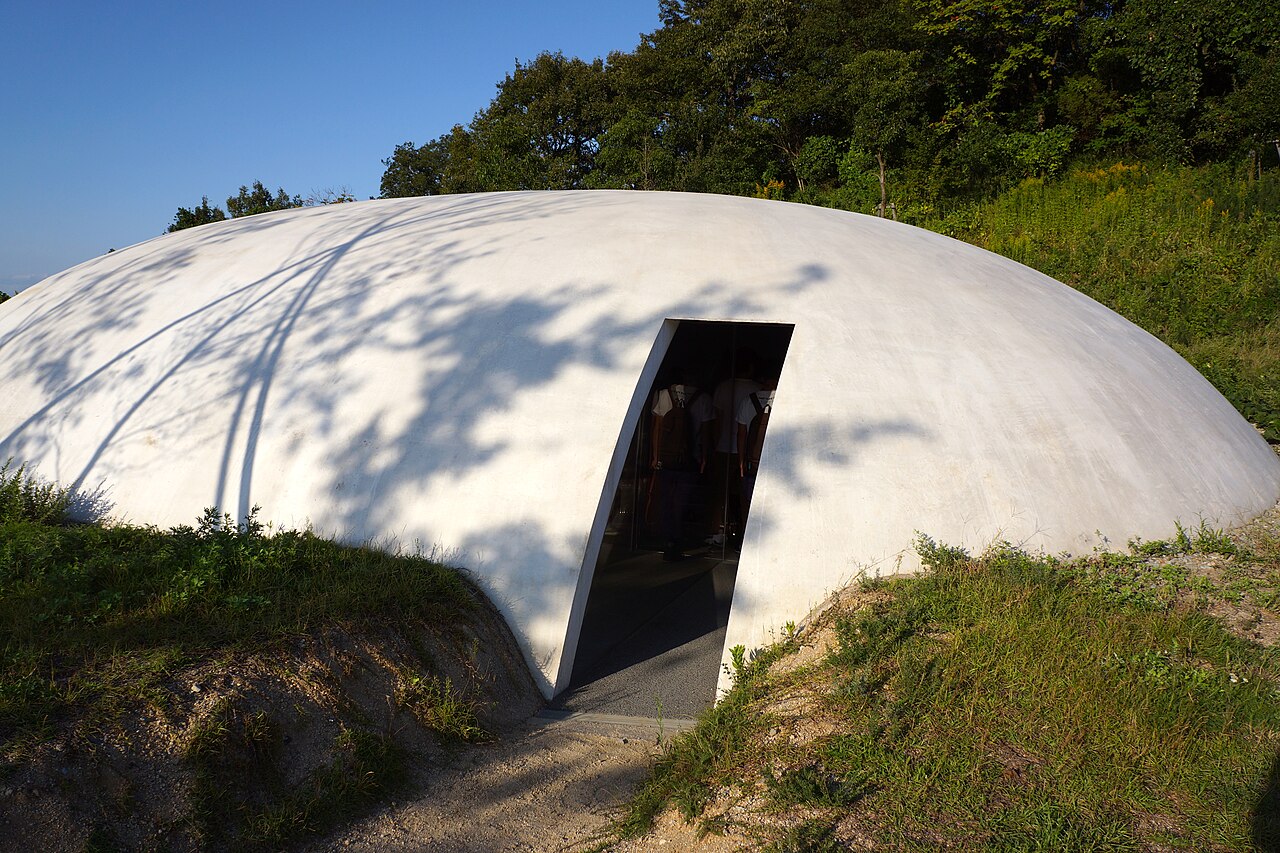
Nishizawa aimed for a building that is an artificial object yet has the naturalness of a hill, in tune with its surroundings and the lie of the land. It is a concrete shell with no pillars at all, about 40 by 60 metres and about 25 centimetres thick, whose shape recalls a drop of water at the instant it touches the ground. He began with a single room drawn with a free curve: a rectilinear building would have meant levelling the neighbouring hill, whereas a free curve can be fitted to it without harming the nature around. The building is the size of the old spring, only slightly enlarged, and its height is held as low as the structure allows, so the room spreads out horizontally.
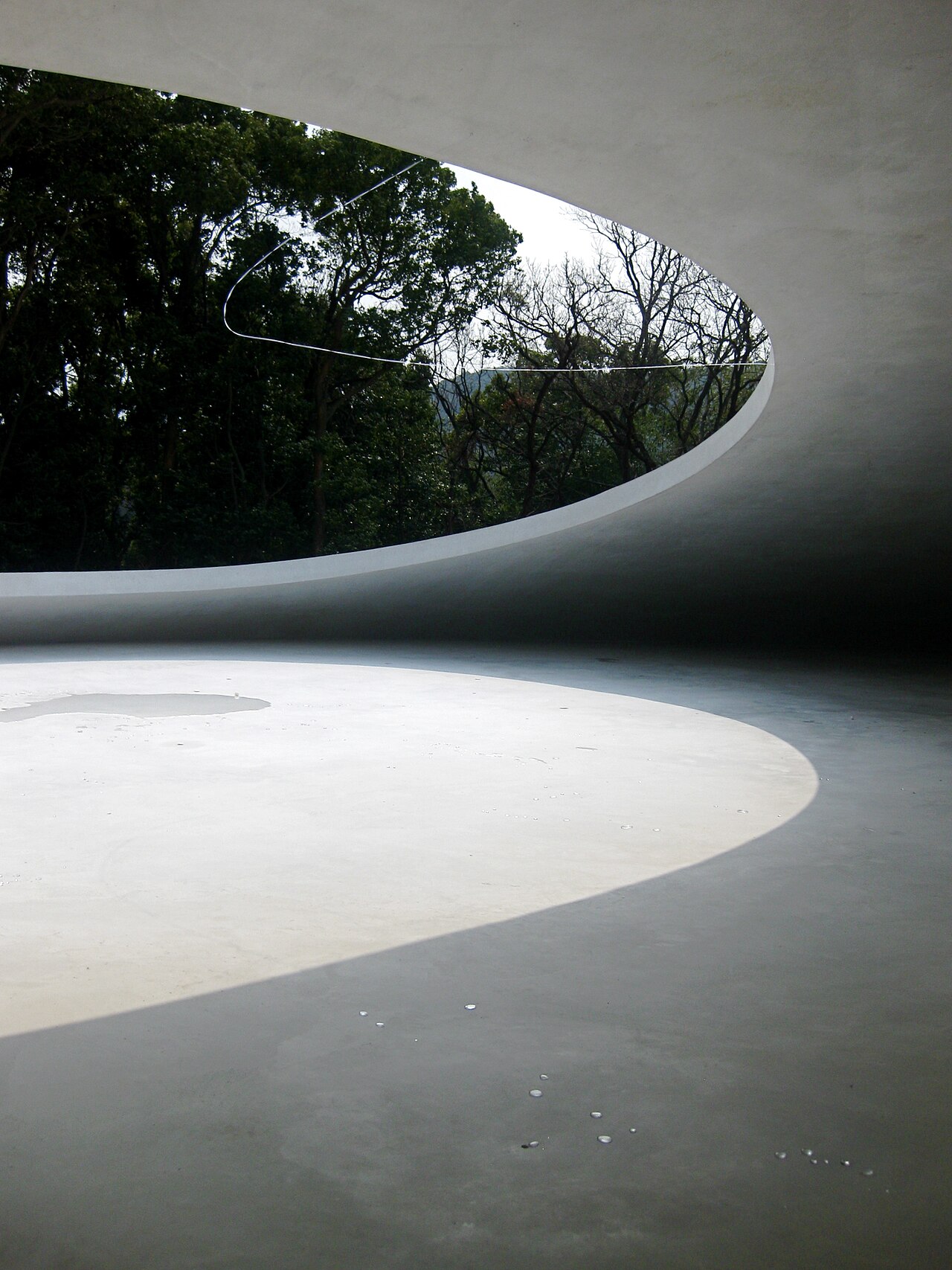
The shell has two large openings. They also answer a construction need: once the concrete was poured, the earth inside had to be dug out. Nishizawa left these working holes as they were, and they now bring wind, sounds, light and rain straight into the room, where the rain joins Rei Naito's work.
Outside, all the planting is made of wild grasses that grow naturally on the island. A ring-shaped path, one-way and walkable only clockwise, leads to the museum: visitors do not go straight to the building but first see the rice terraces, then the Seto Inland Sea, and pass through the forest before they arrive.
Use today
The museum shows "Matrix" (母型), a permanent work by the artist Rei Naito, dated 2010. It is a spring: water wells up in many places throughout the day, and the work answers the light and wind that come in through the two openings, and the singing of birds.
A café and a shop, whose space Nishizawa designed, adjoin the museum.
Visiting
Admission is by ticket for a set date and time, best bought online; when online tickets sell out, none are sold at the door on the day. Children aged 15 and under enter free. The museum opens at 10:00 and closes at 17:00 or 16:00 depending on the season (last entry half an hour before). It is closed on Tuesdays from March to November and from Tuesday to Thursday from December to February; when a closing day falls on a public holiday, the museum opens that day and closes the following day instead, and when a Monday is a holiday it opens on the Tuesday and closes on the Wednesday. In some spaces visitors take off their shoes.
Teshima is reached by boat from Takamatsu, Uno or Naoshima, landing at Ieura or Karato; the museum stands in the Karato area.
Photos
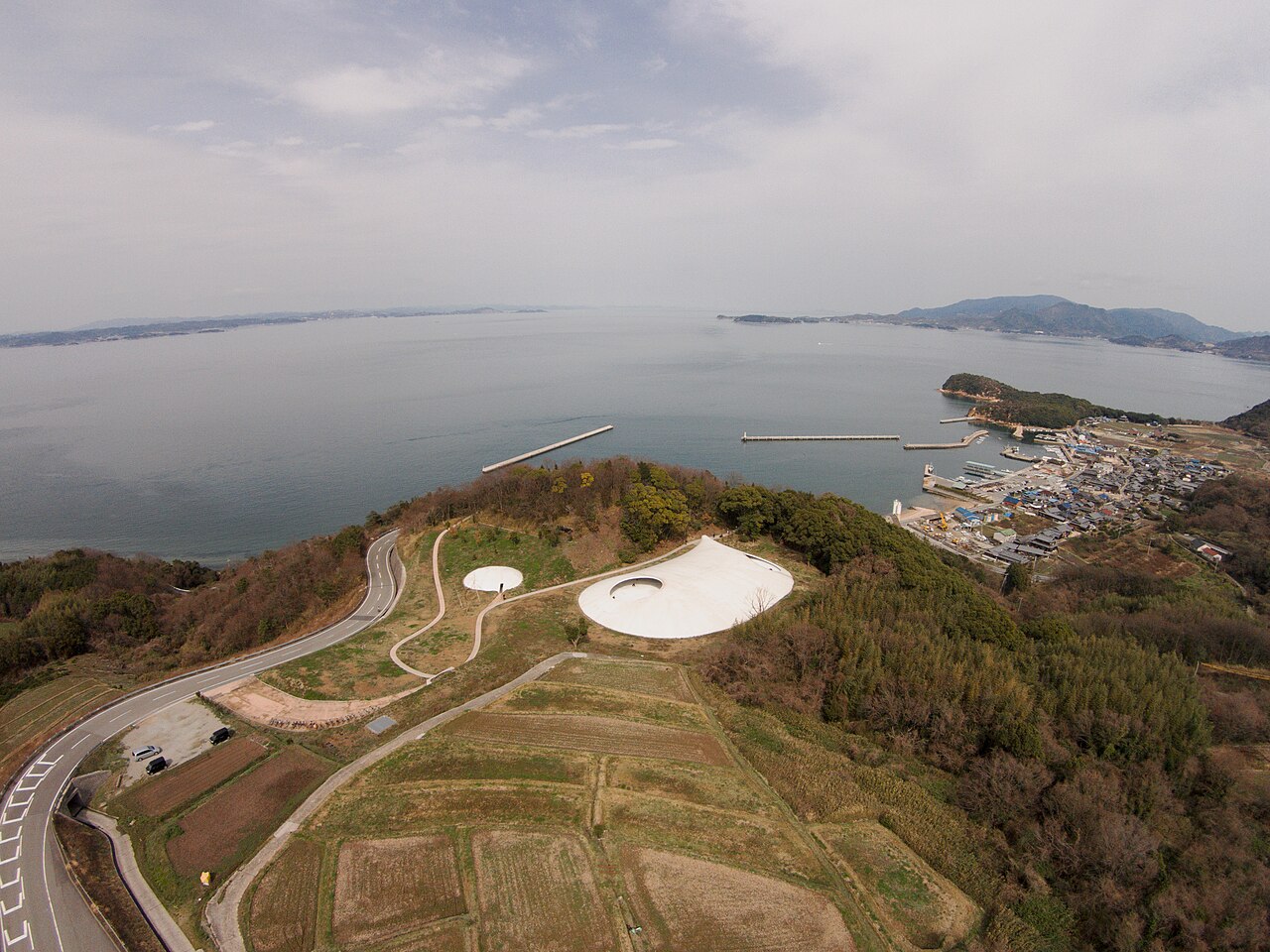
34.49° N, 134.09° E
Greenhouses nearby
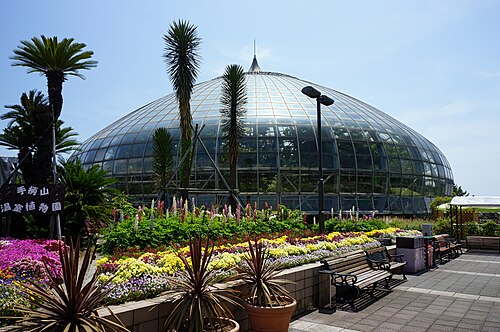
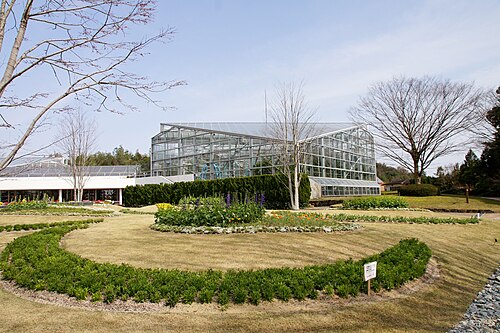
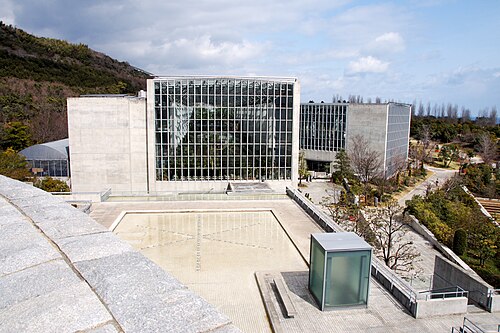
Architecture nearby
By the same architect
Affiliate links — booking through Verrière helps fund our research, at no extra cost to you.