Château La Coste (Art Centre, Chapel, Four Cubes to Contemplate Our Environment)
Le Puy-Sainte-Réparade, Bouches-du-Rhône
Sources checked October 2026
- Year
- 2011
- Architect
- Tadao Ando
- Type
- Art centre, chapel and pavilion on a wine estate
- Access
- Open every day except 25 December; tickets for the self-guided walk bought on site (official website, October 2026)
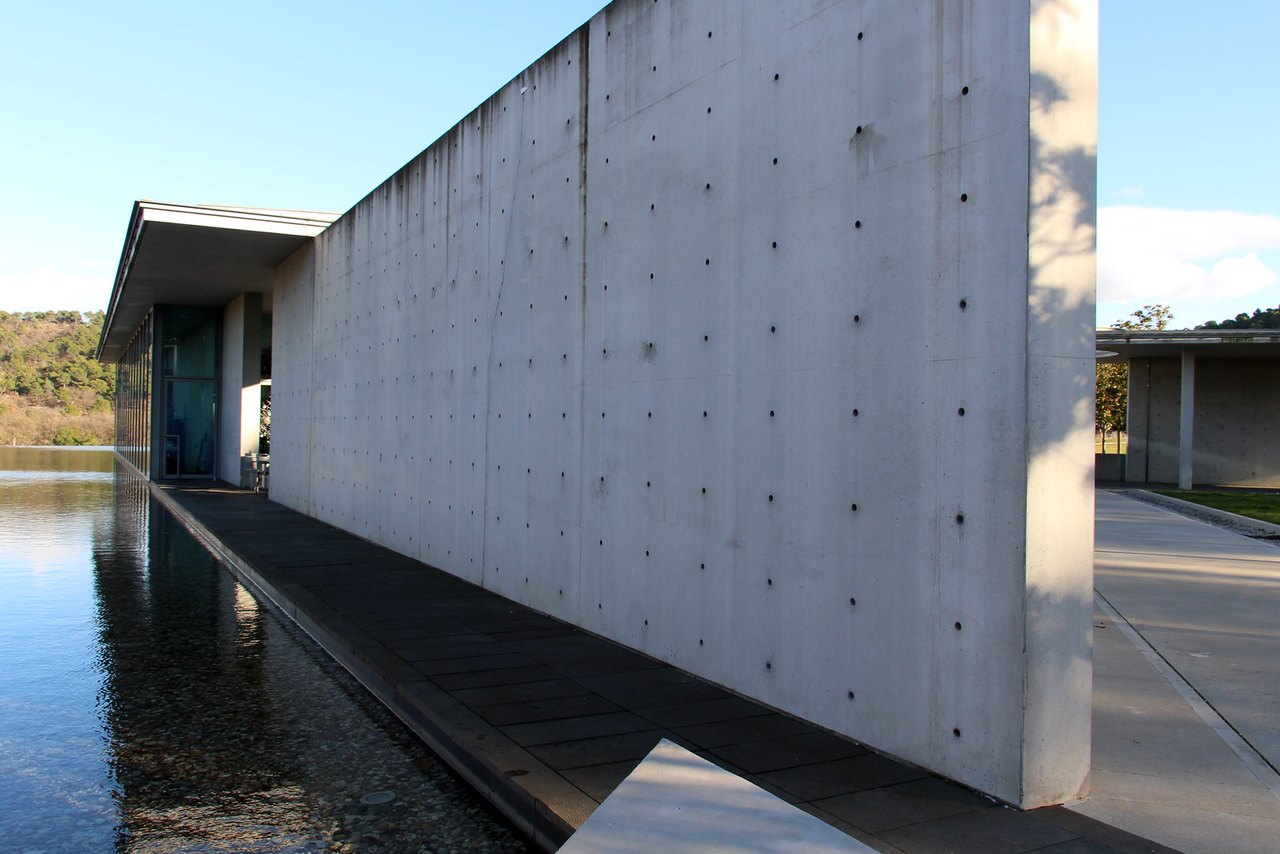
On the Château La Coste wine estate, Tadao Ando designed in 2011 the art centre that serves as the gateway to the park: a V-shaped concrete building jutting out over a pool. Higher up the trail he gave new life to a 16th-century chapel that had fallen into ruin; in a small grove he built a timber pavilion for four glass cubes devoted to the environment. The estate also holds the work of many other artists and architects.
Affiliate links — booking through Verrière helps fund our research, at no extra cost to you.
History
Château La Coste is a wine estate near Aix-en-Provence that the Irishman Patrick (Paddy) McKillen, a real-estate investor and art collector, has been turning step by step since 2004 into a park of art and architecture; the estate has been open to visitors since 2011. Each invited artist designs a work there and chooses its place in the landscape. For this project McKillen called on Tadao Ando, whom he had known since the 1980s, and asked him for a master plan and an art centre to serve as the gateway to the park.
Ando came to the estate for long visits and walked it at every hour of the day. There he designed the art centre, the chapel, the entrance gate (Gate), "origami" benches and a pavilion for his installation Four Cubes to Contemplate Our Environment, conceived between 2008 and 2011. The art centre opened to the public in June 2011, on a former vineyard; the gate, the chapel, the benches and the pavilion date from 2011.
The chapel was a ruined 16th-century building when Ando first came to the estate; he was drawn by the idea of giving it a second life.
Architecture
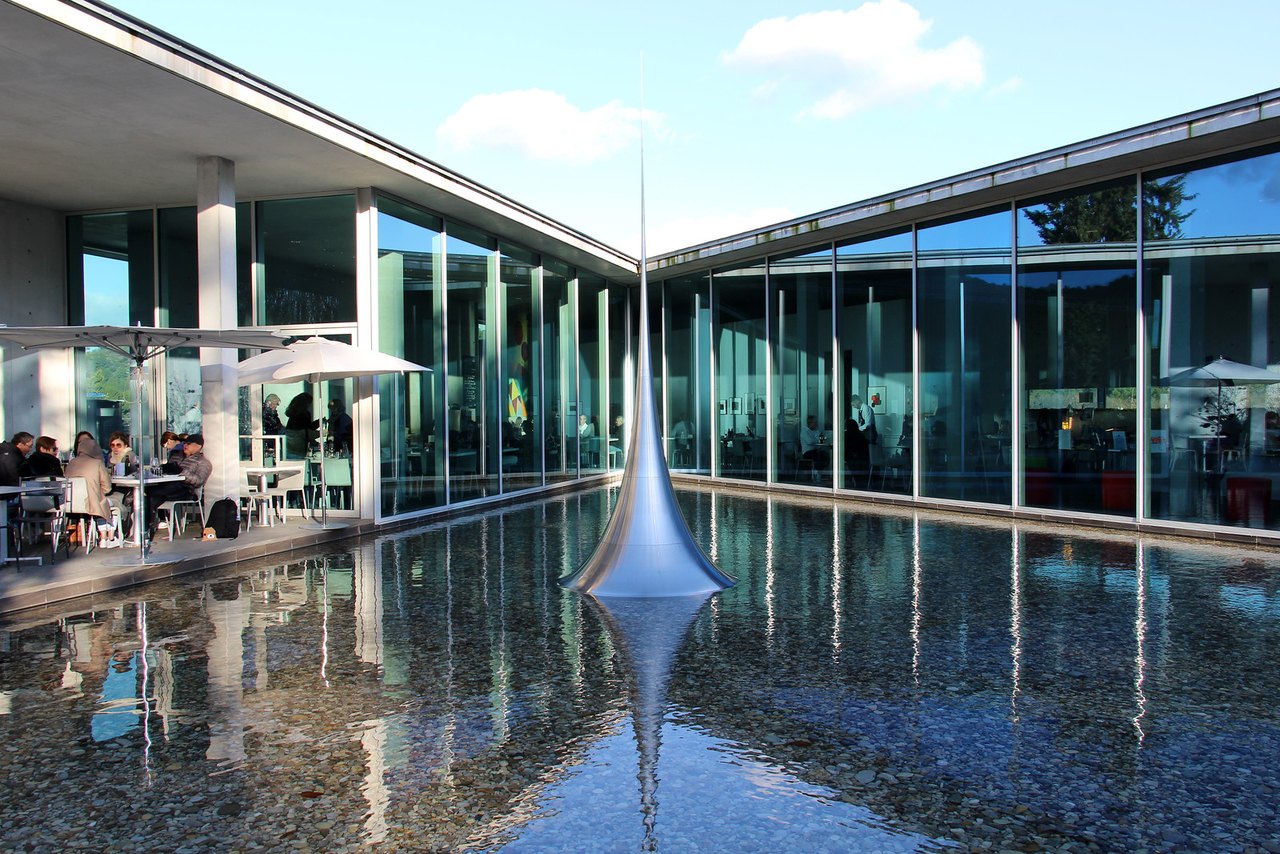
The art centre is a V-shaped building of poured-in-place concrete, of about 3,000 m2 (32,000 square feet). It juts out over a large pool that roofs a car park for 120 vehicles, and concrete, glass and water open up spaces, angles and views onto the Provençal landscape. Columns that begin inside the building continue out into the vines, uniting the culture of art and the culture of wine.
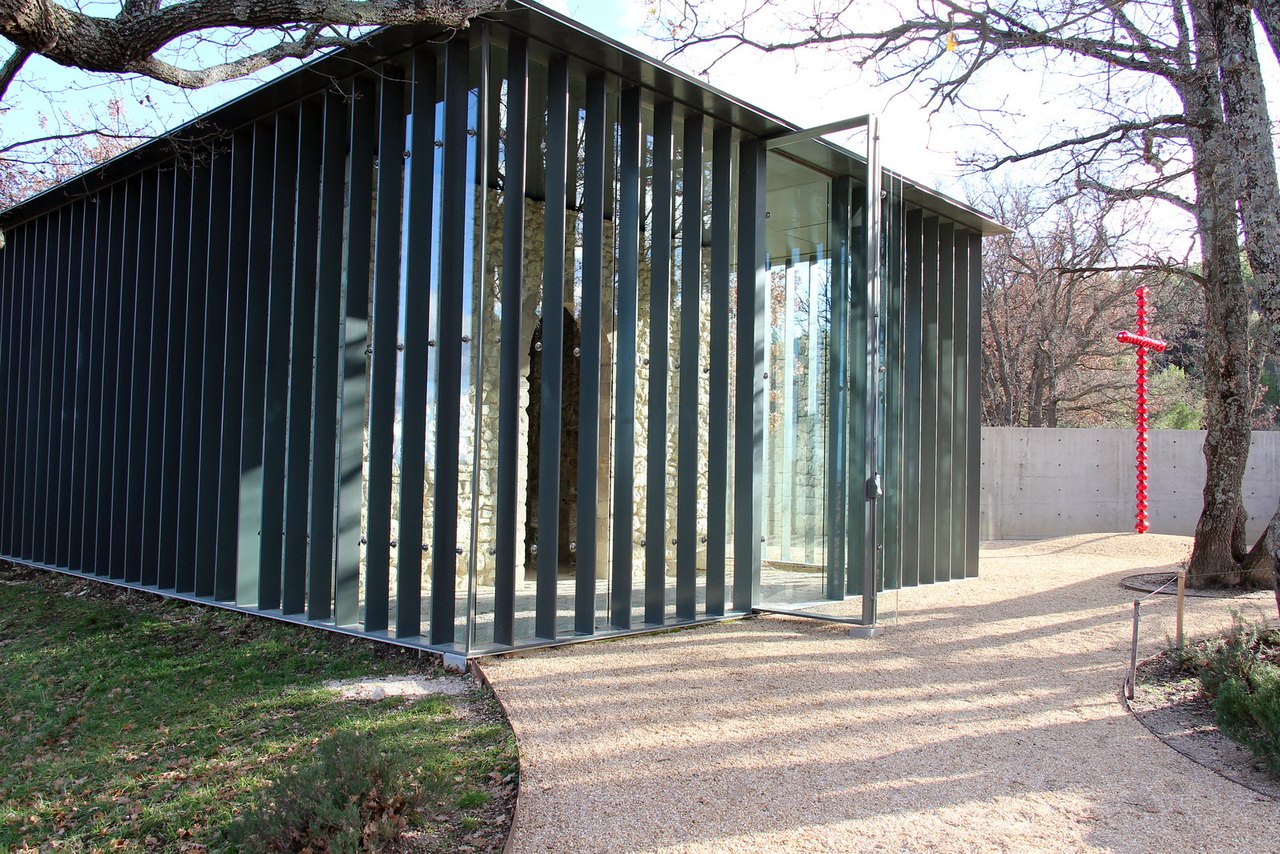
At the highest point of the trail, which gives an unobstructed view over the surrounding countryside, the chapel is built around the old stone walls of the 16th-century building, enclosed in a casing of glass and steel. Visitors arrive between two concrete walls. Inside, in a dark rectangular space, the small openings cut into the rear wall behind the altar are among the few sources of light.
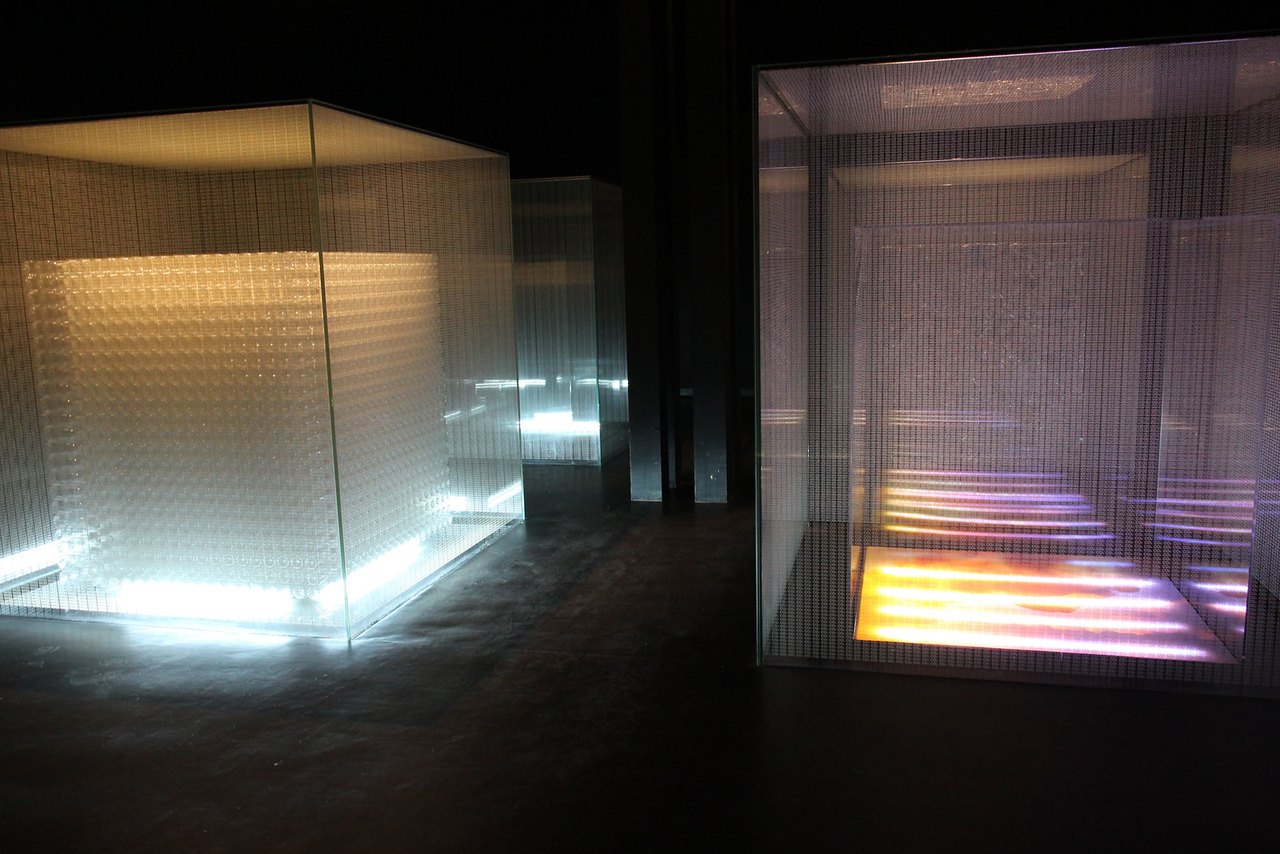
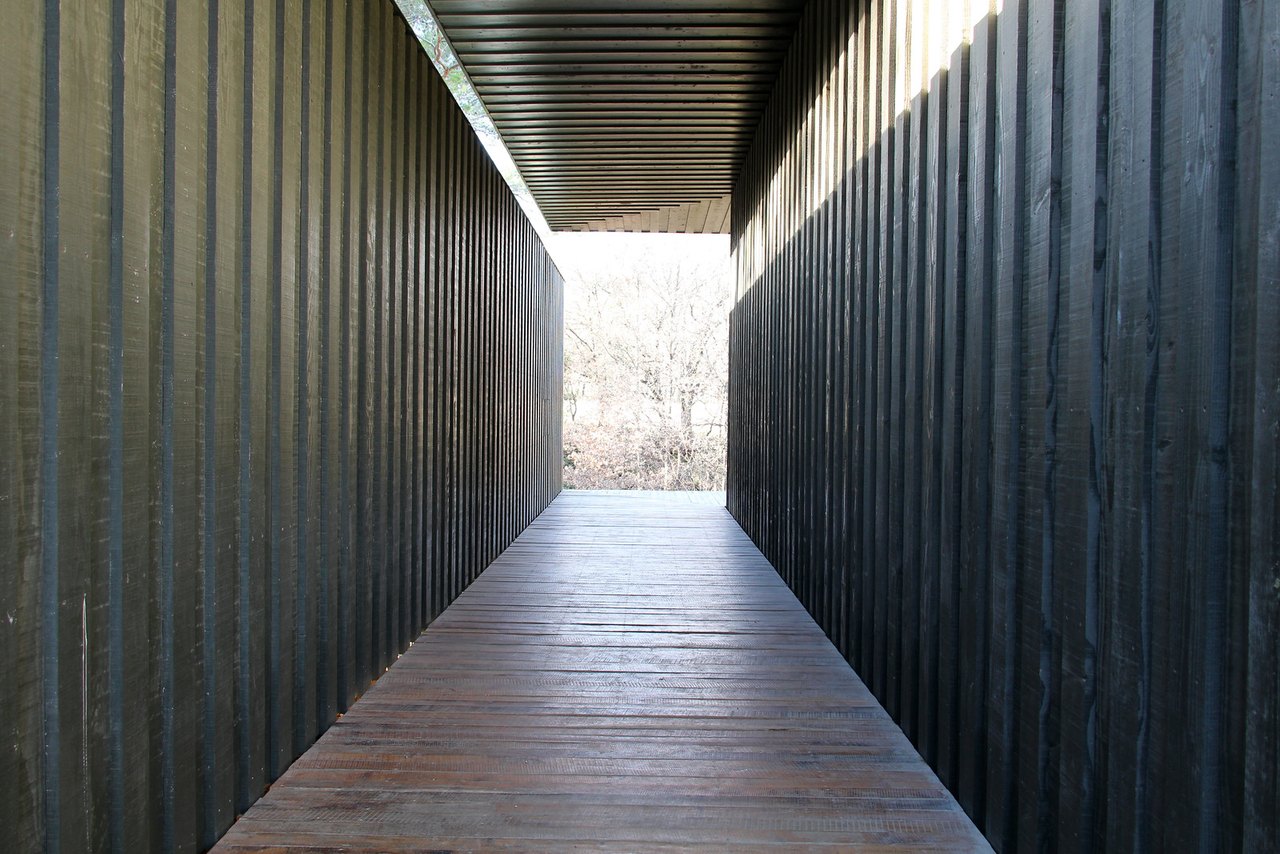
The pavilion for Four Cubes to Contemplate Our Environment is a square volume of dark timber, in tarred spruce, with Japanese influences, set in a small grove. Light enters only through a narrow gap in the ceiling. At the centre, in the half-dark, four glass cubes each invite contemplation of the environment; key words (carbon dioxide, water, garbage, future) are repeated on the surface of the cubes as a warning about the future of the planet.
The gate marks the entrance to the estate: a smooth concrete wall punctuated by formwork holes deliberately left visible. The origami benches are placed for the view.
Use today
Ando's building houses the estate's reception, services, the art centre bookshop and the Tadao Ando café-restaurant, where lunch is served by the water. The chapel and the Four Cubes pavilion are on the Art and Architecture trail, which has more than forty works, from sculpture to architecture.
The estate also gathers the work of many other artists and architects, including Jean Nouvel (cellars), Frank Gehry (music pavilion), Renzo Piano (exhibition pavilion) and Louise Bourgeois. Jean-Michel Othoniel's La Grande Croix Rouge, in Murano glass, is in dialogue with the chapel.
Visiting
The estate is open every day except 25 December, at 2750 route de la Cride, 20 minutes from Aix-en-Provence. For the self-guided walk, tickets are bought directly on site; booking is advised for the guided tours, offered in French and in English.
The trail is a 4 km outdoor walk through the hills, with climbs and descents: allow two to three hours on a self-guided visit. The guided tour lasts about two hours and does not take in every work. Bring good shoes, water and a cap in hot weather. The latest time to start depends on sunset. Dogs are allowed on a lead.
Photos
43.64° N, 5.42° E
Greenhouses nearby
Architecture nearby
Sources (11)
- chateau-la-coste.com/fr/art-architecture/artistes-architectes.html
- chateau-la-coste.com/fr/art-architecture/promenade-art-architecture.html
- chateau-la-coste.com/fr/actualites/foire-aux-questions.html
- chateau-la-coste.com/fr/acces.html
- chateau-la-coste.com/fr/restaurants/cafe-restaurant-de-tadao-ando.html
- chateau-la-coste.com/en/art-architecture/artists-architects.html
- architecturalrecord.com/articles/5915-collectors-edition-chateau-la-coste
- lalibre.be/culture/arts/2014/07/24/senivrer-avec-lart-contemporain-GM3UNUQO7BFRVEELOGEXC57
- inexhibit.com/case-studies/chateau-la-coste-winery-art-center-provence/amp
- provence-alpes-cotedazur.com/que-faire/culture-et-patrimoine/lieux/centre-dart-tadao-ando-
- fr.wikipedia.org/wiki/Ch%C3%A2teau_La_Coste
Affiliate links — booking through Verrière helps fund our research, at no extra cost to you.