Garden of Fine Arts, Kyoto (京都府立陶板名画の庭)
Kyoto (Sakyō-ku), Kyoto Prefecture
Sources checked October 2026
- Year
- 1994
- Architect
- Tadao Ando
- Type
- Open-air garden museum in concrete, with ponds and waterfalls
- Access
- Open to the public from 9:00 to 17:00 (last entry 16:30), closed from 28 December to 4 January (official site, October 2026)
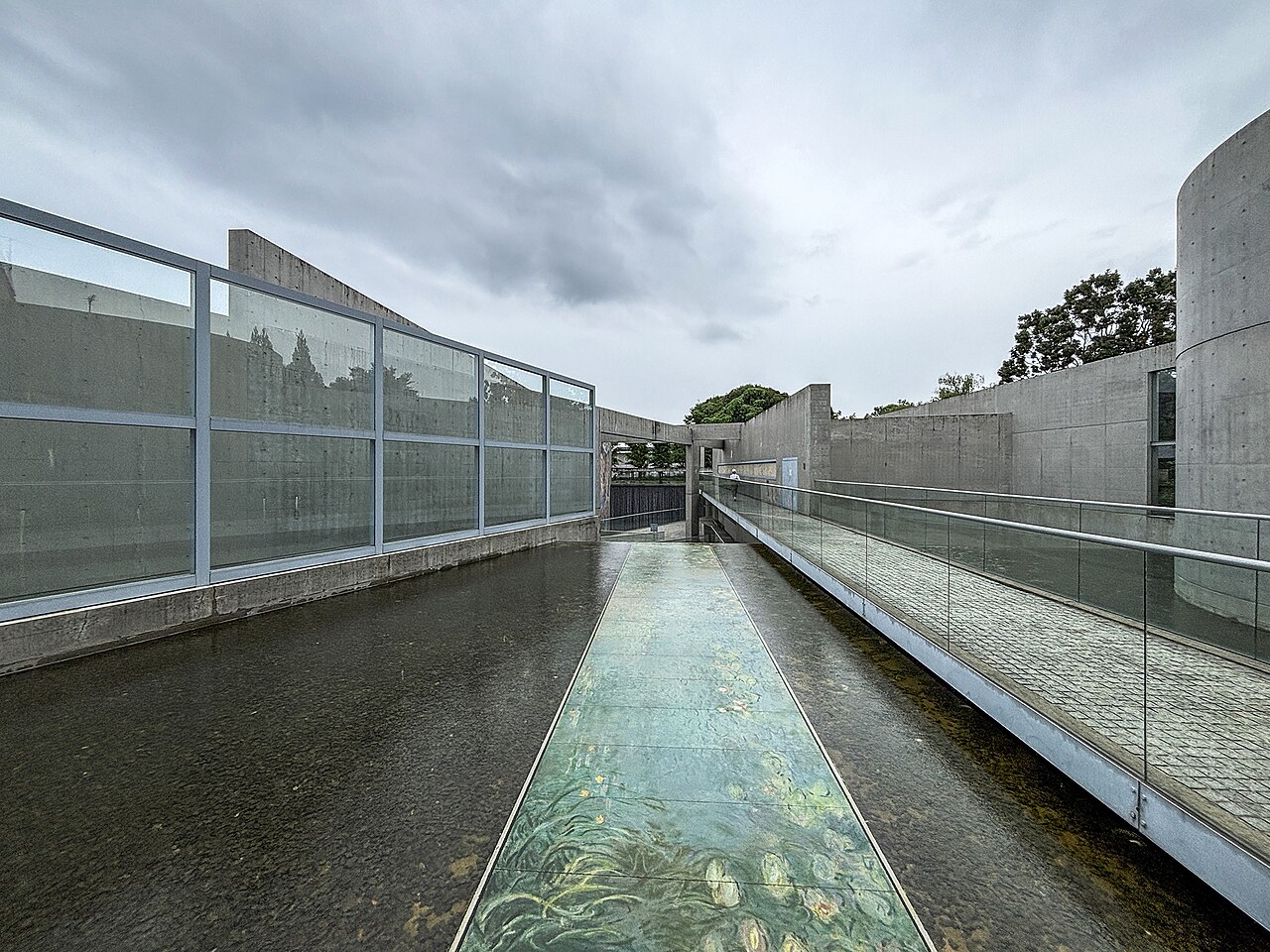
In Kyoto's Shimogamo district, next to the prefectural botanical garden, Tadao Ando designed a concrete garden, completed in March 1994, for eight famous paintings reproduced on ceramic plates, from Monet and Michelangelo to Leonardo da Vinci and Van Gogh. The reproductions are at the size of the originals or enlarged about twofold. A gently sloping corridor leads down to the second basement level, between seven ponds and four waterfalls, large and small.
Affiliate links — booking through Verrière helps fund our research, at no extra cost to you.
History
Four of the garden's eight paintings were made for the 1990 International Garden and Greenery Exposition (国際花と緑の博覧会), held in Osaka, in Tsurumi Ryokuchi park. There they stood in the open air in a pavilion designed by Tadao Ando (安藤忠雄), the "Garden of Masterpieces" (名画の庭), a reinforced-concrete garden. The other four, including Renoir's "On the Terrace", were created for the place that would receive them in Kyoto.
All eight paintings were donated to Kyoto Prefecture by Kayamori Shinji (栢森新治), representative of the company Daikoku Denki (ダイコク電機), on an idea by Sakaiya Taichi (堺屋太一). The prefecture had asked for the gift, and the garden opened with the cooperation of Sakaiya and Ando. The plates were made at the Shigaraki (信楽) factory of Otsuka Ohmi Ceramics (大塚オーミ陶業).
A prefectural ordinance of 15 March 1994 established the Kyoto Prefectural Garden of Ceramic-Plate Masterpieces (京都府立陶板名画の庭, Kyōto-furitsu Tōban Meiga no Niwa) at Shimogamo Hangi-chō, to show masterpieces painted on ceramic in relation to nature and to give residents a place to come into contact with art. Ando's open-air building was completed in March of the same year. Construction cost about 1.6 billion yen, and the attendance peak, 175,808 visitors, dates from fiscal year 1994. The garden presents itself as the first painting garden in the world where works can be admired in the open air.
Architecture
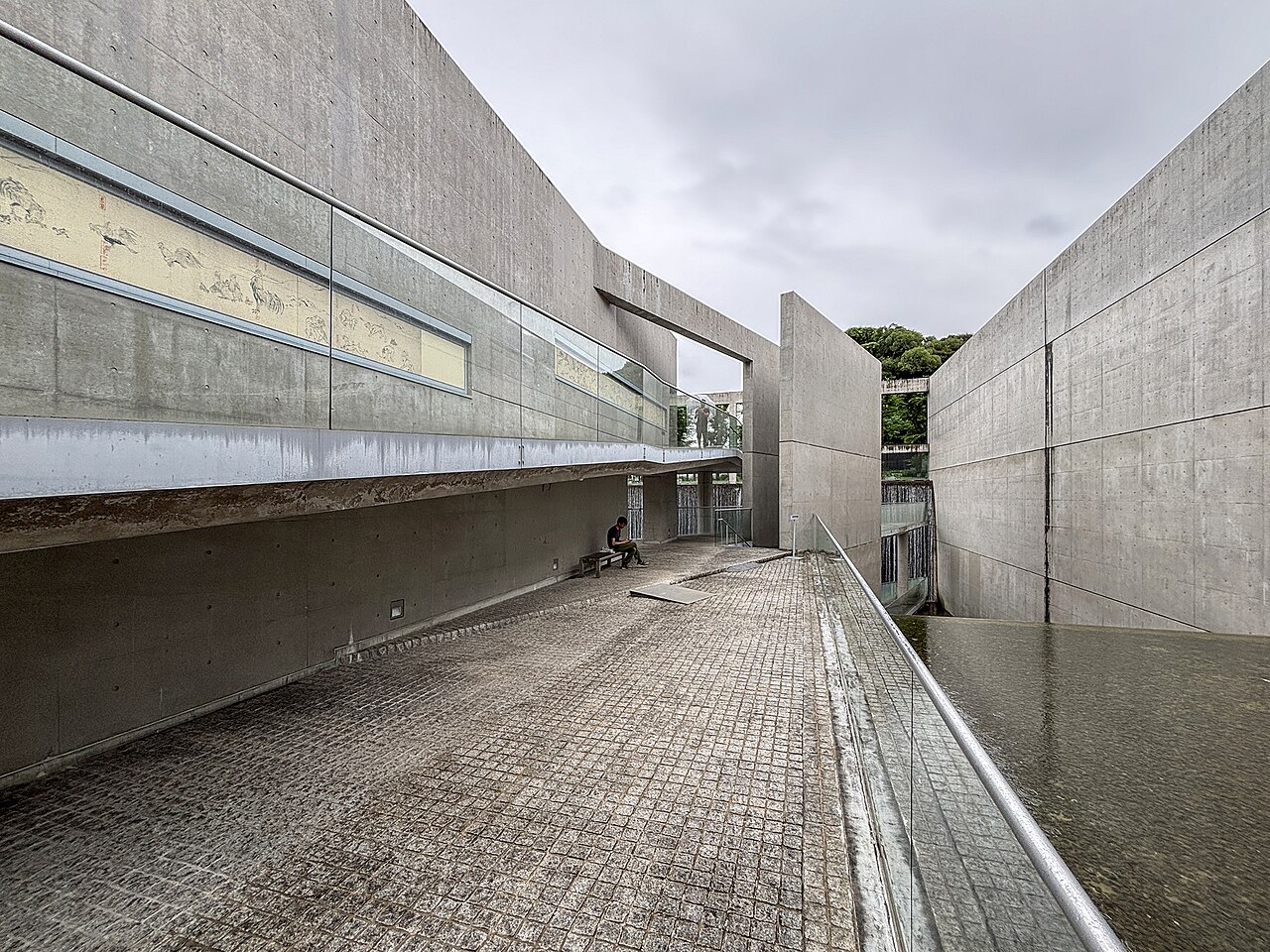
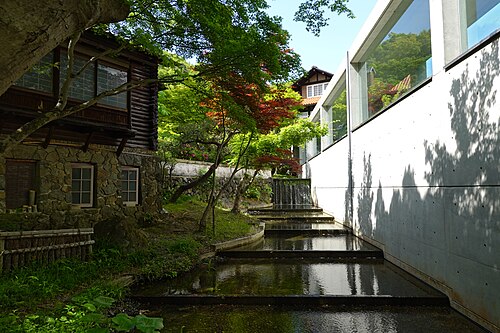
The garden covers about 2,849 m². A gently sloping corridor descends to the second basement level, so the works are discovered in space, on several levels. The concrete is left exposed, as often with Ando. The route passes between seven ponds and four waterfalls, large and small, amid the sound of water and the reflections of the sun.
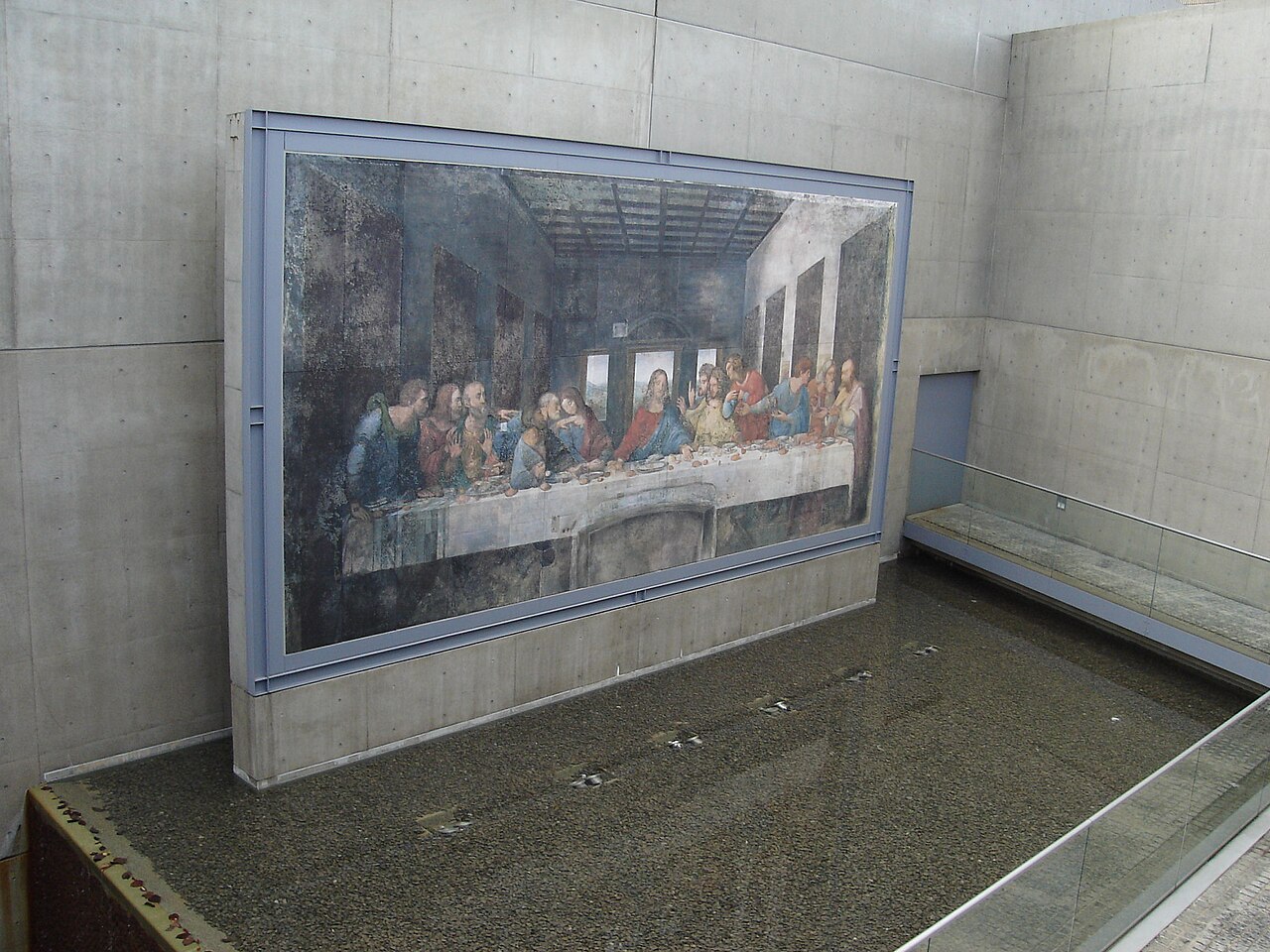
Each painting is an assembly of ceramic plates. The image of the original, photographed on positive film, is transferred to the ceramic by photoengraving and then fired; this ceramic neither fades nor corrodes, so it can be displayed outdoors for a long time. Michelangelo's Last Judgment measures about 14.30 m by 13.09 m, almost the scale of the original, and reproduces the Sistine Chapel as it was in 1990. Monet's Water Lilies, Morning is 2 m by 12.75 m, almost full size. The scroll of Animals and Humans (鳥獣人物戯画), Renoir's "On the Terrace" and Van Gogh's "Road with Cypress and Star" are enlarged about twofold.
Use today
The garden is an open-air museum of eight works: Claude Monet's “Water Lilies, Morning” (original at the Musée de l'Orangerie, Paris), Michelangelo's “Last Judgment” (Sistine Chapel, Vatican), Leonardo da Vinci's “Last Supper” (Santa Maria delle Grazie, Milan), the Animals and Humans at Play scrolls (鳥獣人物戯画) attributed to the monk Toba (鳥羽僧正, Kōzan-ji temple, Kyoto), “Along the River During the Qingming Festival” (清明上河図) by Zhang Zeduan (張澤端, after the copy in the National Palace Museum in Taipei), Seurat's “A Sunday Afternoon on the Island of La Grande Jatte” and Renoir's “On the Terrace” (Art Institute of Chicago), and Van Gogh's “Road with Cypress and Star” (Kröller-Müller Museum, Netherlands).
The garden is also used for events, on a prior request filed no later than the 10th of the preceding month.
Visiting
The garden is open from 9:00 to 17:00, last entry 16:30. It closes from 28 December to 4 January, and sometimes for maintenance work. Admission is charged, at a reduced rate for high-school students and for visitors aged 65 and over (show identification); free up to junior high school and, with two companions, for holders of disability booklets.
Address: Shimogamo Hangi-chō (下鴨半木町), Sakyō-ku, just east of the Kitayama Gate exit of the prefectural botanical garden. From Kitayama Station (北山) on the Karasuma Line of the municipal subway, take exit 3 and head east, about a minute on foot.
Commercial and pre-wedding photo shoots require a prior application and fees in addition to admission; there is no space for changing clothes.
Photos
35.05° N, 135.77° E
Greenhouses nearby
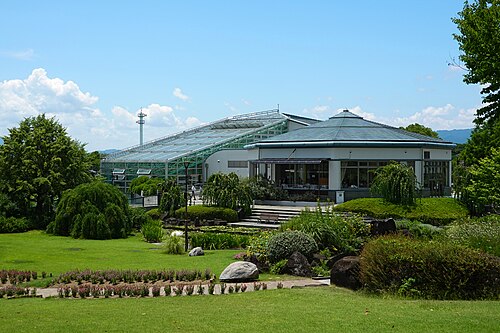
Architecture nearby
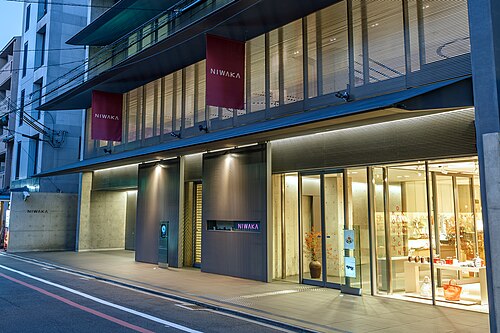
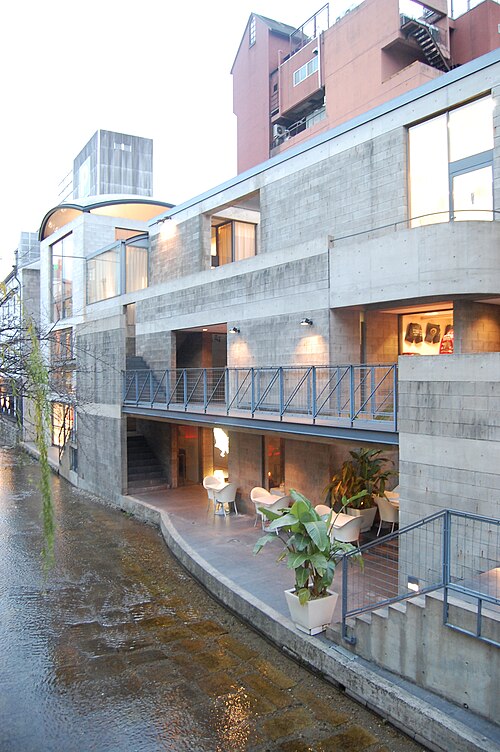
Sources (11)
- kyoto-toban-hp.or.jp/%e5%ba%ad%e5%9c%92%e3%81%ab%e3%81%a4%e3%81%84%e3%81%a6/
- kyoto-toban-hp.or.jp/%e6%96%bd%e8%a8%ad%e6%a1%88%e5%86%85/
- kyoto-toban-hp.or.jp/%e4%ba%a4%e9%80%9a%e3%82%a2%e3%82%af%e3%82%bb%e3%82%b9/
- pref.kyoto.jp/reiki/reiki_honbun/a300RG00000069.html
- pref.kyoto.jp/keisen/documents/h28-chosho-01.pdf
- ja.wikipedia.org/wiki/京都府立陶板名画の庭
- gltjp.com/ja/directory/item/17233/
- nomu.com/cre-navi/architecture/20250519.html
- art-tourism.jp/en/article/the-garden-of-fine-arts-kyoto
- openstreetmap.org/way/551634923
- wikidata.org/wiki/Q11375286
Affiliate links — booking through Verrière helps fund our research, at no extra cost to you.