Hyōgo Prefectural Museum of Art and Kobe Waterfront Plaza (兵庫県立美術館, 神戸市水際広場)
Kobe (Chūō-ku), Hyōgo Prefecture
Sources checked October 2026
- Year
- 2001 (opened 2002)
- Architect
- Tadao Ando
- Type
- Prefectural art museum, designed together with the neighbouring waterfront plaza
- Access
- Open to the public, closed on Mondays (official site and Hyōgo Prefecture, October 2026)
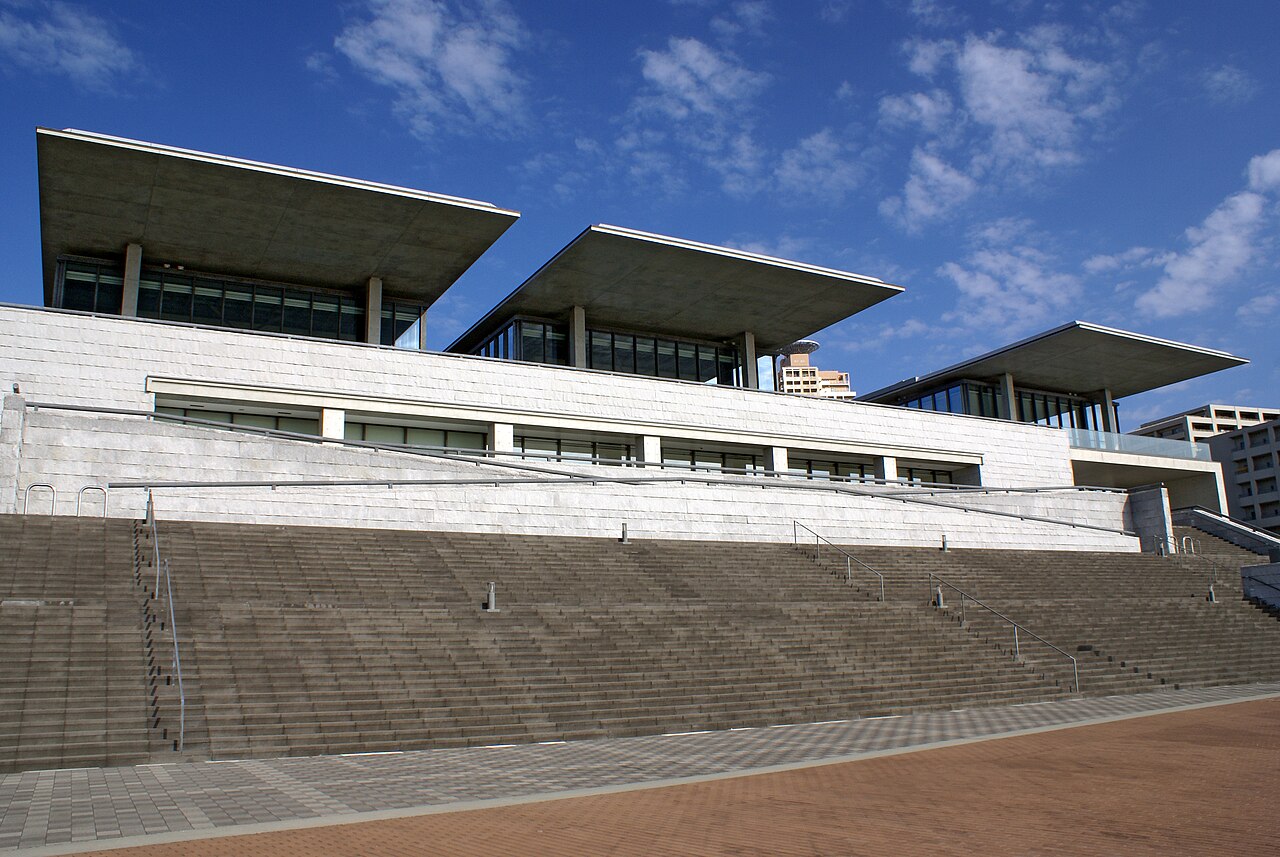
On the waterfront in HAT Kobe, Tadao Ando designed the Hyōgo Prefectural Museum of Art together with the neighbouring waterfront plaza, as part of the rebuilding that followed the 1995 earthquake. Across 27,461 m² of floor area, granite lower levels and glass upper floors rest on a seismic isolation system among the largest of all isolated buildings. The museum shows the collections of the prefecture's former modern art museum and, since 2019, the Ando Gallery, devoted to the architect's models and drawings.
Affiliate links — booking through Verrière helps fund our research, at no extra cost to you.
History
The museum grew out of the rebuilding of Kobe after the 1995 Great Hanshin-Awaji Earthquake (阪神・淡路大震災). It stands in HAT Kobe (HAT神戸), the new district on the east side of the city that was the core project of the reconstruction plan, and was built as a symbol of cultural renewal. It takes over from the Hyōgo Prefectural Museum of Modern Art, which opened in 1970 near Ōji Park to designs by Murano Tōgo (村野藤吾) and the prefecture's building department; that older building now houses the Harada-no-mori Gallery (原田の森ギャラリー) and the Yokoo Tadanori Museum of Contemporary Art (横尾忠則現代美術館).
The client is Hyōgo Prefecture, the design is by Tadao Ando's office (安藤忠雄建築研究所), and six firms, including Ōbayashi (大林組) and Shimizu (清水建設), built it. The works were handed over on 30 September 2001 and the museum opened on 6 April 2002. Ando also designed Kobe's waterfront plaza (神戸市水際広場) next to the museum, another reconstruction project launched after the earthquake, whose design forms a single whole with the museum's.
In May 2019 a second exhibition wing, the Ando Gallery, opened on top of the existing building. Ando designed it, and his office paid for its design and construction before donating the wing to the prefecture.
Architecture
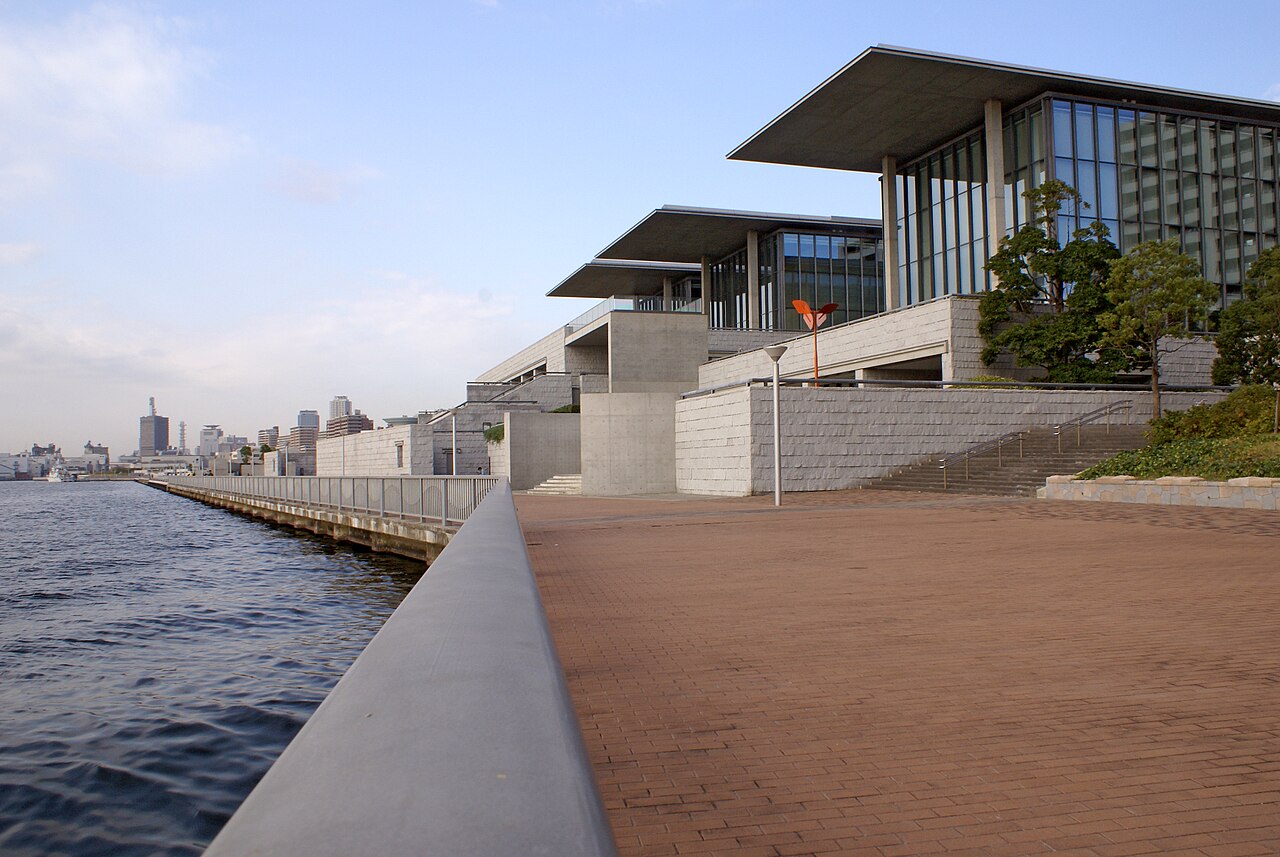
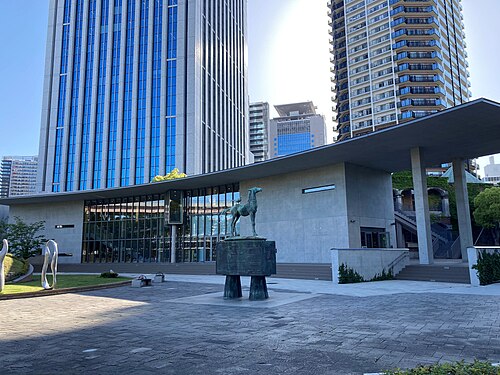
The building has one basement level and four storeys above ground, with 27,461 m² of floor area, in reinforced concrete and mixed steel-and-concrete structure. The first two levels are clad in split-faced granite, which evokes the Hanshin region as it was before the earthquake; on levels 3 and 4, three blocks are wrapped in a glass curtain wall, an image of the reconstruction's future, behind which stand exposed-concrete walls. The plan plays with separate blocks, multi-storey voids and a large canopy cantilevered by 10 m, forms that seismic isolation made it possible to dare.
That isolation is one of the building's distinguishing features: 190 laminated rubber bearings, 173 steel-bar dampers and 76 lead dampers protect the building and its collections from an earthquake on the scale of Hanshin-Awaji, and rank among the largest of all seismically isolated buildings. The building received the BCS Prize in 2005 and the 5th Japan Society of Seismic Isolation Works Award (日本免震構造協会作品賞).
The construction was painstaking: about a year of study to choose the facade stone, a mock-up test, in a factory, of the skylights that bring natural light into the exhibition rooms, and the whole joint-venture staff taking part in the pours to secure the quality of the exposed concrete.
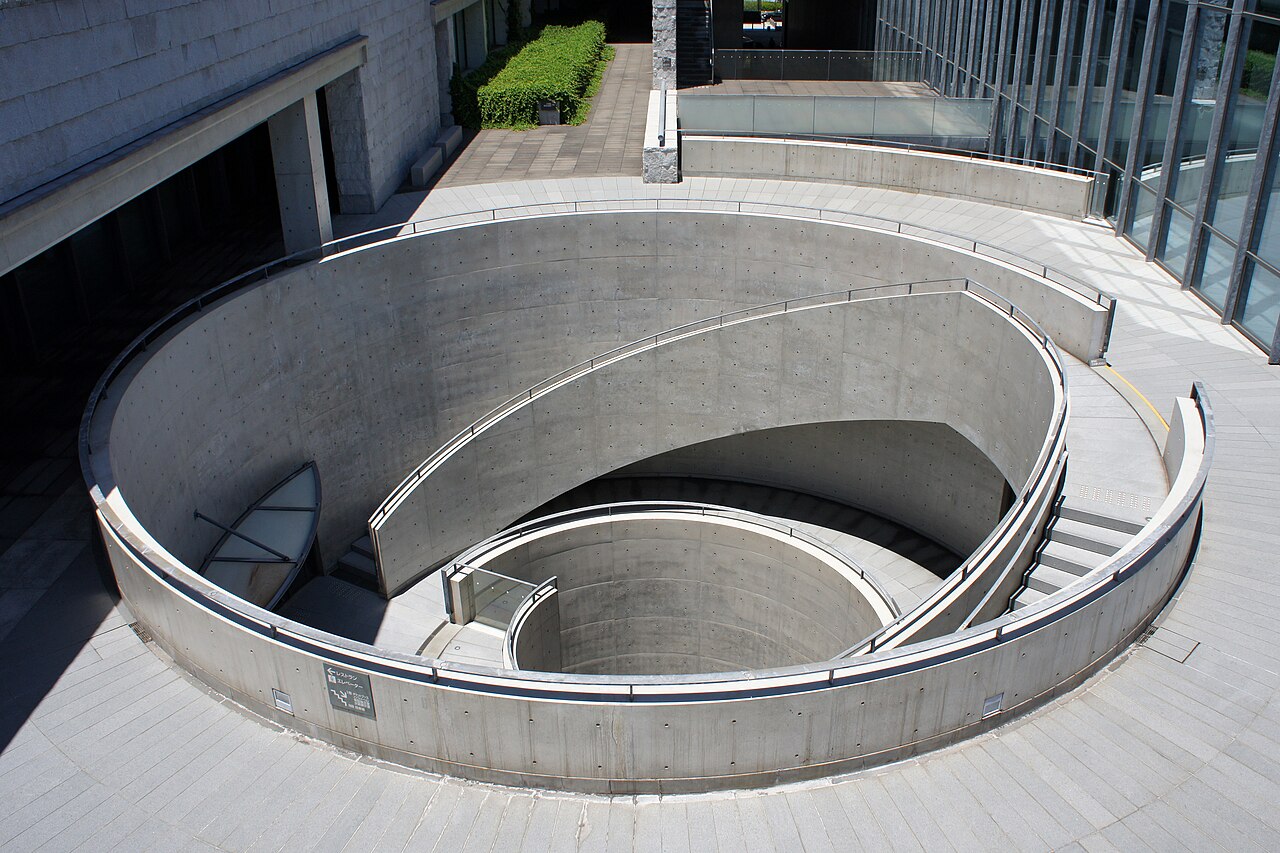
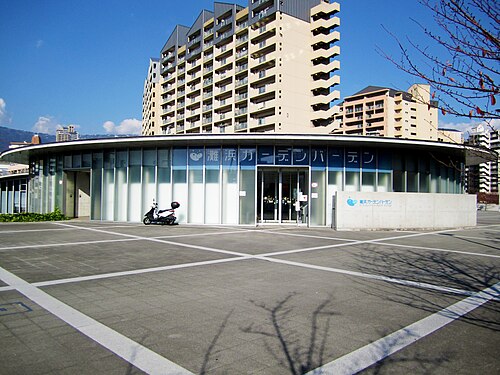
The museum was designed as one with Nagisa Park (なぎさ公園) on the waterfront and with the neighbouring waterfront plaza; free passages link the building to the plaza and to the harbour promenade (ハーバーウォーク). Inside, corridors run through the building so that the building itself becomes an object of contemplation. Outside, the exposed-concrete circular terrace (円形テラス), the museum's emblem, links the exhibition wings, the gallery wing, the sea and the mountains.
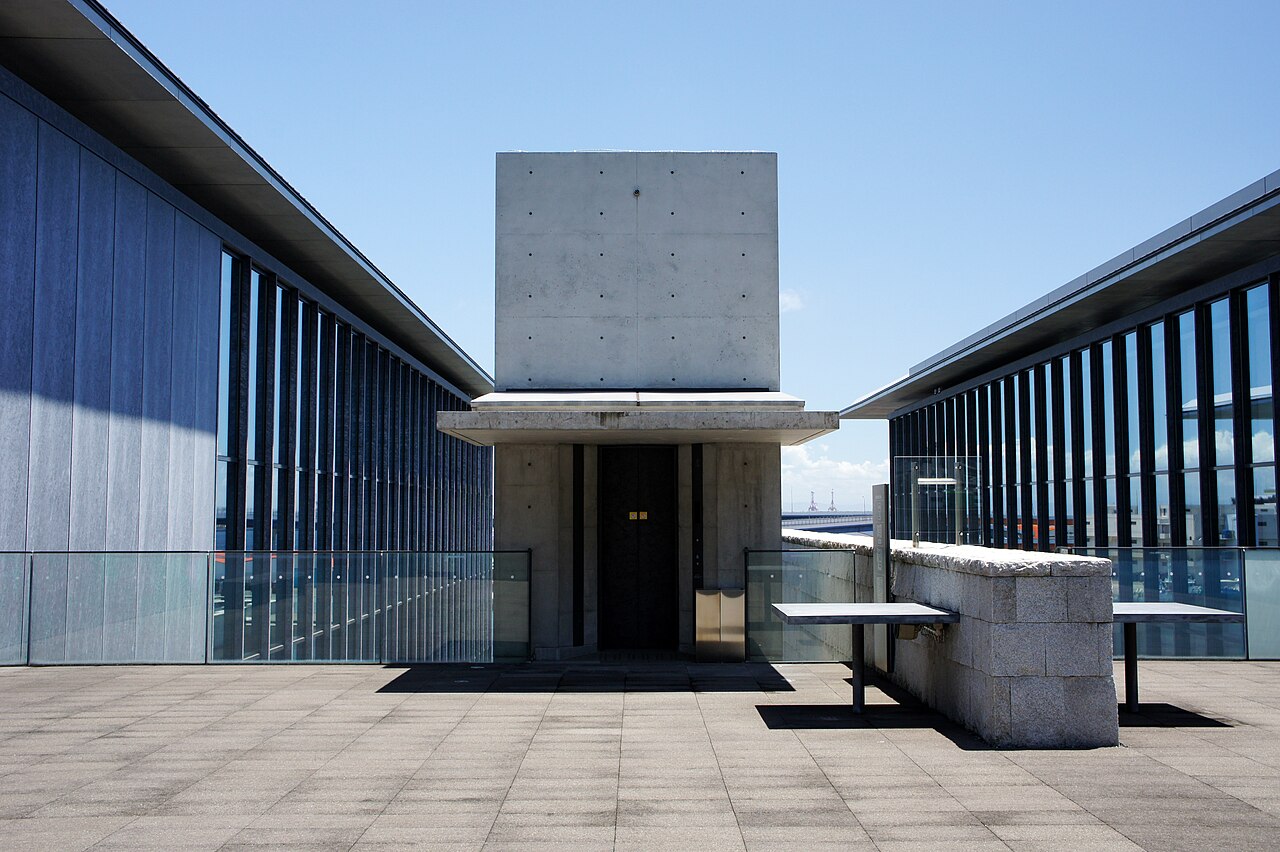
The Ando Gallery occupies levels 2 and 3 of the second wing, raised on the existing isolated building; its large voids continue toward the Mountain Deck (山のデッキ) and an outdoor passage links it to the terrace that faces the sea, the Sea Deck (海のデッキ), where the Green Apple (青りんご) stands, a monumental object designed by Ando after the poem "Youth" by the American Samuel Ullman.
Use today
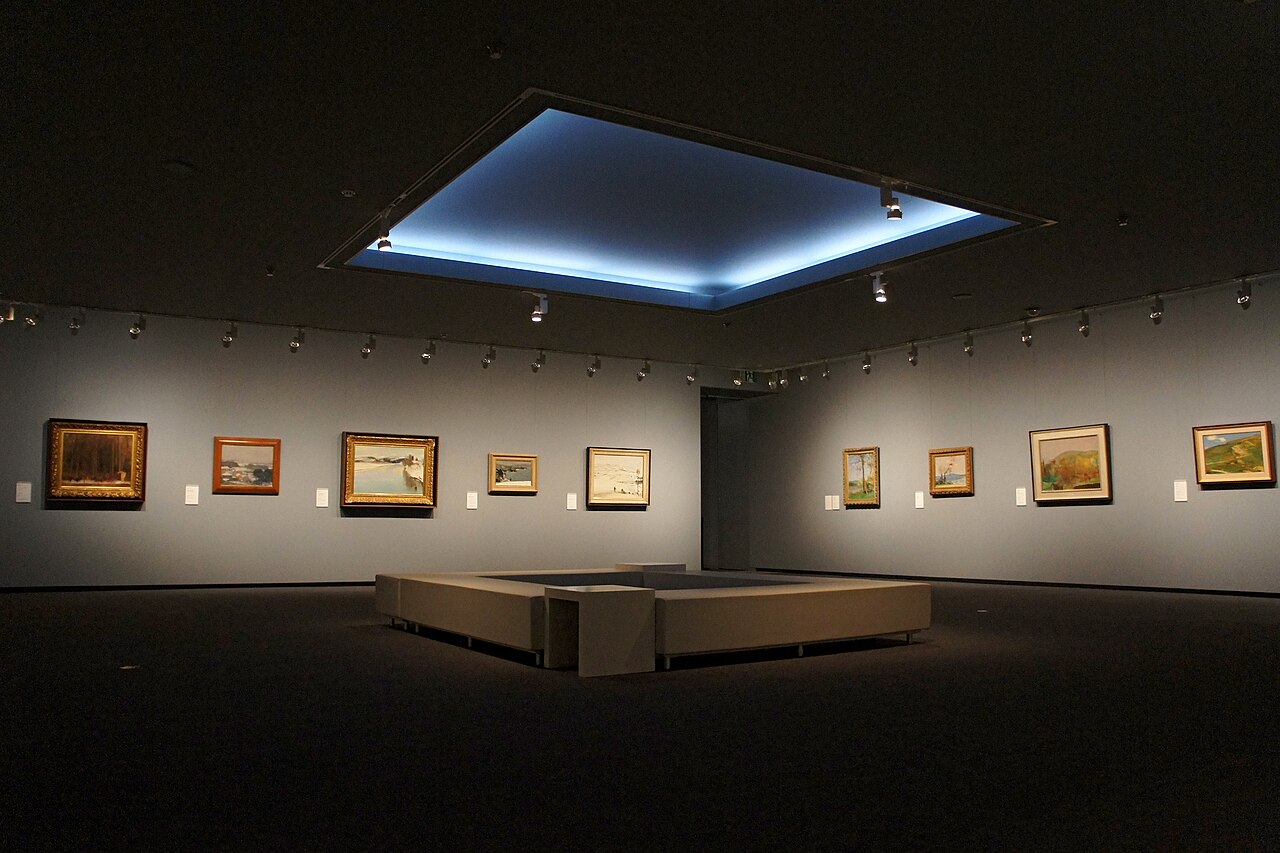
The museum shows the collections inherited from the prefectural museum of modern art: major foreign names such as Rodin, Goya and Matisse, painters linked to Hyōgo such as Koiso Ryōhei (小磯良平) and Kanayama Heizō (金山平三), sculpture, prints, and modern and contemporary paintings. It has added an art information centre and an art conservation and restoration workshop. Alongside the exhibitions there are family workshops, lectures by curators, tours led by museum volunteers, concerts and film screenings.
The Ando Gallery shows Ando's models, sketches and drawings: the Row House in Sumiyoshi (住吉の長屋), the Church of the Light (光の教会), the Chichu Art Museum (地中美術館), his work in Hyōgo Prefecture, his notes and sketches after the earthquake, and the reconstruction project of the Kobe waterfront plaza. On the upper level, a library offers architecture books, including Ando's own.
Visiting
The museum is open from 10:00 to 18:00, last entry 17:30. It is closed on Mondays (the following day if the Monday is a public holiday), over the year-end and New Year period and for maintenance closures. The collection exhibitions and the special exhibitions are ticketed; the price of special exhibitions varies with the exhibition.
Address: 1-1-1 Wakinohama Kaigan-dōri (脇浜海岸通1-1-1), Chūō-ku, Kobe, inside HAT Kobe. Hanshin Railway's Iwaya Station (岩屋) is about 8 minutes' walk to the south and JR Nada Station (灘) about 10 minutes; a city bus from Sannomiya Station serves the Kenritsu Bijutsukan-mae stop (県立美術館前).
The neighbouring Nagisa Park, open to the sea, has a 1,500-seat amphitheatre, a lawn and a waterside promenade; a grove dedicated to the earthquake's victims holds about 250 camphor trees.
Photos
34.70° N, 135.22° E
Greenhouses nearby
Architecture nearby
Sources (10)
- web.pref.hyogo.lg.jp/shisetsu/bijutsu/shisetsu_001.html
- artm.pref.hyogo.jp/
- web.pref.hyogo.lg.jp/recommend/learn/learn02.html
- web.pref.hyogo.lg.jp/archives/c431.html
- city.kobe.lg.jp/a42810/kanko/leisure/harbor/kankou/park/park-3.html
- japanculturalexpo.bunka.go.jp/en/hotspots/1118/
- obayashi.co.jp/chronicle/works/34800.html
- kanebako-se.co.jp/works/view/215
- kobecco.hpg.co.jp/42077/
- ja.wikipedia.org/wiki/兵庫県立美術館
Affiliate links — booking through Verrière helps fund our research, at no extra cost to you.