Lee Ufan Museum
Naoshima, Kagawa
Sources checked October 2026
- Year
- 2010
- Architect
- Tadao Ando
- Type
- Art museum, semi-underground
- Access
- Open to the public, closed on Mondays (official site, October 2026)
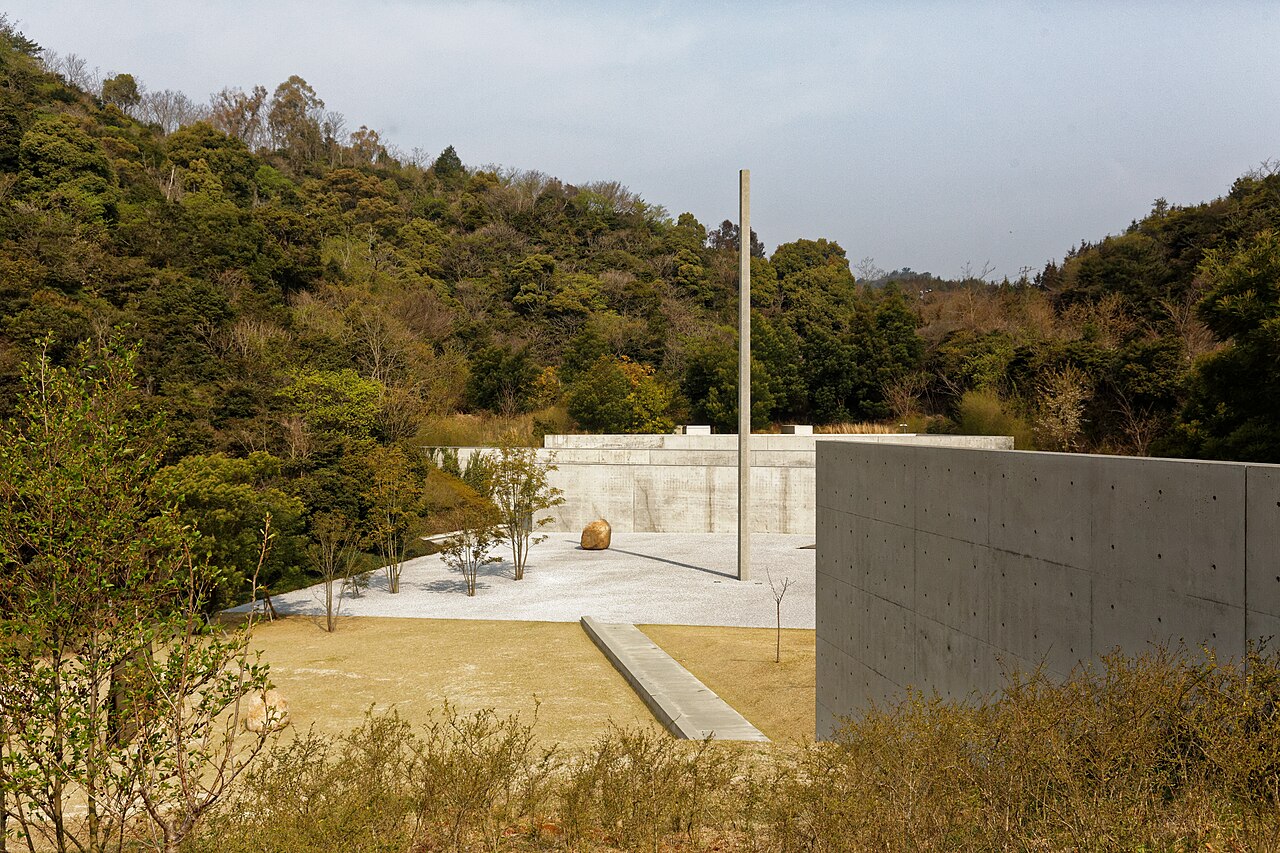
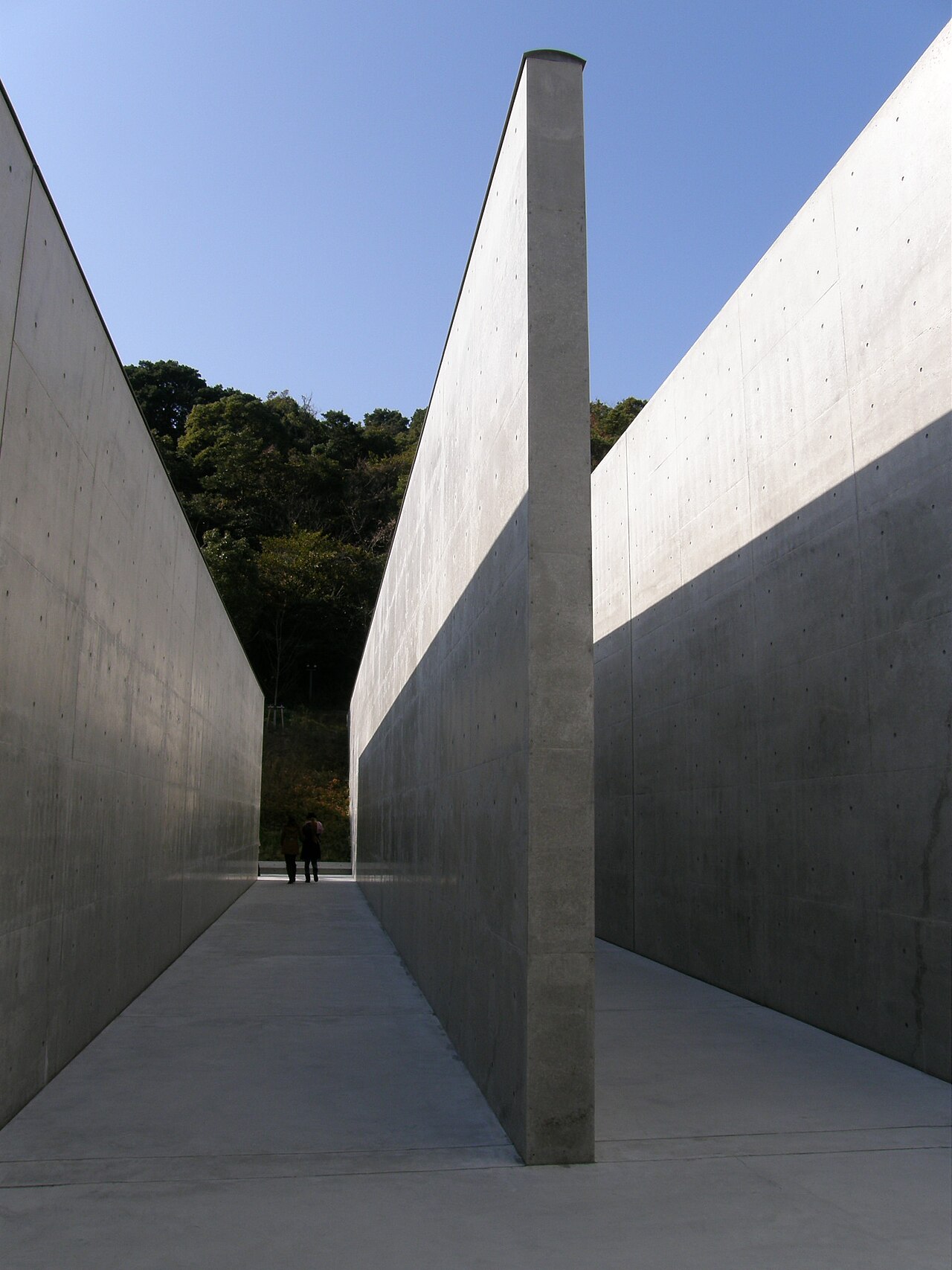
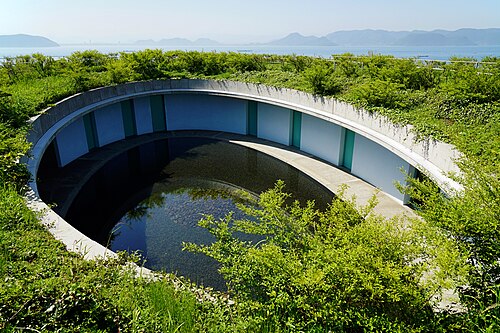
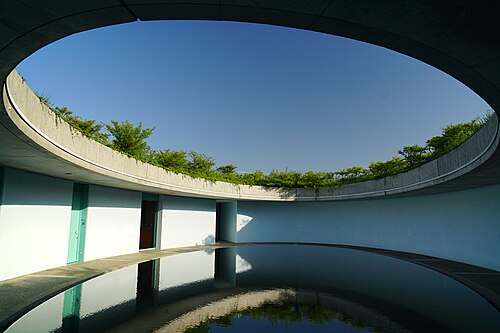
In a valley on Naoshima, Tadao Ando half-buried the first museum in the world devoted to Lee Ufan (李禹煥美術館). Parallel walls lead to a triangular courtyard that frames the sky, and a pole by the artist stands in front of the entrance. The rooms show his paintings and his stone and steel sculptures, from the 1970s to today.
Affiliate links — booking through Verrière helps fund our research, at no extra cost to you.
History
The Lee Ufan Museum (李禹煥美術館) opened to the public on 15 June 2010 on the island of Naoshima (直島), in the Seto Inland Sea. It is the first museum in the world devoted to Lee Ufan (李禹煥), an artist born in Korea in 1936 who has played a central role in the Mono-ha (もの派) movement since the late 1960s, and it was then Tadao Ando's (安藤忠雄) sixth building on the island.
The "Lee Ufan project" began on Naoshima in March 2009. It was one of five new projects carried out on the islands of the Seto Inland Sea ahead of the Setouchi Triennale (瀬戸内国際芸術祭) of July 2010. Unlike the nearby Chichu Art Museum (地中美術館), which permanently houses Western works, it presents the world of an artist with a Korean and Japanese cultural background.
Lee was not enthusiastic at first. Of the request from Soichiro Fukutake (福武總一郎), he says that, frankly, at first he had no interest whatsoever in creating a museum of his work. It was Ando who talked him into it. To choose the stones for his works, Lee toured quarries in Okayama and Kagawa and mountain rivers; on 2 November 2009 he was at a quarry of Mannari stone (万成石).
In 2019 a new sculpture was added to the space in front of the museum: Porte vers l'infini (無限門), open to the public since 19 July 2019.
Architecture
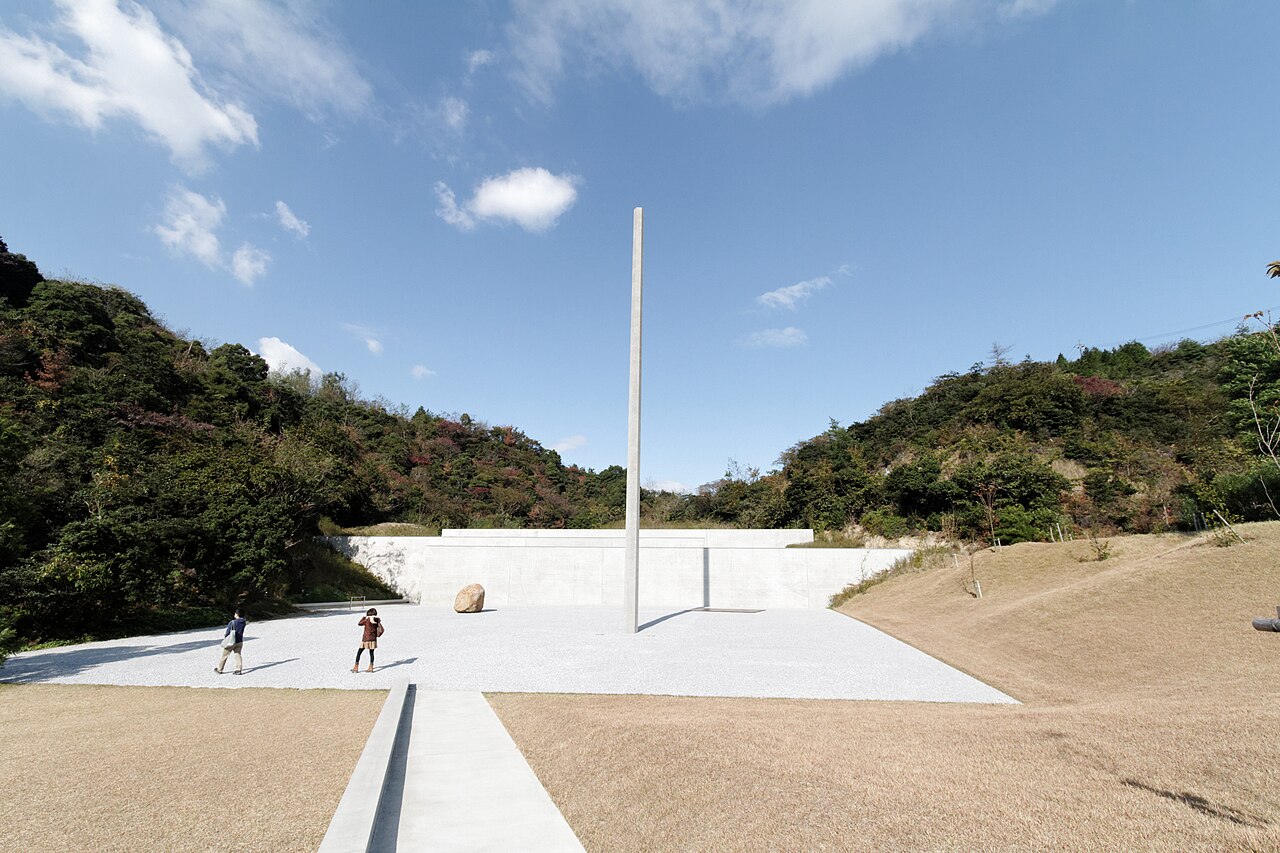
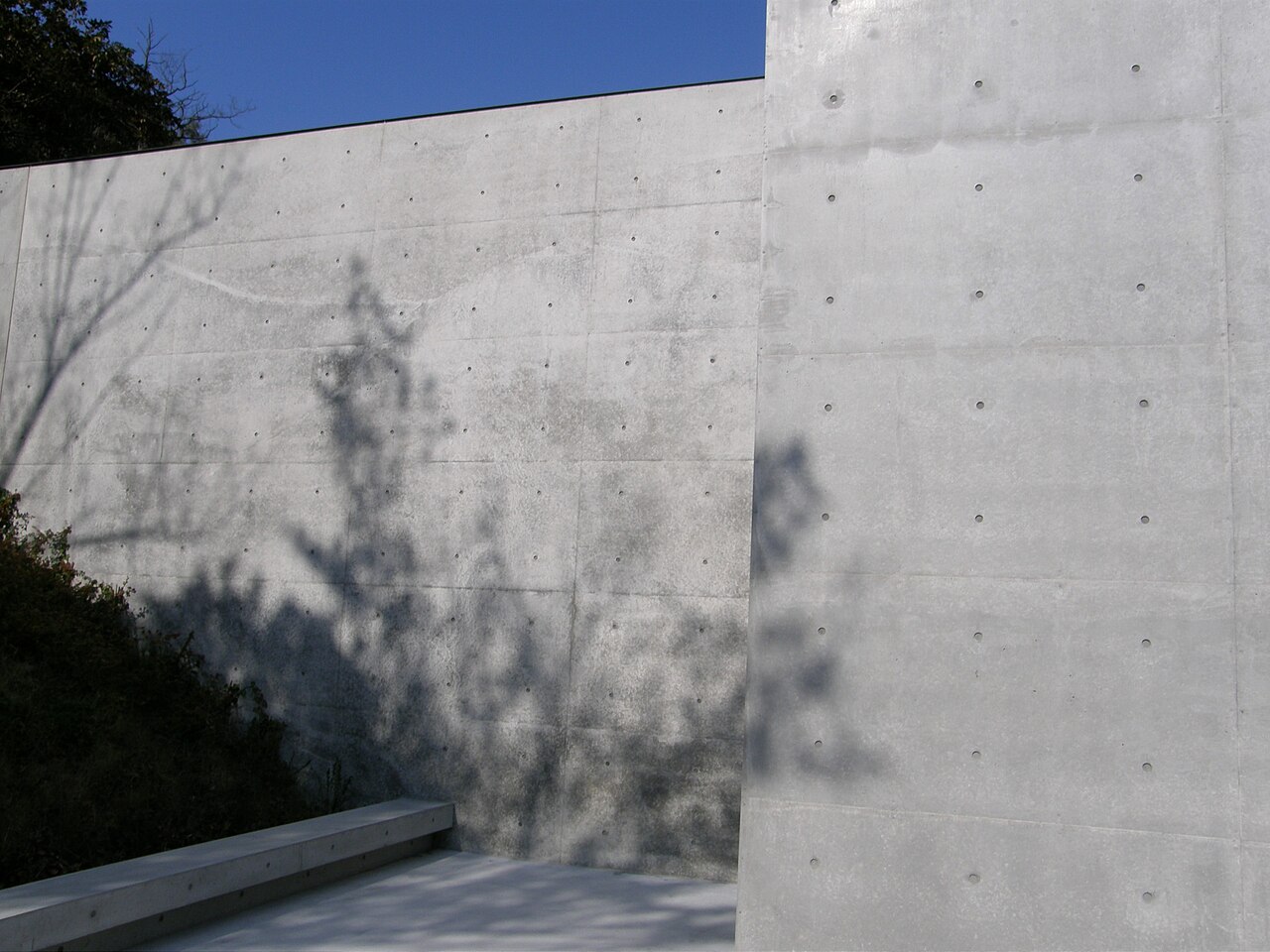
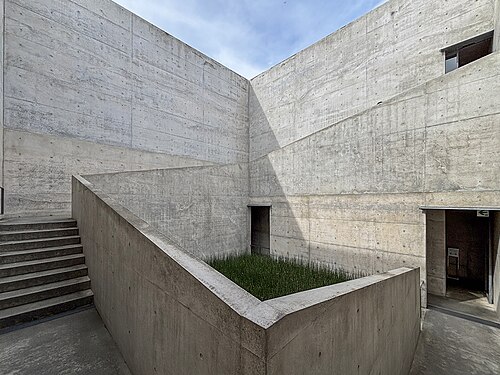
The museum is semi-underground (半地下): Ando set it in a gentle valley between hills and sea, following the landform. Its parts are a closed triangular forecourt, rectangular rooms cut into the ground, and an approach lined with parallel walls. These walls form the only elevation of the museum. Visitors enter by weaving around these walls: they go down into the ground for a moment before re-emerging in the triangular forecourt, which frames the sky. On the site that slopes from the valley toward the sea, the plan lays out a triangle and rectangles. The structure is reinforced concrete, and after Chichu the museum continues an "architecture in the ground".
In front of the entrance, a pole by Lee stands facing the building laid into the slope, creating a tension between the vertical and the horizontal. The exhibition spaces differ in material, light and scale according to the works they hold, and their details were designed according to the artist's preferences.
Lee wanted a space "like a cave", something comparable to going into and coming out of a tomb or a human body. The result is not a space that an architect designed first and into which the works were put later: Lee says that neither he nor Ando could have achieved it alone.
Use today
The museum shows paintings and sculptures by Lee Ufan from the 1970s to today: canvases with brushstrokes repeated to the rhythm of quiet breathing, and sculptures combining natural stones and steel plates, in which the artist's intervention is reduced to the bare minimum. For Lee, stone is, among the elements that make up the universe, the "oldest, simplest and most symbolic" existence, far older than humankind.
Outside, the Pole Place (柱の広場) and the Correspondence Place (照応の広場) hold works from the Relatum series (関係項, from 2008 to 2013) and Porte vers l'infini (無限門, 2019), which visitors walk under. Lee says each passage brings different sensations: the sky looks wider, the sea fresher, the mountain newer.
Inside, the Encounter Room (出会いの間) brings together several works, including From Point (点より, 1976 and 1980) and From Line (線より, 1974). There are also Relatum – Silence (2010) in the Silence Room (沈黙の間), Relatum – Shadow of Stone (2010) in the Shadow Room (影の間) and Dialogue (2010) in the Meditation Room (瞑想の間). In the Silence Room a steel plate leans against a wall and a stone lies on the floor; in the Meditation Room, light brushstrokes are laid on three walls.
A museum shop sells books about the artist and original goods. The museum is run by the Fukutake Foundation (福武財団).
Visiting
The museum is open 10:00 to 17:00 (last admission 16:30) and closed on Mondays; if the Monday is a holiday (祝日・休日), the museum is open that day and closed the next. Admission is charged, with one price online and another at the counter; it is free for children 15 and under. It is worth checking the open-days calendar before coming.
Shoes are removed in some spaces. Suitcases, umbrellas and tripods are not allowed (lockers or the shop); photographs, videos and sketching are not allowed inside, but the outdoor works and the area up to the reception can be photographed. Some places are not suited to visitors with reduced mobility: the museum invites them to contact it directly.
Address: 1390 Kuraura (倉浦), Naoshima, Kagawa. From Miyanoura port, the municipal bus goes to Tsutsuji-so (つつじ荘), where a free Benesse Art Site Naoshima (ベネッセアートサイト直島) shuttle serves the museum. Between the east gate (near Tsutsuji-so) and the north gate (near the museum) the land is private: no cars or bicycles, except for guests of Benesse House.
Photos
34.45° N, 133.99° E
Greenhouses nearby
Architecture nearby
Sources (17)
- benesse-artsite.jp/art/lee-ufan.html
- benesse-artsite.jp/en/art/lee-ufan.html
- benesse-artsite.jp/contact/press/20100601_pressrelease.pdf
- benesse-artsite.jp/access/naoshima/
- benesse-artsite.jp/general-information.html
- benesse-artsite.jp/photography.html
- benesse-artsite.jp/calendar/
- benesse-artsite.jp/story/20190719-1203.html
- benesse-artsite.jp/story/20200910-1448.html
- setouchi-artfest.jp/artworks/detail/3e0e0711-1ccf-4d7b-8be3-e5717d98bc0a
- benesse-artsite.jp/about/soichiro-fukutake.html
- data.shinkenchiku.online/en/projects/articles/SK_2010_09_094-0
- archilovers.com/projects/19932/museo-lee-ufan.html
- apollo-magazine.com/solitary-soul-interview-with-lee-ufan/
- wikidata.org/wiki/Special:EntityData/Q11522528.json
- openstreetmap.org/way/401738808
- ja.wikipedia.org/wiki/李禹煥美術館
Affiliate links — booking through Verrière helps fund our research, at no extra cost to you.