Marco Polo Stufano Conservatory (Wave Hill)
Bronx, New York
Entry updated on October 5, 2026
- Year
- 1906–1907
- Architect
- Uncertain: Lord & Burnham (more likely) or Robert M. Byers; rebuilt in 1969
- Style
- Early-20th-century estate glasshouse, rebuilt in 1969 behind its original portico
- Status
- Open to the public
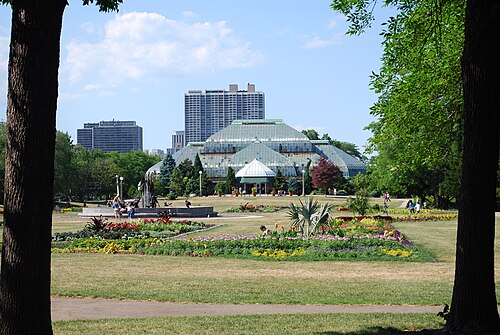
At the heart of Wave Hill, a former Bronx estate turned public garden above the Hudson River and the Palisades cliffs, this conservatory brings together three glasshouses: the Palm House in the centre, with the Tropical House and the Cactus and Succulent House on either side. The financier George W. Perkins had it built in 1906-1907, possibly to plans by Lord & Burnham. Taken down to its foundations and rebuilt in 1969, it kept only its original portico. It is named after Marco Polo Stufano, the garden's founding director of horticulture.
Affiliate links — booking through Verrière helps fund our research, at no extra cost to you.
History
1 min
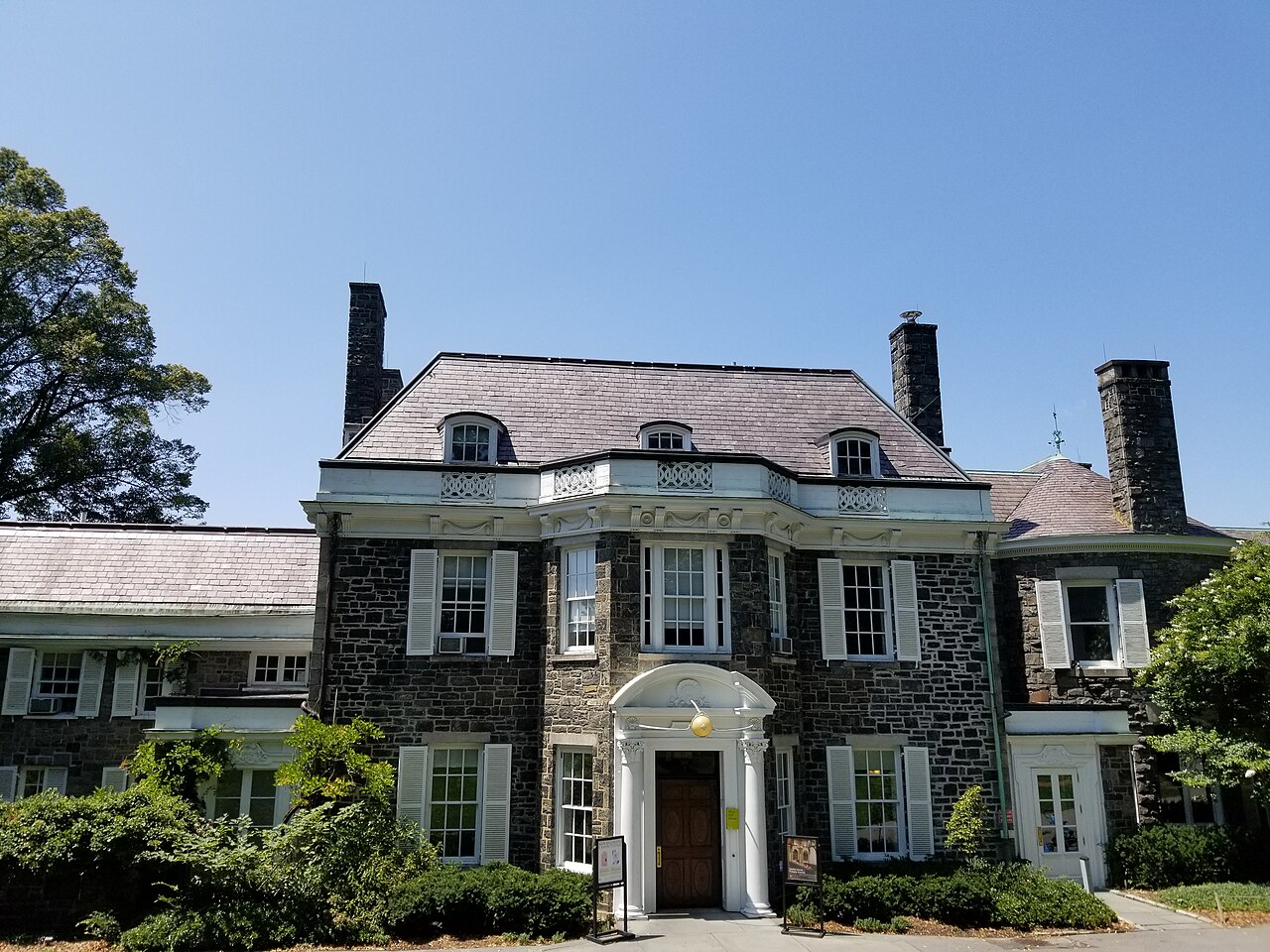
The Wave Hill estate began in 1843, when the lawyer William Lewis Morris built a stone house on the slopes of Riverdale above the Hudson. From 1866 to 1903 it belonged to the publisher William Henry Appleton, Charles Darwin's American publisher, who enlarged the house and gave the property gardens and its first greenhouses. Between 1893 and 1911 the financier George Walbridge Perkins, a partner of J. P. Morgan, assembled an 80-acre estate that forms the core of today's Wave Hill. Working with Albert Millard, a Vienna-trained landscape gardener, he reshaped the grounds and in 1906 added a palm house, built in 1906-1907. The garden tentatively attributes its design to his personal architect Robert Byers or, more likely, to the firm of Lord & Burnham.
In 1960 the Perkins and Freeman families gave the City of New York the estate's two houses and 28 acres of land. The garden opened to the public in 1967, by which time the plantings had become dilapidated. Among the transformations that followed the arrival of Marco Polo Stufano, the founding director of horticulture, the glasshouse was taken down to its foundations and rebuilt in 1969, with only its original portico retained.
Listed on the National Register of Historic Places in 1983 and protected as a New York City landmark, the estate, long known as Perkins Garden, took back the name Wave Hill in 1987. The conservatory now honours the man who led the revival of its gardens.
Architecture and engineering
1 min
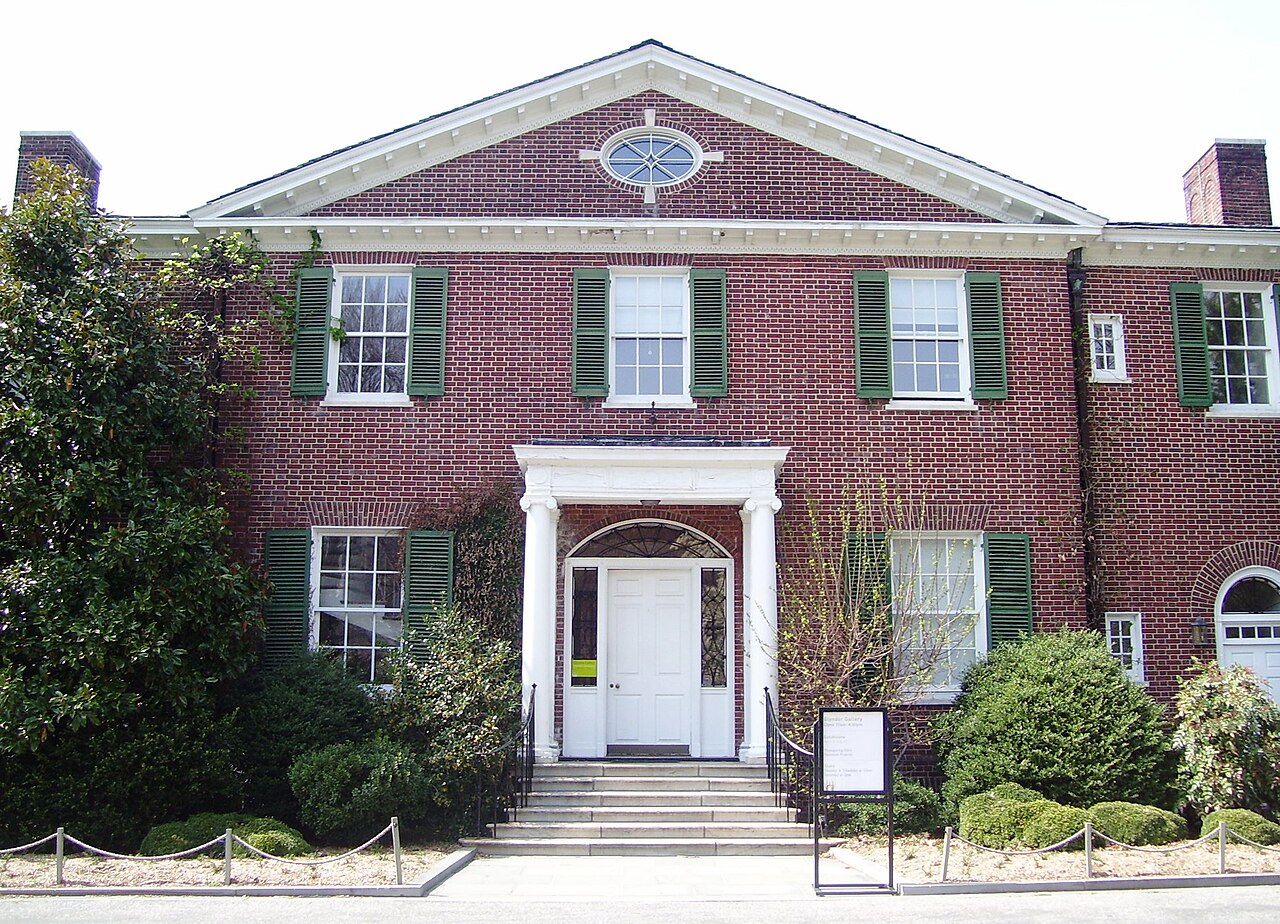
The conservatory holds a central position in the landscape, between Glyndor House to the south and Wave Hill House to the north, the estate's two former residences. Its entrance looks onto the Flower Garden. It is made up of three glazed volumes: in the centre the Palm House, an open and airy space fronted by the 1906 portico, the only original element spared by the 1969 rebuilding; on one side the Tropical House; on the other the Cactus and Succulent House, a long, narrow range lined on both sides with waist-high benches.
Each house has its own climate. In the Tropical House rainforest conditions are achieved by damping down: two or three times a day the floor and heating pipes are hosed with water to keep humidity high. The cactus house, by contrast, is laid out as a gallery of benches on which the plants are displayed in pots.
The garden itself stresses the modest scale of this glasshouse, designed so that visitors linger over each specimen rather than over the size of the space. The institution publishes no dimensions.
Plant collections
1 min
During the cooler months the Palm House gathers plants with fragrant, colourful flowers and striking foliage; in summer most of its occupants move out into the Flower Garden and beyond. South African bulbs are displayed there one by one as they come into bloom, and the garden flags short-lived flowerings week by week, such as the harlequin evening flower set on a windowsill.
The Tropical House aims, in the words of Tom Christopher, author of Nature into Art: The Gardens of Wave Hill, to create a jungle understory under filtered light, packed with ferns, bromeliads and other tender plants.
The Cactus and Succulent House holds more than 1,100 container-grown plants: those from the Americas, including the cacti, on one side and those from other continents on the other. Rarities include McLoughlin's aloe, a small species from Ethiopia and Djibouti that is seldom seen in cultivation.
Visiting
1 min
Wave Hill lies at 4900 Independence Avenue in the Hudson Hill section of Riverdale, in the Bronx. The 28-acre (11 ha) estate welcomes about 65,000 visitors a year.
Half an hour is enough for the conservatory, but allow two hours to take in the Flower Garden, the Herb and Dry Gardens, the T. H. Everett Alpine House, the Wild Garden and the ten-acre woodland that rings the property. The pergola frames views of the Hudson and the Palisades, and Glyndor House hosts temporary art exhibitions. The glasshouse is at its fullest in the cold months, when the Palm House plants are gathered indoors.
40.90° N, 73.91° W
Greenhouses nearby
More greenhouses — United States
Do you have a good photo of this greenhouse? Suggest it for this page →