Franklin Park Conservatory (John F. Wolfe Palm House)
Columbus, Ohio

Sources checked September 2026
- Year
- 1895
- Architect
- John M. Freese
- Style
- Victorian, influenced by the 1893 World's Columbian Exposition in Chicago and the City Beautiful movement
- Dimensions
- Expansion of 1989-1992: about 5,400 m² (58,000 sq ft) added to the conservatory
- Status
- Open; the historic Palm House is closed for renovation until autumn 2027
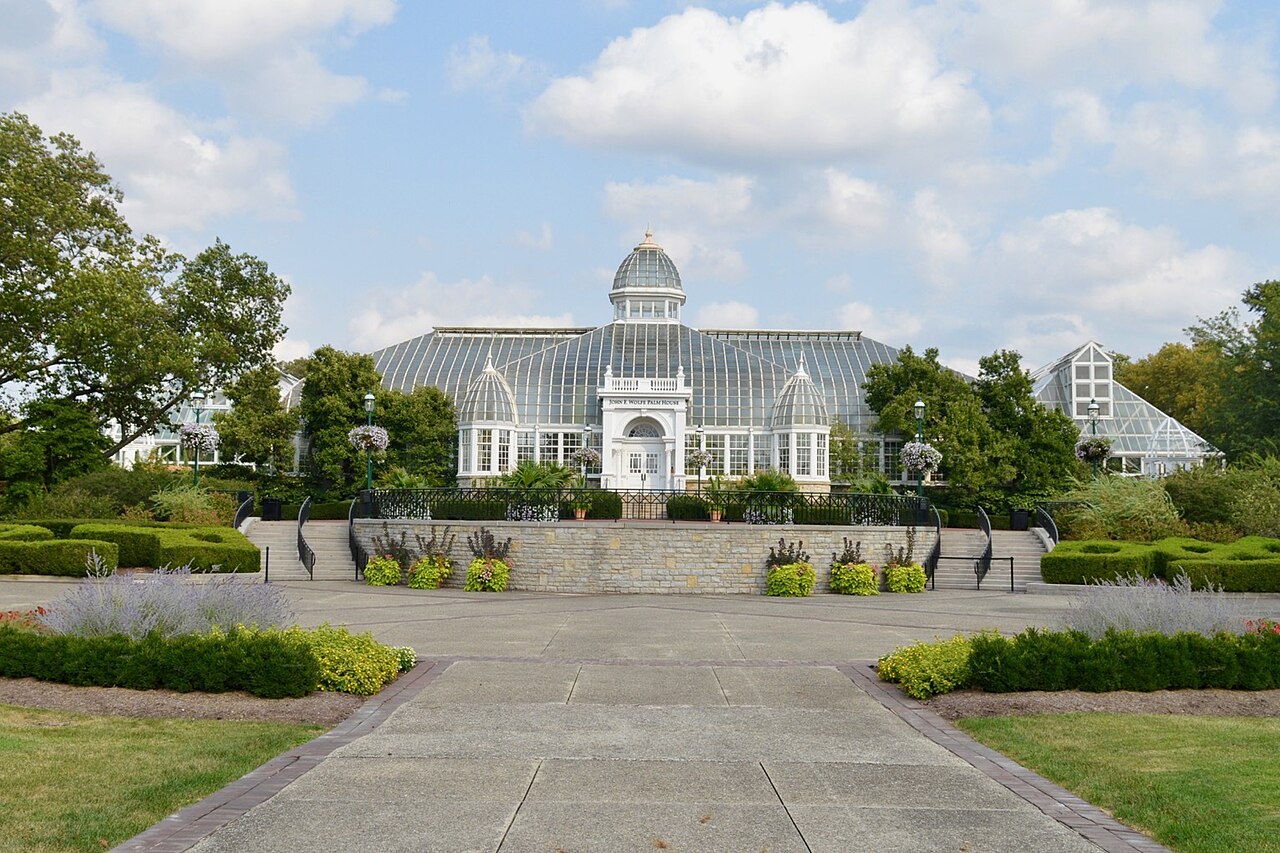
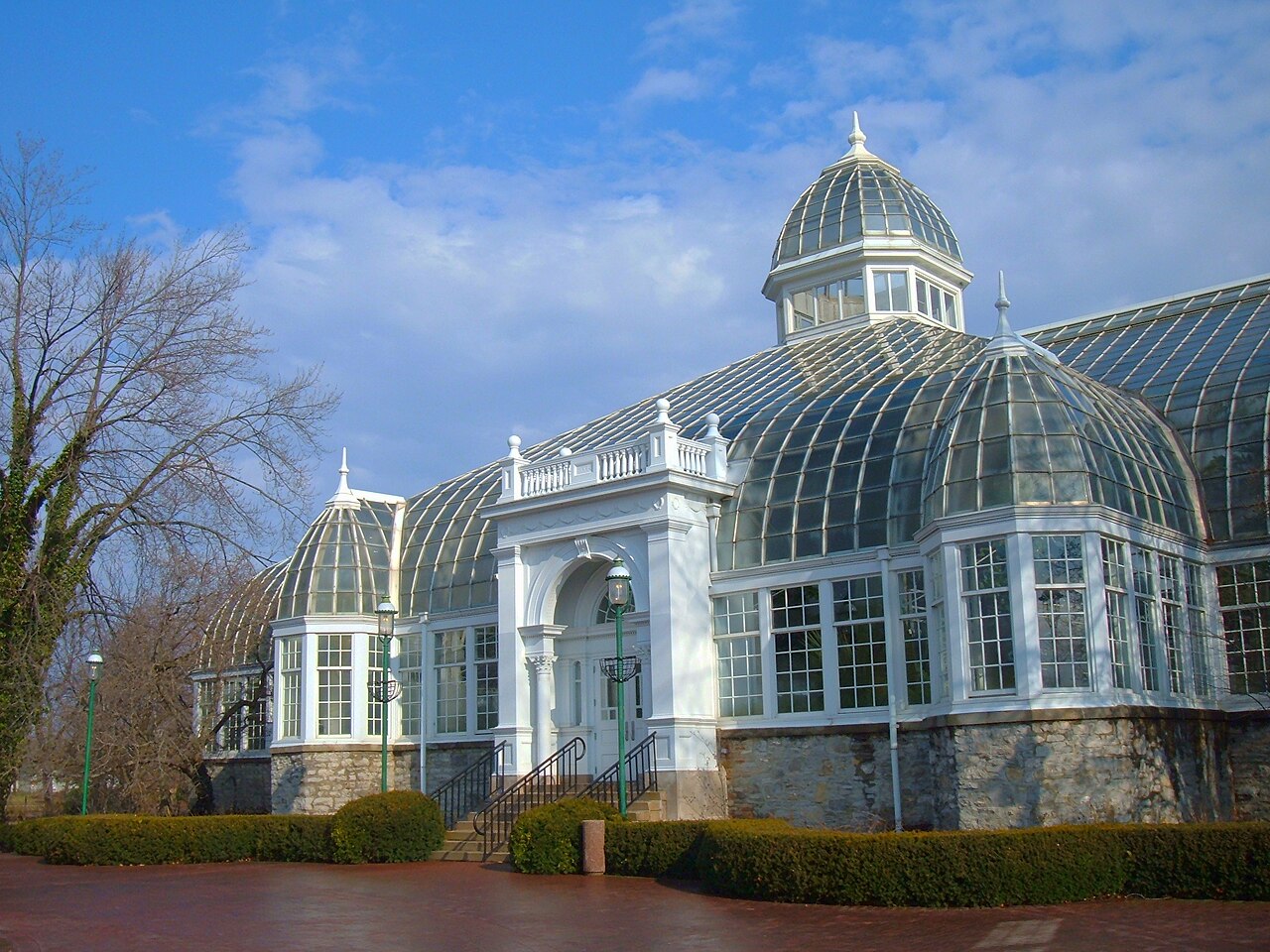
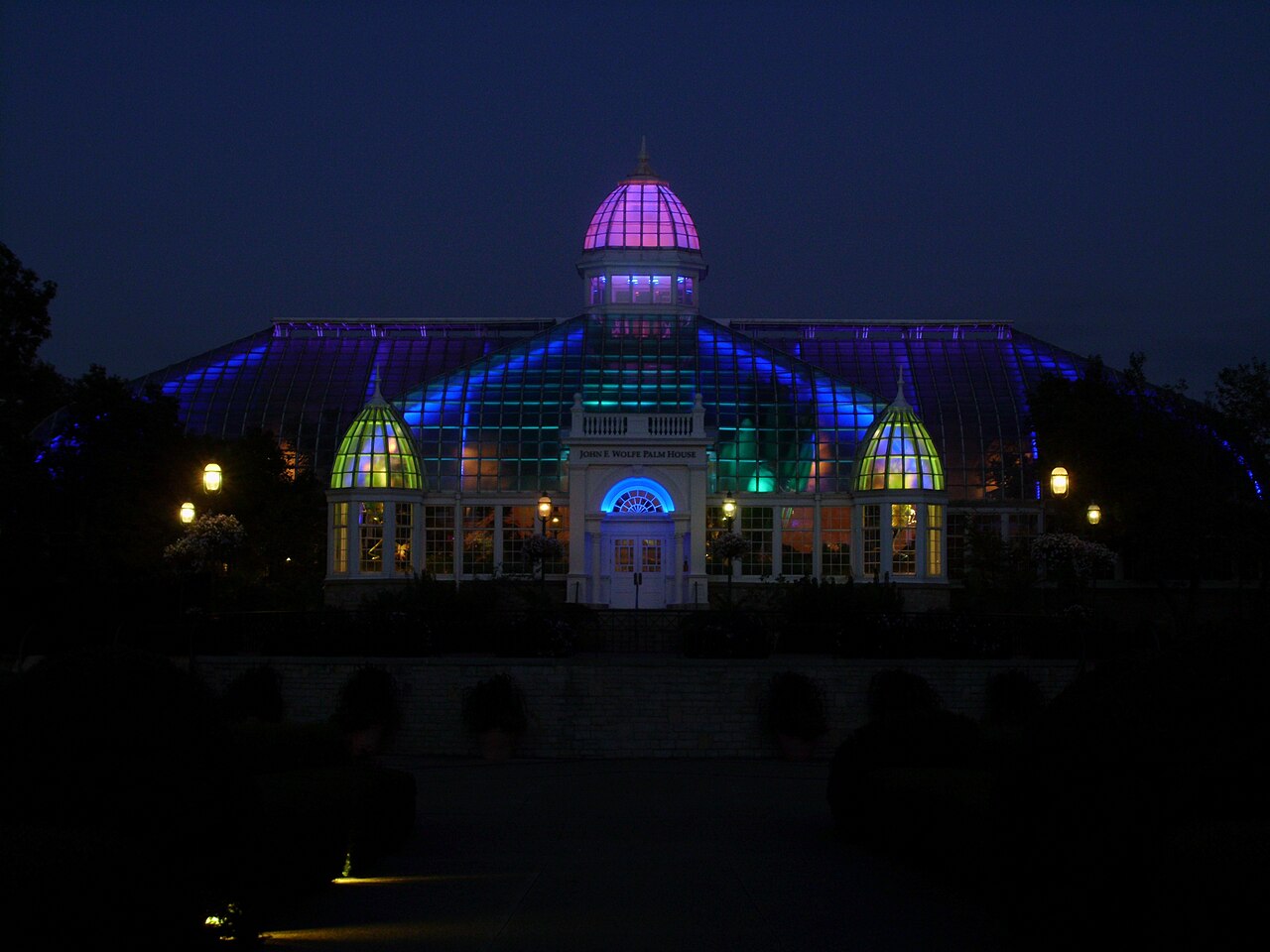
Built in 1895 by architect John M. Freese, Franklin Park's Palm House was influenced by the success of the 1893 World's Columbian Exposition in Chicago and inspired by the City Beautiful movement. Open to the public from 1897, it was restored from 1989, while an expansion of 58,000 square feet (about 5,400 m²) added new plant collections, classrooms, a library, a shop, a café and offices to the conservatory for the AmeriFlora '92 international horticultural exposition. Listed on the National Register of Historic Places since 1974, the Palm House is part of a conservatory that houses more than 400 plant species along with a permanent collection of Dale Chihuly glass artworks unique among botanical gardens.
Affiliate links — booking through Verrière helps fund our research, at no extra cost to you.
Practical info
- Tickets
- General admission: adult (13–59) $25.20, senior (60+) $21, child (3–12) $17.33, 5% fee included (prices listed in October 2026). Free for members. Booking advised, not required. The Chihuly collection and exhibitions are included.
- Opening hours
- Open every day except Thanksgiving, Christmas Eve and Christmas Day. General admission 10am–4pm (another official page says 5pm). Some special events take place in the evening, with separate tickets.
- Getting there
- 1777 E. Broad Street, Columbus, Ohio, less than two miles from downtown. Free parking (lots A and B). COTA bus line 10: stop "E. Broad St. & Franklin Park Conservatory" eastbound, "E. Broad St. & Brunson Ave." westbound.
Frequently asked questions
Is the Chihuly collection included in the ticket?
Yes: admission covers the main building, the Children's Garden and the Grand Mallway, and exhibitions are included. Special engagements (Pumpkins Aglow, Chihuly Nights) need separate tickets.
Is the Palm House open?
No. The John F. Wolfe Palm House, the Davis Showhouse and the Wolfe Terrace are closed for renovation; reopening is announced for fall 2027.
Do I need to book?
Booking is advised, not required. Tickets are nonrefundable, with one exchange allowed up to 24 hours before. No advance booking on the first Sunday of the month.
Is there a free day?
On the first Sunday of each month (Community Day), entry is free for Franklin County and City of Columbus residents with valid ID, excluding special engagements.
History
The site has deep horticultural roots: in 1851 the Columbus Horticultural Society bought ten acres here to create a public garden. Enlarged to 88 acres by the Franklin County Agricultural Society, the grounds hosted the Ohio State Fair from 1874 until the mid-1880s and became a public park in 1886.
The Victorian glasshouse now called the John F. Wolfe Palm House was built in 1895 to designs by the architect John M. Freese, in the spirit of the City Beautiful movement and under the influence of Chicago’s 1893 World’s Columbian Exposition. It opened to the public in 1897 as Franklin Park Conservatory.
In 1989 work began on restoring the Palm House and on a $14 million expansion by Böhm-NBBJ, which added some 58,000 square feet of glasshouses, classrooms, a library, shop, café and offices. The complex then hosted AmeriFlora ’92, a six-month international horticultural exposition, after which the Ohio legislature created a joint recreation district to run the conservatory. Blooms & Butterflies began in 1994. In 2003 the exhibition Chihuly at the Conservatory drew record crowds, and in 2004 the Friends of the Conservatory bought most of the pieces, a collection valued at close to $7 million. In 2009 four acres of the park became the Scotts Miracle-Gro Community Garden Campus. Listed on the National Register of Historic Places in 1974, the original building is closed for renovation, together with the Davis Showhouse and Wolfe Terrace, with reopening announced for autumn 2027.
Architecture and engineering
The historic core consists of the John F. Wolfe Palm House and the connecting Dorothy M. Davis Showhouse, two Victorian-style glasshouses of 1895 that are the oldest parts of the institution.
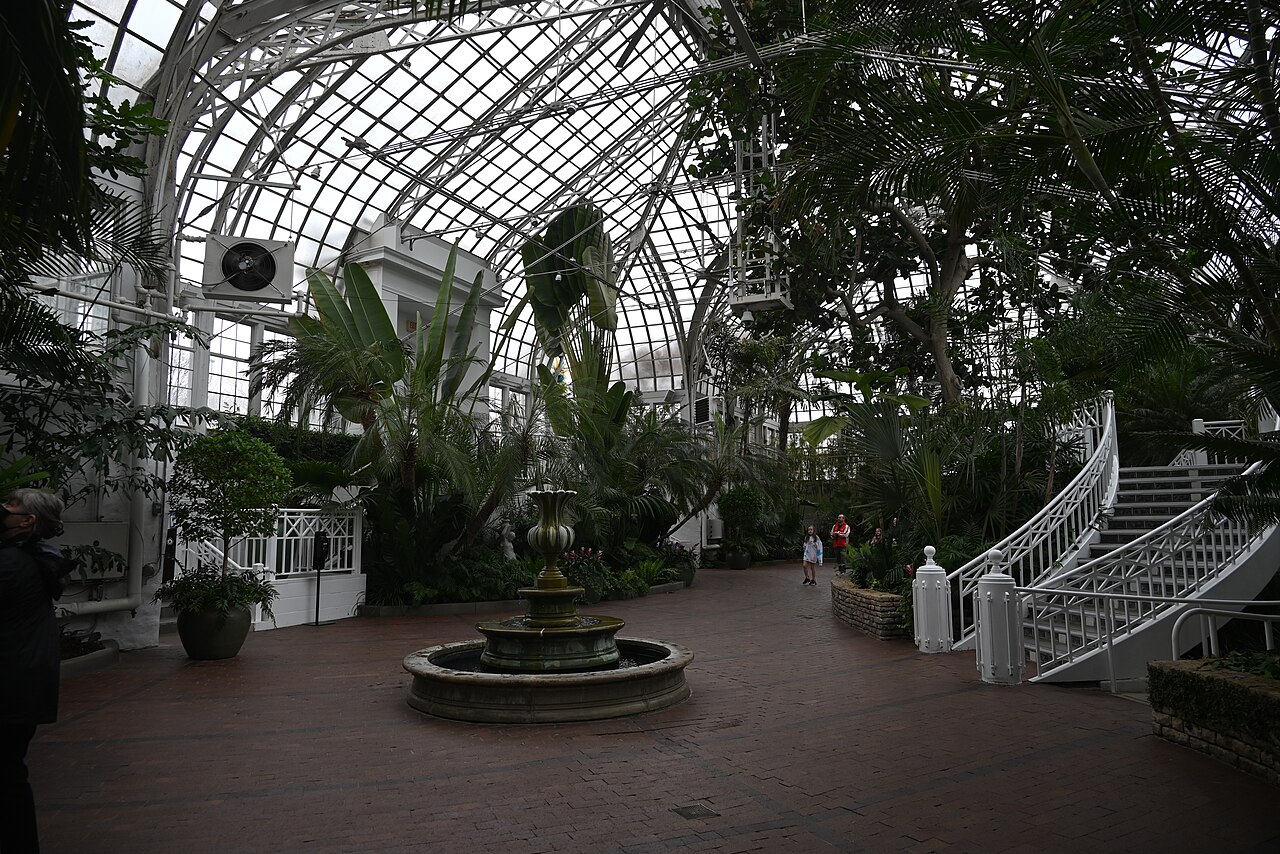
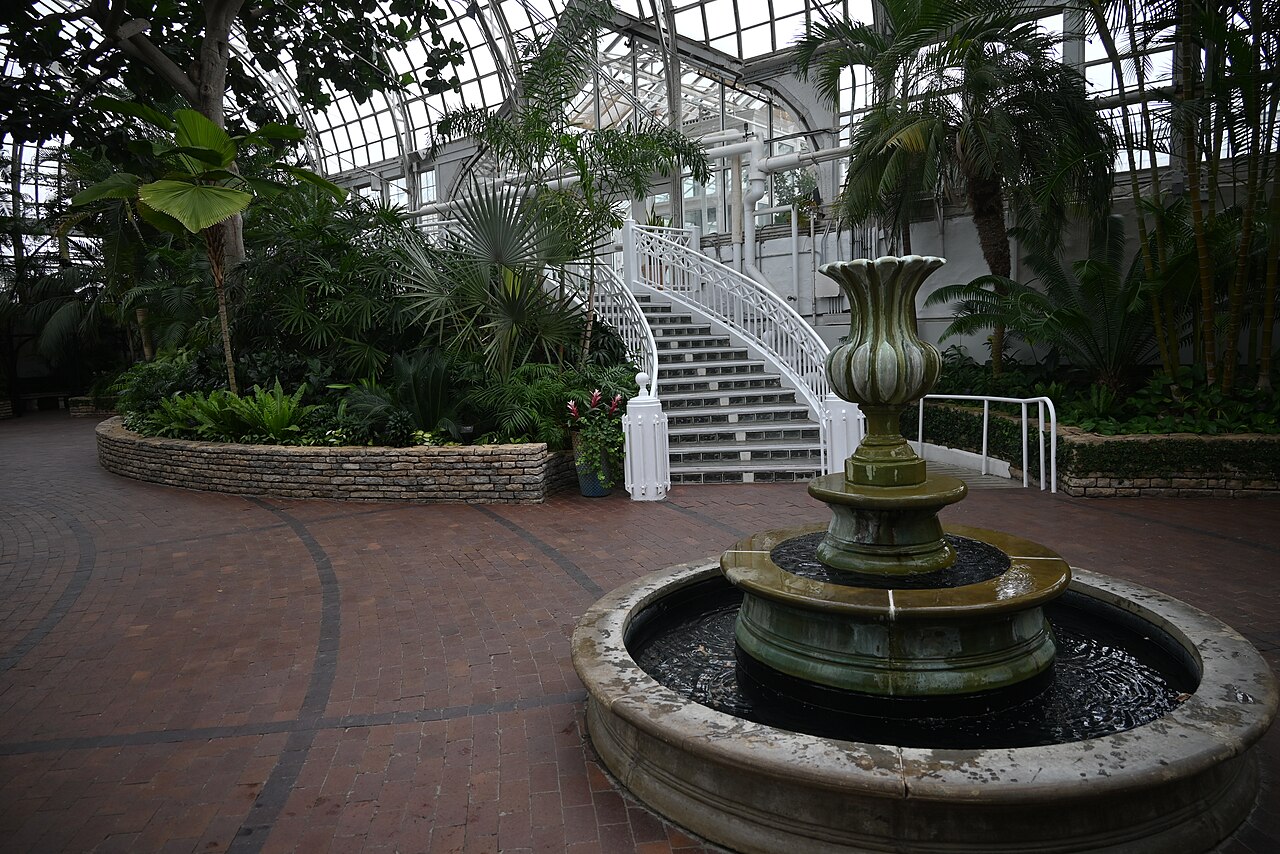
The expansion completed for AmeriFlora ’92 added about 58,000 square feet of new buildings, housing a sequence of biomes with distinct climates: Himalayan Mountains, Tropical Rainforest, Desert and Pacific Island Water Garden. The rainforest can be explored at ground level and from a canopy bridge above; the desert is laid out on several levels; and in the Pacific Island garden an elevated path overlooks a koi pond. Rooftop gardens beside the Davis Showhouse, The Grove and the Zen Terrace, add vertical fountains and Asian-inspired planting. In the North Courtyard, a covered pavilion houses the Hot Shop glassblowing studio.
Plant collections
The glasshouses display more than 400 plant species. The Palm House holds 43 palm species, several of them threatened in the wild, and a fiddle-leaf fig that was among its original plantings. The Himalayan biome combines conifers, deciduous trees, shrubs and vines, with star jasmine scenting the air in June and autumn colour later in the year; the rainforest shelters mahogany, cacao and epiphytes; the desert gathers cacti and succulents; and the Pacific Island garden features ancient ferns, breadfruit and bananas. More than 50 bonsai, half tropical and half hardy, the oldest over 365 years old, are shown in rotation from late March to late October.
The Chihuly collection, born of the 2003 exhibition, comprises more than 3,000 pieces of glass arranged in 17 installations among the plants; the institution describes it as the largest private collection of its kind in a botanical garden.
Visiting
The conservatory stands in Franklin Park, east of downtown Columbus, surrounded by outdoor botanical gardens, a children’s garden and the Community Garden Campus, which is open to the public. The route leads from biome to biome, and the Chihuly collection is included with admission. In spring, Blooms & Butterflies fills the Pacific Island Water Garden; several Chihuly Nights each year show the glass under dramatic lighting, and glassblowing demonstrations run in the Hot Shop from April to December. Until the planned reopening in autumn 2027, the historic Palm House, the Davis Showhouse and the rooftop gardens remain closed.
39.97° N, 82.95° W
Greenhouses nearby
Architecture nearby
More greenhouses — United States
Do you have a good photo of this greenhouse? Suggest it for this page →
Sources (8)
- fpconservatory.org/about/history/
- fpconservatory.org/discover/gardens-collections/palm-house/
- fpconservatory.org/discover/gardens-collections/conservatory/
- fpconservatory.org/discover/gardens-collections/chihuly-collection/
- fpconservatory.org/discover/gardens-collections/bonsai/
- fpconservatory.org/discover/hot-shop/
- en.wikipedia.org/wiki/Franklin_Park_Conservatory
- openstreetmap.org/way/817895050
Affiliate links — booking through Verrière helps fund our research, at no extra cost to you.