Aberglasney Ninfarium
Llangathen, Carmarthenshire, Wales
Entry updated on October 3, 2026
- Year
- 2005
- Style
- Glass atrium over the ruined rooms of a mansion
- Status
- Open to the public
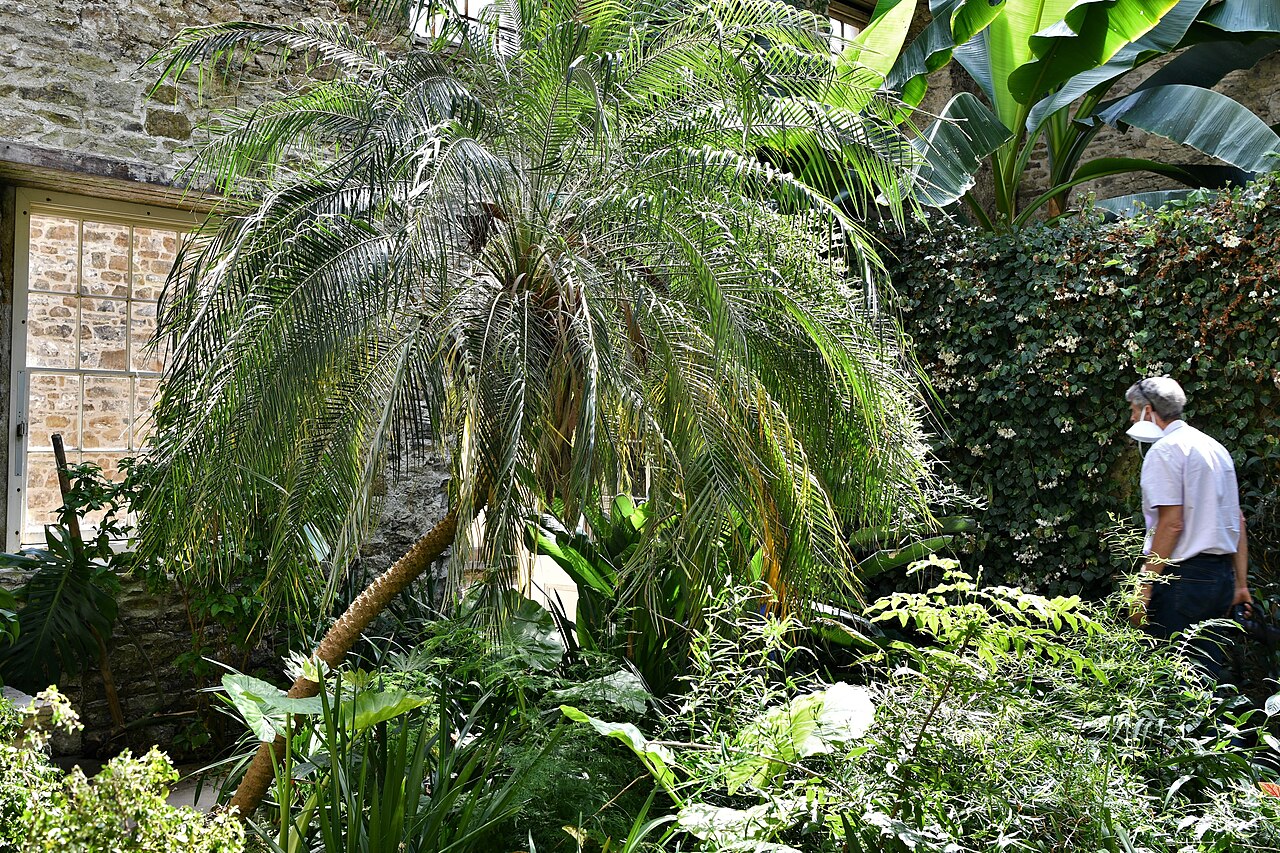
At the heart of Aberglasney's mansion in the Tywi valley, the ruined central rooms were covered by a glass atrium completed in 2005. Named the Ninfarium after the garden of Ninfa south of Rome, planted among stone ruins, this award-winning space holds subtropical and exotic plants growing among the remains: Phalaenopsis orchids, the banana Musa coccinea, the giant Dutchman's pipe and Madagascar jasmine. It complements gardens that opened to the public in 1999, four years after the Aberglasney Restoration Trust bought the estate.
Affiliate links — booking through Verrière helps fund our research, at no extra cost to you.
History
1 min
Aberglasney, near Llangathen, is an old house in the Tywi valley. Anthony Rudd, appointed Bishop of St Davids in 1594, paid for its rebuilding in 1603, and the Dyer family, who acquired the estate around 1710, gave it a Queen Anne style façade. The Philipps family and then the Mayhews lived there into the early twentieth century.
After Marianne Mayhew died in 1939 the house fell into decline. By 1977 it was suffering from vandalism and architectural theft, and an attempt to sell its portico legally through Christie's prompted the Welsh Office to step in. In 1995 the Aberglasney Restoration Trust, founded with William Wilkins as chair, bought the house and gardens thanks to a gift from the American benefactor Frank Cabot. The gardens reopened to the public in July 1999.
The central rooms of the mansion, still in ruins, then became the setting for an unusual project: roofing them in glass and planting a garden inside. Completed in 2005, the Ninfarium takes its name from the garden of Ninfa, at the foot of the Lepini Mountains south of Rome, which was also laid out among stone ruins. The garden describes the space as award-winning. Restoration of the ground floor of the rest of the mansion was completed in 2013, and that of the Old Piggeries in 2016.
Architecture and engineering
1 min
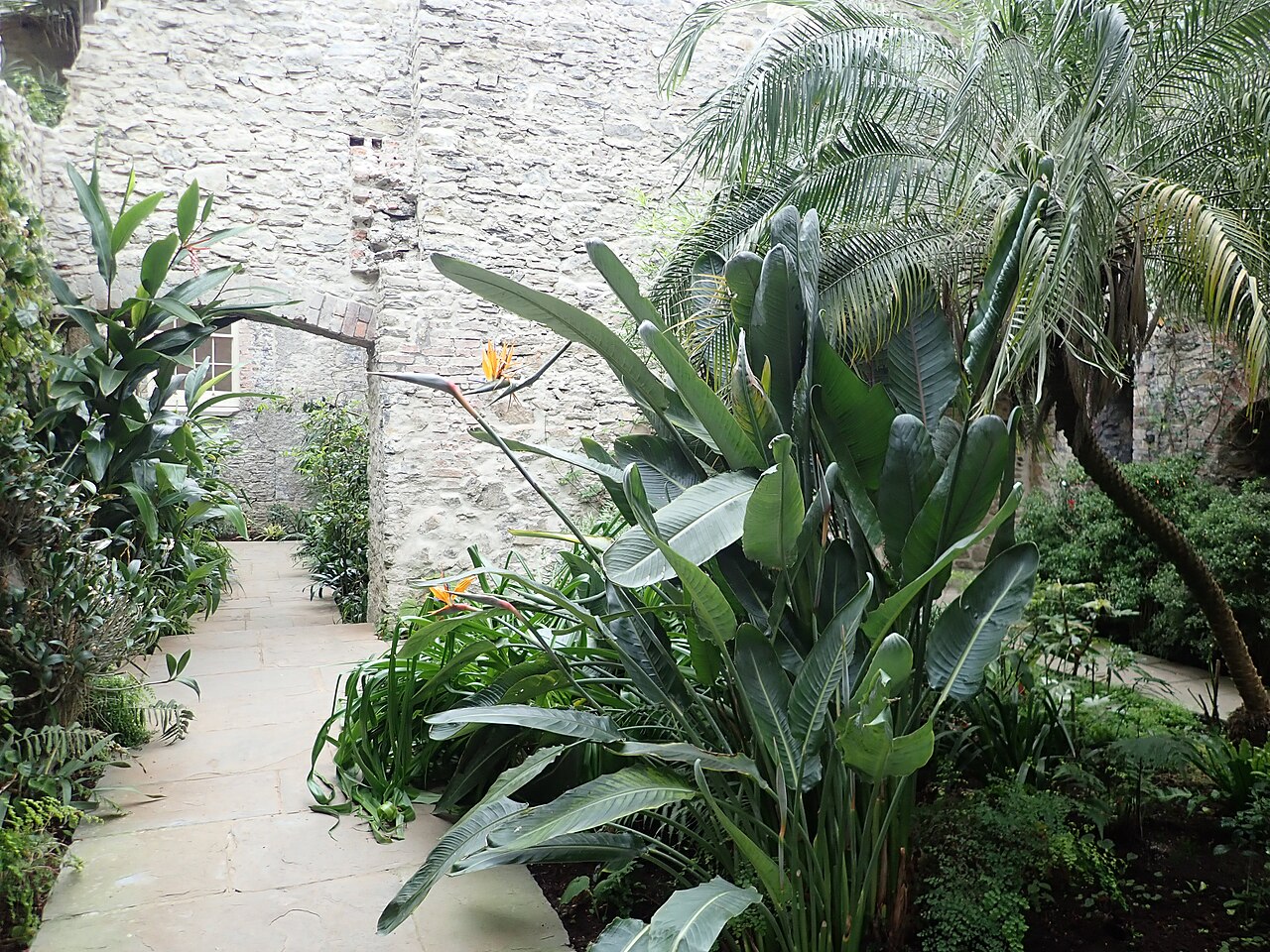
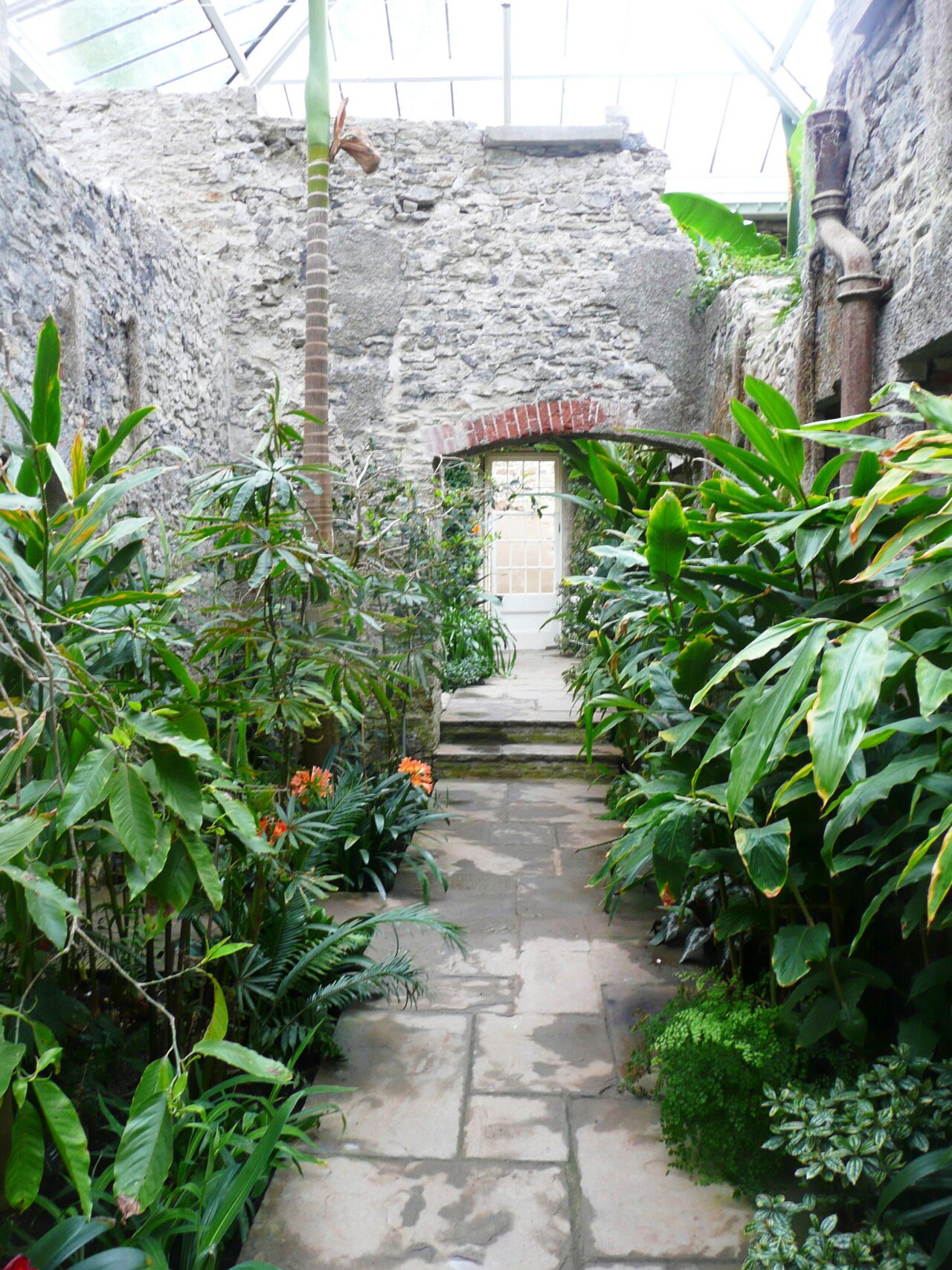
The Ninfarium is not a free-standing glasshouse: it is a glass atrium built over the central rooms of the mansion, which had been left in ruins after decades of neglect. The glazed roof thus covers the very heart of the house, and the plants grow directly among the remains, at the foot of the surviving walls of the old rooms.
The building around it carries several periods: a rebuilding paid for in 1603 by Bishop Anthony Rudd, then a Queen Anne style façade added by Robert Dyer in the early eighteenth century. Both the house and the gardens are listed Grade II*.
The idea follows the garden of Ninfa, where plants were set among stone ruins; Aberglasney offers a version sheltered under glass, at the centre of a house lived in for several centuries. Neither the designer of the atrium nor its dimensions are given in the sources consulted.
Plant collections
1 min
The Ninfarium is home to subtropical and exotic plants. The garden highlights the flame lily (Gloriosa superba), a climber, Phalaenopsis orchids, the giant Dutchman's pipe (Aristolochia gigantea), the yellow jade orchid tree (Magnolia champaca), Madagascar jasmine (Stephanotis floribunda) and an ornamental banana, Musa coccinea.
These plants grow among the remains of the house, against the walls and inside the former rooms, which gives the place its character of a ruin taken over by vegetation, true to the Italian model that inspired it.
Visiting
1 min
The Ninfarium is seen as part of a visit to Aberglasney's gardens in the Tywi valley, about 5 km (3 miles) from Llandeilo on the A40. The 10 acres (about 4 hectares) of gardens include an Elizabethan or Jacobean cloister garden, enclosed on three sides by an arcaded stone walkway and topped by a rare parapet walk, and a yew tunnel planted by the Dyer family in the eighteenth century. In spring the collection runs to more than 450 varieties of daffodil. The National Botanic Garden of Wales and its Great Glasshouse lie about 7 km away as the crow flies, so the two can be combined in a day.
51.88° N, 4.06° W
Greenhouses nearby
More greenhouses — United Kingdom
Do you have a good photo of this greenhouse? Suggest it for this page →