Glasshouses, Birmingham Botanical Gardens
Edgbaston, Birmingham (West Midlands)
Entry updated on October 3, 2026
- Year
- 1852–1884 · restored 1980s–1990s
- Architect
- Not documented (garden laid out by John Claudius Loudon)
- Style
- Range of Victorian glasshouses: tropical house, square house with pyramidal roof, terrace range
- Dimensions
- Four main glasshouses; 1871 house 8 m high
- Status
- Open to the public
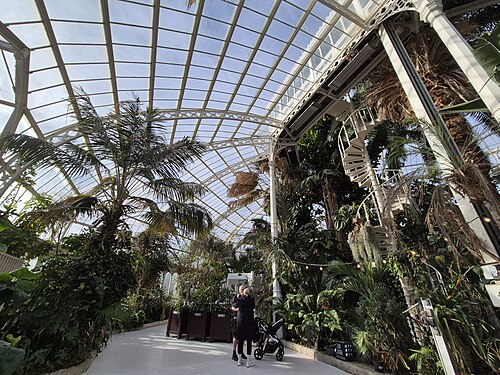
Founded in 1829 by the Birmingham Botanical and Horticultural Society and laid out by John Claudius Loudon, the botanical gardens at Edgbaston opened in 1832. Their glasshouses span half a century: a Tropical House of 1852, built partly for the giant waterlily Victoria amazonica, a Subtropical House of 1871, 8 m high under a pyramidal roof, and terrace glasshouses of 1884. Restored in the 1980s and 1990s, they display tropical crop plants, orchids, carnivorous plants, citrus and cacti, and a £19.4 million programme now aims to safeguard this heritage.
Affiliate links — booking through Verrière helps fund our research, at no extra cost to you.
History
1 min
The Birmingham Botanical and Horticultural Society was founded on 23 September 1829 by local businessmen and professional men, under the presidency of William Legge, 4th Earl of Dartmouth. The committee asked the landscape gardener and horticulturist John Claudius Loudon for a plan, but rejected as too expensive his ideas for the garden's main conservatory. The garden opened to members of the society on 11 June 1832 at Edgbaston, and its layout has changed very little since Loudon's design was carried out.
The present glasshouses were built over the following half century. The Tropical House went up in 1852, partly to house the giant waterlily Victoria amazonica; the Subtropical House followed in 1871; and in 1884 the terrace glasshouses replaced the original conservatory and lean-to houses. A £1.8 million refurbishment programme begun in the 1980s and continued in the 1990s restored the houses, with the Tropical House rebuilt in 1990–91.
The garden, still run by the society, now a registered charity, announced a project called Growing Our Green Heritage on 10 July 2023, then costed at £13 million. In July 2025 a £9 million National Lottery award took it to 90 per cent of a target since raised to £19.4 million.
Architecture and engineering
1 min
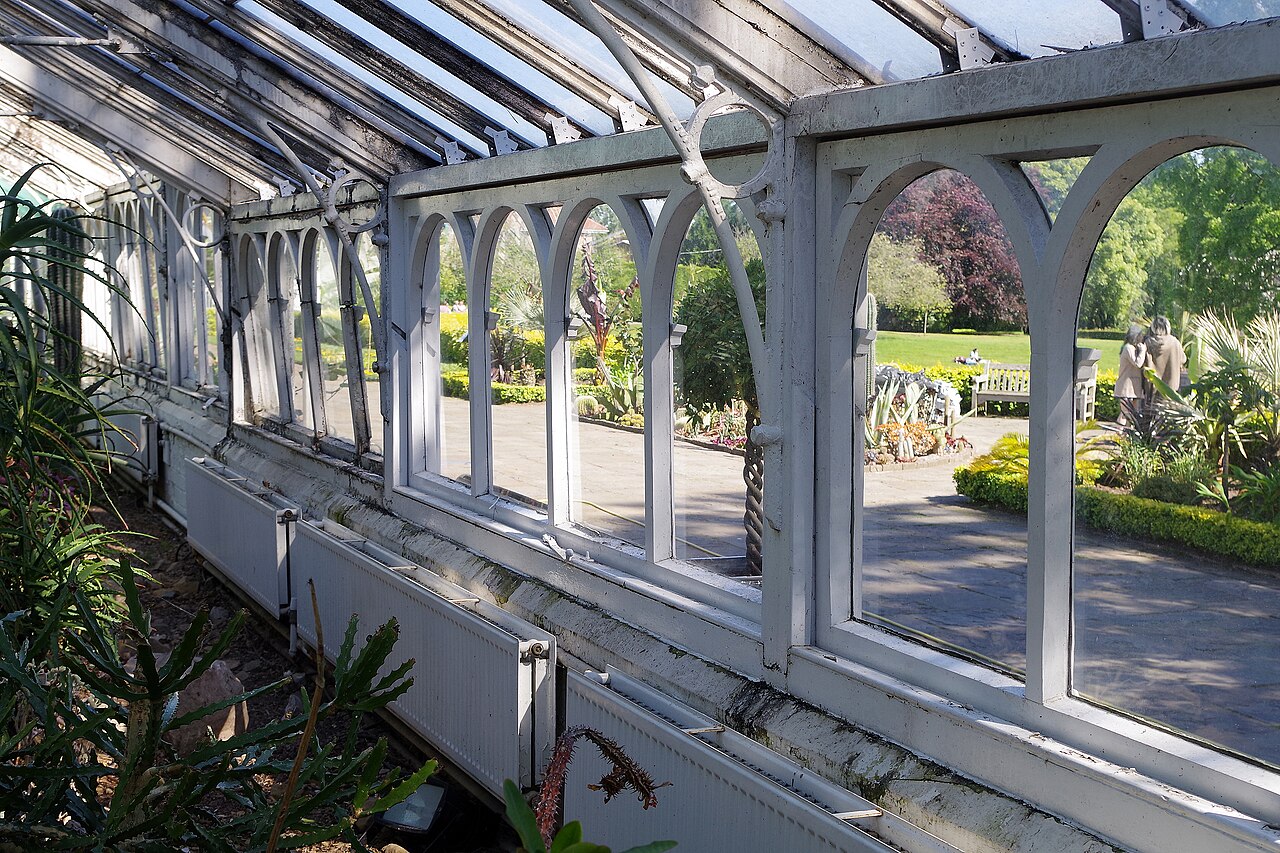
The glasshouses form a sequence of separate buildings rather than one great conservatory. The Tropical House of 1852, rebuilt in 1990–91, is laid out around a raised circular pool. The 1871 house, listed Grade II, is a square block 8 m high under a pyramidal roof; Parks & Gardens calls it the Palm House and notes an elaborate fountain and basin inside. The south range of 1884, the terrace glasshouses, comprises the Orangery and, to the west of its central entrance, the Cactus and Succulent House.
The glasshouses stand in a garden registered at Grade II* on the national Register of Parks and Gardens. Built between 1852 and 1884, the glasshouses all belong to the Victorian era, and Parks & Gardens observes that the garden's layout has altered very little since it was created.
Plant collections
1 min
Each house represents a different climate. The Tropical House displays essential food and industrial crops such as rice, cocoa, sugar cane and cotton, along with ornamental and aquatic plants around its pool. The Subtropical House brings together orchids, ferns and carnivorous plants, including the Venus flytrap. The Mediterranean House holds citrus trees and shrubs, and the Arid House cacti and aloes, among them Aloe vera.
Outdoors, the winter garden, rock garden, pinetum, Japanese garden and herb garden extend the collections beyond the glass.
Visiting
1 min
Birmingham Botanical Gardens lie on the south side of Westbourne Road in Edgbaston, south-west of Birmingham city centre. Half a day allows time for the four glasshouses and then the outdoor gardens with their themed areas. Being heated, the glasshouses can be enjoyed in any season, while spring and summer show the outdoor garden at its best. Given the Growing Our Green Heritage programme, it is worth checking the garden's website before visiting.
52.47° N, 1.93° W
Greenhouses nearby
More greenhouses — United Kingdom
Do you have a good photo of this greenhouse? Suggest it for this page →