Great Glasshouse (Tŷ Gwydr Mawr)
National Botanic Garden of Wales, Llanarthne, Wales

Sources checked September 2026
- Year
- 2000
- Architect
- Foster and Partners (project architect Nigel Curry); interior landscape by Kathryn Gustafson
- Style
- Contemporary single-span glass dome
- Dimensions
- 95 to 110 m × 55 to 60 m; 3,500 m² inside
- Status
- Open to the public; phased refurbishment begun in 2025
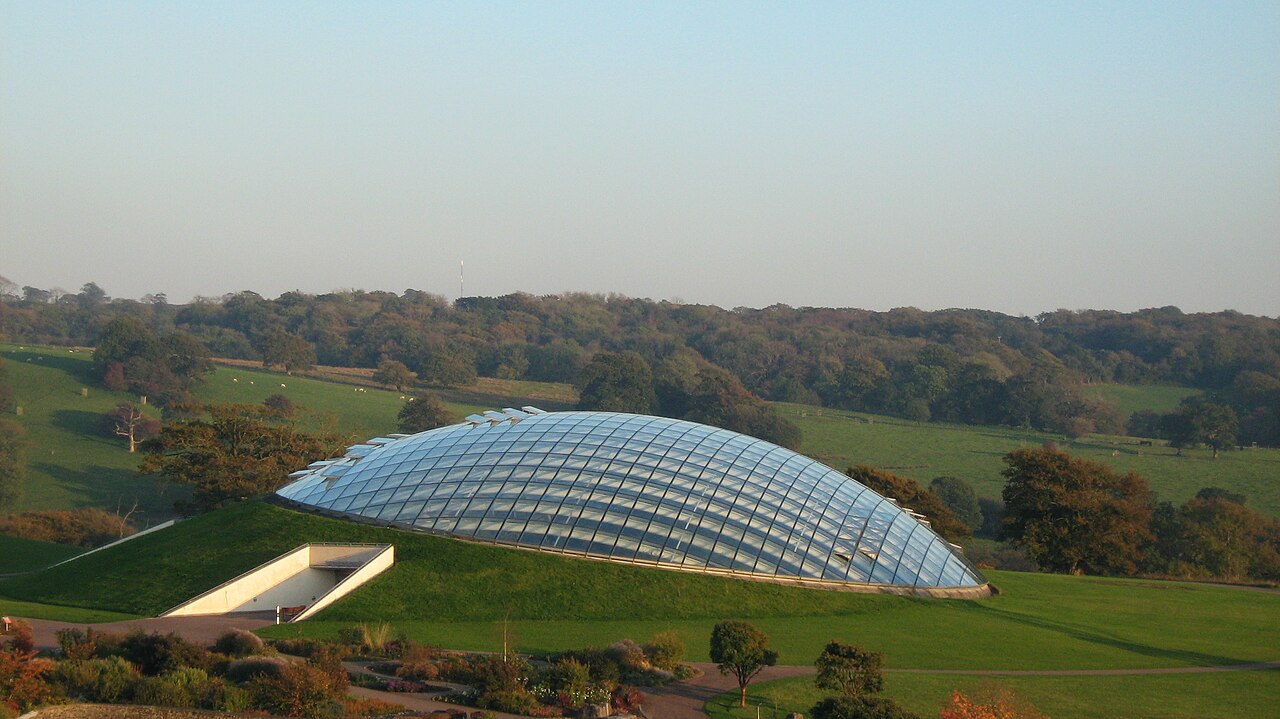
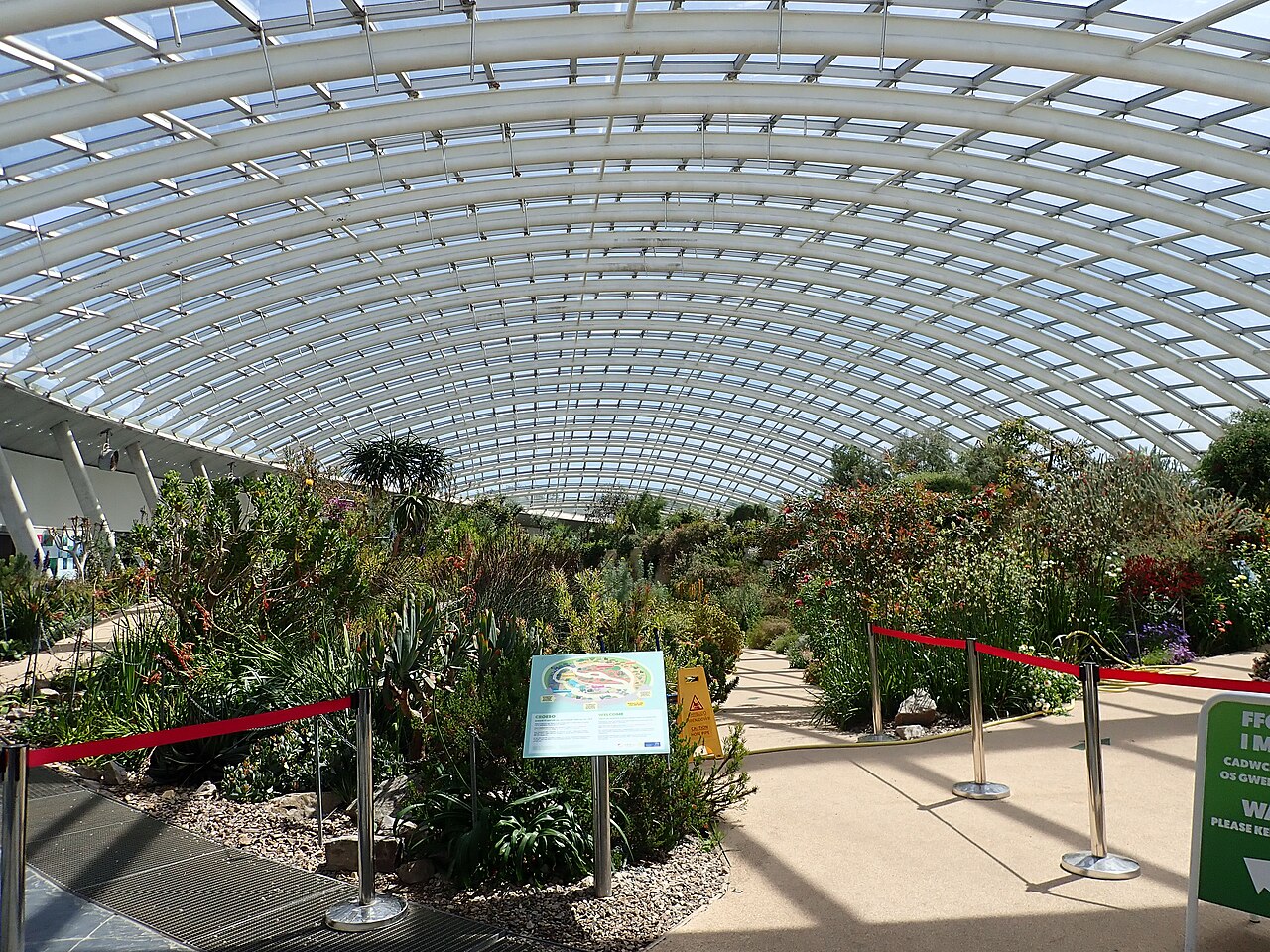
The centrepiece of the National Botanic Garden of Wales, opened in 2000 in the Tywi valley, the Great Glasshouse was designed by Foster and Partners, who won the National Eisteddfod's Gold Medal for Architecture for it that same year. Billed by the garden as the largest single-span glasshouse in the world, the glass dome encloses 3,500 m² of terraces, sandstone cliffs and scree slopes shaped by landscape architect Kathryn Gustafson. Plants, many of them endangered, represent the six Mediterranean-climate regions: California, Chile, South Africa, Australia, the Canary Islands and the Mediterranean Basin. A phased refurbishment began in 2025.
Affiliate links — booking through Verrière helps fund our research, at no extra cost to you.
Practical info
- Tickets
- Garden admission ticket, valid for seven days (the Great Glasshouse is its central attraction). Free under 2 and for carers; children's rate (ages 2–17). Booking online is optional (10% off); half price if you arrive by bike, bus or train.
- Opening hours
- Open daily except 24 and 25 December: 10am–4pm until 28 March 2027. Last entry is one hour before closing.
- Getting there
- Carmarthenshire, postcode SA32 8HN: 10 minutes from the M4 and 2 minutes from the A48, between Cross Hands and Carmarthen. Free parking. Bus 279 from Carmarthen (limited service), TrawsCymru T1S from Swansea; Carmarthen station is about 8 miles away.
Frequently asked questions
Are dogs allowed?
Not on a daily basis, except guide and assistance dogs. On "Doggy Days" (every Monday, every Friday and the first weekend of each month) dogs are welcome in the garden, but never in the Great Glasshouse or the Tropical House.
Is the ticket valid for more than one day?
Yes: it gives unlimited entry to the garden for seven days after the date of your visit. The garden is open every day of the year except 24 and 25 December.
Is there a discount if I arrive without a car?
Yes: entry is half price (on the full adult rate) if you arrive by train, bus or bike. Cyclists leave their helmets at the gatehouse; bicycles are not allowed inside the garden.
Is the garden wheelchair friendly?
All paths in the formal garden area are, but not those of the Waun Las nature reserve. Manual wheelchairs are available at the gatehouse, and a shuttle buggy serves most parts of the garden.
History
The Great Glasshouse stands almost on the site of Middleton Hall, the mansion that the architect Samuel Pepys Cockerell built for Sir William Paxton, who bought the estate in 1789 and laid out a water park of lakes, dams and cascades around it. Gutted by fire in 1931, the house was left a shell whose walls were pulled down some twenty years later; the estate, bought by Carmarthenshire County Council, was let to young farmers.
From 1978 local walkers took an interest in the park's remains and raised money that led to the rediscovery of several historic features. From that grew the idea of a national botanic garden for Wales, whose start-up costs were shared with the UK Millennium Fund. The glasshouse, entrusted to Foster and Partners with Nigel Curry as project architect, became its centrepiece. The garden opened to the public on 24 May 2000 and was officially opened by Charles, Prince of Wales, on 21 July; that year the practice won the Gold Medal for Architecture at the National Eisteddfod of Wales for the glasshouse.
In 2003 the garden ran into serious financial difficulties, and in 2004 it accepted a support package from the Welsh Assembly Government, Carmarthenshire County Council and the Millennium Commission. In 2009 the glasshouse stood in for the domed greenhouse in the Doctor Who episode The Waters of Mars. In 2025, the garden's 25th anniversary year, a £1.3 million grant from the Julia Rausing Trust launched the first phase of a multi-phase refurbishment.
Architecture and engineering
Foster and Partners gave the glasshouse the form of a glass dome that the garden likens to a teardrop set in the landscape, covering the whole interior garden in a single span. When it was completed it was the largest single-span glasshouse in the world, a rank the garden still claims for it. It is 95 to 110 m long and 55 to 60 m wide, with a roof of 785 panes of glass, and the garden gives 3,500 m² of interior space.
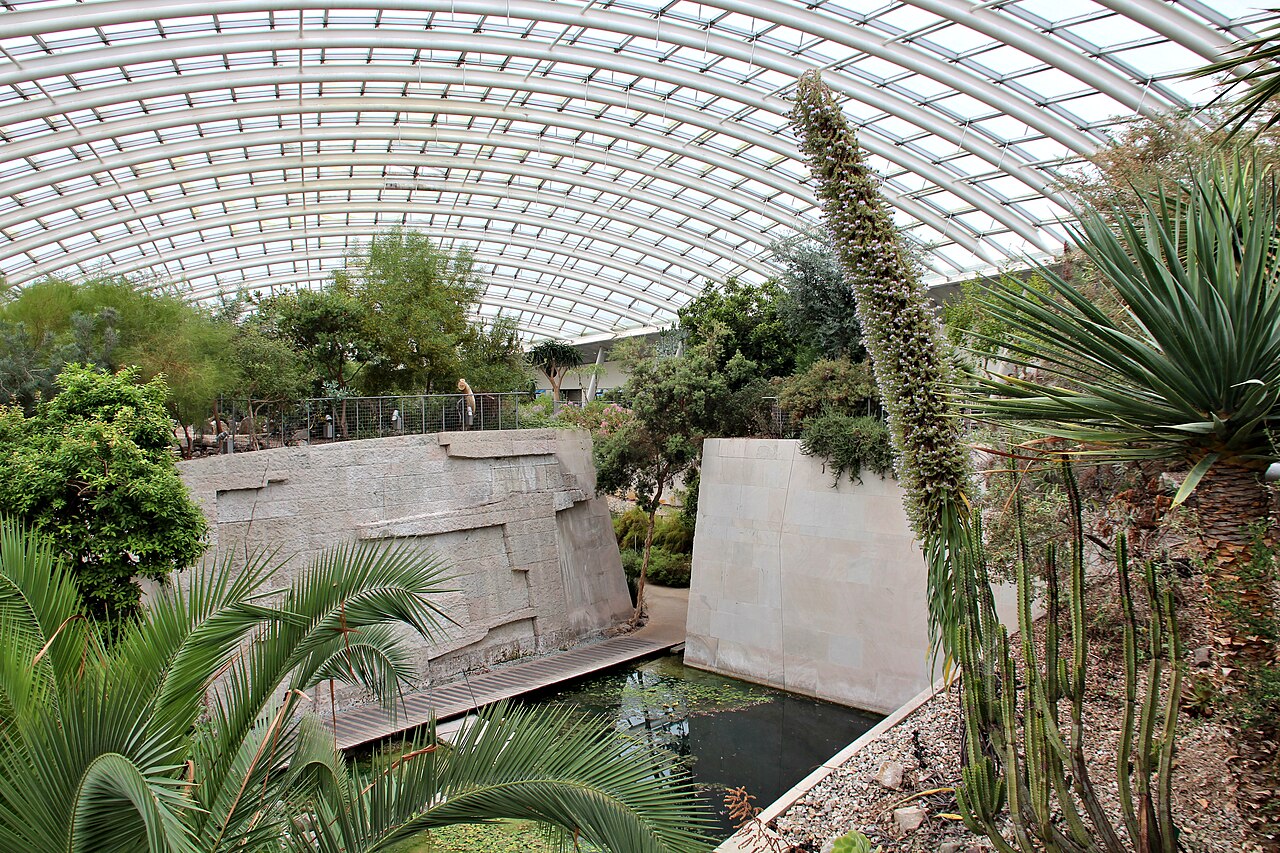
Under this transparent shell, Kathryn Gustafson's landscape builds up rocky terraces, sandstone cliffs and gravelled scree slopes, creating a wide range of aspects and habitats. The garden was planned around recycling and conservation: recycled biomass supplies part of its heating, including for the visitor centre and the glasshouses.
Twenty-five years after opening, the refurbishment begun in 2025 addresses the mechanical plant, glazing and environmental control systems that keep conditions precise for the plants, with the aim of cutting energy use and meeting current sustainability standards. Inside, a hemispherical marble bench inspired by the building's form commemorates Nigel Curry, who died in 2024.
Plant collections
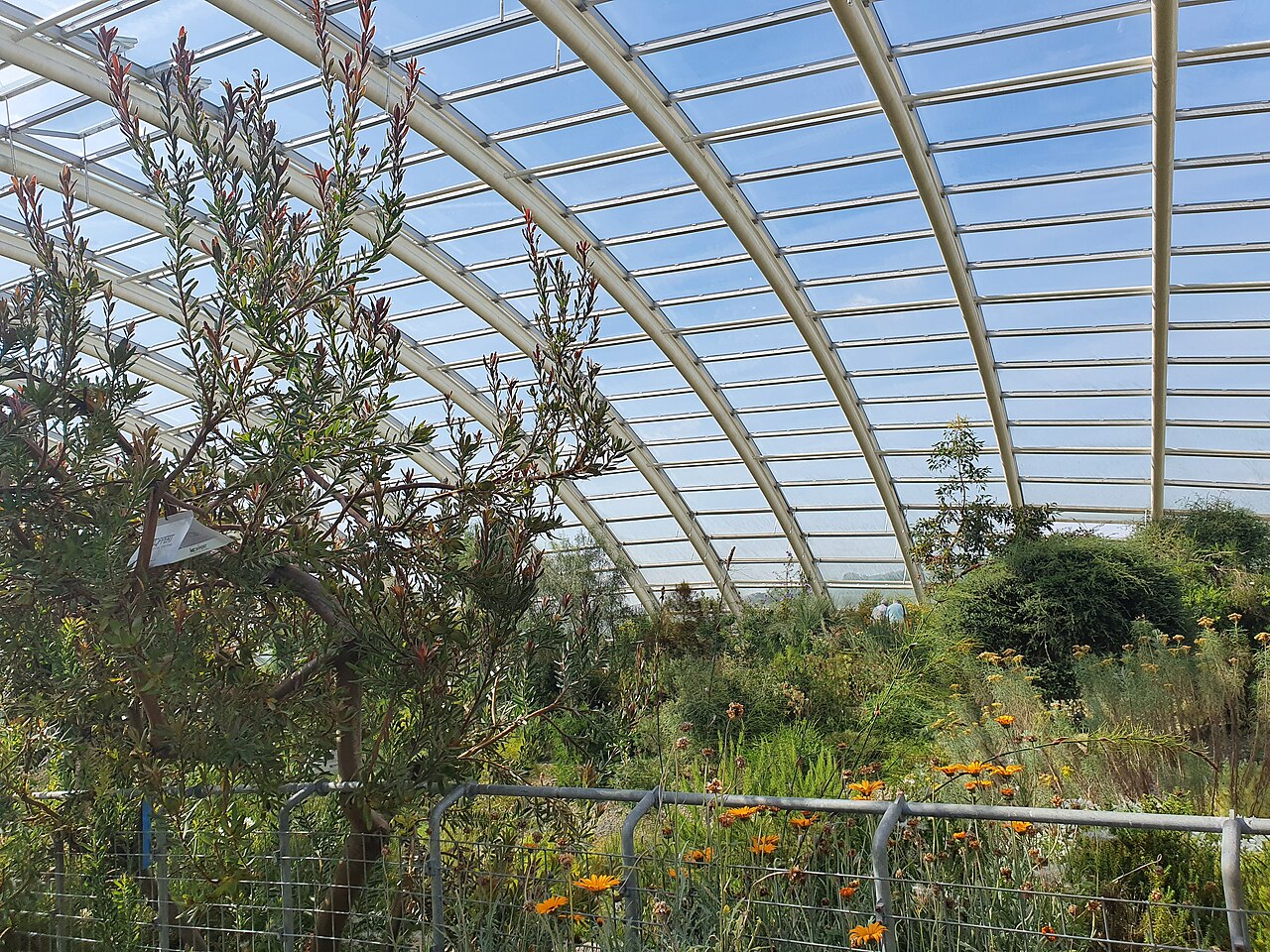
The glasshouse is devoted to the floras of the world's six Mediterranean-climate regions: California, Chile, South Africa, Australia (Western Australia), the Canary Islands and the Mediterranean Basin. Together these regions cover less than 2% of the Earth's surface yet hold more than 20% of all known flowering plant species, a diversity the garden ranks second only to tropical rainforest. It describes the glasshouse as home to the largest collection of Mediterranean plants in the Northern Hemisphere, and many of the species grown are endangered in the wild.
Each region has its own zone, with suitable soils and terrain. The garden singles out California lilacs and Western Australian flowers; in the Canaries section stand architectural dragon trees, alongside geraniums from Madeira and echiums whose spring flowering the garden compares to slow-motion fireworks. The glasshouse also serves as a living laboratory for conservation, research and education.
Visiting
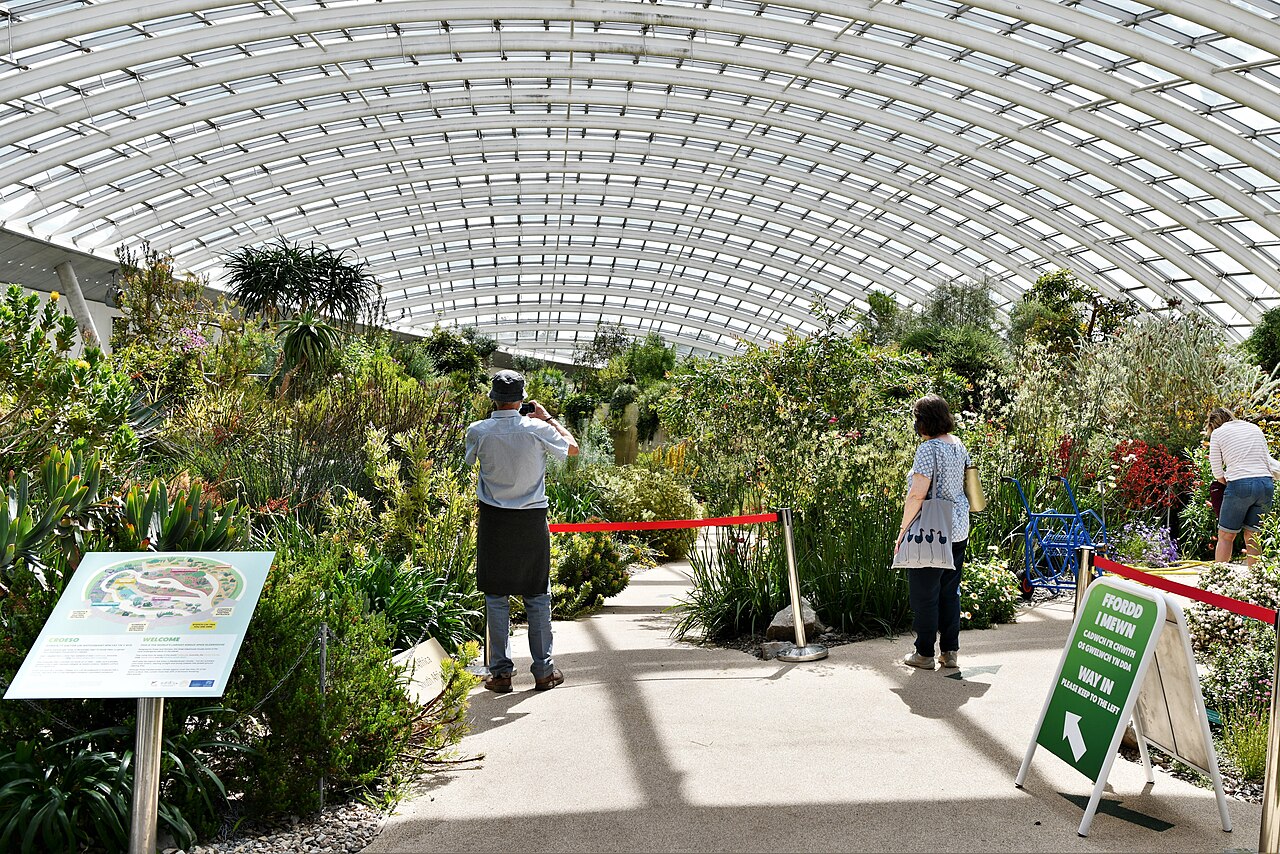
The glasshouse sits at the heart of the garden, which covers 568 acres (about 230 ha) in the Tywi valley in Carmarthenshire; the Med café is just inside its northern entrance. Allow at least an hour to take in the six zones. The garden recommends April and May, when the Mediterranean plants are at their blooming best.
The visit carries on into the Double Walled Garden, rebuilt from the ruins, the tropical glasshouse designed by the Welsh architect John Belle and opened in 2007, or the Waun Las national nature reserve, some 150 hectares of wildflower meadows and pasture reached from the garden. To the east, the restored view from the old mansion site runs out to Paxton's Tower, a neo-Gothic folly raised in honour of Lord Nelson.
More photos
51.84° N, 4.15° W
Greenhouses nearby
More greenhouses — United Kingdom
Do you have a good photo of this greenhouse? Suggest it for this page →
Sources (8)
- botanicgarden.wales/garden-areas/the-great-glasshouse/
- botanicgarden.wales/garden/great-glasshouse/
- en.wikipedia.org/wiki/National_Botanic_Garden_of_Wales
- botanicgarden.wales/press/great-glasshouse-tribute-to-nigel-curry/
- botanicgarden.wales/press/press-release-1-3m-grant-for-national-botanic-garden-of-wales-fr
- botanicgarden.wales/2016/04/dont-miss-great-glasshouse-brilliant-best/
- wikidata.org/wiki/Q55841858
- openstreetmap.org/way/24902964
Affiliate links — booking through Verrière helps fund our research, at no extra cost to you.