Pálmaház of Budapest Zoo
Budapest

Sources checked September 2026
- Year
- 1909–1912
- Architect
- Gyula Végh
- Style
- Early 20th-century historicist architecture, iron framework on a reinforced concrete base
- Dimensions
- Reopened in 1953 after major destruction during the Second World War
- Status
- Open to the public (within Budapest Zoo)
Built between 1909 and 1912 as part of the major reconstruction of Budapest Zoo, the Pálmaház is the work of architect Kornél Neuschloss, with contributions from Károly Kós and Dezső Zrumeczky. Its iron framework and reinforced-concrete base, advanced techniques for the time, made it a feat of engineering for early-20th-century Budapest. Badly damaged during the Second World War, it did not reopen until 1953, after a complete reconstruction, and it continues to house dense tropical vegetation set among artificial rockwork.
Affiliate links — booking through Verrière helps fund our research, at no extra cost to you.
History
The Palm House at Budapest Zoo grew out of the sweeping reconstruction of the zoo between 1909 and 1912, which transformed the institution in the Városliget. A large tropical glasshouse had first been planned for Gellért Hill, where thermal springs could have heated it; in 1907 the scheme was moved to the zoo, on the shore of the main lake. The building was designed by architect Gyula Végh, with the planting laid out by the gardeners Károly Räde and Keresztély Ilsemann. It opened on 20 May 1912.
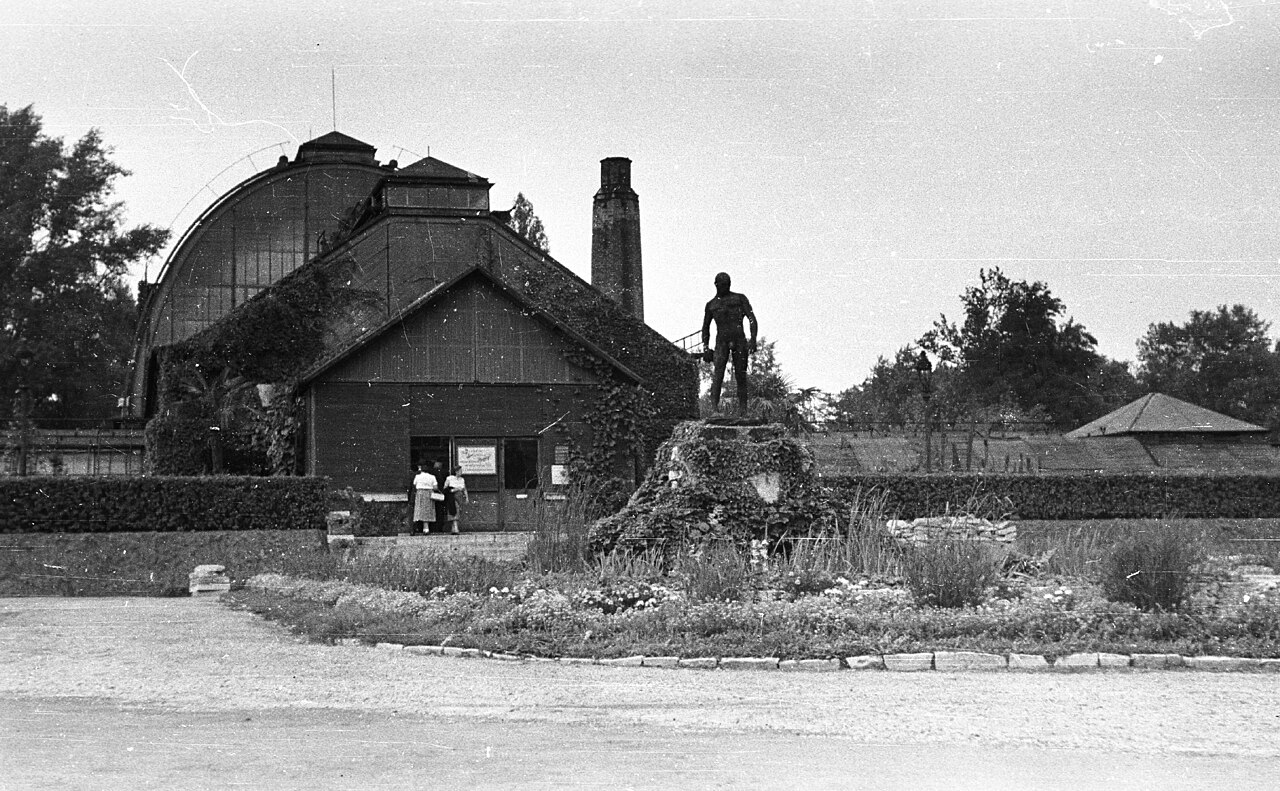
Animals soon joined the plants, from 1922 onwards, and crocodiles arrived in 1934. During the siege of 1944–45 bombs shattered the glazing, damaged the steelwork and destroyed the thermal-water pipes that heated the crocodile pool; the crocodiles froze, the collections were lost and only the metal skeleton survived. The main hall reopened on 20 December 1952.
Warm, humid air then took its toll on the structure, which needed repeated repairs in the 1960s and 1970s; closed in 1976, the house reopened in 1981. Another closure in February 1991 led to almost a decade of work, and the Palm House reopened on 30 October 2000. In 2011–12 its displays were reorganised around the tropical Americas.
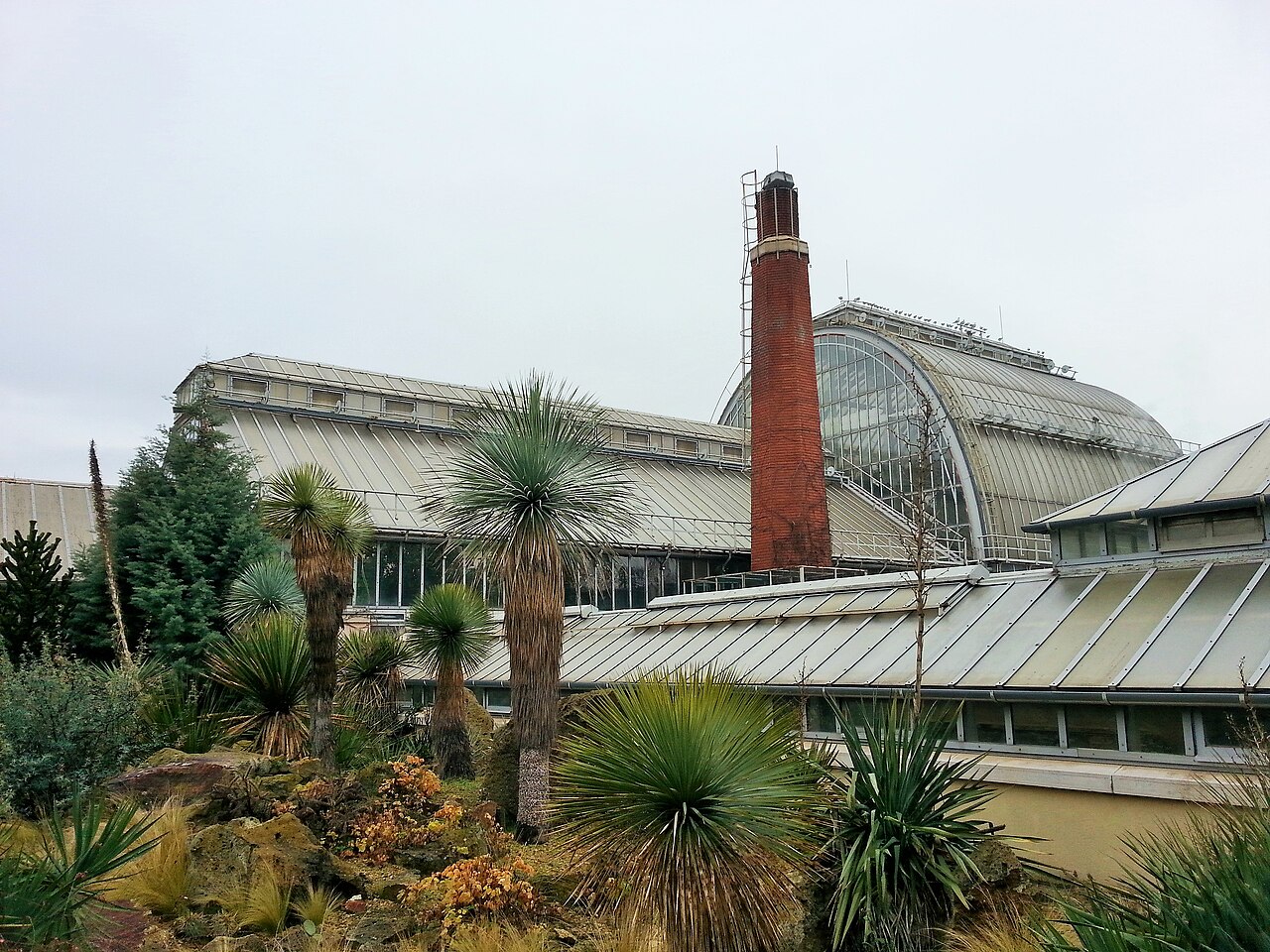
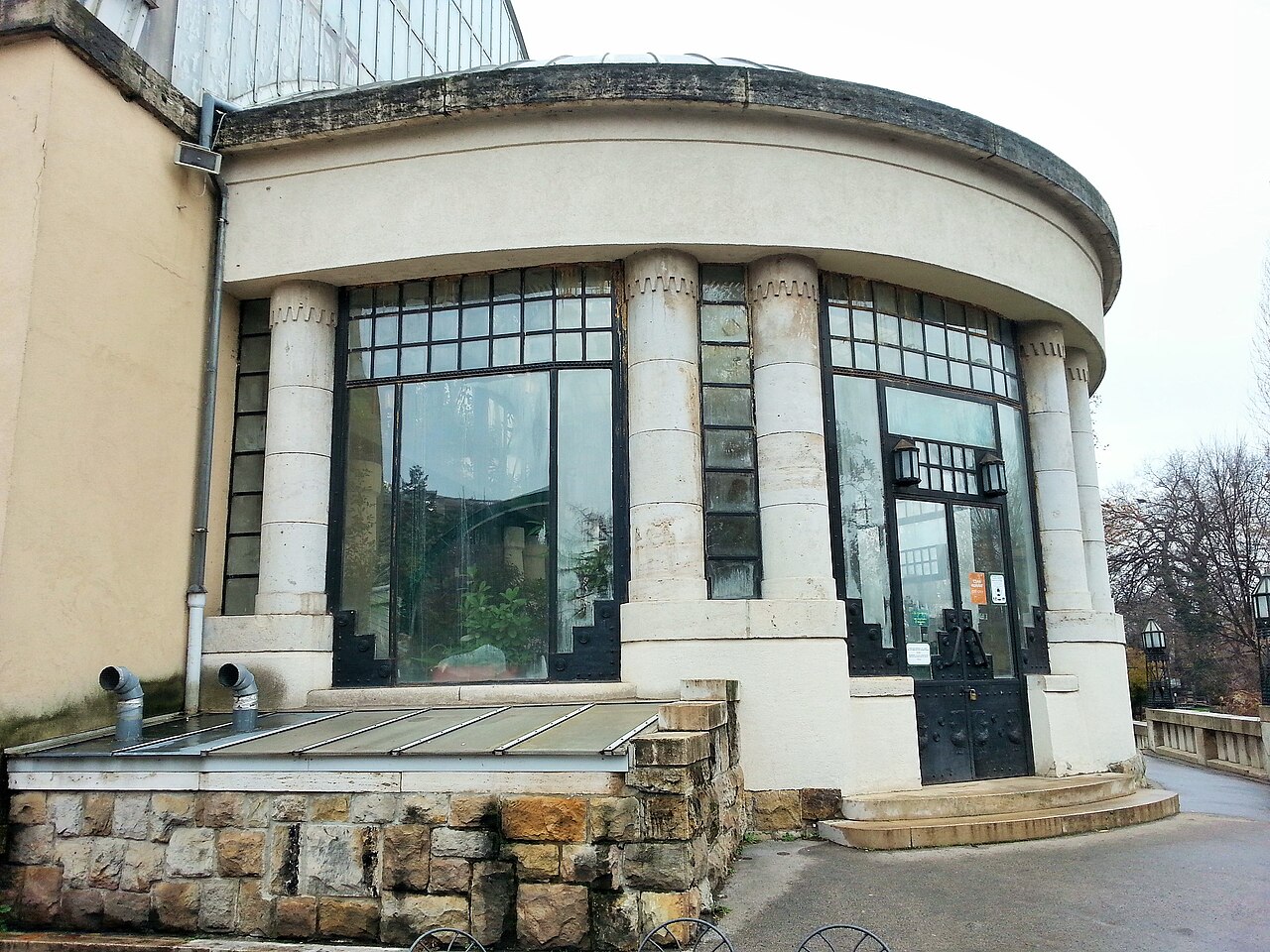
Architecture and engineering
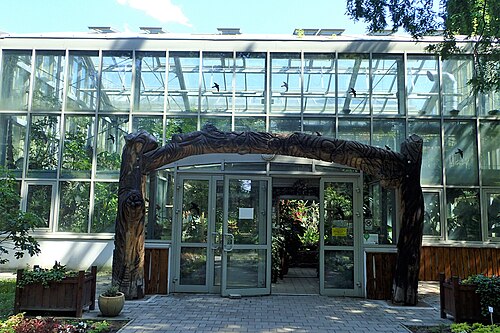
The building combines a large central hall of steel and glass with six side wings, three on each side, and is described by some sources as one of the largest structures of its kind in Central and Eastern Europe. It is glazed on every face, and an internal staircase leads down to the aquarium beneath it.
The 1990s reconstruction reinforced or replaced most of the steel frame, insulated the building and swapped the roof glass for polycarbonate (Makrolon) sheeting. Two of the wings were deepened and given galleries, and the final phase, completed in 2000, strengthened the parabolic hall and finished the building services.
In a roundabout way the house now fulfils the thermal idea of 1907: it is among the zoo buildings heated through a network supplied by water from the neighbouring Széchenyi Baths.
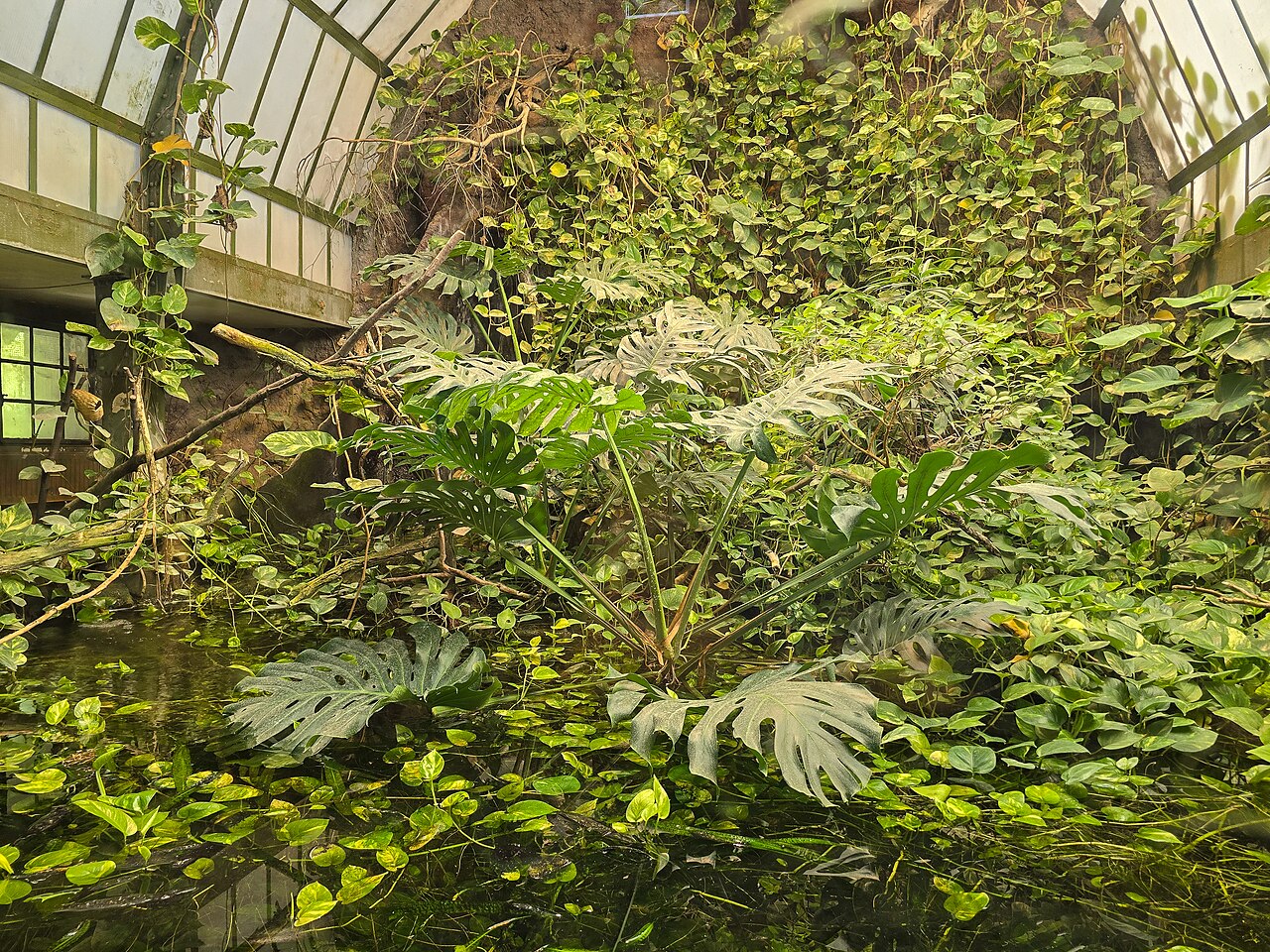
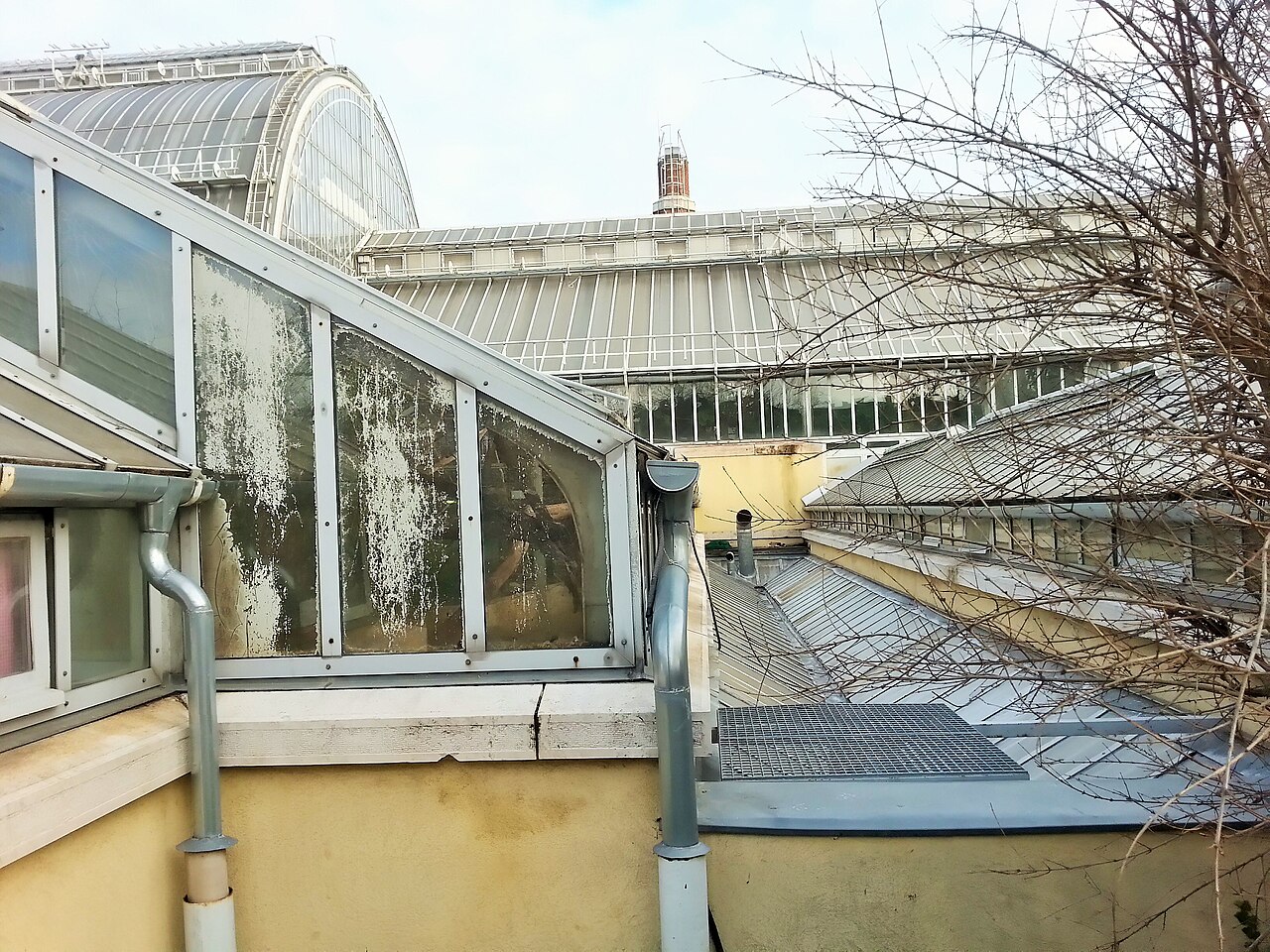
Plant collections
Since 2011–12 the Palm House has been devoted to the tropical and subtropical Americas. Its wings evoke specific places, among them the Iguazú and Manú national parks, Amazonia, the Orinoco delta, the Caribbean, the Okefenokee Swamp and the Chihuahuan Desert.
Visitors meet sloths, armadillos, prairie dogs, anacondas, silky anteaters and small New World monkeys amid dense tropical planting. A Phoenix palm some 15 metres tall, about 110 years old, is among the oldest plants. The aquarium below the glasshouse holds rays, large catfish and a wide range of tropical fish.
Visiting
The Palm House stands beside the zoo's main lake in the Városliget. It can be explored as a loop or wing by wing, with stairs leading straight down to the aquarium without going outdoors, which makes it a favourite refuge on rainy or winter days. Allow at least an hour, longer with children.
It pairs naturally with the zoo's other historic buildings — Kornél Neuschloss's Elephant House and main entrance, and the pavilions by Károly Kós and Dezső Zrumeczky — and with the Széchenyi Baths close by.
47.52° N, 19.09° E
Greenhouses nearby
Architecture nearby
More greenhouses — Hungary
Do you have a good photo of this greenhouse? Suggest it for this page →
Sources (8)
- zoobudapest.com/en/news/on-the-zoos-historic-buildings-for-the-international-day-for-monum
- zoobudapest.com/aktualis/allatkert-az-esoben/
- welovebudapest.com/en/article/2016/02/02/tropical-vibes-shine-on-at-the-budapest-zoo-s-exo
- nagyutazas.hu/magazin/article.php?id=275
- budappest.hu/a-palmahaz-tropusi-kaland-a-varosliget-sziveben/
- telikertepites.net/a-budapesti-palmahaz/
- orszagepito.net/150-eves-a-fovarosi-allat-es-novenykert-ii/
- fototar.mi.btk.mta.hu/hu/altlist/details/9/9756/%C3%A1ltal%C3%A1nos-lista-budapest,-f%C5%9
Affiliate links — booking through Verrière helps fund our research, at no extra cost to you.