New Orangery (Nowa Pomarańczarnia), Łazienki Park
Warsaw, Łazienki Park

Sources checked October 2026
- Year
- 1860–1861
- Architect
- Adam Adolf Loewe and Józef Orłowski
- Style
- Neoclassical with eclectic elements; long south-facing glazed hall, cast-iron columns
- Status
- Accessible as a restaurant (Belvedere, since 1992); registered monument
Built in 1860-1861 to a design by Adam Adolf Loewe and Józef Orłowski, the New Orangery is the second orangery of Łazienki Park in Warsaw, after the eighteenth-century one. Its long hall, glazed on the south side and divided by slender cast-iron columns, was meant to winter exotic trees; two masonry blocks at the centre carry sculptures by Leon Molatyński. The hall now holds tropical plants and, since 1992, the Belvedere restaurant. The building has been in the register of monuments since 1973.
Affiliate links — booking through Verrière helps fund our research, at no extra cost to you.
History
The Nowa Pomarańczarnia, or New Orangery, is the second orangery of Łazienki Park in Warsaw. It complements the Stara Pomarańczarnia, built under King Stanisław August in 1786-1788, which German Wikipedia describes as no longer sufficient for wintering the park's exotic plants. The new building went up in 1860-1861 to a design by Adam Adolf Loewe and Józef Orłowski, in the southern part of the park along the path known as Droga Wilanowska or Chińska. The statues of Vertumnus and Pomona flanking its central block are by Leon Molatyński.
As for the orange-tree collection from Nieborów, English Wikipedia and an online guide tie it to this building, which the guide says was raised on the order of Tsar Alexander II. Polish Wikipedia reports instead that Alexander II bought the collection from Zygmunt Radziwiłł, had it moved to Łazienki and had a dedicated pavilion built around 1870 to house it, demolished after the First World War. In 1914-1915 the Russians evacuated the estate's movable property, and the orange trees left in Warsaw froze in 1915.
After the Warsaw Uprising, in December 1944, the Germans devastated several buildings in the park, including the New Orangery, and the exotic plants kept in both orangeries were destroyed. The building has been entered in the register of monuments under number 2/12 since 28 July 1973. The Belvedere restaurant has occupied it since 1992, and its website mentions more than 150 years of history.
Architecture and engineering
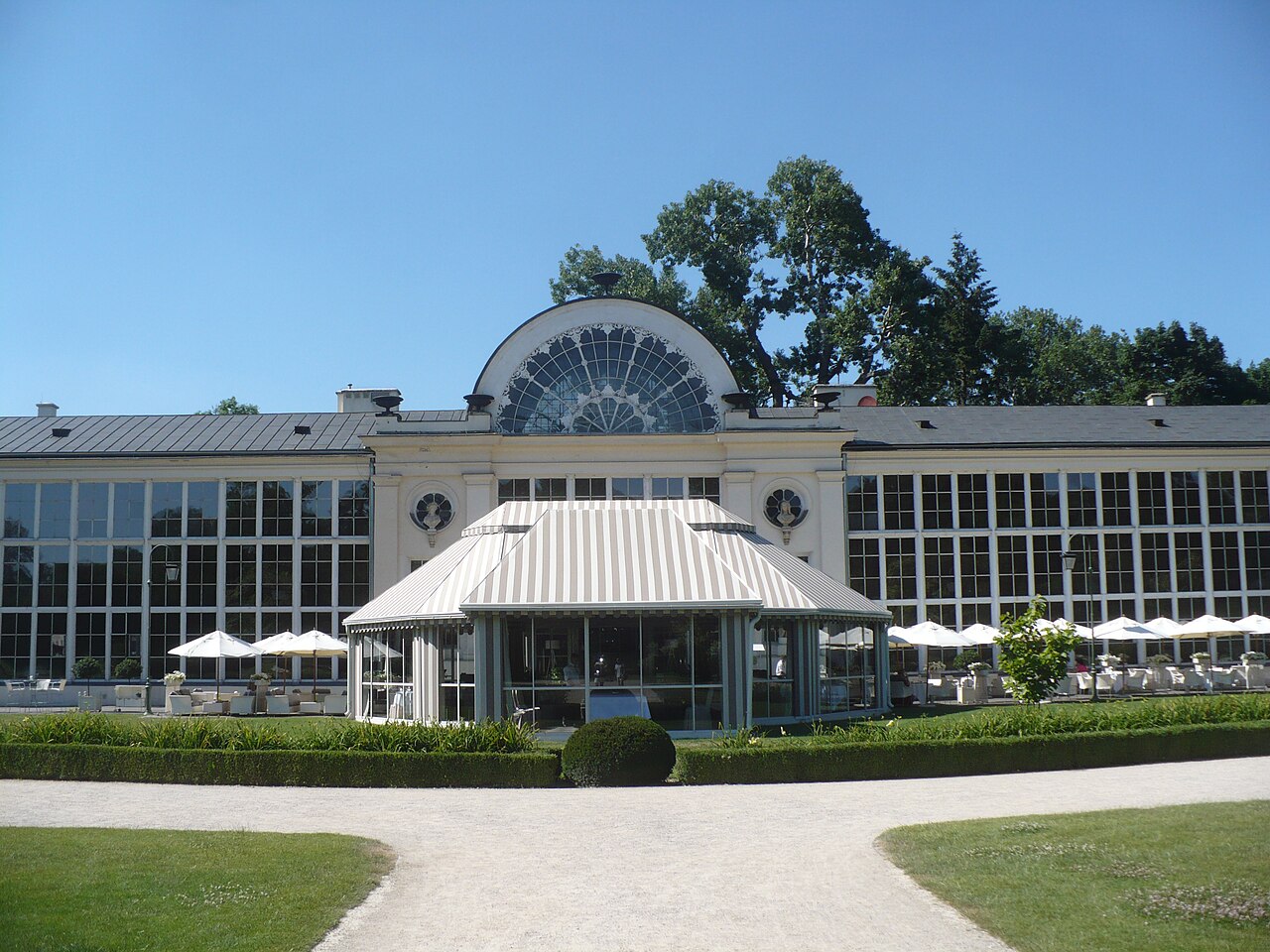
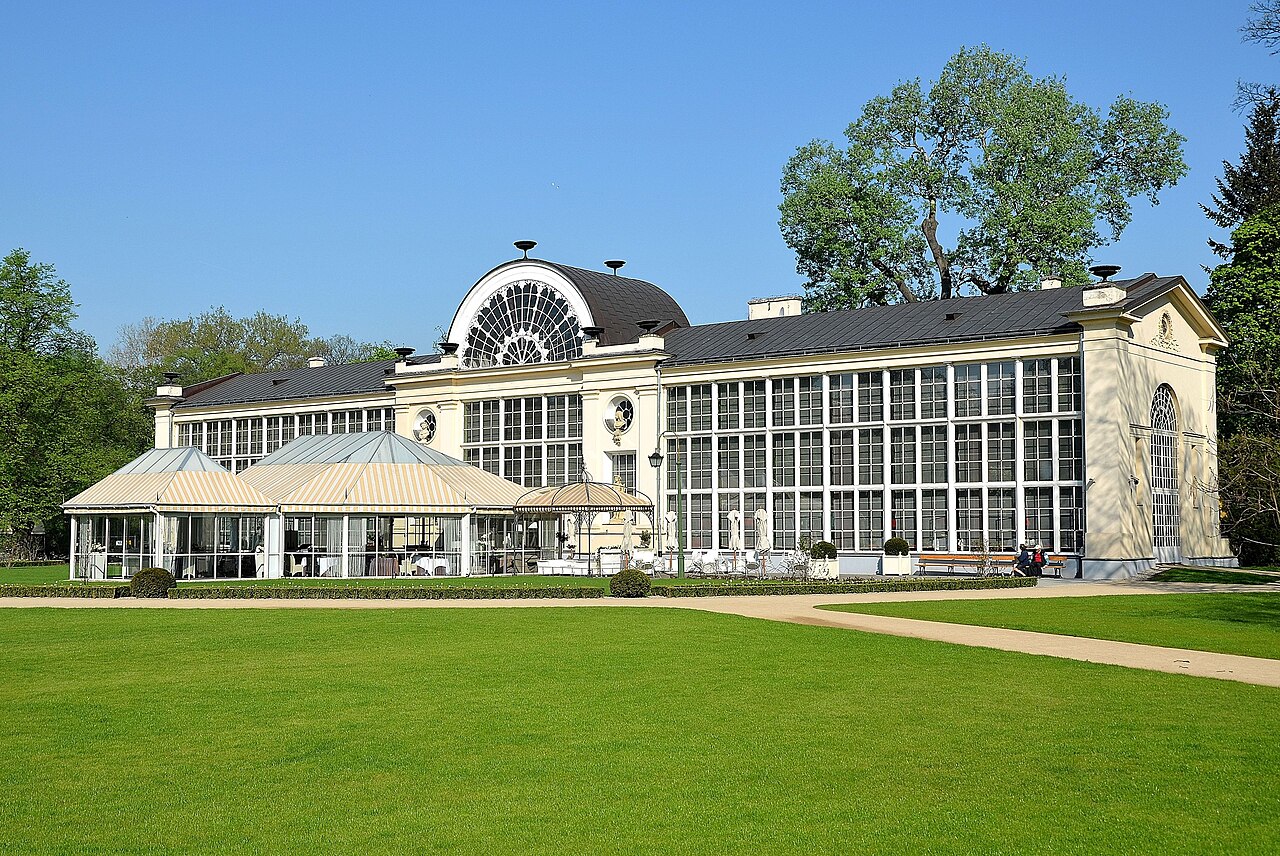
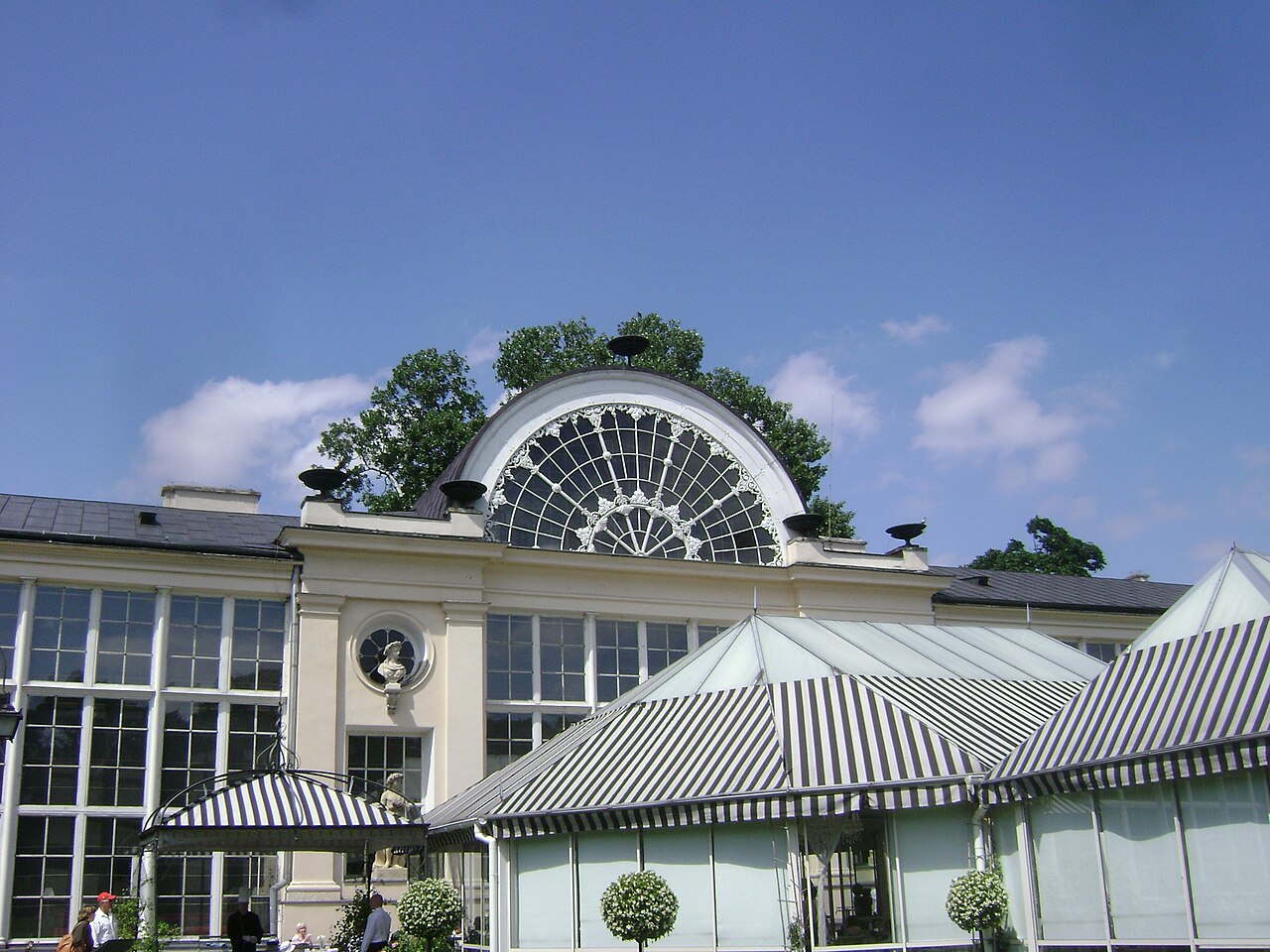
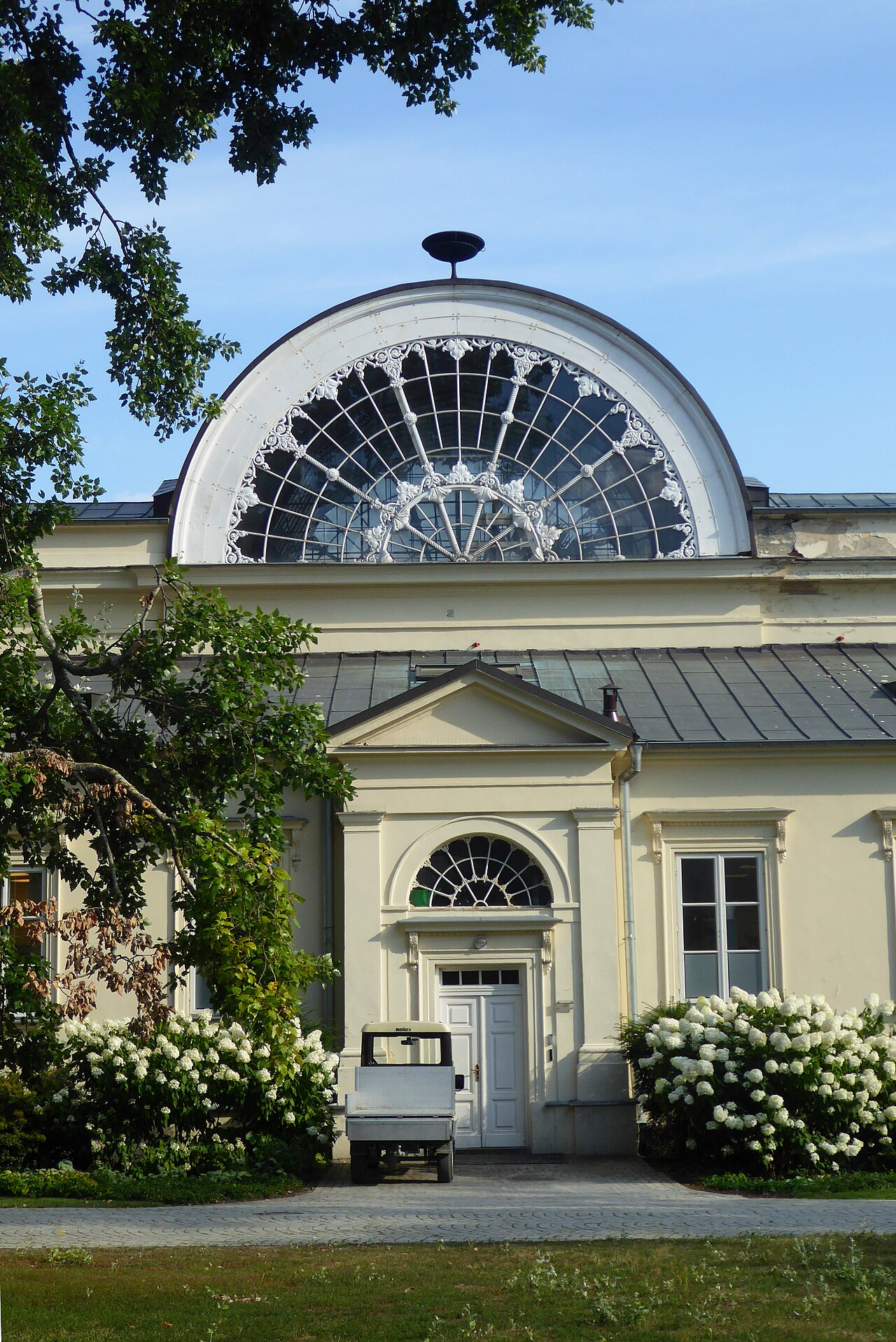
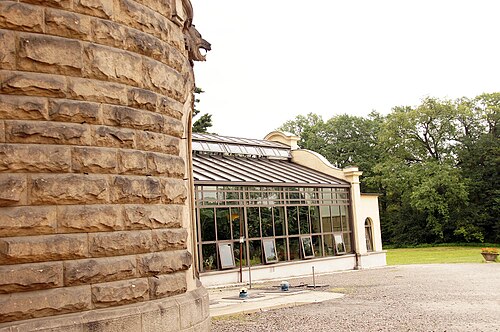
The building is organised around a long hall glazed on the south side. The sashes are divided by cast-iron glazing bars, and tall, very slender cast-iron columns separate the windows of the south façade. At the centre, the roof carries a transverse element pierced by half-rosettes.
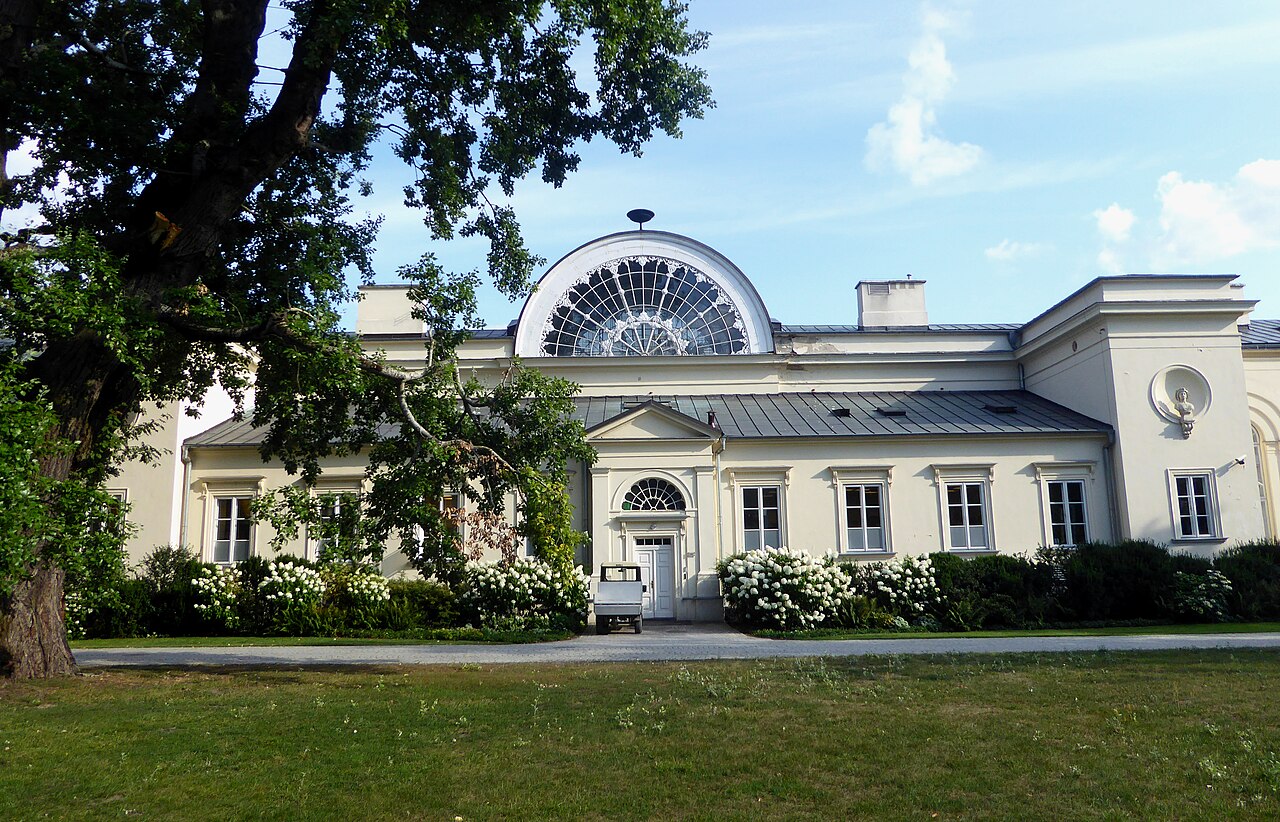
The middle of the south façade is taken up by two solid masonry segments housing the sculptures by Leon Molatyński: Vertumnus and Pomona, together with figures of the seasons, which German Wikipedia reads as symbols of autumn and winter. They are crowned by attics decorated with flat vases. The north façade, designed differently, has a single-storey segment adorned with stone busts representing spring and summer.
English Wikipedia describes the style as neoclassical with eclectic elements, whereas the German article speaks of early classicism.
Plant collections
Designed to winter exotic trees, the great hall now holds, according to Polish and German Wikipedia, a permanent garden of varied plants including tropical ones; English Wikipedia calls it a tropical garden. The restaurant's website describes a building filled with imposing tropical plants, as in the past.
The Nieborów collection had come to the Radziwiłł family, according to Polish Wikipedia, from Augustus II the Strong, who had it brought from Dresden; it numbered more than a hundred orange trees, about seventy of them 300 to 400 years old, and was described as the largest orange-tree collection in Europe. English Wikipedia counts 124 trees. Bought by Alexander II, it could not be moved to Saint Petersburg because of the climate, the same source says; the trees left in Warsaw died of cold in 1915, and the exotic plants of both orangeries were destroyed in 1944.
Visiting
The New Orangery stands in the southern part of Łazienki Park, about 290 m from the Old Orangery. It is approached as a restaurant: the hall is occupied by the Belvedere (ul. Agrykola 1), whose website offers reservations, while the 76-hectare park itself is a public space. A visit is therefore planned around a lunch or a coffee beneath the tropical plants.
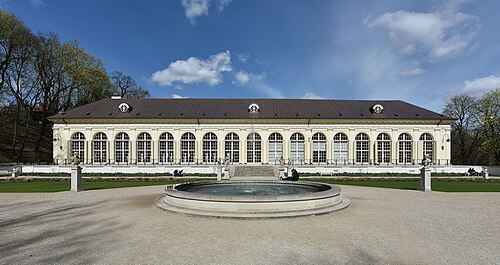
Nearby, the Old Orangery, built in 1786-1788, keeps an eighteenth-century court theatre and a sculpture gallery, and combines naturally with this stop for comparing two orangeries of different periods within the same park.
52.21° N, 21.03° E
Greenhouses nearby
More greenhouses — Poland
Do you have a good photo of this greenhouse? Suggest it for this page →
Affiliate links — booking through Verrière helps fund our research, at no extra cost to you.