Glasshouses and Palm House of the University of Wrocław Botanical Garden (Ogród Botaniczny UWr)
Wrocław, Lower Silesia
Entry updated on October 5, 2026
- Year
- 1823–1907 · new palm house under construction
- Architect
- Theodor Milczewski (1862–1864 palm house); Maciej Marzecki Pracownia Architektury (new palm house)
- Style
- Historic 19th- and 20th-century glasshouses; contemporary triple-glazed palm house under construction
- Dimensions
- New palm house: 1,000 m², 13 m high (2024 design)
- Status
- Garden open April–October; new palm house under construction (completion announced for October 2026)
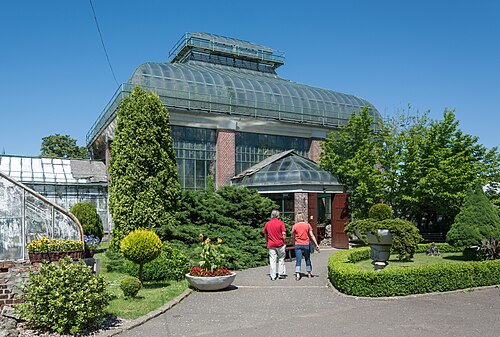
Founded in 1811 on former fortification land given by the King of Prussia, the University of Wrocław Botanical Garden had glasshouses from its earliest years. Its large display house of 1823, rebuilt in steel and glass in 1878 and raised again in 1957 after the destruction of 1945, grew Victoria regia; having become the palm house, it closed in 2006 and was demolished in 2013. A new palm house, designed by the studio of Maciej Marzecki and built by BERGER Bau for more than 20 million złoty, is to bring together three sections: Palmiarnia, Wiktoria and Australia.
Affiliate links — booking through Verrière helps fund our research, at no extra cost to you.
History
1 min
The botanical garden was founded in 1811 on about 5 ha of former fortification land given by King Frederick William III of Prussia. Its first glasshouses, including a three-part palm house, went up between 1811 and 1815, and another house was built in 1817 where the cactus house stands today. In 1823, at the initiative of August Henschel, a second large display house was erected on the spot later occupied by the palm house.
Under Heinrich Robert Göppert, director from 1852 to 1884, the collections grew to 12,000 species and varieties. The three-part palm house was rebuilt in 1862–1864 to a design by Theodor Milczewski, the glasshouses opened to visitors in 1866, and the large display house was reconstructed in 1878 with a pool for tropical aquatic plants. A new range of glasshouses, still standing according to the garden, followed in 1906–1907 in the western part of the grounds.
In 1945, during the defence of Festung Breslau, the garden held anti-aircraft guns and received ammunition drops; the collections were lost and buildings and glasshouses were damaged or pulled down. Rebuilding took a decade: an experimental house in 1950, the cactus house in 1955, the large display house, henceforth the palm house, in 1957, and the cool house known as "Australia" in 1961. Although the garden was entered on the heritage register in 1974, its palm house deteriorated, closed in 2006 and was demolished in 2013. In autumn 2024 a design-and-build contract for a new palm house went to the firm BERGER Bau.
Architecture and engineering
1 min
The 1823 display house measured 25 m long, 9.5 m wide and 5 m high. Rebuilt in steel and glass in 1878, it grew to 24 m by 12.5 m and 11.75 m in height, with an advanced heating system and an adjoining pool where Victoria regia was grown. Of Theodor Milczewski's three-part palm house, the garden's chronology records that one wing survives: the western wing, returned to use in 1961 as the cool display house "Australia". Water features followed: the first aquaria in 1956–1957, a pool for the Nymphaea collection designed in 1967 by the architect Tadeusz Zipser, and 29 tanks of 1,200 litres each installed in 1993.
The new palm house, designed by the studio of Maciej Marzecki and modelled in BIM, is to cover 1,000 m² with a maximum height of 13 m according to the 2024 design, while in 2026 the garden's director, Zygmunt Kącki, spoke of about 1,800 m². It has triple Optiwhite glazing and photovoltaic panels on its roofs. Water curtains divide its zones, kept at around 23 °C; raised walkways and terraces open views over the planting, and part of the iron framework of the old palm house is to be reused.
Plant collections
1 min
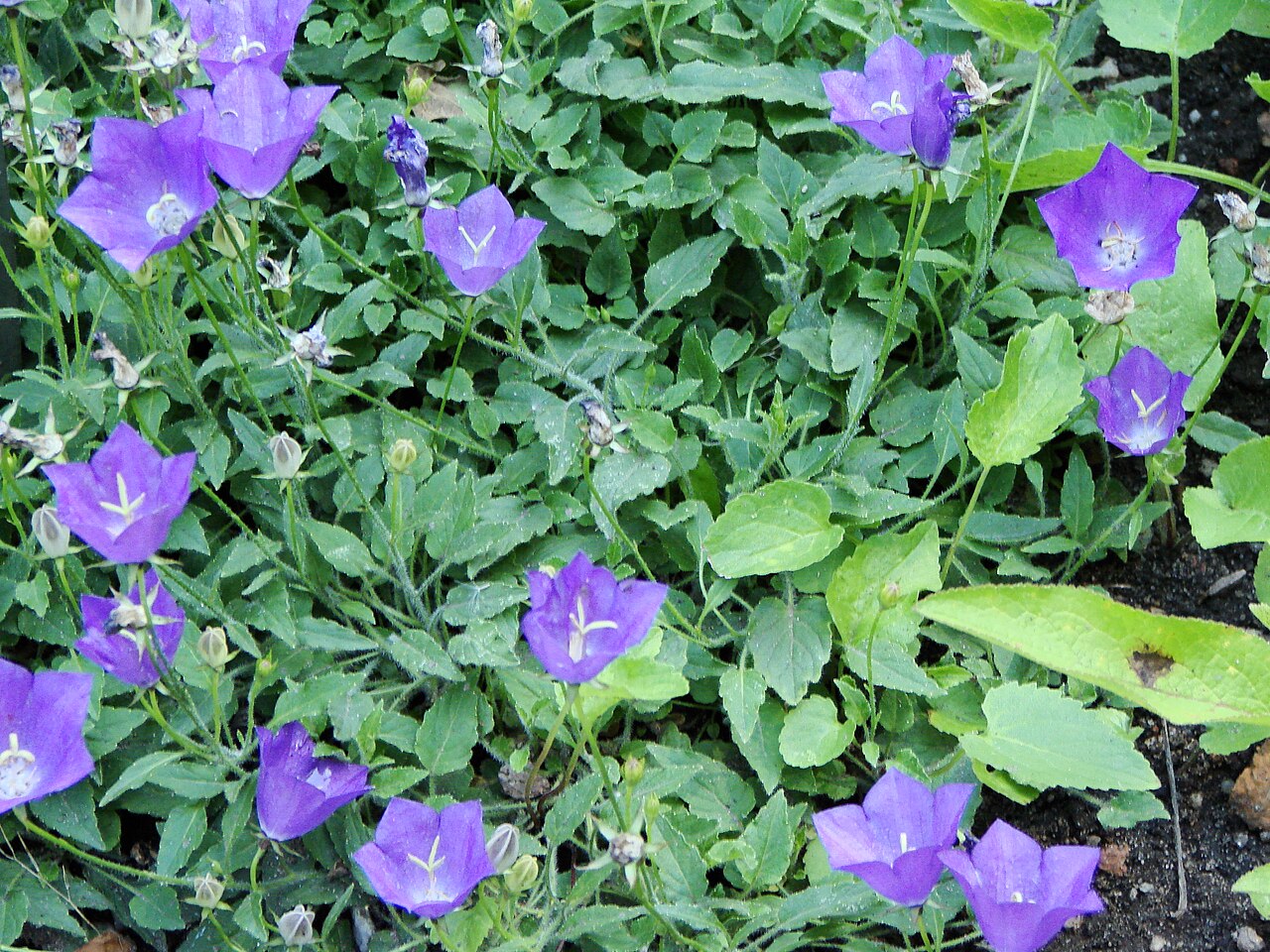
The garden grows about 7,500 species, or some 11,500 taxa when varieties are counted. Under glass its speciality is aquatic: Victoria regia was displayed in the pool of the old palm house, and from 1956–1957 Stanisław Sławiński built up a collection of aquatic and marsh plants that the garden describes as being of European rank; it now holds more than 250 subtropical and tropical taxa. The cacti have their own house, renovated in 1955, and the Nymphaea collection has had a dedicated pool since 1967.
The new palm house is to hold palms, aquatic plants including Victoria amazonica, and carnivorous plants shown in separately controlled compartments, while pump-fed cascades and waterfalls run through its three sections, named Palmiarnia, Wiktoria and Australia. It is also meant to give room to collections that have so far been kept in smaller glasshouses.
Visiting
1 min
The garden, at 23 Sienkiewicza Street, is open to the public from 1 April to 31 October. It stays open while the palm house is built under the supervision of the heritage conservator; completion has been announced for October 2026, twenty years after the old house closed, although a city page from March 2026 gave 2027. The new building includes ramps and lifts for wheelchair users. One to two hours are enough for the glasshouses and the outdoor collections, among them an alpine rock garden of about 1,500 species and varieties. Recognised in 1994 as a Monument of History together with Wrocław's historic centre, the garden combines well with a walk through the old town.
51.12° N, 17.05° E
Greenhouses nearby
More greenhouses — Poland
Do you have a good photo of this greenhouse? Suggest it for this page →
Sources (5)
- ogrodbotaniczny.wroclaw.pl/historia.html
- pl.wikipedia.org/wiki/Ogr%C3%B3d_Botaniczny_Uniwersytetu_Wroc%C5%82awskiego
- inzynierbudownictwa.pl/powstanie-nowa-palmiarnia-w-ogrodzie-botanicznym-we-wroclawiu/
- wroclaw.pl/akademicki-wroclaw/w-ogrodzie-botanicznym-we-wroclawiu-powstaje-palmiarnia-wizu
- propertydesign.pl/architektura/104/wroclaw_bedzie_mial_miejska_dzungle_finisz_nowej_inwest