Glasshouse, Dyffryn Gardens
St Nicholas, Vale of Glamorgan, Wales

Sources checked October 2026
- Year
- 2011 (rebuilt)
- Style
- Long heated glasshouse rebuilt on the footprint of an Edwardian original
- Status
- Open to the public with the National Trust gardens
Dyffryn Gardens, a Cadw grade I garden in the Vale of Glamorgan, keeps, along its walled garden, a long heated glasshouse on the site of the one where Reginald Cory (1871-1934) grew his tender plants, vines, orchids, ferns and palms, until the 1930s. The 1960s brought a Richardson of Darlington glasshouse that fell into disrepair; the present one was rebuilt in 2011, according to the National Trust, on the footprint of the Edwardian original. It holds a cactus house and an orchid house.
Affiliate links — booking through Verrière helps fund our research, at no extra cost to you.
History
Dyffryn's walled garden, west of the house, is older than Thomas Mawson's layout: the Cadw register suggests it may be contemporary with the earlier house on the site (sixteenth or seventeenth century) and notes that it appears in its present form on the 1841 tithe map and the 1878 Ordnance Survey map, with a small glasshouse in the middle of its north side. By the end of the nineteenth century a very large glasshouse stood along the whole length of that wall; Cadw considers it probably later than John Cory's purchase of the estate in 1891. Until the 1930s it housed the tender plants of his son Reginald Cory (1871-1934), a horticulturist and collector: vines, orchids, ferns and palms according to The Garden History Blog, while Glamorgan Archives describes an extensive heated glasshouse holding exotic species.
The estate was sold in 1937 to Sir Cennydd Traherne, who leased it to Glamorgan County Council; a Cadw listing of 1992 adds that Dyffryn was a botanical garden until about 1985. The original glasshouse was replaced in the 1960s by one supplied by Richardson of Darlington (same blog), and the Cadw register of 2000 records a modern lean-to glasshouse running the full length of the north wall. That house fell into disrepair and gave way to the present one within the Heritage Lottery Fund restoration: the National Trust dates the rebuilding to 2011, on the footprint of the Edwardian original, and the BBC reported in June 2011 that the final touches were being made to a new glasshouse. What stands today is therefore a reconstruction, not a structure of the Cory era.
Architecture and engineering
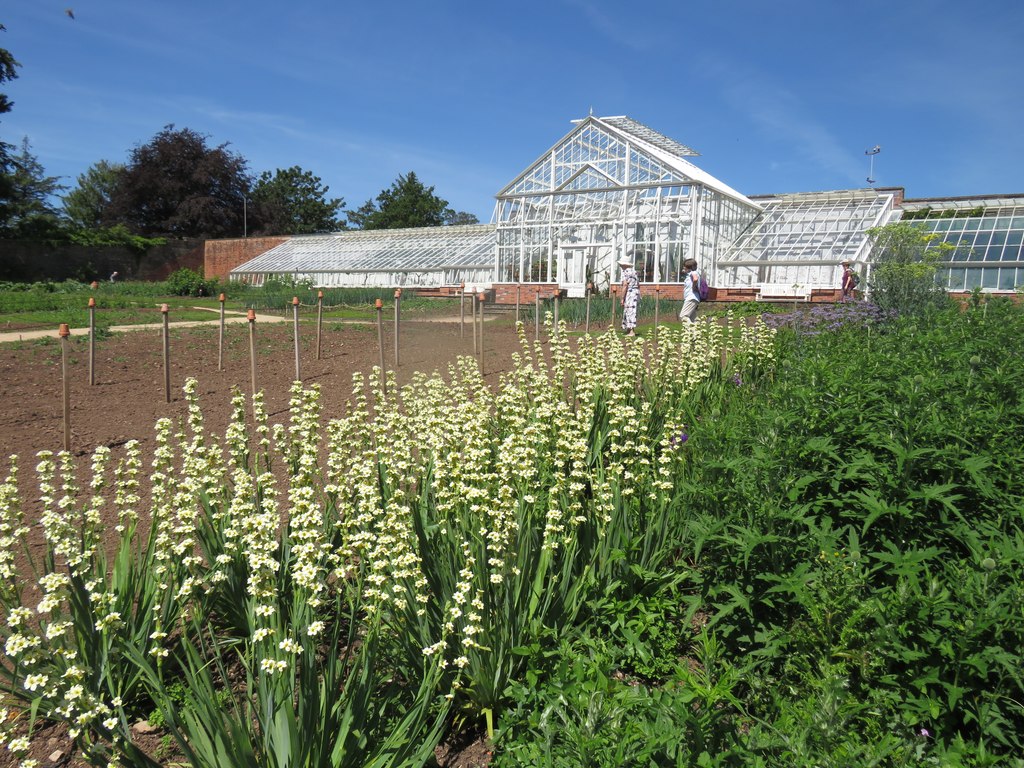
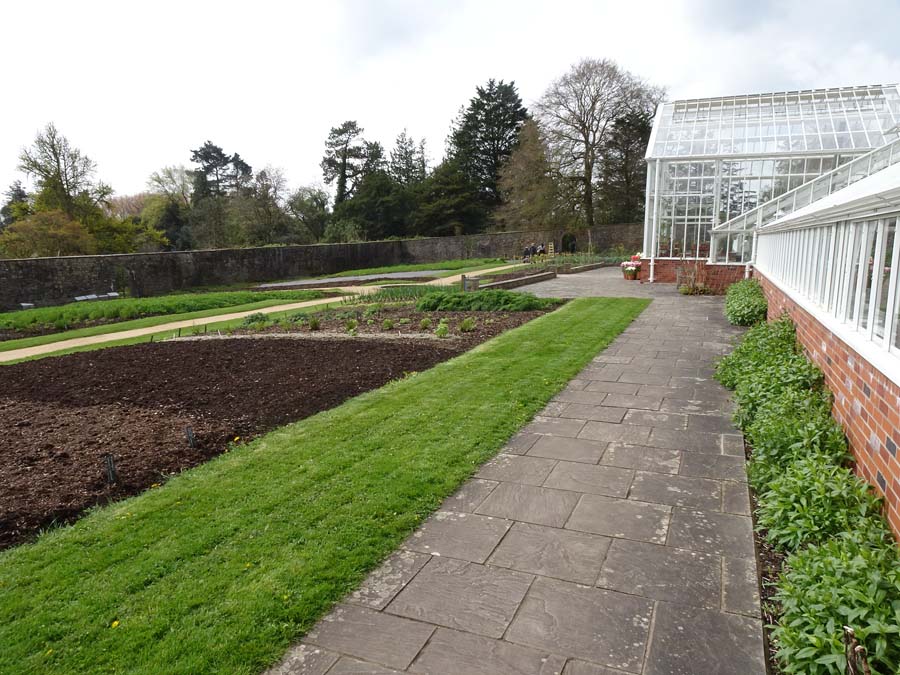
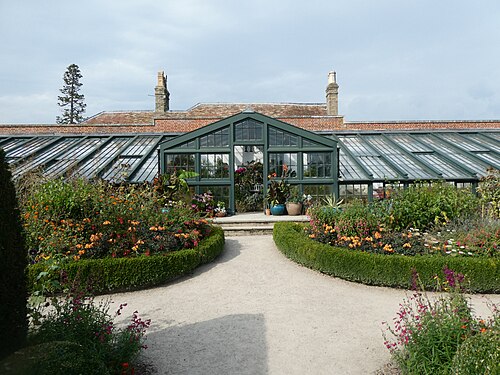
The glasshouse forms the north-west side of the walled garden, whose other three sides are closed, according to the 1992 Cadw listing, by rubble walls with flat coping; the garden occupies a south-east-facing slope, on a north-east to south-west axis. The present building follows the footprint of the Edwardian house, which ran the whole length of the north wall, and the National Trust calls it the long glasshouse. Photographs published on Wikimedia Commons show a glazed range with white-painted framing on a brick base: a gabled central pavilion rises above two lower wings whose glazed roofs slope away on either side.
The house is heated in winter and divided into two climates, a cactus house and an orchid house, the latter described as steamy and tropical.
Plant collections
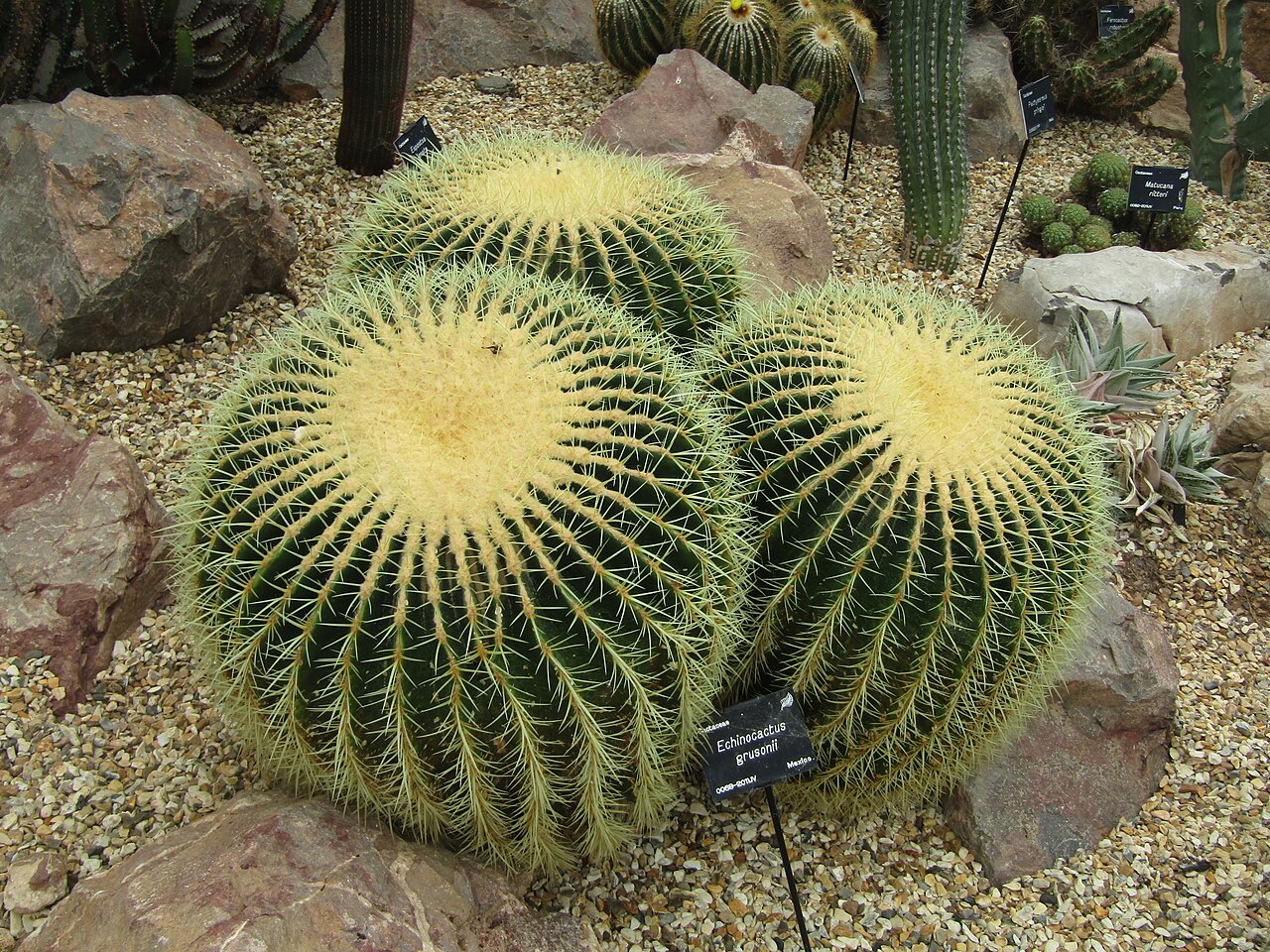
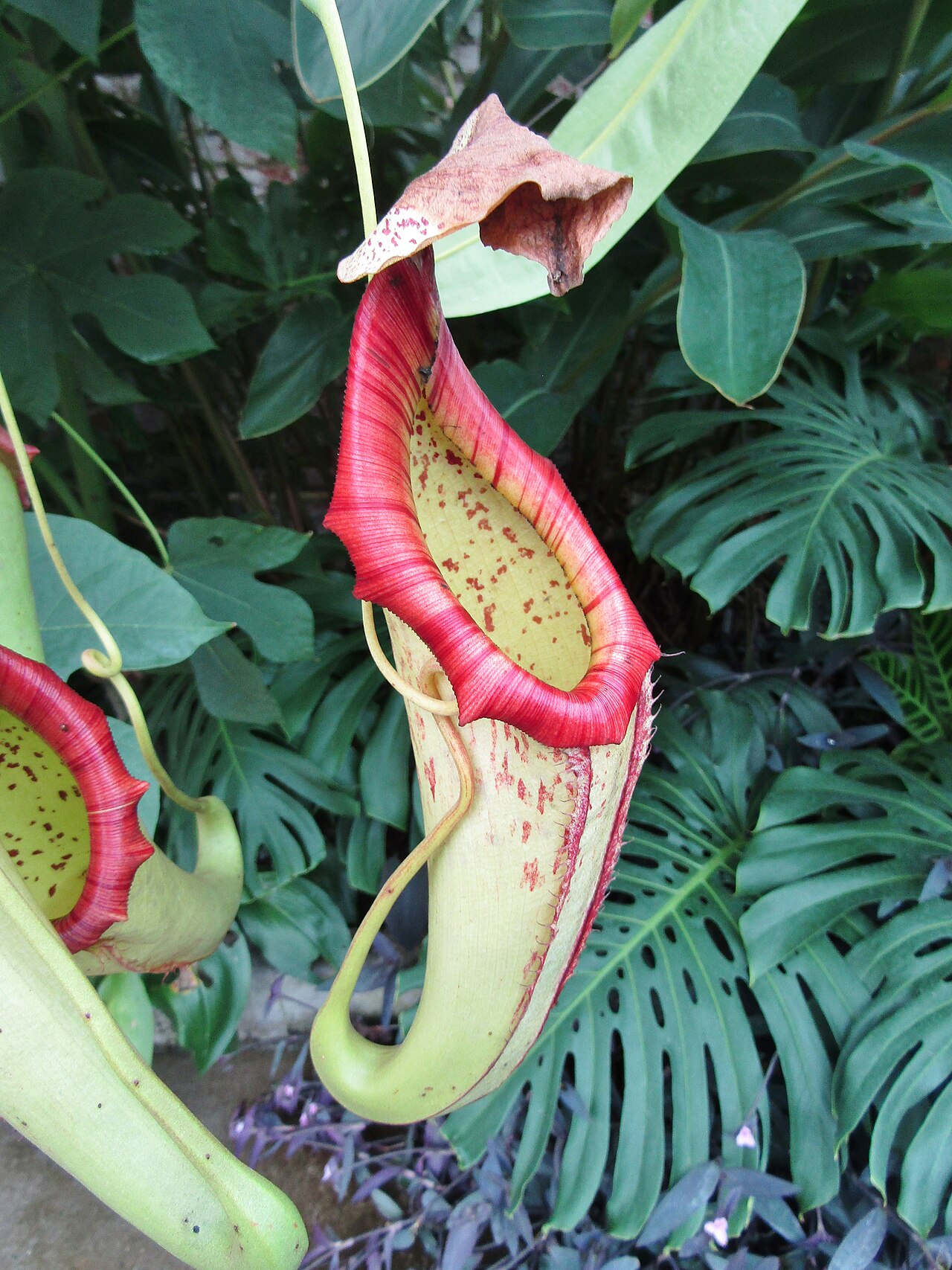
According to the National Trust, the cactus house holds prickly pears and many mammillaria cacti alongside aloes, agaves and other succulents, while the orchid house, a steamy tropical space, shelters bromeliads, begonias, orchids and tender ferns. The estate's presentation page adds grape vines and other tropical plants, with something exotic always in bloom.
The planting looks back to Reginald Cory's tastes. The Garden History Blog reports that he collected cacti and succulents on trips to South Africa and America, and that the orchids are displayed as in his day, including plants he is known to have owned and hybrids from the Veitch nurseries. In autumn, the National Trust points to a display of gourds in the glasshouse.
Visiting
The glasshouse stands in the walled garden, west of Dyffryn House, within 55 acres on the outskirts of Cardiff. It is one stop in a visit to the National Trust gardens rather than a destination on its own. Nearby are the productive kitchen garden, the themed garden rooms (among them the Pompeian Garden, built in 1909, and the Paved Court), the Exotics Garden, where dahlias and ginger lilies flower from late summer until the first frost, and the 22-acre arboretum, which holds 17 champion trees. Heated in winter, the glasshouse remains a possible goal outside the main garden season, and the autumn gourd display makes it a seasonal stop.
51.44° N, 3.31° W
Greenhouses nearby
More greenhouses — United Kingdom
Do you have a good photo of this greenhouse? Suggest it for this page →
Sources (8)
- nationaltrust.org.uk/visit/wales/dyffryn-gardens
- nationaltrust.org.uk/visit/gardens-parks/houseplants-to-see-in-our-conservatories-and-glas
- nationaltrust.org.uk/visit/wales/dyffryn-gardens/the-gardens-at-dyffryn
- cadwpublic-api.azurewebsites.net/reports/parkgarden/FullReport?lang=en&id=221
- cadwpublic-api.azurewebsites.net/reports/listedbuilding/FullReport?lang=en&id=13472
- bbc.co.uk/news/uk-wales-south-east-wales-13698383
- thegardenhistory.blog/2014/12/13/dyffryn/
- glamarchives.wordpress.com/2020/02/17/snapshots-of-dyffryn-gardens-the-tropical-lily-pond-
Affiliate links — booking through Verrière helps fund our research, at no extra cost to you.