Tropenhaus at Tiergarten Ulm
Tiergarten Ulm, Ulm (Friedrichsau), Baden-Württemberg
No freely licensed photo of this greenhouse yet. Do you have one? Suggest it for this page →
Sources checked October 2026
- Year
- 1980
- Style
- Zoo tropical house under a translucent roof (glass according to OpenStreetMap)
- Dimensions
- Footprint of about 860 m² (OpenStreetMap outline)
- Status
- Open to the public, included in zoo admission
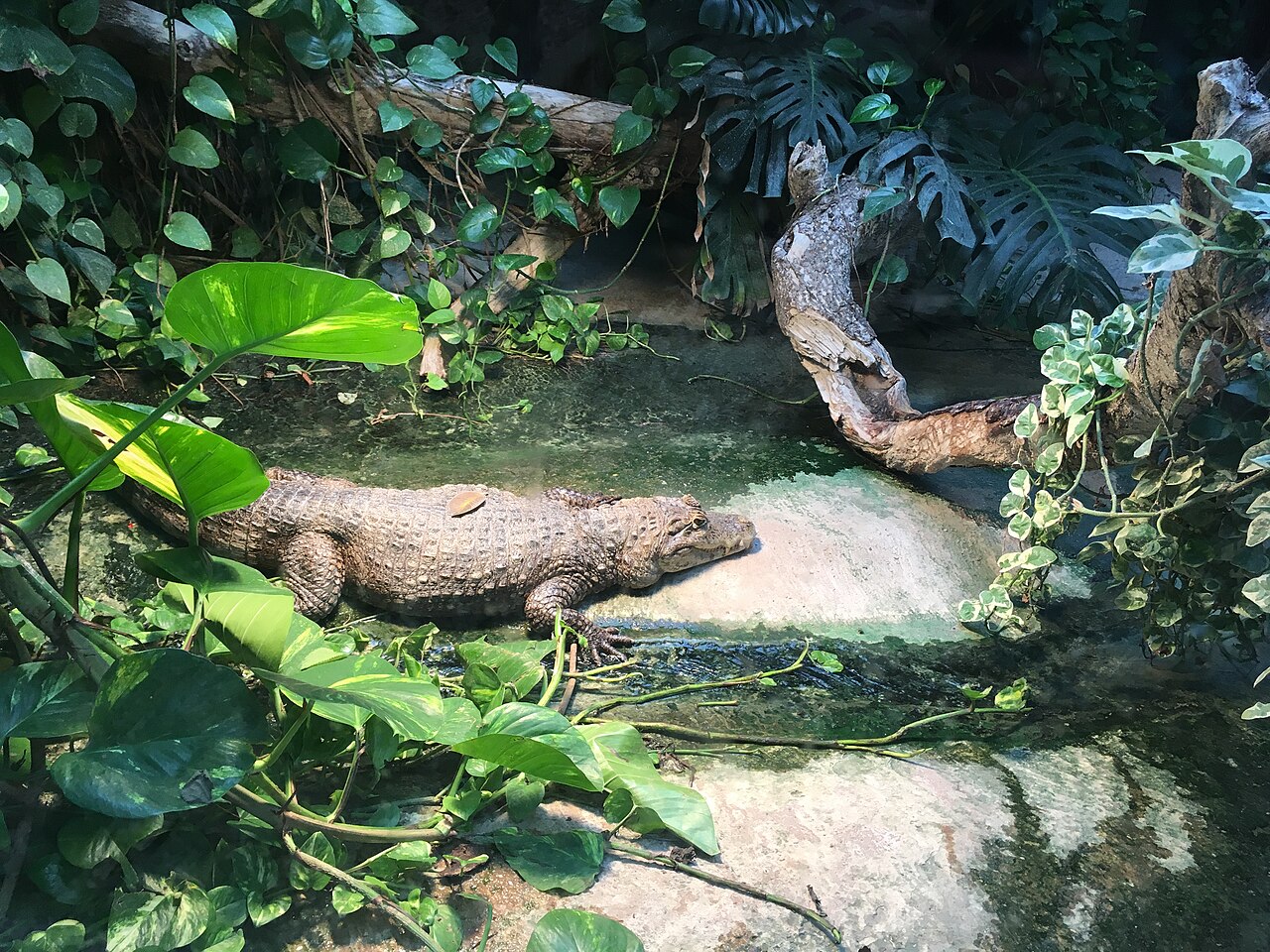
Opened in 1980 as part of the Landesgartenschau in Ulm, the Tropenhaus is the tropical house of Tiergarten Ulm, the municipal zoo in the Friedrichsau. According to the zoo, several hundred plant species help create a tropical climate there, notably banana plants, coffee bushes whose beans have already been harvested, vanilla and monstera. Gibbons, spider monkeys, marmosets, capuchins and crocodilians live among this vegetation. The building's outline in OpenStreetMap describes it as a glasshouse with a glass roof, on a footprint of about 860 m².
Affiliate links — booking through Verrière helps fund our research, at no extra cost to you.
History
The Tropenhaus was born not with the zoo but with a horticultural event. Tiergarten Ulm goes back to a monkey enclosure and pheasant aviaries set up in 1927 in a shed in the Friedrichsau; a small animal park was begun in 1935, with an aquarium house, aviaries and a few enclosures. It closed in 1944, a small aquarium and terrarium show opened in the old bird house in 1954, a fire destroyed the whole installation in 1961, and a new main building opened in 1966.
In 1980 Ulm hosted the first Landesgartenschau of Baden-Württemberg, after the decision taken in December 1977 to hold such shows in the state. From 14 May to 5 October it drew 1.35 million visitors across 30 hectares in the Friedrichsau, linked to the 26 hectares of the Glacis in Neu-Ulm by a 2.5 km path along the Danube. The zoo writes that the Tropenhaus was opened in the course of this show.
The zoo then grew: a free-flight aviary and outdoor monkey enclosures (1986 according to German Wikipedia, 1993 according to the zoo), a new bear enclosure in 2003, the Danube tunnel in 2008, and a service and administration building in 2021. Before the reopening of March 2021, the crocodilian enclosures were renovated. The zoo notes that its official name, Tiergarten Ulm, took hold over the last thirty years, as outdoor enclosures and the bears were added alongside the Tropenhaus.
Architecture and engineering
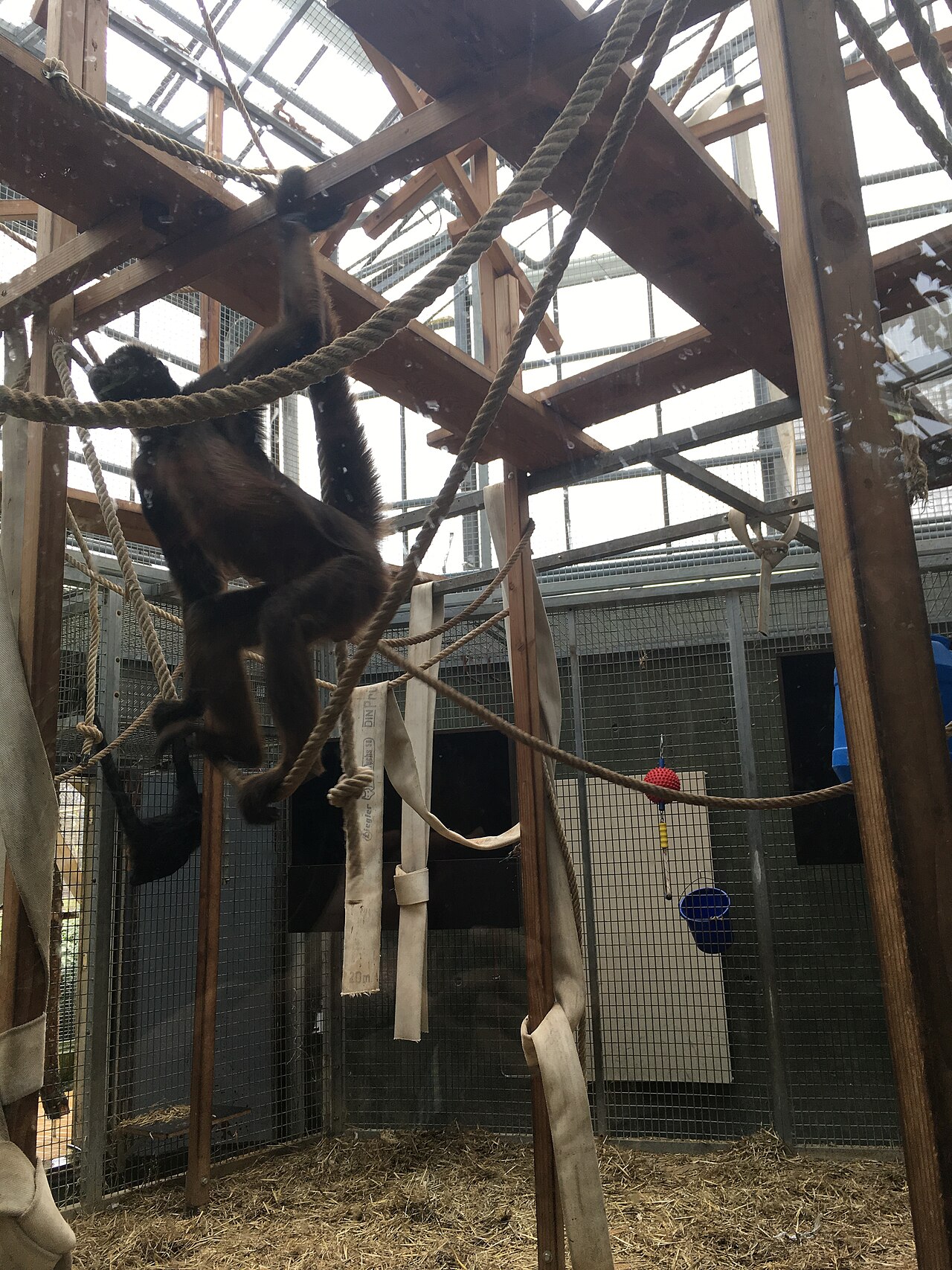
The building's outline in OpenStreetMap, whose stated source is the Maps4BW base map of the Baden-Württemberg survey authority, carries the tags greenhouse, glass walls and glass roof, and shows an irregular polygon of about 34 m by 39 m, close to 860 m² of footprint. A freely licensed photograph taken inside, which illustrates the spider monkey "im Tropenhaus" on German Wikipedia, shows, above the enclosure's timber framing, a translucent roof with metal glazing bars.
The zoo writes that the plants help create an authentic tropical climate. The building adjoins the free-flight aviary, and the zoo counts it as one of its four main areas, with the aquarium section, the terrarium section and the outdoor enclosures.
Plant collections
According to the zoo, several hundred plant species grow in the Tropenhaus and help create an authentic tropical climate and a particular atmosphere; gardeners tend and check them every day. Some bear fruit: a coffee bush has already yielded real coffee. The zoo names banana plants, coffee and vanilla among the useful plants, and devotes a page to further tropical species such as cacao, passion flowers and carambola. It also highlights the monstera, with its large cut leaves, and describes more broadly warmth-loving perennials and trees.
Primates are the stars for many visitors: gibbons, spider monkeys, marmosets and a group of capuchins, along with crocodilians, including a Mississippi alligator named Timo. Outside, the macaws, the free-flight aviary and the meerkats belong to the same area.
Visiting
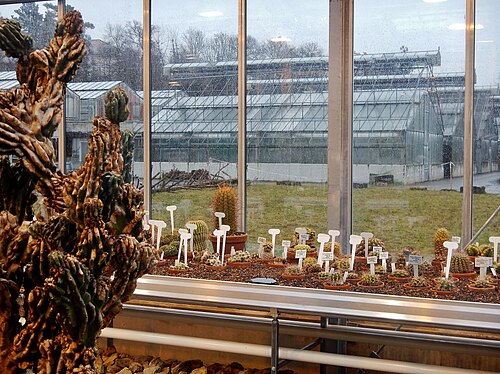
The Tropenhaus is one of the four areas of Tiergarten Ulm, set in the Friedrichsau park, a legacy of the 1980 Landesgartenschau. The zoo points out that many enclosures are indoors and that a visit also suits rainy weather; it is open all year. The free-flight aviary and the meerkats lie right next to it. Tram line 1 stops at Donauhalle nearby. A 2.5 km bank path, tied to the Landesgartenschau, links the Friedrichsau to the Glacis in Neu-Ulm. The tropical houses of the University of Ulm botanical garden, about four kilometres away, are also in the catalogue.
48.41° N, 10.01° E
Greenhouses nearby
More greenhouses — Germany
Do you have a good photo of this greenhouse? Suggest it for this page →
Sources (8)
- tiergarten.ulm.de/unsere-geschichte/unsere-botanik
- tiergarten.ulm.de/unsere-geschichte/die-tiere/tropenhaus-neu
- tiergarten.ulm.de/unsere-geschichte/geschichte
- de.wikipedia.org/wiki/Tiergarten_Ulm
- bwgruen.de/schauplaetze/landesgartenschau-ulm-neu-ulm-1980/
- museen.de/tiergarten-ulm.html
- openstreetmap.org/way/98237286
- commons.wikimedia.org/wiki/File:Brown_spider_monkey_zoo_ulm.jpg
Affiliate links — booking through Verrière helps fund our research, at no extra cost to you.