Glasshouses and Orangery of the University of Warsaw Botanic Garden (Ogród Botaniczny UW)
Warsaw, Masovia
Entry updated on October 5, 2026
- Year
- Orangery from the second half of the 18th century; palm house 2005
- Style
- 18th-century royal orangery and display glasshouses, including a 2005 palm house
- Status
- Subtropical and tropical houses and palm house open to the public; orangery closed for technical reasons until further notice
Established in 1818 on land of the royal garden near the Belweder and Łazienki, the University of Warsaw Botanic Garden inherited orangeries built under King Stanisław August; one of them, the "trebhauz", survives as a cool house for plants adapted to scarce water. After the destruction of 1944, five new glasshouses were built between 1948 and 1950, and a palm house linked to the tropical house opened on 29 June 2005. The subtropical and tropical houses and the palm house hold useful plants, epiphytes, Cycas and palms; the orangery is closed to visitors for technical reasons.
Affiliate links — booking through Verrière helps fund our research, at no extra cost to you.
History
1 min
The university's first botanic garden was created in 1811 beside the Kazimierzowski Palace for the School of Medicine; Professor Jakub Fryderyk Hoffmann presented its plan on 31 January 1814, with the gardener Karol Lindner. Michał Szubert, director from 1816, pressed for a move, approved on 15 December 1818: the garden settled on land of the royal garden near the Belweder and Łazienki, where the university received more than 20 ha and where orangeries built under King Stanisław August already stood. The 1824 catalogue listed more than 10,000 species, and the ginkgo planted that year is now the garden's oldest specimen and its emblem.
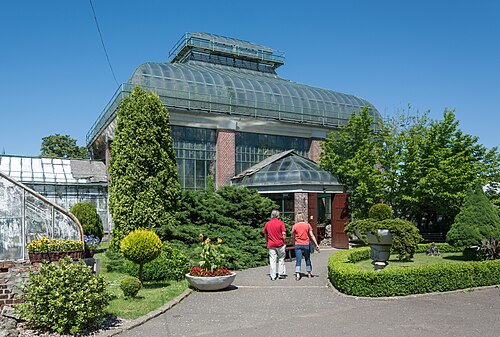
After the November Uprising the university was closed and the garden lost three-quarters of its area, shrinking to about 5.16 ha. Jerzy Aleksandrowicz, director from 1862, enlarged the collections and the glasshouses. Transferred in 1916 to the re-established University of Warsaw, the garden lost its scientific staff to the German occupiers in August 1942 and was annexed to Łazienki Park; in 1944, according to Wikipedia, all its buildings and glasshouses lay in ruins. Bolesław Hryniewiecki and Roman and Jadwiga Kobendza restored it between 1945 and 1950, and five new glasshouses were built in 1948–1950. The garden was entered on the heritage register on 1 July 1965. A palm house, joined to the tropical house, opened on 29 June 2005. The orangery, which the garden presents as the sole survivor of the royal orangeries, is now closed to visitors for technical reasons.
Architecture and engineering
1 min
The garden has four glasshouses with distinct climates. The oldest, the orangery, is called the "trebhauz", from the German treiben (to stimulate) and Haus (house): the word meant a house where the growth of plants was hastened. The garden describes it as the only surviving example in Warsaw of utilitarian architecture from the second half of the 18th century. It now works as a cool house, a regime that suits xeromorphic plants adapted to scarce water.
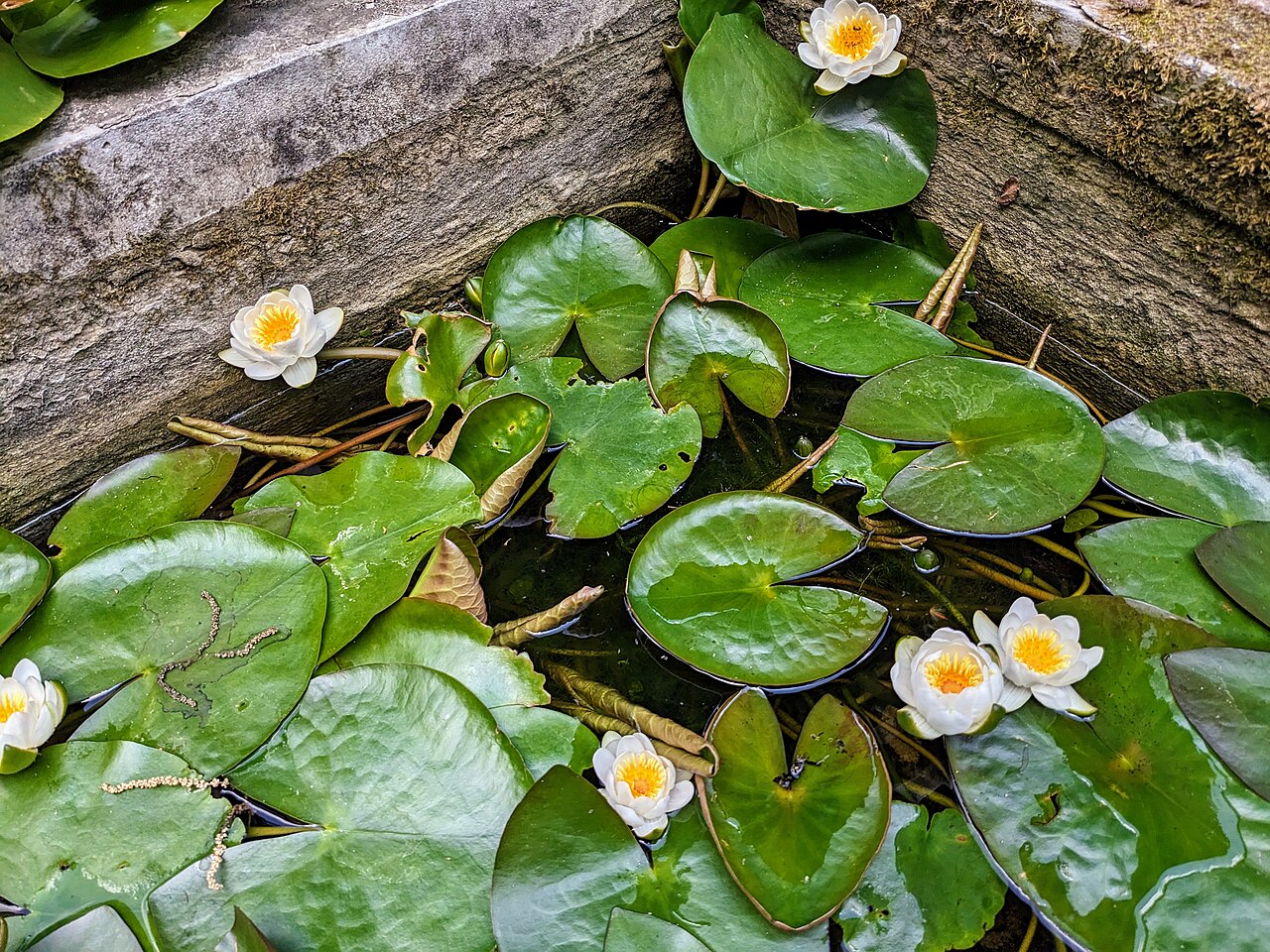
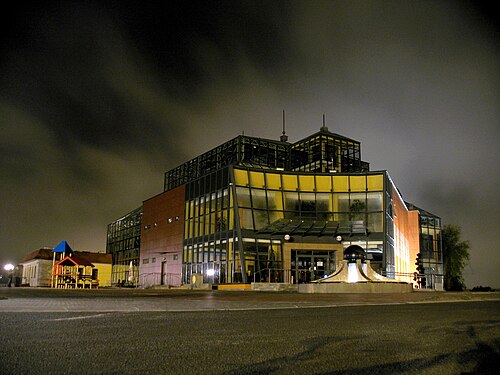
The other three houses hold subtropical and tropical climates. The subtropical house is arranged around a pool of tropical water lilies and other aquatic plants. The tropical house recreates the humid conditions of the equatorial forest, home to many epiphytes. The palm house, opened on 29 June 2005, is joined to it and shelters palms, figs and bananas. All these buildings lie within the garden's protected perimeter, entered on the heritage register in 1965 as number 602.
Plant collections
1 min
The garden grows about 5,000 species and varieties. In the orangery, xeromorphic plants come from several continents: Mexican cacti including Cereus, African succulents, Australian eucalyptus, Asian camellias and Lithops, known as "living stones", alongside a Mediterranean flora of Chamaerops humilis, Ficus carica, Laurus nobilis, Punica granatum and Olea europaea.
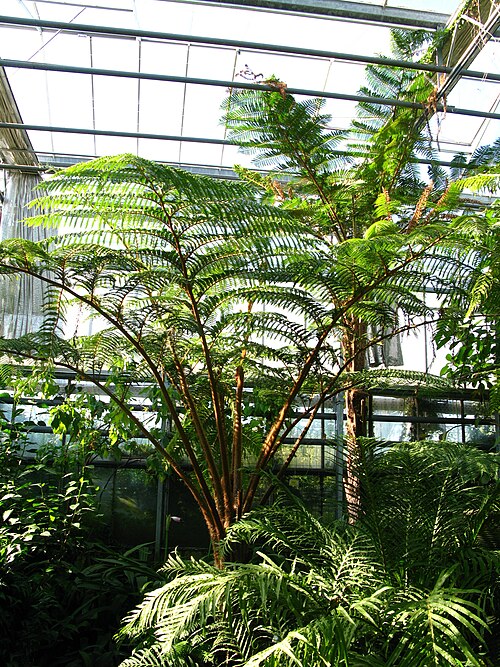
The subtropical house pairs its pool with ferns such as Asplenium nidus and Platycerium, epiphytic cacti, Monstera deliciosa, tropical Aristolochia with trap flowers, carnivorous plants and useful plants: ginger, turmeric, coffee, cacao, avocado, passion fruit, pepper, vanilla, sugar cane and cotton. The tropical house gathers epiphytic bromeliads, aroids and orchids, Cycas of several species more than forty years old, and Stangeria eriopus from KwaZulu-Natal. The palm house brings together palms with varied leaf forms, Ficus lyrata, Ficus religiosa and Ficus macrophylla, a strangler fig, Ravenala madagascariensis, bananas, Strelitzia nicolai, Kigelia africana and fragrant Stanhopea orchids.
Visiting
1 min
The garden lies at 4 Aleje Ujazdowskie, in the Śródmieście district, on the edge of the Royal Łazienki Park. The three open glasshouses take about an hour; the orangery remains closed until further notice. Guided walks are offered on Saturdays and Sundays, and the ginkgo planted in 1824 is worth a stop along the paths. The visit extends naturally into neighbouring Łazienki, where the Stara Pomarańczarnia, a royal orangery of the late 18th century, completes this survey of the capital's glasshouses from the age of Stanisław August to the present.
52.22° N, 21.03° E
Greenhouses nearby
More greenhouses — Poland
Do you have a good photo of this greenhouse? Suggest it for this page →