National Museum of Western Art, Tokyo (国立西洋美術館)
Ueno Park, Taito-ku, Tokyo
Sources checked October 2026
- Year
- 1955-1959
- Architect
- Le Corbusier
- Type
- National art museum
- Access
- Open to the public from 9:30 am to 5:30 pm (to 8 pm on Fridays and Saturdays), closed on Mondays; the central great hall can be entered without a ticket (official website, October 2026)
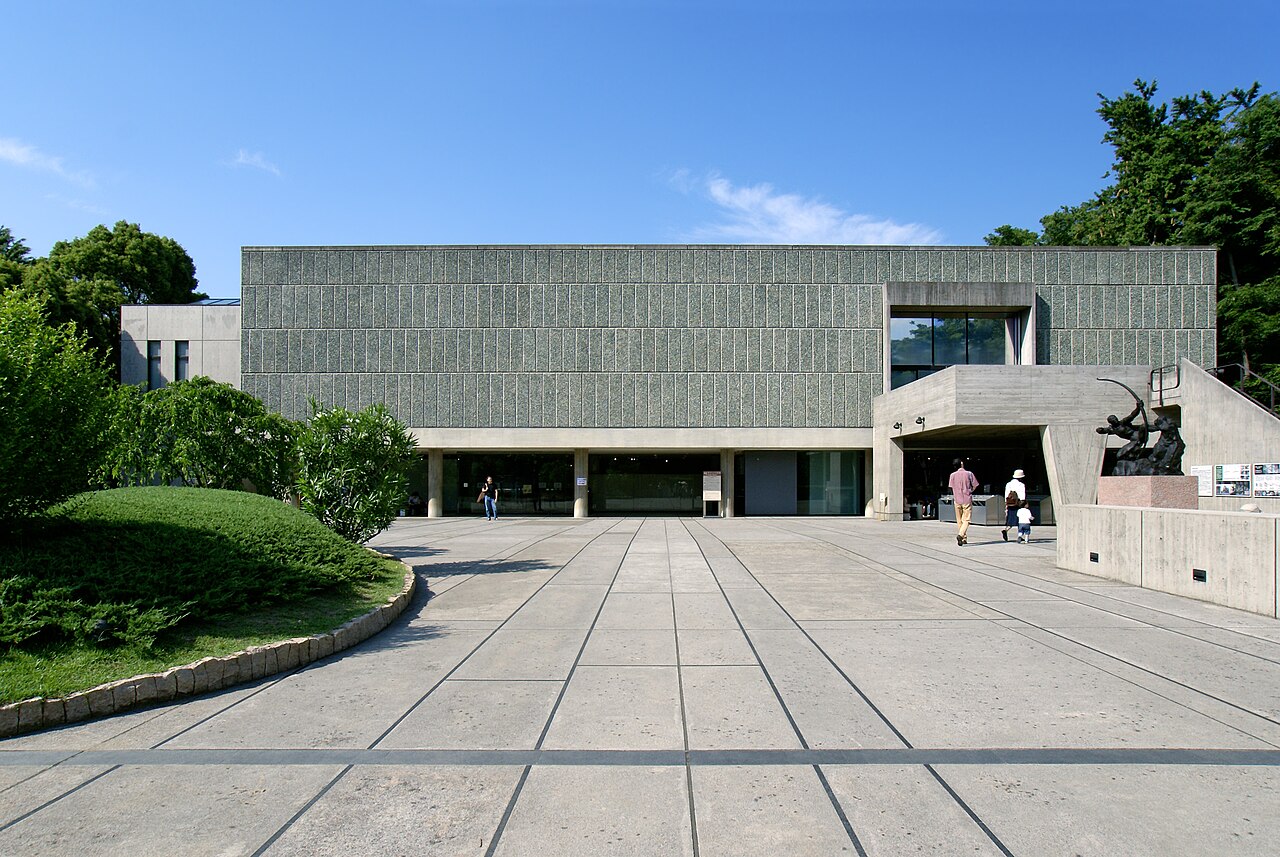
To house the collection of Matsukata Kōjirō (松方幸次郎) returned to Japan by France, the Japanese government had Le Corbusier's only building in Japan built in Ueno Park (上野公園) between 1958 and 1959; three of his former Japanese collaborators ran the construction site. On a square plan, the galleries wind in a spiral around a great central hall, following the idea of a museum that grows with its collection; the project makes use of pilotis, a ramp, a roof garden and the Modulor. Designated an Important Cultural Property of Japan in 2007 and inscribed on UNESCO's World Heritage List in 2016, the building still houses the museum's permanent collection, together with the 1979 wing by the office of Maekawa Kunio (前川國男).
Affiliate links — booking through Verrière helps fund our research, at no extra cost to you.
History
The museum was born of a restitution. Following the San Francisco Peace Treaty, the paintings and sculptures that Matsukata Kōjirō (松方幸次郎), then president of the Kawasaki Dockyard (川崎造船所), had gathered in Europe came into the possession of the French state. In June 1953 the French ambassador sent a memorandum stating that the creation of a French art museum in Tokyo was an indispensable condition for their return; in May 1954 the Japanese government decided to found a national museum in Ueno Park.
In March 1955 Le Corbusier was chosen as architect, with three Japanese collaborators: Sakakura Junzō (坂倉準三), Maekawa Kunio (前川國男) and Yoshizaka Takamasa (吉阪隆正). Construction began in March 1958 and was completed in March 1959 under the direction of Le Corbusier's three former collaborators; he did not return to Japan and saw the building only in photographs from a Japanese magazine, and he judged the result "perfect". The museum opened to the public on 10 June 1959.
Maekawa's office then designed a new wing, completed in 1979, and, with the Kanto Region Development Bureau of the Ministry of Construction, a temporary-exhibition pavilion largely beneath the forecourt, finished in December 1997. Le Corbusier's building was fitted with seismic isolation, with the work finished in March 1998. It was designated an Important Cultural Property of Japan in December 2007, its garden was registered as a monument in 2009, and in 2016 the museum was inscribed on UNESCO's World Heritage List, together with sixteen other properties by Le Corbusier, the seventeen spread across seven countries. The forecourt was restored during the closure from 19 October 2020 to 8 April 2022, to bring it back as far as possible to its 1959 state.
Architecture
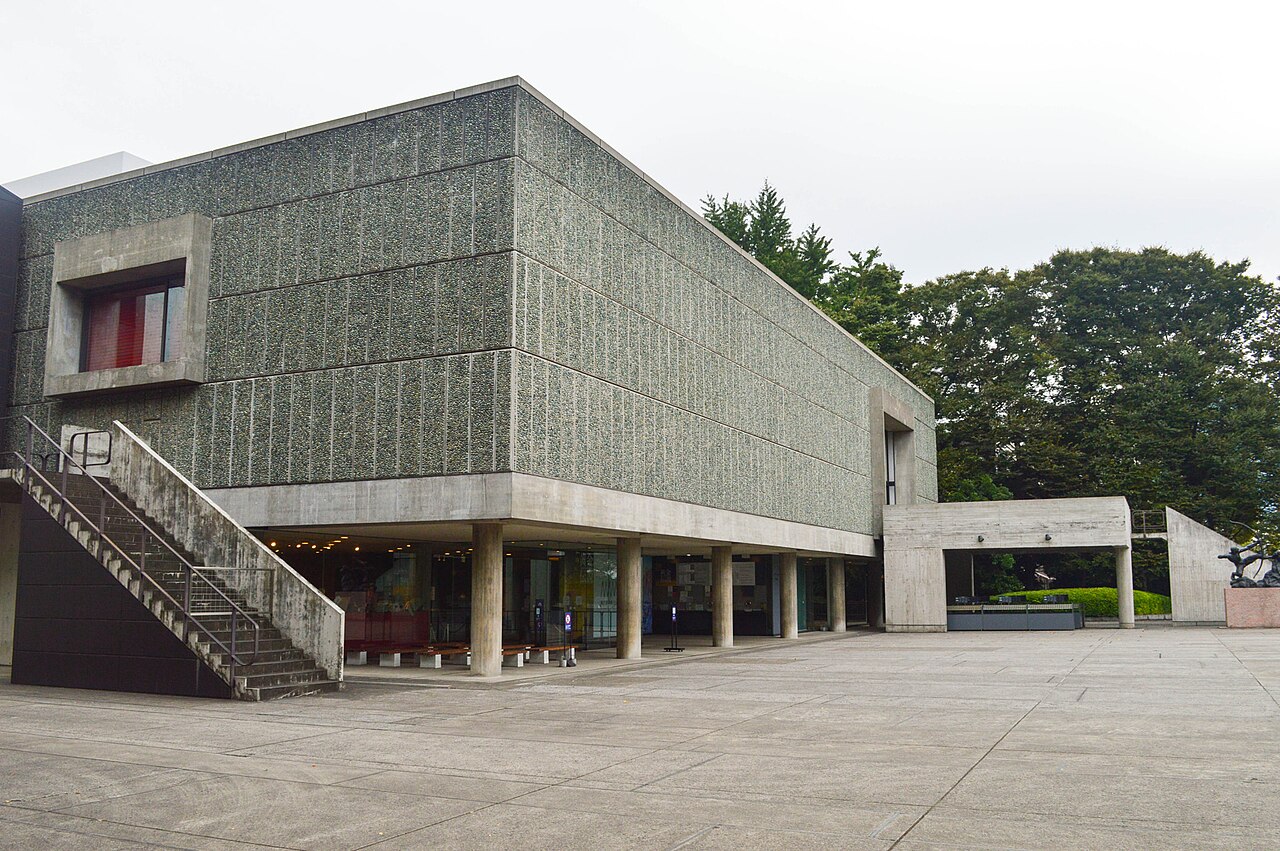
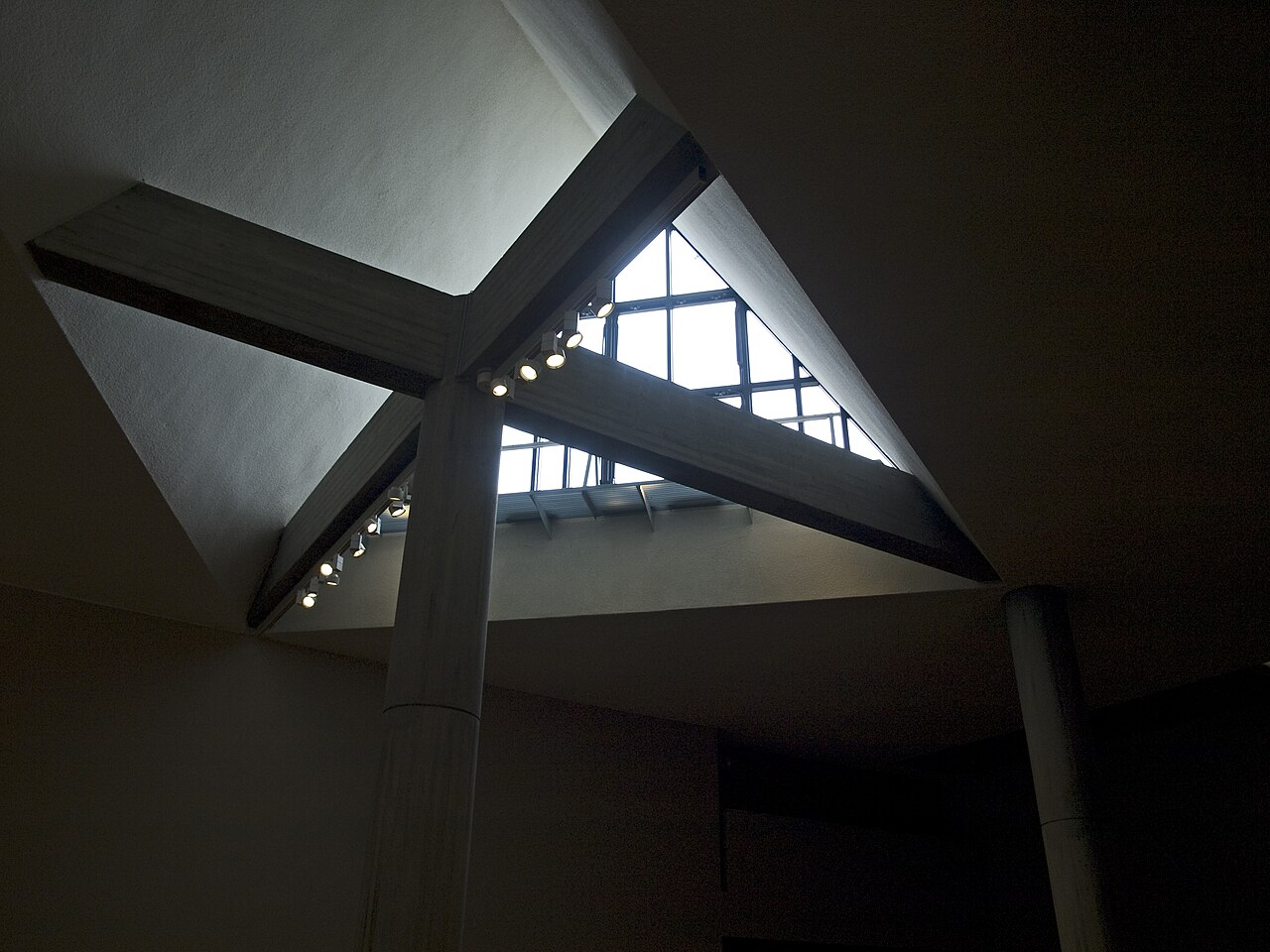
The plan is a square under a flat roof, and the galleries form a spiral designed to extend as the collection grows: this is the "museum of unlimited growth" (Musée à croissance illimitée) that Le Corbusier had been imagining since 1931. The reinforced-concrete building has three storeys above ground and one below. In the route designed by Le Corbusier, visitors enter at ground level, between the pilotis, and reach the great nineteenth-century hall: a central void rising the full height of the building, lit by rooflights in the original project. A ramp in the north part of the hall leads to the upper floor, where the visit continues from room to room, clockwise around the void, guided by the zenithal light received by the mezzanines, which act as rooflights.
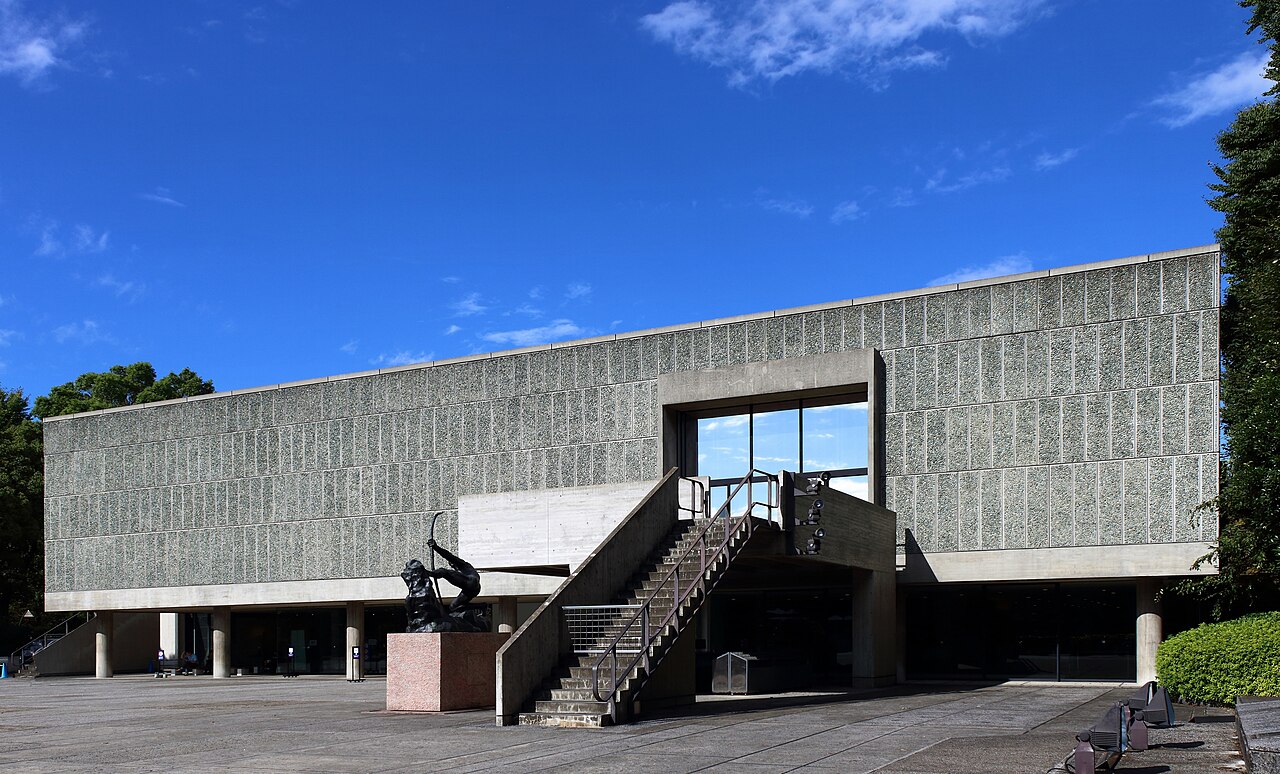
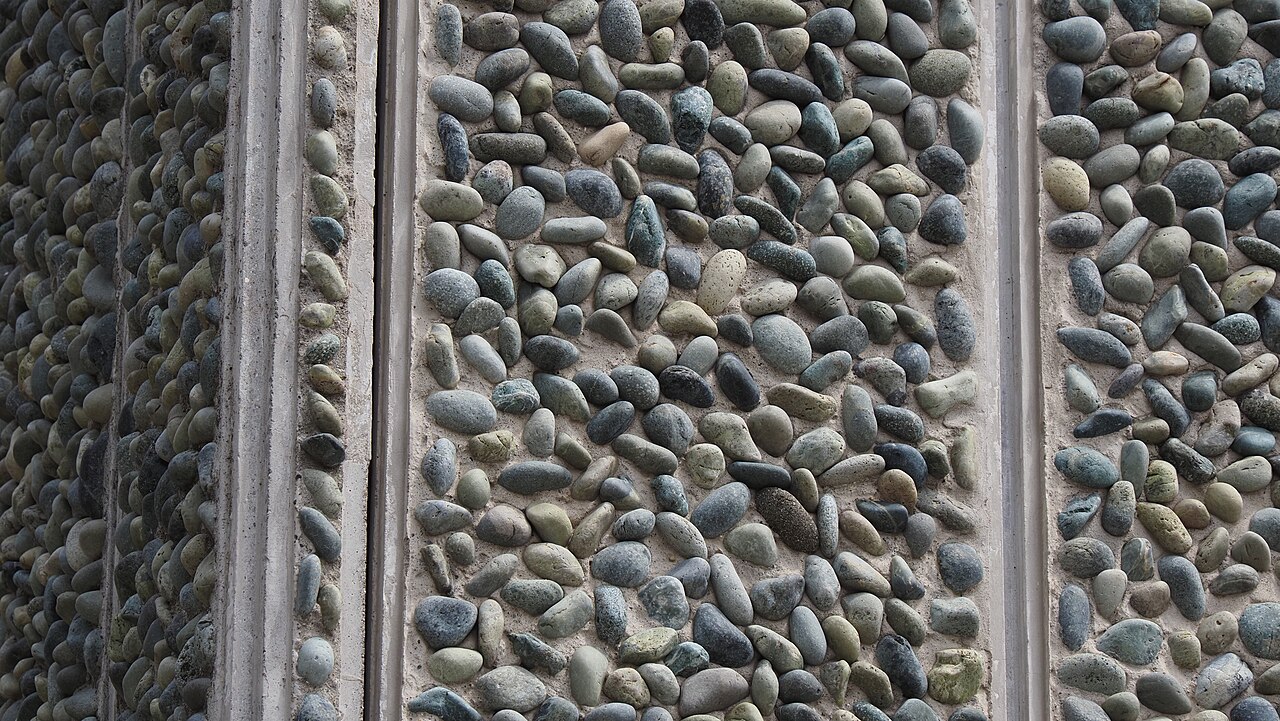
Pilotis, a roof garden, a ramp, natural lighting and the Modulor, the scale of dimensions based on the human body and the golden ratio, are the Le Corbusier devices the building brings together. The façades are made of precast concrete panels with pebble inclusions. Later alterations closed off part of the space under the pilotis and removed natural lighting from the galleries.
In front of the building, the forecourt reinstated in 2022 follows the 1959 layout: the main gate opened on the west side, facing the fountain square of the park, and two lines in the paving joints form a T, one running straight from that gate towards Rodin's The Gates of Hell, the other turning at a right angle towards the building. The paving joints are laid out on the Modulor, and The Thinker and The Burghers of Calais are back, as far as possible, in their original positions.
Use today
The museum shows in its permanent collection, in Le Corbusier's building and in Maekawa's wing, the works of the Matsukata collection, those it has bought every year since its founding, from the Renaissance to the early twentieth century, as well as gifts and loans. The 1997 pavilion hosts temporary exhibitions of works lent by museums in Europe and America, among others. Rodin sculptures stand on the forecourt, including The Gates of Hell, The Thinker and The Burghers of Calais. The museum belongs to the Independent Administrative Institution National Museum of Art (独立行政法人国立美術館).
Visiting
The museum is open from 9:30 am to 5:30 pm, until 8 pm on Fridays and Saturdays; the last entry is 30 minutes before closing. It is closed on Mondays, except when a Monday is a public holiday or the substitute day for one: it then opens and closes on the following weekday. It is also closed from 28 December to 1 January, and may open or close exceptionally. Tickets are sold at the ticket desk or online; when it is crowded, ticket-desk sales may be suspended and entry delayed. A ticket for a temporary exhibition also gives access to the permanent collection, and the permanent collection is free for people under 18, high-school students and younger, people aged 65 and over, and people with disabilities with one companion.
The great nineteenth-century hall, the café, the shop and the lobby of the main building can be entered without a ticket. 2D barcodes in five places in the main building open a digital tour on a smartphone, which shows mainly areas closed to the public, including the Clerestory Gallery on the mezzanine; three of the five require a permanent-collection ticket. The museum has no car park; JR Ueno Station (Park Exit) is a one-minute walk away.
Photos
35.72° N, 139.78° E
Greenhouses nearby
Architecture nearby
By the same architect
Sources (13)
- nmwa.go.jp/jp/about/
- nmwa.go.jp/jp/about/building.html
- nmwa.go.jp/jp/about/history.html
- nmwa.go.jp/jp/visit/index.html
- nmwa.go.jp/jp/visit/floorplans.html
- nmwa.go.jp/jp/visit/map.html
- nmwa.go.jp/jp/visit/faqs.html
- bunkaapi.nii.ac.jp/docs/special_content/lecorbusier_seiyobijutsukan.pdf
- fondationlecorbusier.fr/oeuvre-architecture/realisations-musee-national-des-beaux-arts-de-
- nmwa.go.jp/en/about/building.html
- nmwa.go.jp/en/about/matsukata.html
- wikidata.org/wiki/Q1362629
- openstreetmap.org/way/145344184
Affiliate links — booking through Verrière helps fund our research, at no extra cost to you.