Pflanzenpavillon (plant pavilion) of the Japanese Garden "Kōfuku no niwa", Bad Langensalza
Bad Langensalza, Thuringia

Sources checked October 2026
- Year
- 2002 (garden opening; building work from autumn 2001)
- Architect
- Garden: Silke Hasskerl-Schilling
- Style
- Two-storey Japanese-style pavilion, timber frame, large glazed bays and a partly glazed roof, indoor garden
- Dimensions
- Footprint of about 260 m², two storeys (OpenStreetMap outline)
- Status
- Open to the public with admission to the Japanese Garden, from March to October; closed from November to February
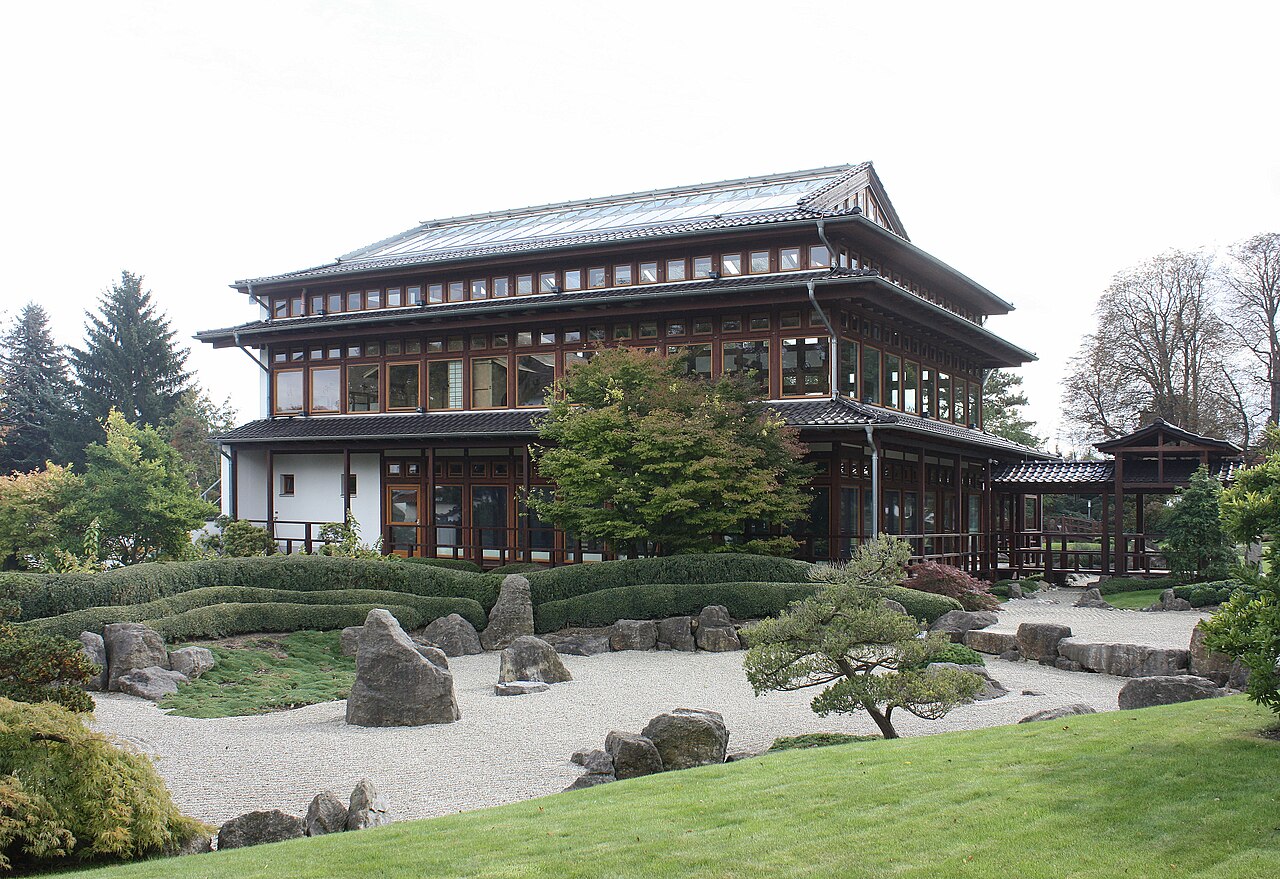
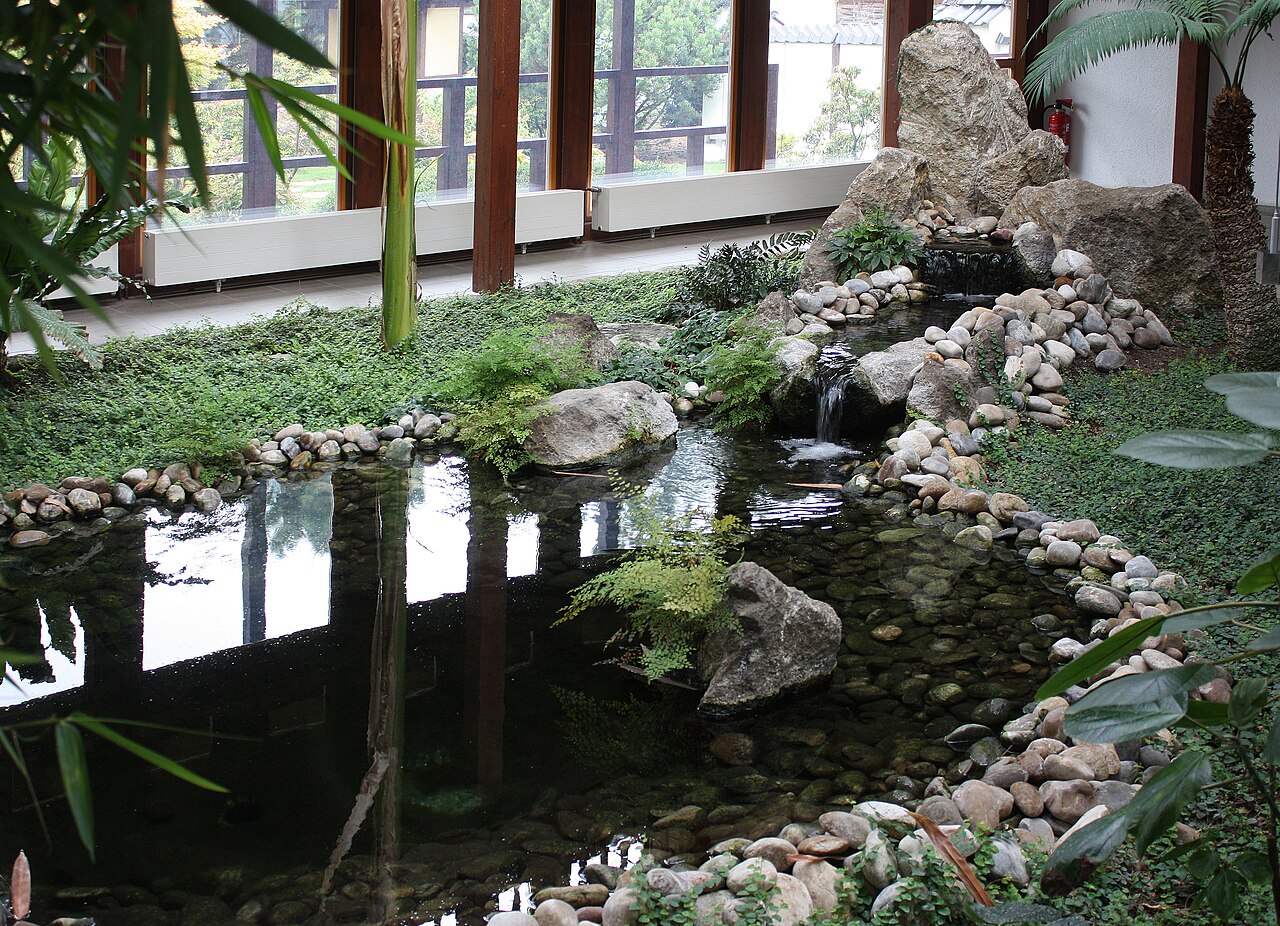
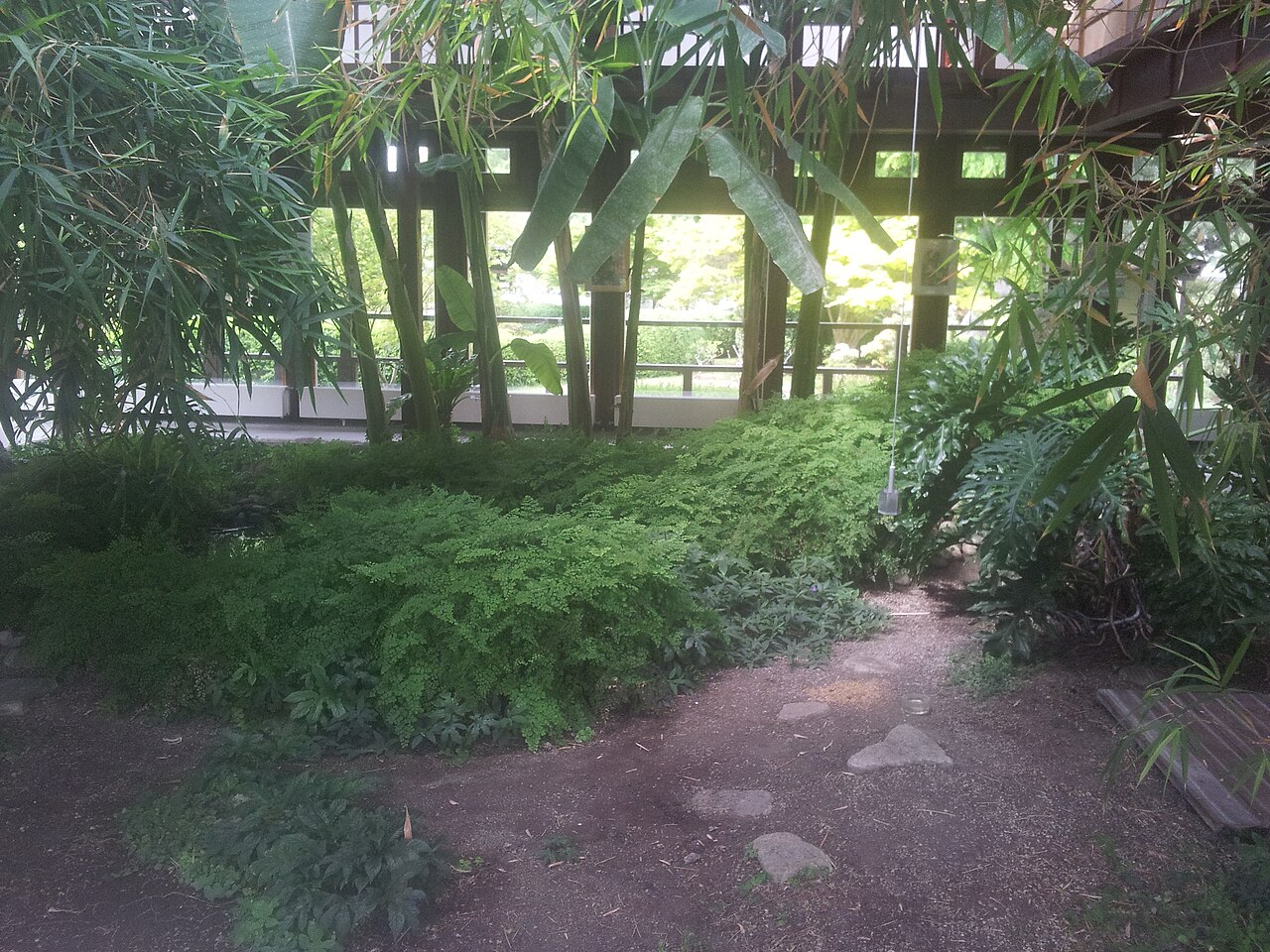
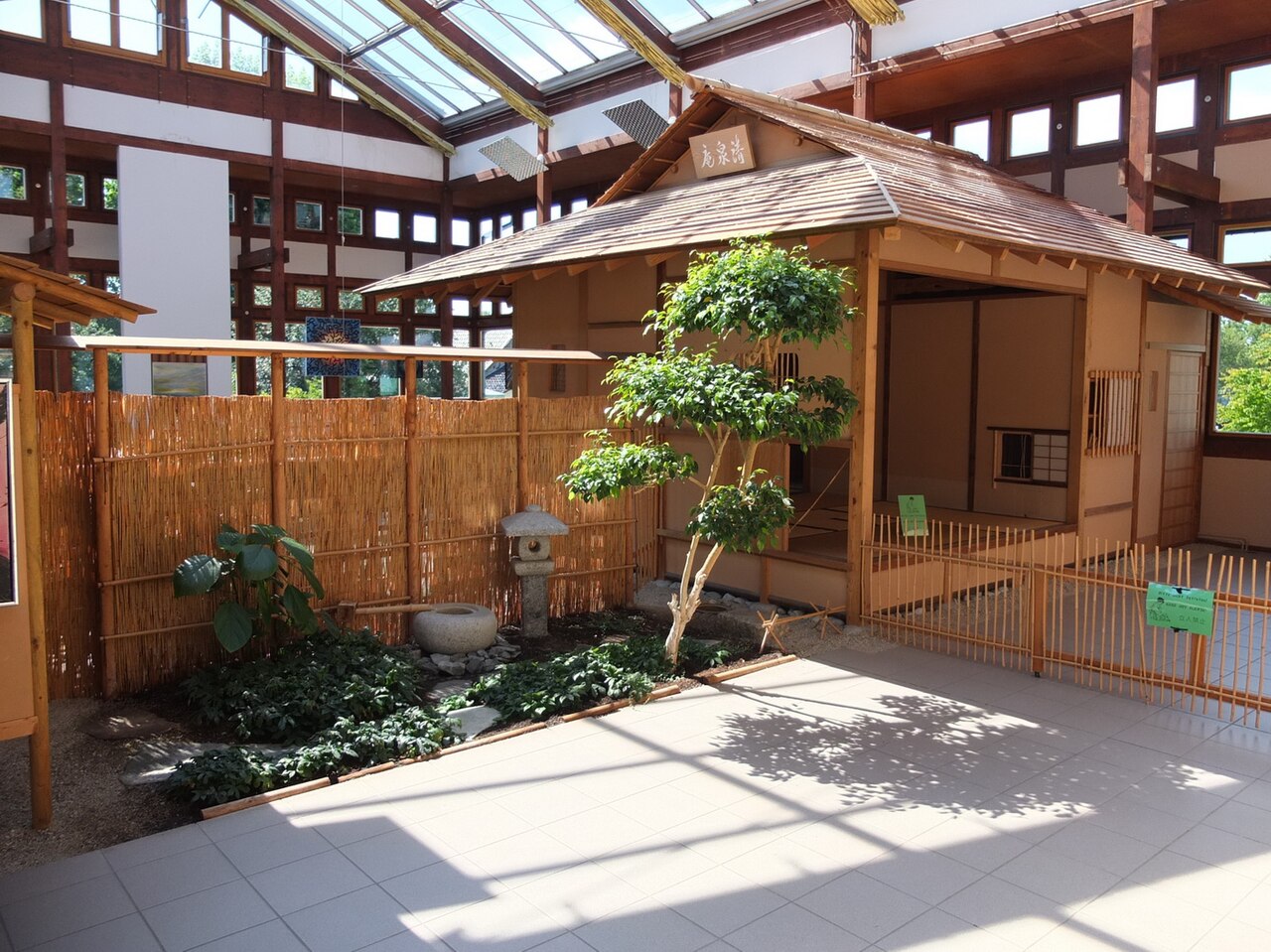
The Pflanzenpavillon is the main building of the Japanese garden "Kōfuku no niwa" in Bad Langensalza, opened in August 2002: a two-storey pavilion built with a lot of glass, because Japanese paper doors would not suit the climate, according to Wikipedia. Photographs show an indoor garden of bamboo, broad-leaved plants and ferns on the ground floor, with a pond and a cascade; a tea house occupies the upper floor, beneath a roof whose upper part is glazed. The garden can be visited from March to October.
Affiliate links — booking through Verrière helps fund our research, at no extra cost to you.
History
In Bad Langensalza, a spa town in Thuringia, the town was looking for a garden theme that would vary the stay of spa guests; the idea of a Japanese garden arose in 1999, according to German Wikipedia. A plot was found in the town centre and work on the building complex began in autumn 2001. The garden opened in August 2002 under the name Kōfuku no niwa, "garden of bliss". German Wikipedia places the design of the garden by the landscape architect Silke Hasskerl-Schilling in autumn 2002, a date incompatible with the opening. The main building is the Pflanzenpavillon, "plant pavilion".
In 2021 the garden served as an outpost of the Erfurt Bundesgartenschau. Behind the two pavilions stands a service Gewächshaus where sensitive plants of the nearby botanical garden overwinter: it is no longer open to visitors and still appears, almost illegible, on the plan at the entrance. That service greenhouse is not the subject of this entry.
Architecture and engineering
According to German Wikipedia, the main building is a two-storey pavilion built with a lot of glass, since Japanese paper doors (shōji) would not suit the climate. In the Wikimedia Commons photographs, the dark timber frame carries glazed bays right up to the eaves; the low roofs are covered with grey tiles, and the top of the volume is capped by a roof of glass panes, beneath which stands, on the upper floor, a small tea house with a shingle roof. In OpenStreetMap the building is tagged as a greenhouse, with two and a half levels and a hipped glass roof, over about 260 m²; these map data appear in no text of the garden.
A covered zigzag walkway links the pavilion to the "tea pavilion" (Kissa no tei), where green tea is served without ceremony.
Plant collections
The Commons photographs show, on the ground floor, an indoor garden: bamboo, broad cut-leaved plants, ferns, a stepping-stone path, a pebble-edged pond with a cascade and rocks. Upstairs, a wooden tea house stands inside the glazed volume. The pavilion is also used for art exhibitions, on the ground floor as well as upstairs, according to Wikipedia.
In the garden, Wikipedia mentions irises along the zigzag bridge, a cherry orchard east of the pond, a bamboo grove at the entrance, a small gravel garden with bonsai (tsubo-niwa) and three old bonsai from the town's collection. The service Gewächshaus behind the pavilions cannot be visited.
Visiting
The pavilion is part of the Japanese garden, in the very centre of Bad Langensalza, open from March to October and closed from November to February; admission to the garden is charged. A traditional tea ceremony, led by a tea master of the Ueda Sôko school, takes place in the pavilion by registration with the tourist office. The garden holds seasonal festivals: Hanami in April, a fairy-tale festival in June, Tanabata in July.
Allow an hour for the garden, more with a ceremony or an exhibition. The neighbouring "tea pavilion" serves green tea, and the town's botanical garden, whose sensitive plants overwinter behind the pavilion, lies nearby.
51.11° N, 10.65° E
Greenhouses nearby
More greenhouses — Germany
Do you have a good photo of this greenhouse? Suggest it for this page →
Sources (7)
- badlangensalza.de/kur-tourismus/entdecken-erleben/sehenswertes/parks-themengaerten/japanis
- de.wikipedia.org/wiki/Japanischer_Garten_(Bad_Langensalza)
- gartenkultur-thueringen.de/garten-und-parkanlagen/bad-langensalza/japanischer-garten/
- commons.wikimedia.org/wiki/File:Bad_Langensalza,_japanischer_Garten,_Hauptgeb%C3%A4ude.jpg
- commons.wikimedia.org/wiki/File:Bad_Langensalza_Japanischer_Garten_Pflanzenpavillon_innen.
- commons.wikimedia.org/wiki/File:Bad_Langensalza,_japanischer_Garten,_Pflanzenpavillon.jpg
- api.openstreetmap.org/api/0.6/way/1118005679/full.json
Affiliate links — booking through Verrière helps fund our research, at no extra cost to you.