Orchid House and Vine House, Helmsley Walled Garden
Helmsley, North Yorkshire

Sources checked October 2026
- Style
- Timber-and-glass lean-to glasshouses of an 18th-century walled kitchen garden
- Dimensions
- Walled garden of about 2 ha (5 acres)
- Status
- Open to the public from March to December; the Orchid House is used for exhibitions and courses
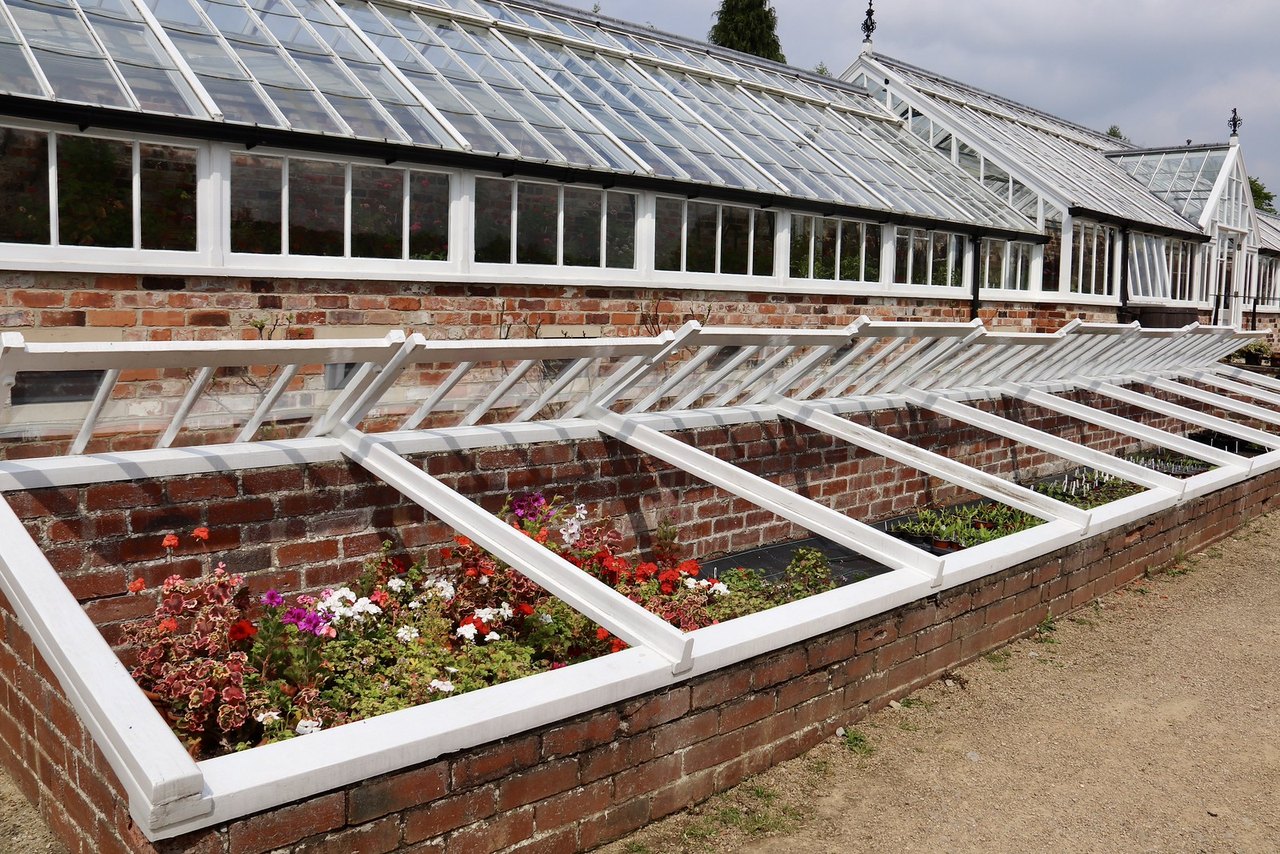
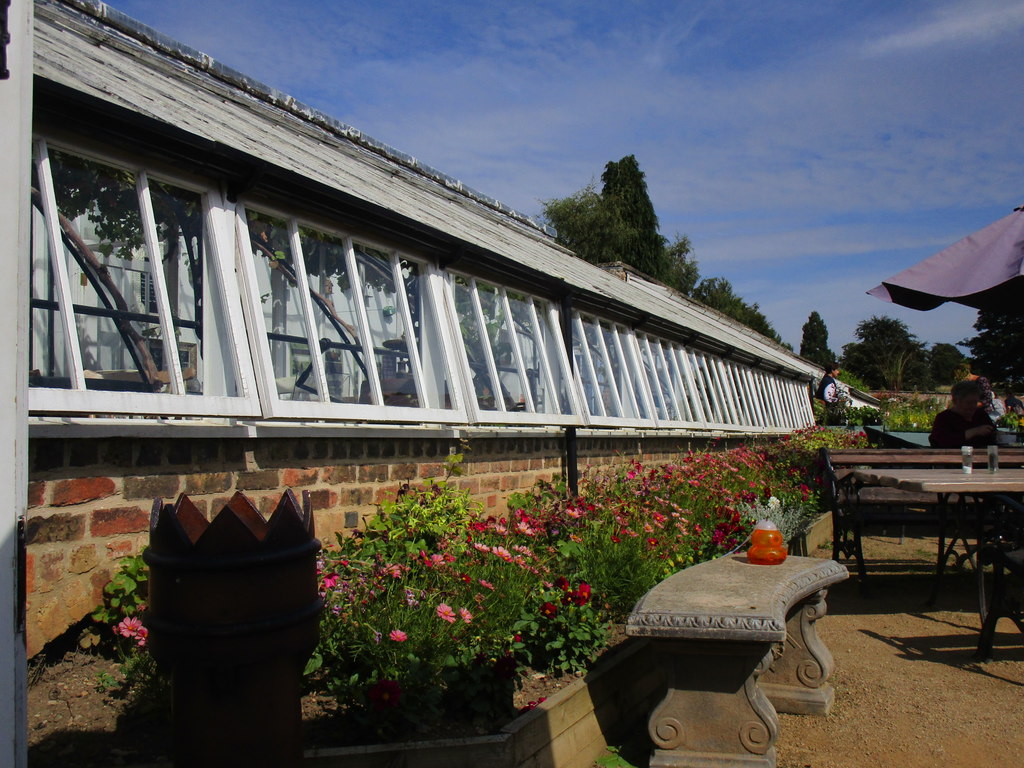
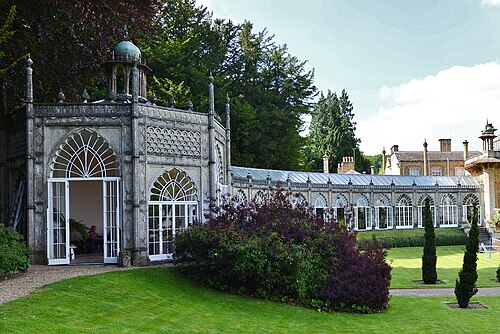
Helmsley Walled Garden, laid out in 1759 below the castle ruins to supply the table of Duncombe Park, keeps two lean-to glasshouses against its north wall: the Vine House, a former vinery now serving as the café, and the Orchid House, which the garden describes as one of its original houses and the press as Victorian. Almost 900 panes of beaver-tailed glass are fitted there without top putty, a method credited to head gardener Michael Rochford. Abandoned in 1984, the garden has been revived since 1994 by a therapeutic-horticulture charity; the Orchid House, restored in 2003 and again after a 2021 appeal, now hosts exhibitions and courses.
Affiliate links — booking through Verrière helps fund our research, at no extra cost to you.
History
Helmsley Walled Garden was built in 1759 (the garden's own history page speaks of a walled garden here since 1758) below the castle ruins, to supply vegetables, fruit and flowers to Duncombe Park, the seat of the Feversham family. The garden describes the Orchid House as one of the original glasshouses of this working garden, which would have held exotic plants and orchids grown for the floral displays at Duncombe Park. Living North magazine calls it, like the neighbouring Vine House, a Victorian glasshouse. It was in this house that head gardener Michael Rochford worked out a way of fitting the glass without top putty, a method the garden presents as having become standard in glasshouse design.
Everything changed after the First World War: the family moved to London and let Duncombe Park, the kitchen garden was leased as a market garden, still worked during the Second World War, then closed for good in 1984 and fell derelict. In 1994 Alison Ticehurst, a practice nurse in the town, saw its potential and imagined a place for therapeutic horticulture; she died before the project was realised, but a charity took it on and has been restoring the garden ever since, with two full-time staff and more than a hundred volunteers. The Orchid House, brought back from dereliction in 2003, needed attention again: an appeal launched in 2021 to raise 25,000 pounds covered the structure, repainting, new blinds, a watering system fed from the original under-floor tank and a new heating system, which the appeal page reports as installed.
Architecture and engineering
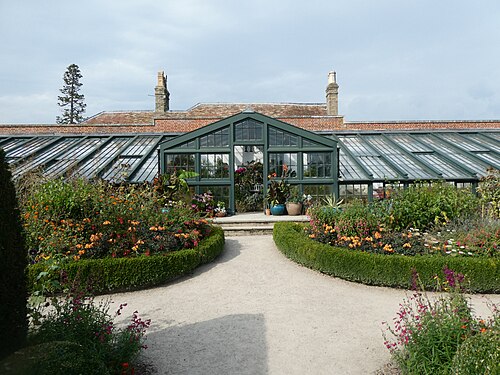
Both glasshouses lean against the north wall of the walled garden, the classic arrangement of English kitchen gardens that turns the glazing towards the south. The Vine House, a former vinery, now holds the café; the Orchid House, a few dozen metres away, is a timber-framed lean-to whose roof carries almost 900 panes. Its beaver-tailed glass, with rounded lower edges, was among the latest developments in glasshouse building when it was fitted. Head gardener Michael Rochford devised a way of fixing the panes without putty on their upper face, which lightened the load on the glazing bars: these could be made thinner and let in more light, a solution the garden says was later taken up across the trade.
Beneath the floor survives a water storage tank, reused in the recent works to feed a watering system. The 2003 restoration brought the house back to what the garden calls a good representation of its former state; the works funded by the 2021 appeal covered general repairs, painting, blinds and heating. Living North noted, however, that at the time of its article the house was unheated.
Plant collections
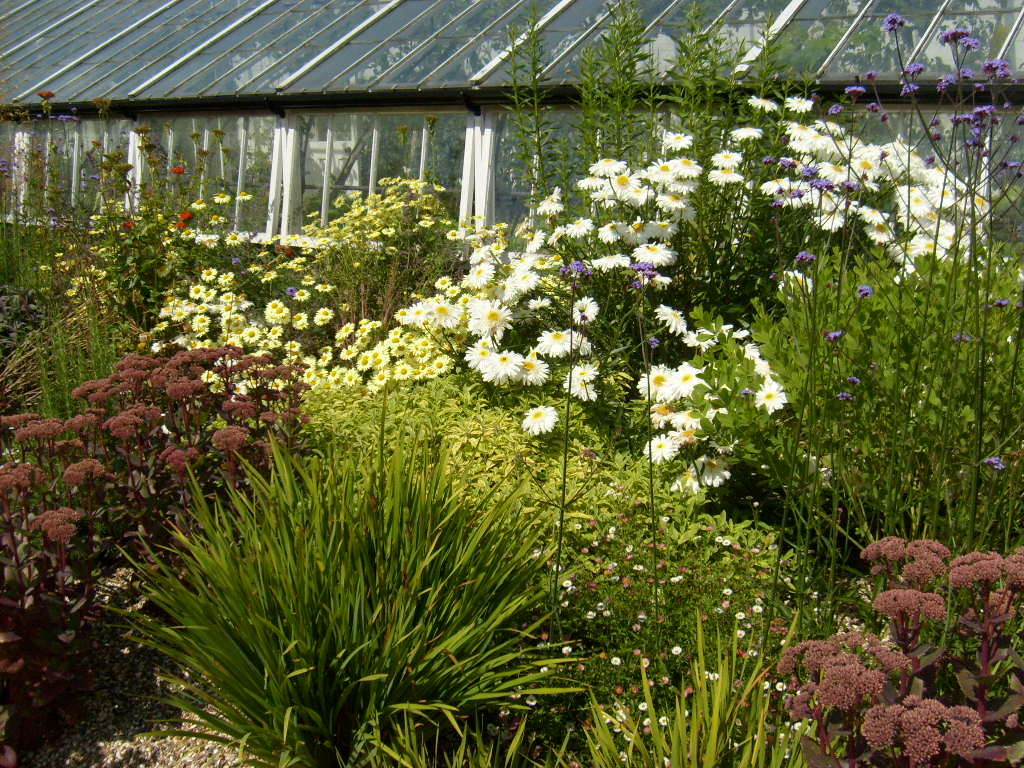
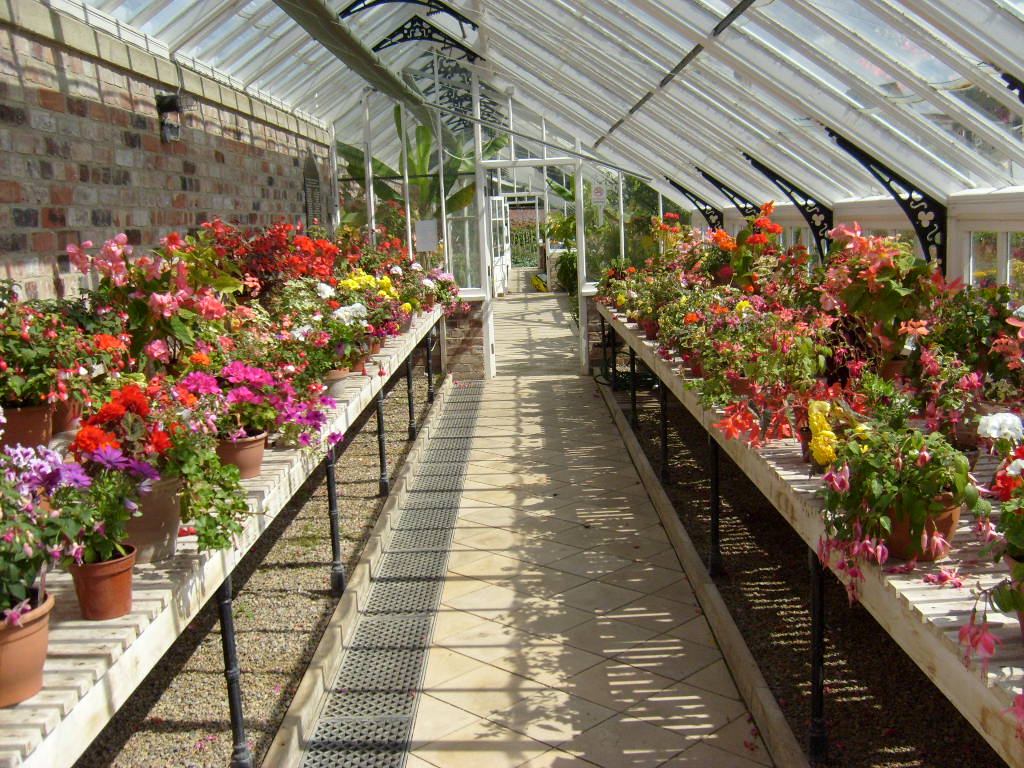
The Orchid House no longer quite lives up to its name: for want of suitable heating, Living North wrote, it held no orchids, though the garden hopes to bring some back; in the meantime it shows a notable collection of pelargoniums and serves as a room for art exhibitions, horticulture courses and volunteer meetings. The rest of the garden, about two hectares divided into smaller gardens, offers a double herbaceous hot border running its full length, a clematis garden with more than a hundred varieties (more than 150 according to Living North), an orchard, a kitchen garden with an edible-flower garden, a garden of contemplation and a plant centre selling perennials. The Vine House café cooks with the garden's produce. The garden is also a Royal Horticultural Society partner garden.
Visiting
The walled garden lies on the Cleveland Way, the long-distance path that passes its gates, below Helmsley Castle, which is visible from the nearby car park. The glasshouses are the natural starting point: the café in the Vine House, then the Orchid House and its exhibitions, before the borders and the clematis garden. Allow an hour to an hour and a half; spring and summer are best for the borders and clematis, autumn for the orchard. The garden opens Wednesday to Sunday from March to December, and dogs on leads are welcome. Duncombe Park, which the kitchen garden once served, and Rievaulx Abbey, at the end of the Cleveland Way, round off the day.
54.24° N, 1.07° W
Greenhouses nearby
More greenhouses — United Kingdom
Do you have a good photo of this greenhouse? Suggest it for this page →
Affiliate links — booking through Verrière helps fund our research, at no extra cost to you.