Chatsworth Display Greenhouse
Bakewell (Derbyshire)

Sources checked September 2026
- Year
- 1970
- Style
- Modern glasshouse with three climate zones, in the historic Chatsworth garden
- Status
- Open to the public
Commissioned by the 11th Duke and Duchess of Devonshire and developed by their successors, this modern glasshouse succeeds Joseph Paxton's Great Conservatory (1836–1840), demolished in 1920 when coal to heat it ran short after the First World War. Its temperate and Mediterranean zones opened to visitors in 2011; the tropical zone stays closed to hold heat and humidity. It grows Musa acuminata Dwarf Cavendish bananas descended from Paxton's plants and a giant water lily raised from his 1849 specimen, the first to flower in England.
Affiliate links — booking through Verrière helps fund our research, at no extra cost to you.
History
The story of glass at Chatsworth is bound up with Joseph Paxton, appointed head gardener by the 6th Duke of Devonshire. Between 1836 and 1840 (some texts, including one from the estate, say 1841) he raised the Great Conservatory with Decimus Burton; 84 metres long, it was then the largest glass building in England. In 1849 he coaxed the Amazonian giant water lily into its first English flowering and went on to build a dedicated Lily House for it. A banana imported from Mauritius in 1829 had already flowered in the estate's glasshouses in 1835.
That world of glass did not survive the First World War. With coal too scarce to feed the boilers and upkeep too costly, the Great Conservatory was demolished in 1920, as was the Lily House. In 1962 the 11th Duke planted a yew maze within its surviving walls.
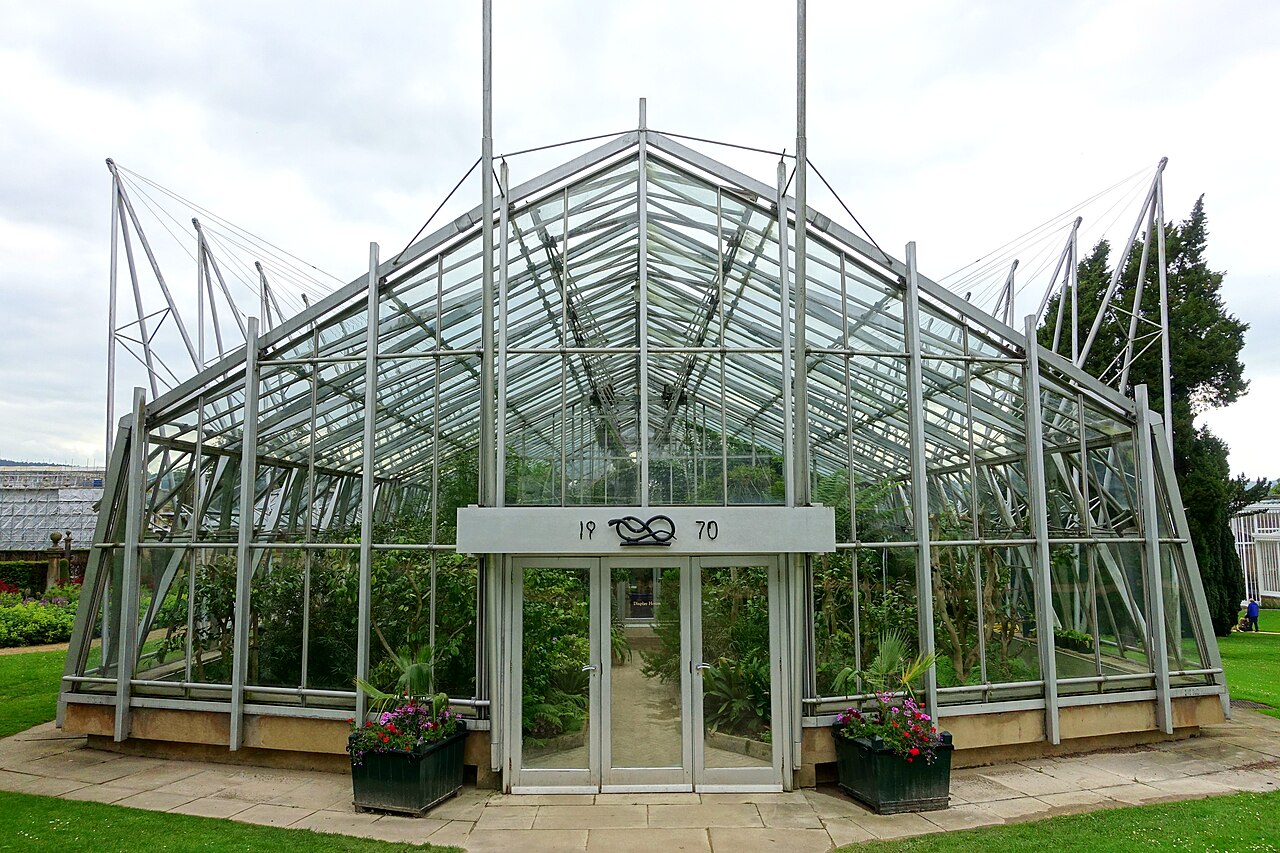
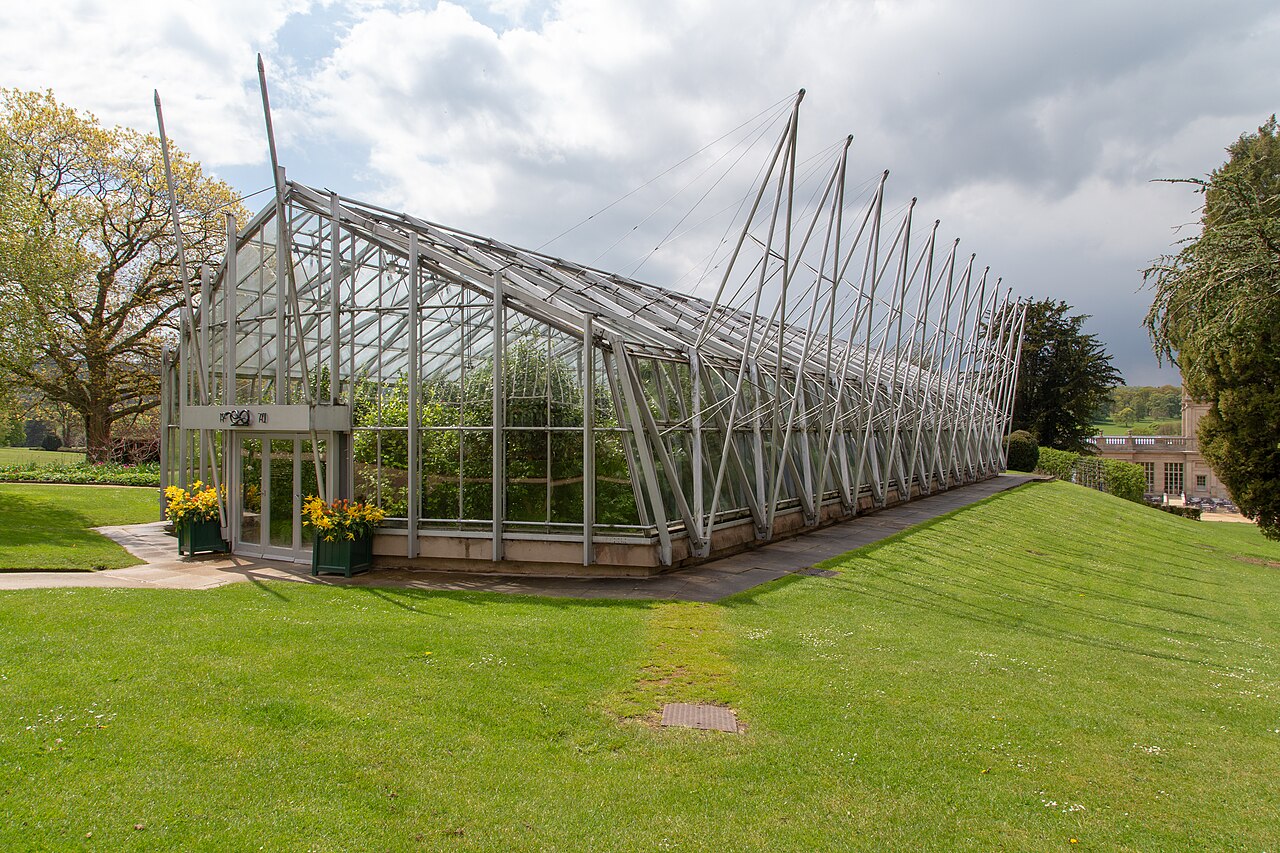
The present Display Greenhouse dates from 1970. Commissioned by the 11th Duke and Duchess and developed by their successors, the 12th Duke and Duchess, it was built to house the family's plant collections. Its temperate and Mediterranean zones opened to visitors in 2011.
Architecture and engineering
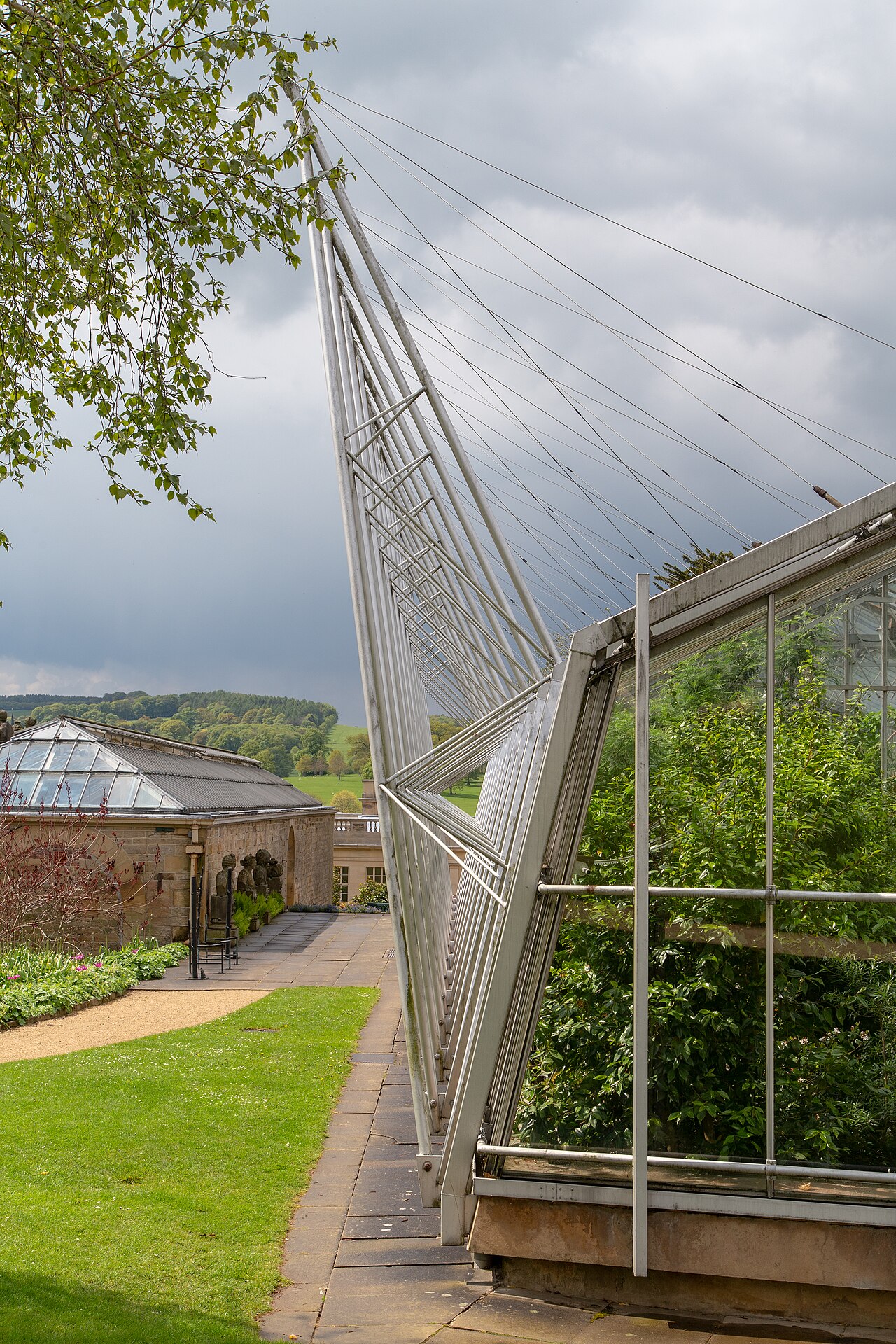
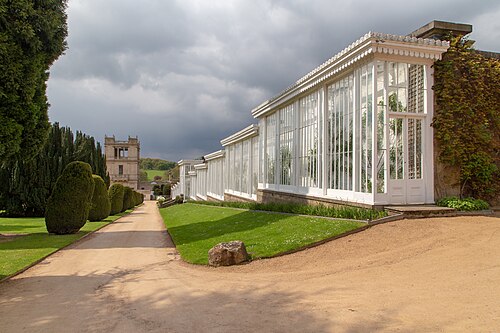
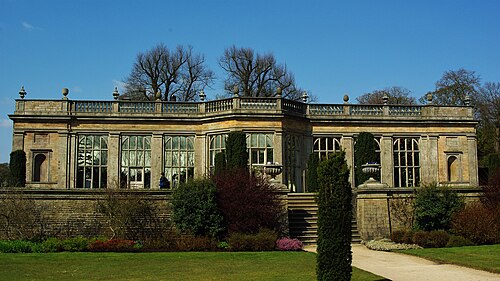
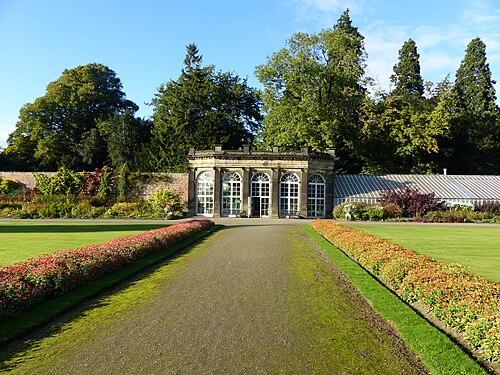
Modern in style, the Display Greenhouse was deliberately tucked away north of the First Duke's Greenhouse, a long, low building with ten arched windows, so as not to compete with the garden's historic structures.
It is divided into three climate zones, each held above a set minimum temperature. The tropical zone is kept at 16 °C or more and remains closed to visitors so that its heat and humidity are not lost. The Mediterranean zone does not fall below 13–16 °C, while the temperate zone is simply kept frost-free at a minimum of 4 °C.
This compartmented arrangement is a far cry from the scale of the vanished Great Conservatory, which was heated by eight coal-fired boilers feeding some seven miles of pipes, and whose retaining walls now enclose the maze.
Plant collections
The glasshouse holds living links with Paxton's era. Dwarf Cavendish bananas (Musa acuminata) descend from the plants that arrived from Mauritius in 1829, the line that gave the Cavendish banana its name; it became the dominant commercial variety in the twentieth century after Panama disease wiped out its rivals. Giant water lilies keep alive the memory of the 1849 flowering. A tree fern, Dicksonia antarctica, imported from Australia in 1826, survived the demolition of the Great Conservatory and was moved several times before settling here.
The temperate zone gathers plants grown at Chatsworth over the past four centuries, set out in four beds that each evoke a period, from Bess of Hardwick to the 12th Duke. There are citrus trees too, including an ‘Imperial’ lemon recognised by the Royal Horticultural Society in 2012, alongside oranges, limes and loquats, and night-flowering Epiphyllum cacti whose blooms reach 30 cm across.
Visiting
The Display Greenhouse stands in Chatsworth's garden, north of the First Duke's Greenhouse and its rose garden. Only the temperate and Mediterranean zones are open; the tropical section cannot be visited.
It makes a short stop that is best folded into a walk devoted to glass and to Paxton: the Conservative Wall, a stepped run of lean-to glasshouses climbing the slope and sheltering camellias planted around 1850, then the maze laid out inside the walls of the former Great Conservatory. Citrus blossom and Epiphyllum flowers give the greenhouse interest even outside the garden's main season.
53.23° N, 1.61° W
Greenhouses nearby
Architecture nearby
More greenhouses — United Kingdom
Do you have a good photo of this greenhouse? Suggest it for this page →
Sources (5)
- chatsworth.org/visit-chatsworth/chatsworth-estate/garden/history-of-the-garden/modern-gard
- chatsworth.org/visit-chatsworth/chatsworth-estate/garden/history-of-the-garden/6th-duke-pa
- chatsworth.org/news-media/news-blogs-press-releases/chatsworths-great-conservatory/
- chatsworth.org/visit-chatsworth/chatsworth-estate/garden/history-of-the-garden/modern-gard
- en.wikipedia.org/wiki/Chatsworth_House
Affiliate links — booking through Verrière helps fund our research, at no extra cost to you.