Greenhouses of the South China National Botanical Garden
Guangzhou

Sources checked September 2026
- Year
- 2008
- Style
- Complex of five themed greenhouses in glass and steel
- Dimensions
- 75,000 m² footprint, 13,000 m² built (tropical rainforest greenhouse: 7,607 m²)
- Status
- Open to the public since late 2008; one of the largest greenhouse complexes in Asia
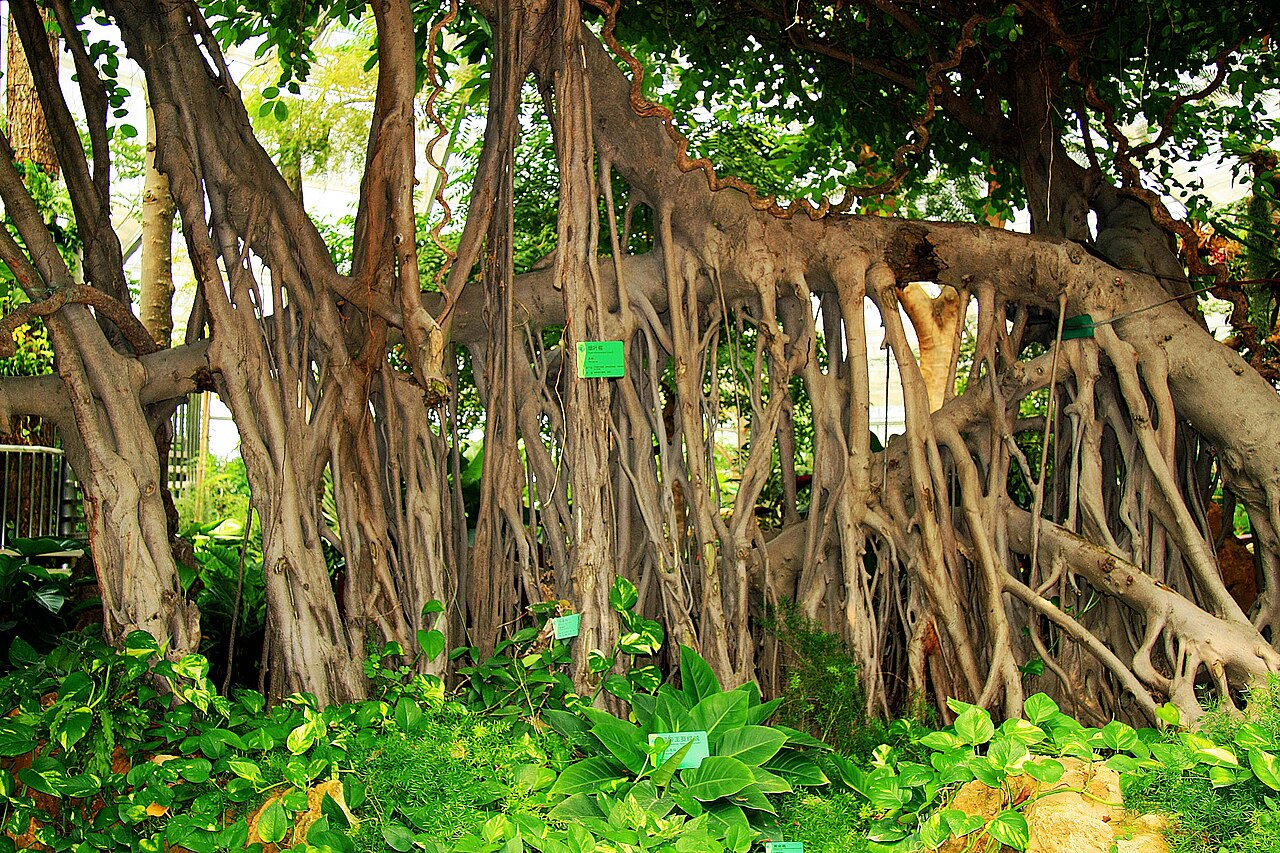
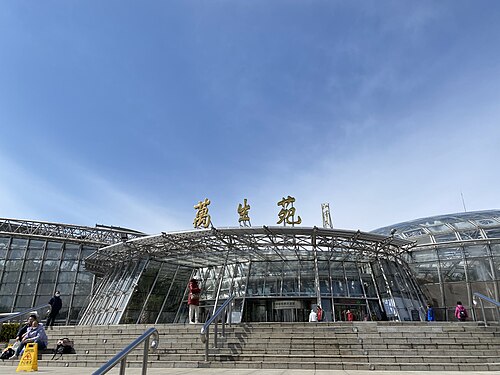
Built between 2003 and 2008 at what is now the South China National Botanical Garden (formerly the South China Botanical Garden), this complex brings together five greenhouses devoted respectively to tropical rainforest, desert plants, alpine and polar flora, exotic species, and a botanical aquarium. The tropical rainforest greenhouse, the centerpiece of the site at 7,607 m², recreates the signature phenomena of equatorial forest: buttress roots, strangler vines, layered canopy and epiphytes. About 3,000 species are kept there for scientific and educational purposes. Opened to the public in late 2008, the complex is considered one of the largest landscaped greenhouse complexes in the world. It embodies the site's dual purpose, serving as both a tourist showcase and a leading center of botanical research in China.
Affiliate links — booking through Verrière helps fund our research, at no extra cost to you.
History
The greenhouses belong to one of China's oldest botanical institutions. The garden traces its origins to 1929, when the botanist Chen Huanyong (Woon-Young Chun) founded the Institute of Agriculture and Forestry at Sun Yat-sen University, first located in Guangzhou's Dongshan district. The institution came under the Chinese Academy of Sciences in 1954, became the South China Institute of Botany, and in 2003 took the name South China Botanical Garden. In 2022 the State Council approved the creation of the South China National Botanical Garden on this foundation, one of the country's first two national botanical gardens alongside Beijing's.
The greenhouse complex, titled World Plant Wonders, was conceived as the public showcase of this research institution. The garden's own description, published in 2010, calls it the largest landscaped greenhouse complex in Asia and possibly the world, and a landmark of Guangzhou. It combines ex situ conservation, scientific research and educational tourism.
Architecture and engineering
The complex covers 75,000 m² and comprises five main structures: the tropical rainforest house, a plant aquarium, the house of curious plants, the desert house and the alpine and polar house. The glasshouses are set among outdoor savanna-style landscapes.
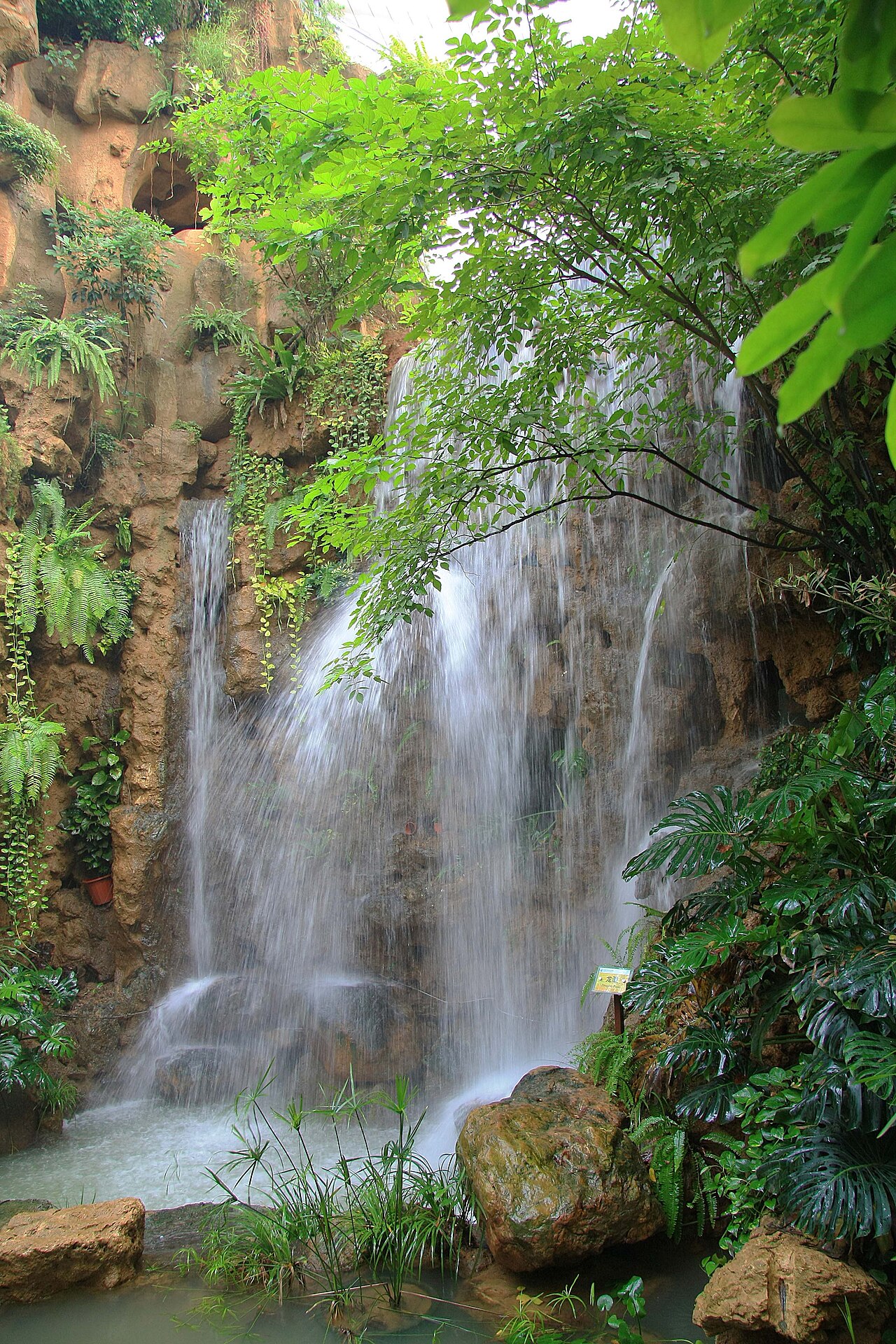
The rainforest house, the centrepiece, rises to 27.4 metres and covers 7,987 m². Its route is divided into seven zones: rainforest landscape, aquatic plants, curious plants, rainforest culture, plant communities, a central waterfall and a river-valley rainforest. The desert house (689 m², 10.52 metres high) continues outdoors into roughly 2,000 m² of open-air desert landscape, where sand, stone, artificial cliffs and weathered strata create an ochre palette. The alpine and polar house (853 m², also 10.52 metres high) uses refrigerated display cases and artificial snow scenes. The house of curious plants, about 1,531 m², is organised around walls of volcanic rock and display cases.
Plant collections
The complex holds about 3,500 species. The rainforest house alone shows more than a thousand, including Parashorea chinensis, a towering tree of southern China's forests, the highly toxic Antiaris toxicaria, the rain tree (Samanea saman) and the giant Victoria water lily; climbers, epiphytes, parasites and strangler figs illustrate the relationships between species.
The desert house gathers some 300 species of cacti and succulents along a circuit that passes through the deserts of the Americas, Africa, Asia and Australia in turn. The alpine and polar house has more than 200 species from subalpine, alpine and polar habitats and doubles as a research platform for southern China's mountain plants and threatened endemic species. The house of curious plants highlights unusual forms and colours, such as the torch ginger (Etlingera elatior).
Visiting
The greenhouse complex is one of the main visitor areas of the garden, in Guangzhou's Tianhe District. Allow half a day to see the five houses and their surroundings while leaving time for the neighbouring gardens.
The garden lists several outdoor collections nearby that extend a visit: the palm garden, the relict plants area, the cycad garden, the orchid garden, the medicinal plant garden and the ferns and shade plants area, as well as the Longdong Qilin landscape. Guangzhou's subtropical climate makes the complex worth visiting in any season.
23.19° N, 113.36° E
Greenhouses nearby
Architecture nearby
More greenhouses — China
Do you have a good photo of this greenhouse? Suggest it for this page →
Sources (8)
- scbg.cas.cn/dl/jdxs_198187/202304/t20230406_6727699.html
- scbg.cas.cn/dl/jdxs_198187/202304/t20230406_6727698.html
- scbg.cas.cn/dl/jdxs_198187/202304/t20230406_6727697.html
- scbg.cas.cn/dl/jdxs_198187/202304/t20230406_6727696.html
- scbg.cas.cn/dl/jdxs_198187/202304/t20230406_6727695.html
- scbg.cas.cn/yk/lsyg/
- english.scbg.cas.cn
- en.wikipedia.org/wiki/South_China_National_Botanical_Garden
Affiliate links — booking through Verrière helps fund our research, at no extra cost to you.