Winter Garden and Temperate House of the Geneva Conservatory and Botanical Garden
Geneva, Canton of Geneva
Entry updated on October 3, 2026
- Year
- 1910–1911
- Architect
- Henri Juvet (Winter Garden)
- Style
- Early 20th-century winter garden; neoclassical-inspired temperate house with central dome (1986)
- Dimensions
- Temperate house: 21 m high
- Status
- Open to the public
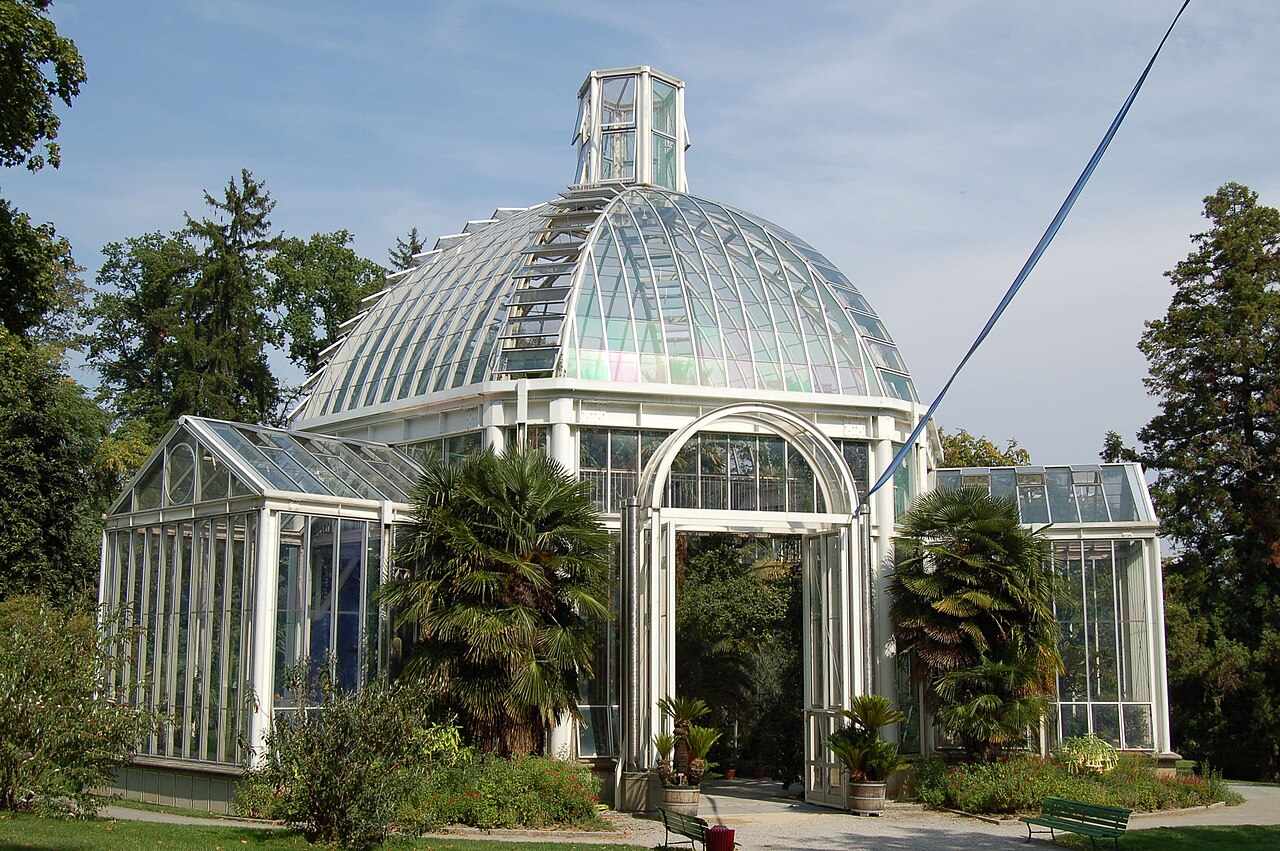
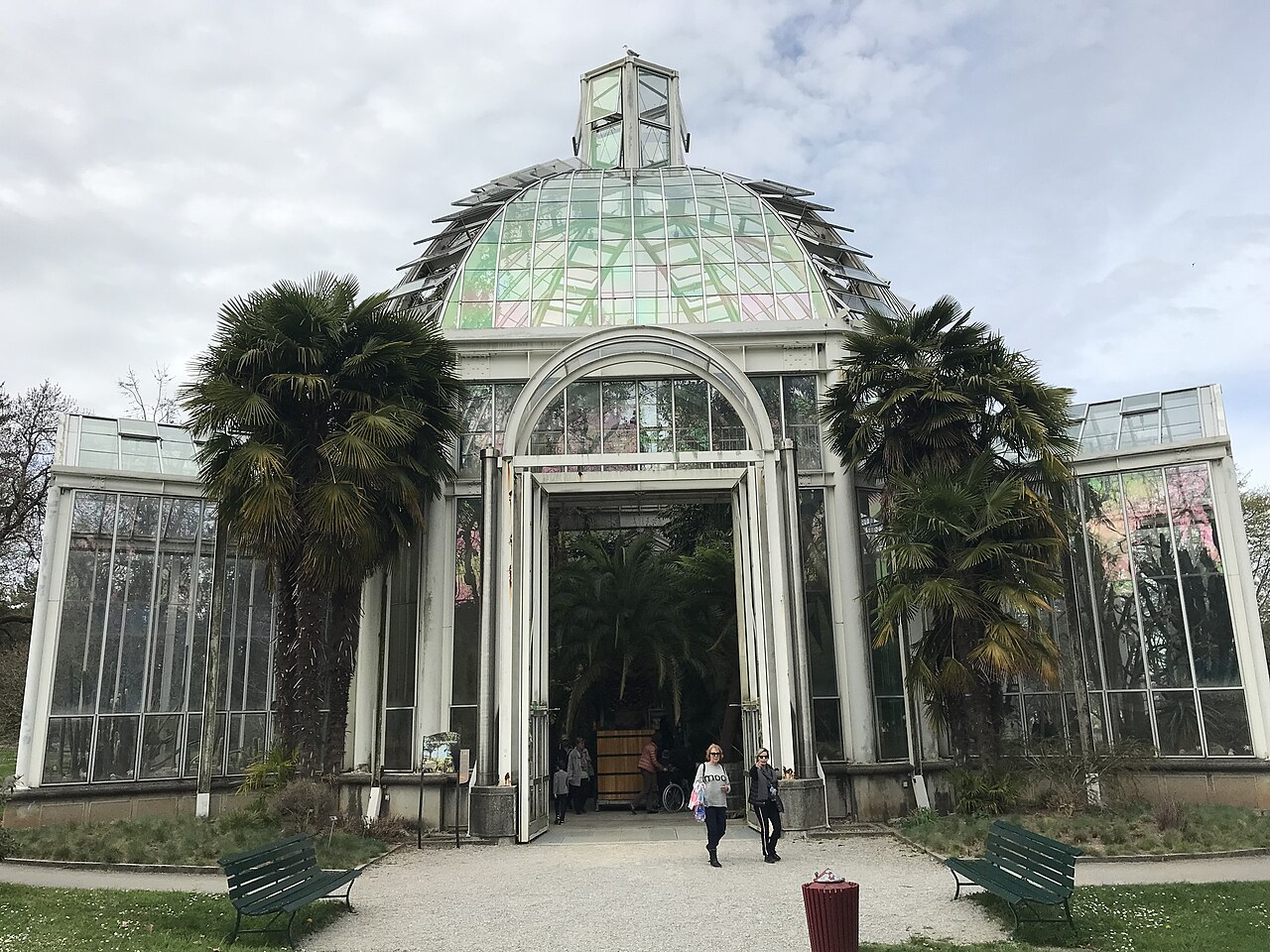
Settled since 1904 on the former Ariana estate beside the lake, Geneva's botanical garden has several glasshouses. The Winter Garden, the oldest, was built in 1910–1911 by Henri Juvet, moved and enlarged in 1935 when the Avenue de la Paix was laid out, and fully renovated in 1998; it shows ornamental tropical plants and useful plants. The neoclassical-inspired temperate house of 1986 pairs a dome of palms and tree ferns with two wings of cacti and holds more than 215 species.
Affiliate links — booking through Verrière helps fund our research, at no extra cost to you.
History
1 min
Geneva's botanical garden was founded by Augustin Pyramus de Candolle and inaugurated on 19 November 1817 in the Parc des Bastions, thanks to a subscription raised from 284 donors. Exotic plants were grown there in two hothouses and an orangery, and a first building for the Conservatory went up in the mid-1820s. Short of space, the institution moved in 1904, under the direction of John Briquet, to the Ariana estate on the right bank of the lake, where landscape architect Jules Allemand designed the new garden and its rockeries.
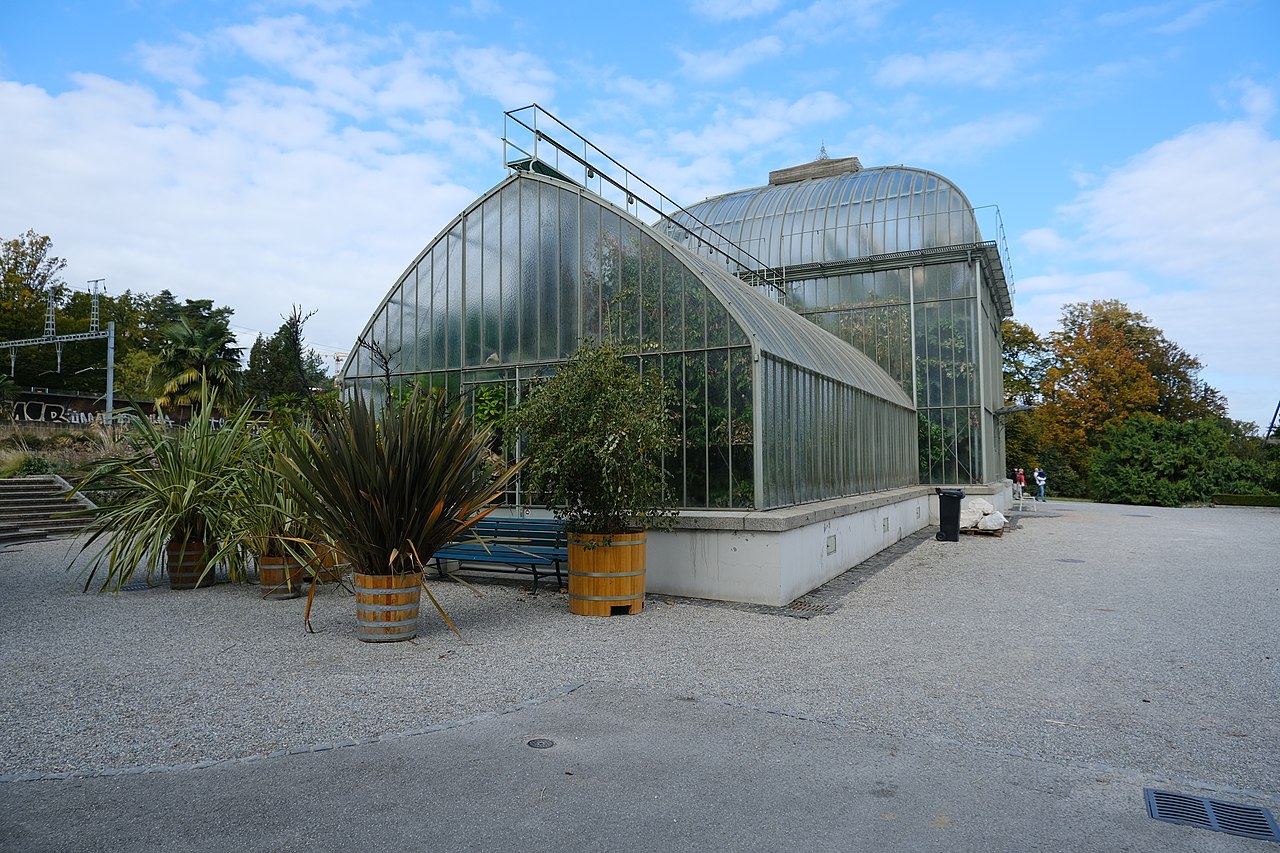
The Winter Garden, now the oldest of the glasshouses, was built in 1910–1911 by the architect Henri Juvet. In 1935 the construction of the Avenue de la Paix, linked to the League of Nations palace, forced it to be moved; it was enlarged at the same time and took on its present appearance, before a complete renovation in 1998.
The other glasshouses are more recent: according to the institution, the temperate house dates from 1986 and the tropical, bromeliad and gesneriad houses and the volcanic house from 1987, whereas Wikipedia mentions new glasshouses completed in 1983 to replace three small buildings. The architect Jean-Marc Lamunière drew a glasshouse project for the garden in 1985, exhibited at EPFL in January 1986. In 2017 all the living collections were certified organic under the Bio Suisse standard.
Architecture and engineering
1 min
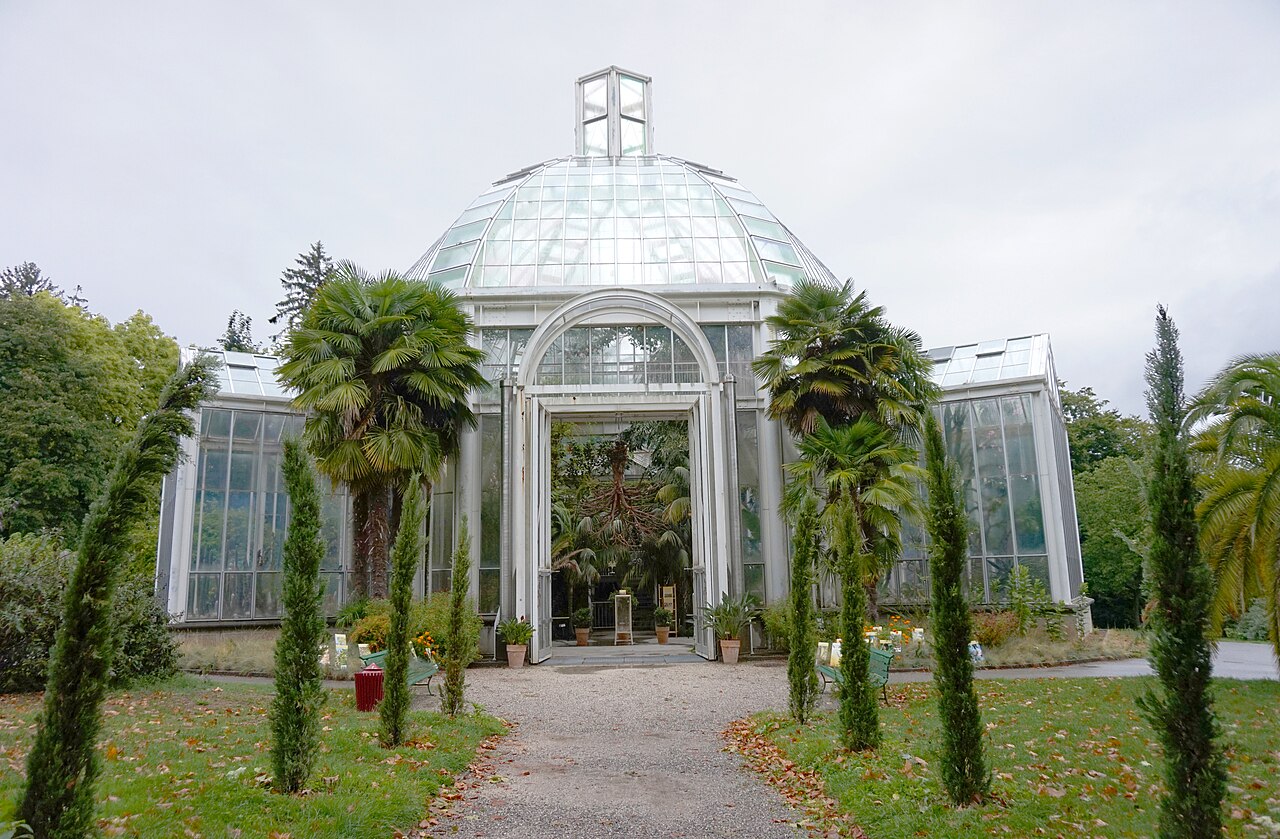
The Winter Garden differs from the newer glasshouses in its warm, humid climate, which the gardeners regulate entirely by hand, whereas the other houses have automated systems. Its present form results from the move and enlargement of 1935 and the full renovation of 1998.
The temperate house, neoclassical in inspiration, consists of a central dome planted with palms and tree ferns, flanked by two side wings reserved for cacti and succulents. The garden gives it a height of 21 metres. The temperature never falls below 12 °C and humidity is kept at around 60 per cent. In winter it also shelters old tub-grown trees from frost.
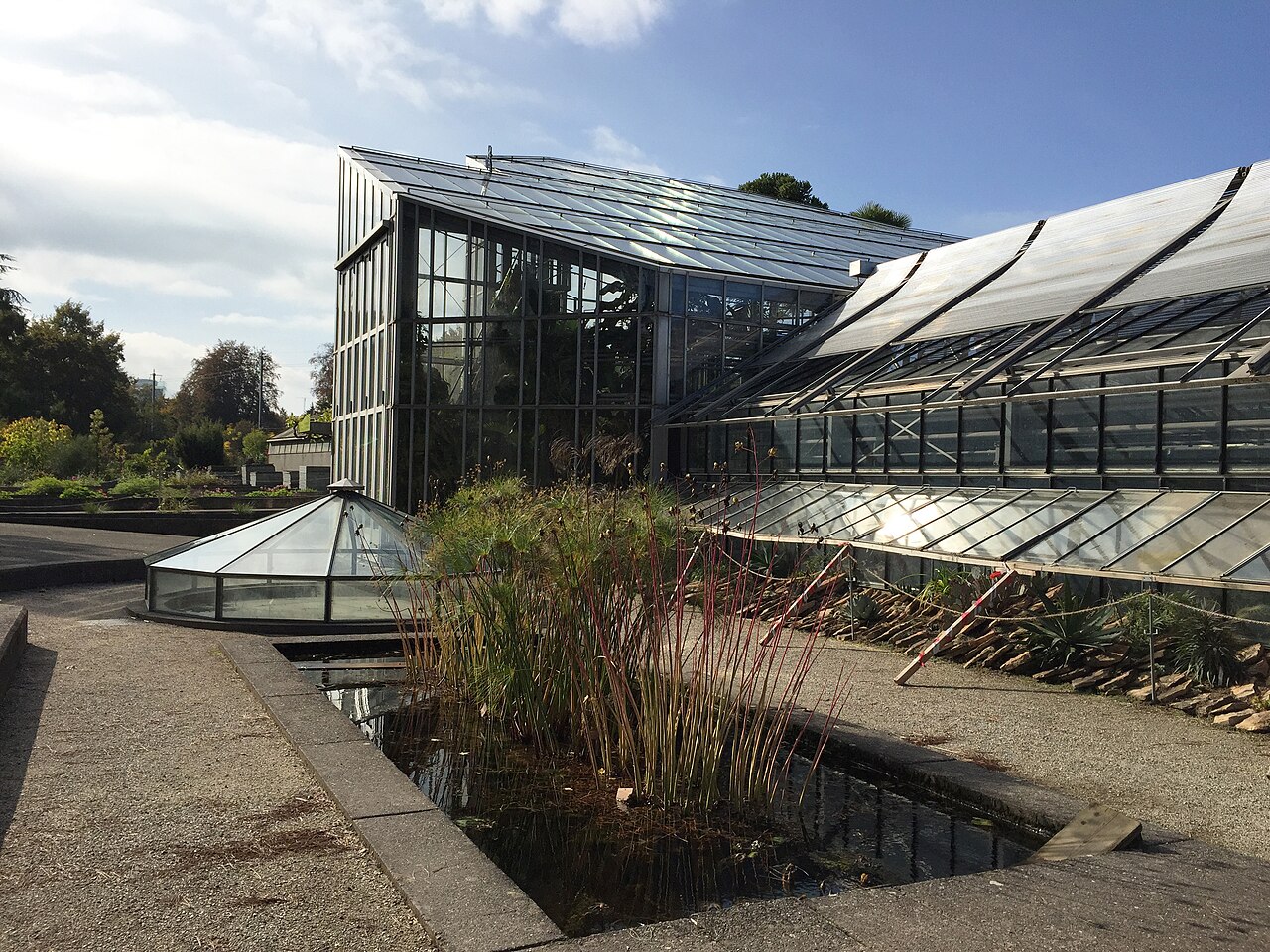
The complex further includes a tropical house, houses devoted to bromeliads and gesneriads, a volcanic house and a collections house, with climates ranging from cool to hot and plants from all five continents.
Plant collections
1 min
The Winter Garden displays ornamental tropical plants and an exhibition area on the useful plants of the tropics and the links between human societies and the plant world: papaya, coffee, cacao, spices, tropical fruits, jackfruit and Vanilla pompona. Its specimens include the jade vine (Strongylodon macrobotrys) from the Philippines, whose turquoise clusters open from late winter into spring, the traveller's tree (Ravenala madagascariensis), Heliconia rostrata, Pamianthe peruviana and Aechmea weilbachii.
The temperate house holds more than 215 species from Australia, South Africa, subtropical Asia and America and the Mediterranean basin, among them Echinocactus grusonii, the palm Caryota maxima, the tree fern Sphaeropteris cooperi, the kauri (Agathis australis), Strelitzia nicolai and Osmanthus fragrans. The garden's living collections exceed 11,000 species.
Visiting
1 min
The glasshouses belong to a 28-hectare garden spread across the municipalities of Geneva and Pregny-Chambésy beside the lake, close to the Avenue de la Paix whose construction displaced the Winter Garden. A visit can combine them with the rockeries devoted to alpine flora from around the world, the arboretum of more than 800 tree species, the terraces of medicinal and useful plants, the scent and touch garden and the Botanicum, a family area by the lake. Listed as a cultural property of national importance, the site also houses a herbarium of nearly six million specimens and a library of 120,000 volumes.
46.23° N, 6.15° E
Greenhouses nearby
More greenhouses — Switzerland
Do you have a good photo of this greenhouse? Suggest it for this page →
Sources (6)
- jardinbotaniquegeneve.ch/linstitution/histoire
- jardinbotaniquegeneve.ch/au-jardin/decouvrir/jardin/jardin-dhiver
- jardinbotaniquegeneve.ch/au-jardin/decouvrir/jardin/serre-temperee
- fr.wikipedia.org/wiki/Conservatoire_et_Jardin_botaniques_de_la_ville_de_Gen%C3%A8ve
- epfl.ch/campus/art-culture/museum-exhibitions/archizoom/fr/serres/
- geneve.ch/sites/default/files/fileadmin/public/Departement_3/Publications/conservatoire-et