Great Glasshouses of the Parc de la Tête d'Or
Lyon

Sources checked September 2026
- Year
- 1877–1880
- Architect
- Théodore Jean-François Domenget
- Style
- Nineteenth-century structural ironwork with a central dome
- Dimensions
- 21 m high, ≈1,900 m²
- Status
- Open to the public
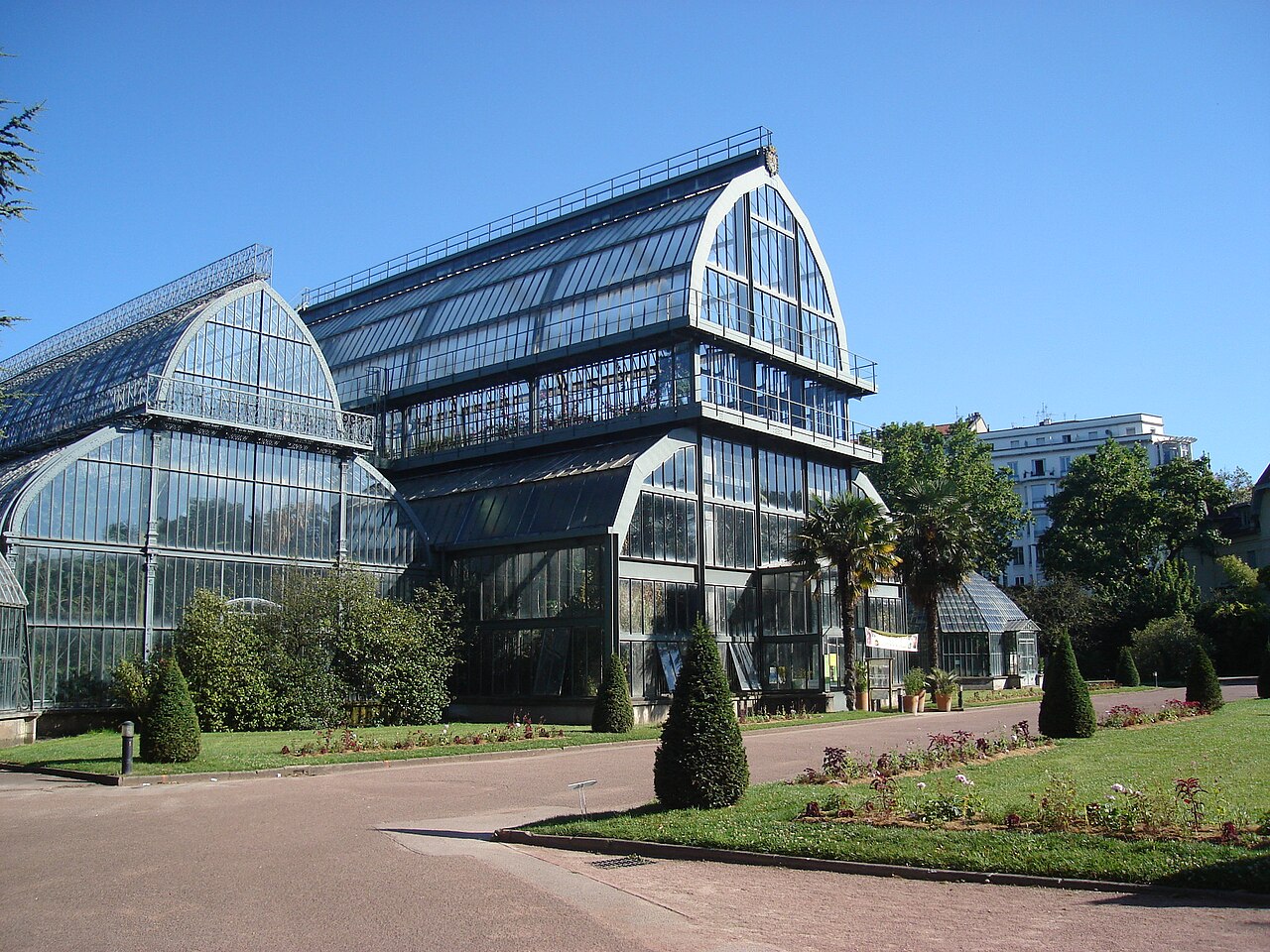
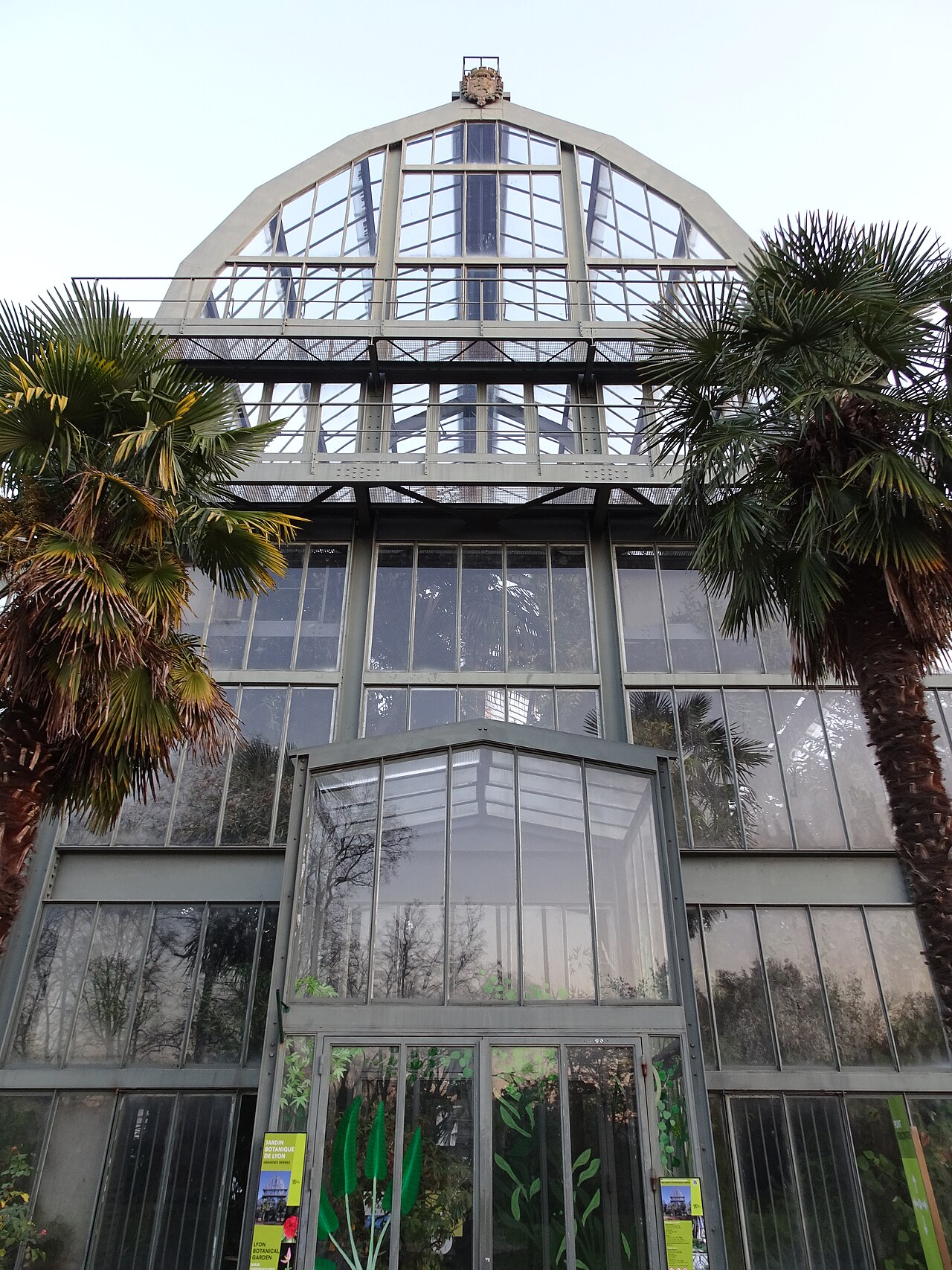
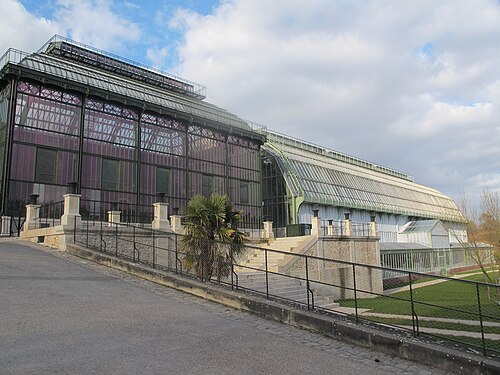
Built between 1877 and 1880 to replace timber glasshouses from 1865, the Great Glasshouses of the Lyon botanical garden opened in 1883. Their central dome, repaired after serious structural damage in 1972, makes them among the tallest glasshouses in France. Long reserved for pharmacy and medical students, they gradually opened to the general public. The collections, arranged by continent since a 1990s renovation, emphasise useful tropical plants.
Affiliate links — booking through Verrière helps fund our research, at no extra cost to you.
Practical info
- Tickets
- Free: according to the City of Lyon, the Parc de la Tête d'Or, its Botanical Garden (8 hectares of glasshouses and outdoor gardens), its zoo and its rose gardens are all entirely free.
- Opening hours
- Botanical Garden: 9:30am–5pm until 14 April; the glasshouses close at 4:30pm. No entry 15 minutes before closing.
- Getting there
- Parc de la Tête d'Or, 69006 Lyon (place du Général-Leclerc); the park has several entrances and is open every day of the year. The City of Lyon points to the TCL network and Vélo'v (bike sharing) for getting there.
Frequently asked questions
Do I have to pay to visit the great glasshouses?
No: the City of Lyon says the Botanical Garden, which combines 8 hectares of glasshouses and outdoor gardens, is free, like the park, the zoo and the rose gardens.
What happens in a heatwave or strong wind?
Under an orange or red heatwave alert, the City states a closing time of 2pm (summer hours). If the wind exceeds 70 km/h, the park is closed.
Is the park accessible to visitors with disabilities?
The City has adapted the park: suitable materials, a ramp near the Cité Internationale, accessible toilets. The Botanical Garden offers guided tours of the great glasshouses for blind and partially sighted visitors.
History
Founded in 1793 on the slopes of the Croix-Rousse, Lyon's botanical garden moved in 1856 to the newly created Parc de la Tête d'Or, laid out by the landscape architects Denis and Eugène Bühler. The first glasshouses, of timber and glass, went up in the 1860s (1865 or 1867), but humidity soon took its toll.
Between 1877 and 1880 they were replaced by metal glasshouses designed by Théodore Jean-François Domenget, the city's architect and director of works; the historic-monuments record instead dates the construction to two campaigns, in 1876 and 1897. The official opening in 1883 was marked by planting a cycad that is still there. The glasshouses first held plants from the Cape and New Holland, later serving as a showcase for colonial flora; long reserved for medical and pharmacy students, they gradually opened to the general public.
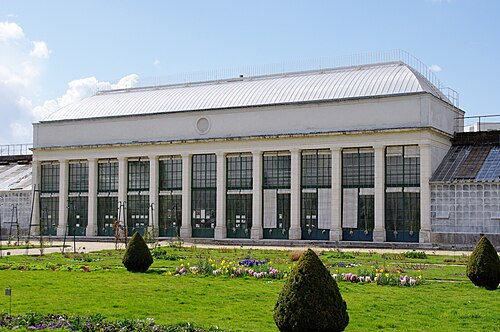
Decades of humidity eventually endangered the structure, and in the early 1970s the central pavilion was demolished and rebuilt (1971 or 1972). The great glasshouses were listed as historic monuments on 4 November 1982, together with the Dutch glasshouse, the Camellia house and the Pandanus house. A further renovation, completed in the late 1990s, reorganised the paths by continent. From October 2020 to February 2021 the glasshouses closed again for a few months while the framework was consolidated and maintained.
Architecture and engineering
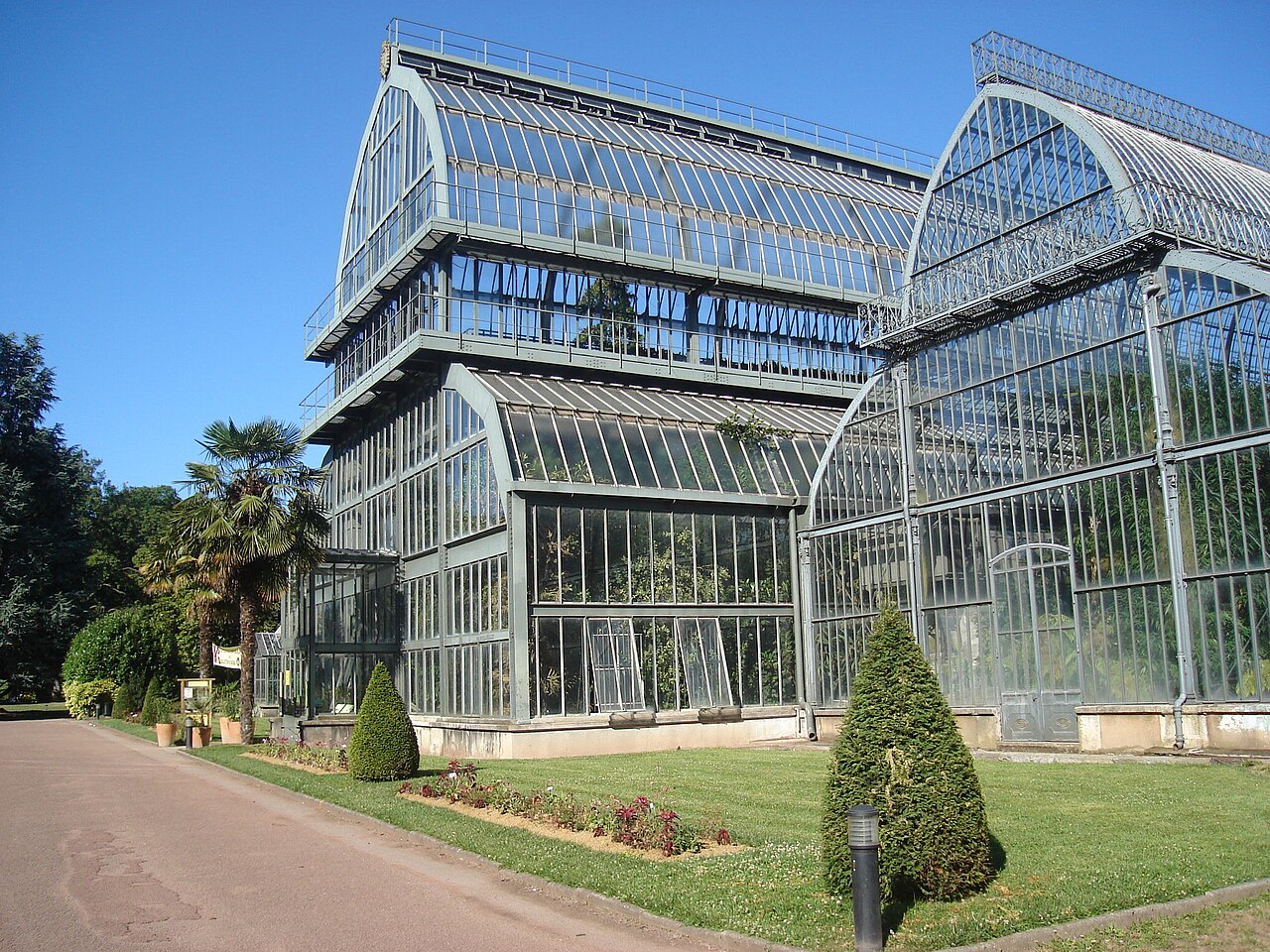
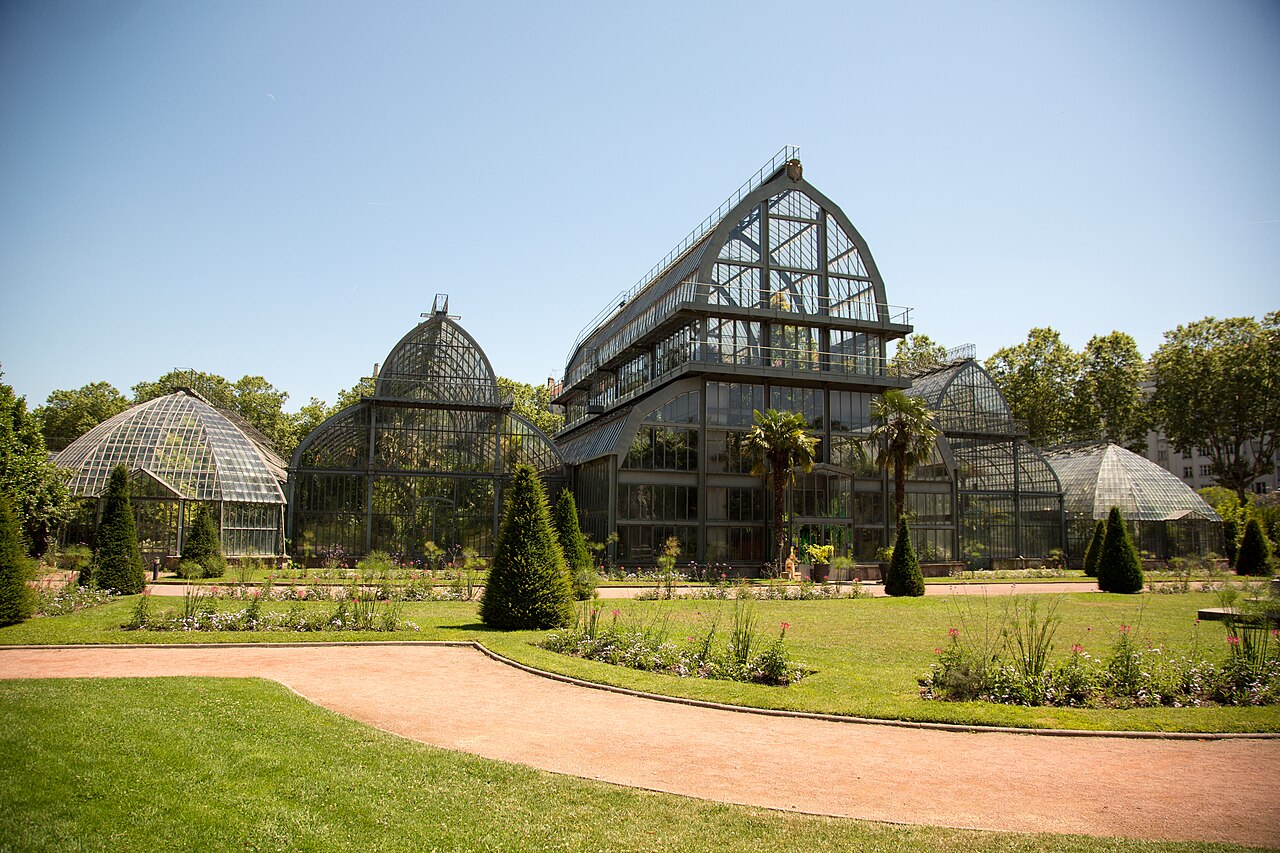
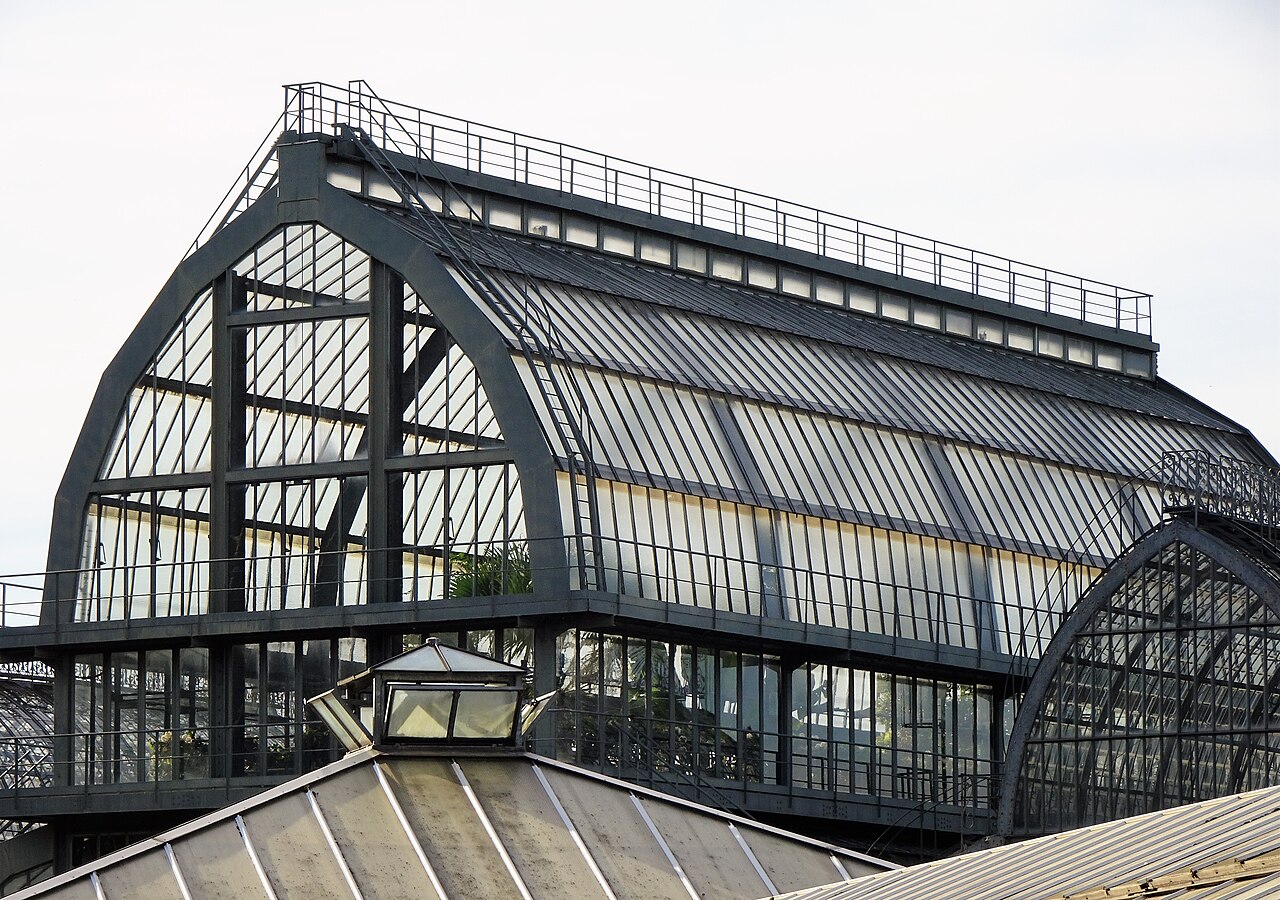
Nicknamed the 'cathedral of glass and steel', the great glasshouses cover some 1,900 m². The central pavilion, topped by a 21-metre dome, is among the tallest in France. The interior is divided into three areas: the central nave, never allowed to fall below 18 °C, a hot and humid section, and a house devoted to camellias.
They form part of a larger complex, one of the most extensive in France, with about 6,500 m² spread over nine glasshouses, including the Dutch house, the round Victoria house, small orchid houses and the 400 m² Madagascar house. The switch to metal in the late 1870s was a direct response to the failure of the timber structures, which could not withstand the humidity of tropical cultivation.
Plant collections
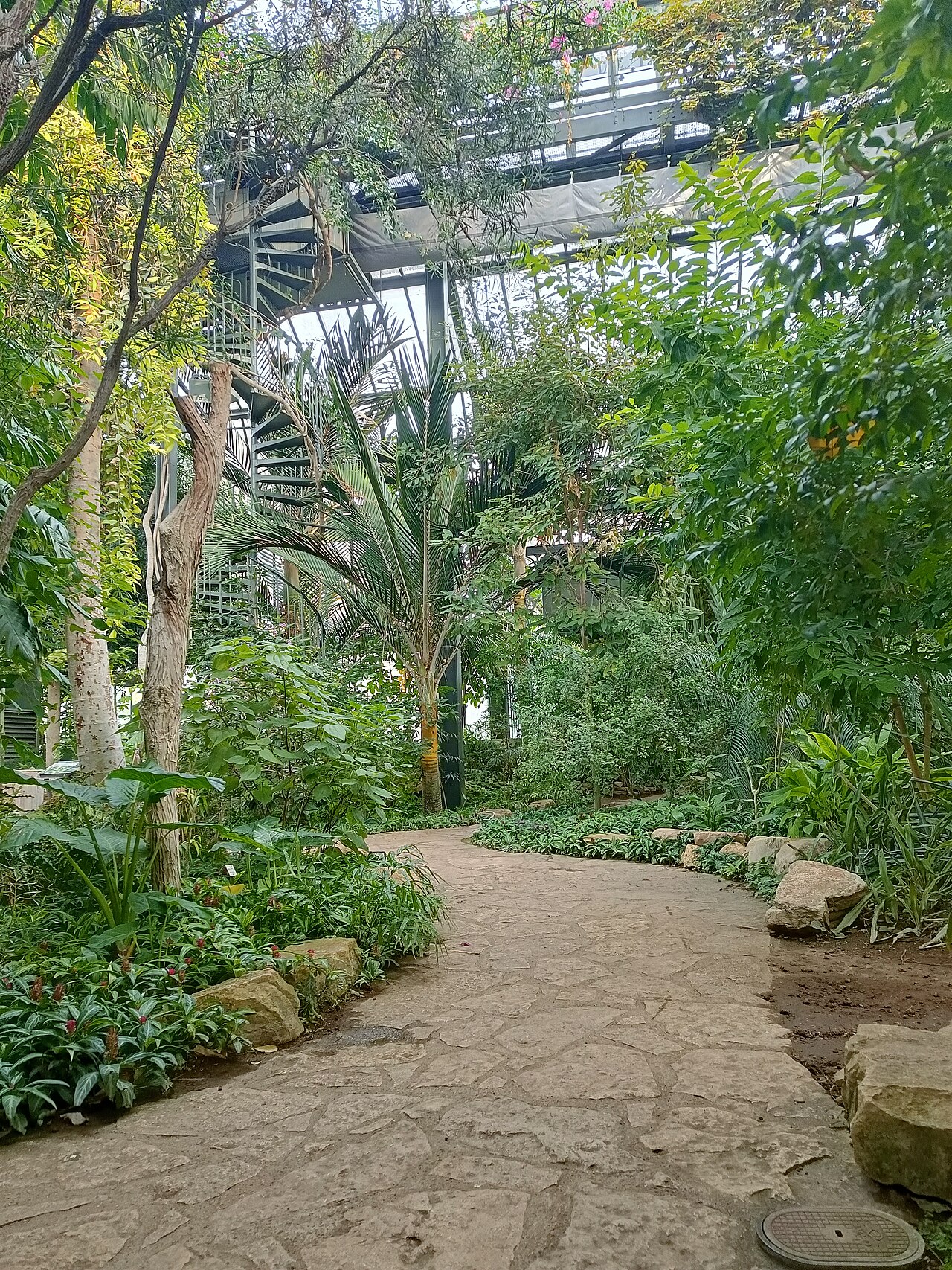
Since the 1990s renovation the plants in the great glasshouses have been arranged by continent, with an emphasis on useful tropical species: coffee, cacao, perfume plants and medicinal plants. The central nave holds species from Africa, Australasia and South America, while the humid section presents the flora of France's overseas territories. The camellias, originally planted in the ground and left in place, flower from February. The female cycad planted in 1883 remains the garden's oldest resident, and the glasshouse also grows Pelliciera rhizophorae, a mangrove tree very rarely cultivated, found in Europe only at Lyon and Kew.
According to the tourist office, the glasshouses together hold about 6,000 species, out of some 15,000 in the botanical garden.
Visiting
The great glasshouses stand in the botanical garden of the Parc de la Tête d'Or, most directly reached through the Avenue Verguin entrance. The botanical garden and its glasshouses are free to enter. Allow an hour for the great glasshouses and their neighbours, longer for the whole garden with its historic rose collection and alpine plants. In winter the camellias, flowering from February, are a good reason to come; in summer the temperature inside is kept below about 30 °C, making it a refuge during heatwaves. The surrounding park, with its lake and zoo, rounds off the visit.
45.78° N, 4.85° E
Greenhouses nearby
Architecture nearby

More greenhouses — France
Do you have a good photo of this greenhouse? Suggest it for this page →
Sources (8)
- visiterlyon.com/sortir/parcs-jardins-et-lieux-de-balade/le-jardin-botanique-du-parc-de-la-
- pop.culture.gouv.fr/notice/merimee/PA00117982
- tribunedelyon.fr/urbanisme-immobilier/il-etait-une-fois-les-grandes-serres-du-jardin-botan
- recherches.archives-lyon.fr/ark:/18811/15ft0d3qkmxn
- ges-lyon.fr/le-jardin-botanique-du-parc-de-la-tete-dor-2021-12-22-678.html
- alalyonnaise.fr/decouvertes/les-grandes-serres-du-parc-de-la-tete-d-or
- lyonmag.com/article/110867/lyon-les-grandes-serres-du-jardin-botanique-du-parc-de-la-tete-
- en.wikipedia.org/wiki/Jardin_botanique_de_Lyon
Affiliate links — booking through Verrière helps fund our research, at no extra cost to you.