Tropical glasshouse of the Lausanne Cantonal Botanical Garden
Lausanne, Canton of Vaud
Entry updated on October 5, 2026
- Year
- 2019
- Style
- Contemporary, with sober, minimalist lines
- Dimensions
- 33 × 5.6 m, 6.4 m high
- Status
- Open to the public
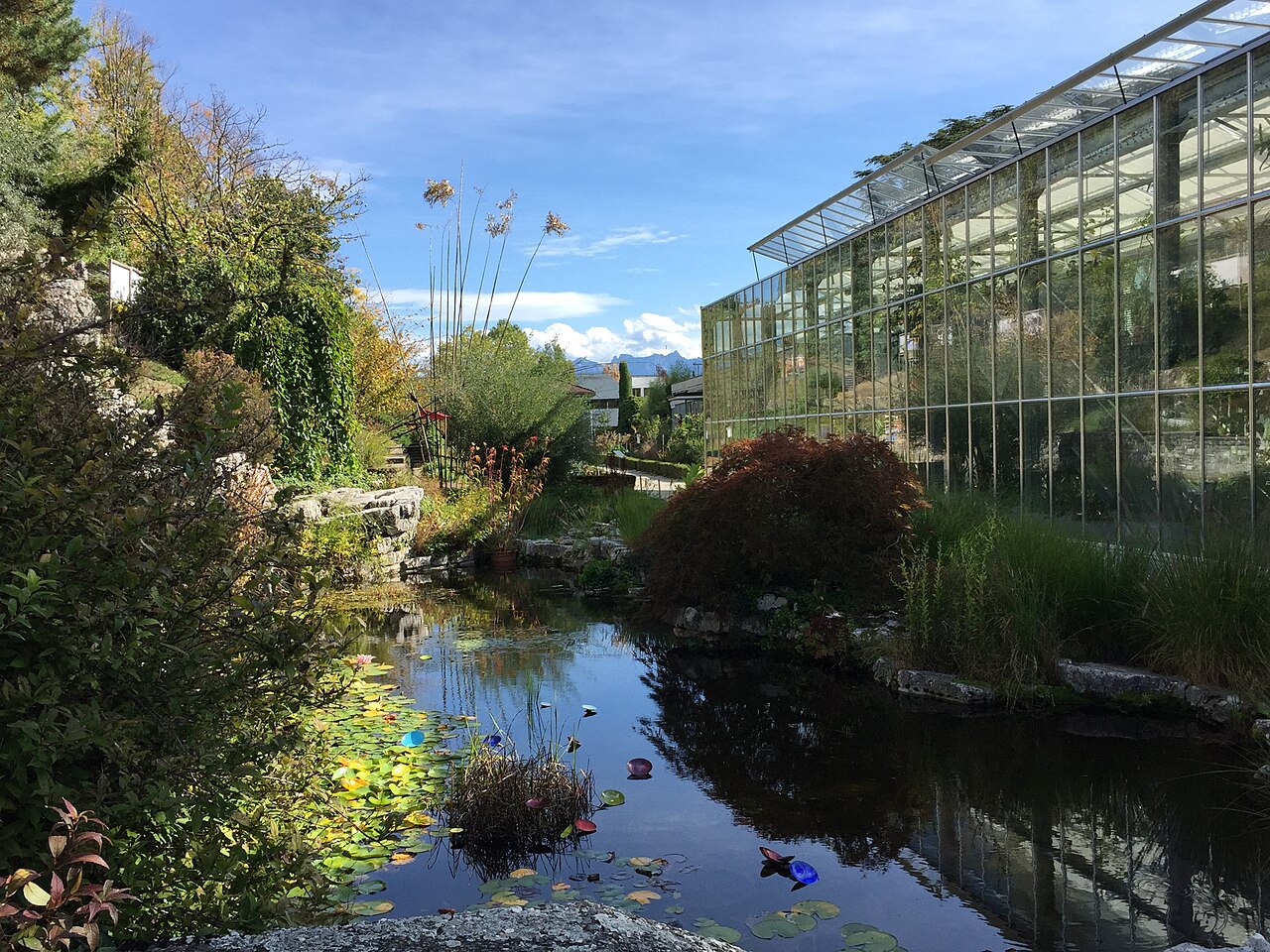
Opened on 9 September 2019 at the foot of the Montriond hill, the new glasshouse of Lausanne's cantonal botanical garden succeeds two small houses added in 1971 and 1985 to the garden designed by the architect Alphonse Laverrière and opened in 1946, an ensemble listed as a cultural property of national importance. About 33 metres long and minimalist in design, it holds some 340 species of tropical medicinal plants and more than 70 species of carnivorous plants, the largest such collection in Switzerland.
Affiliate links — booking through Verrière helps fund our research, at no extra cost to you.
History
1 min
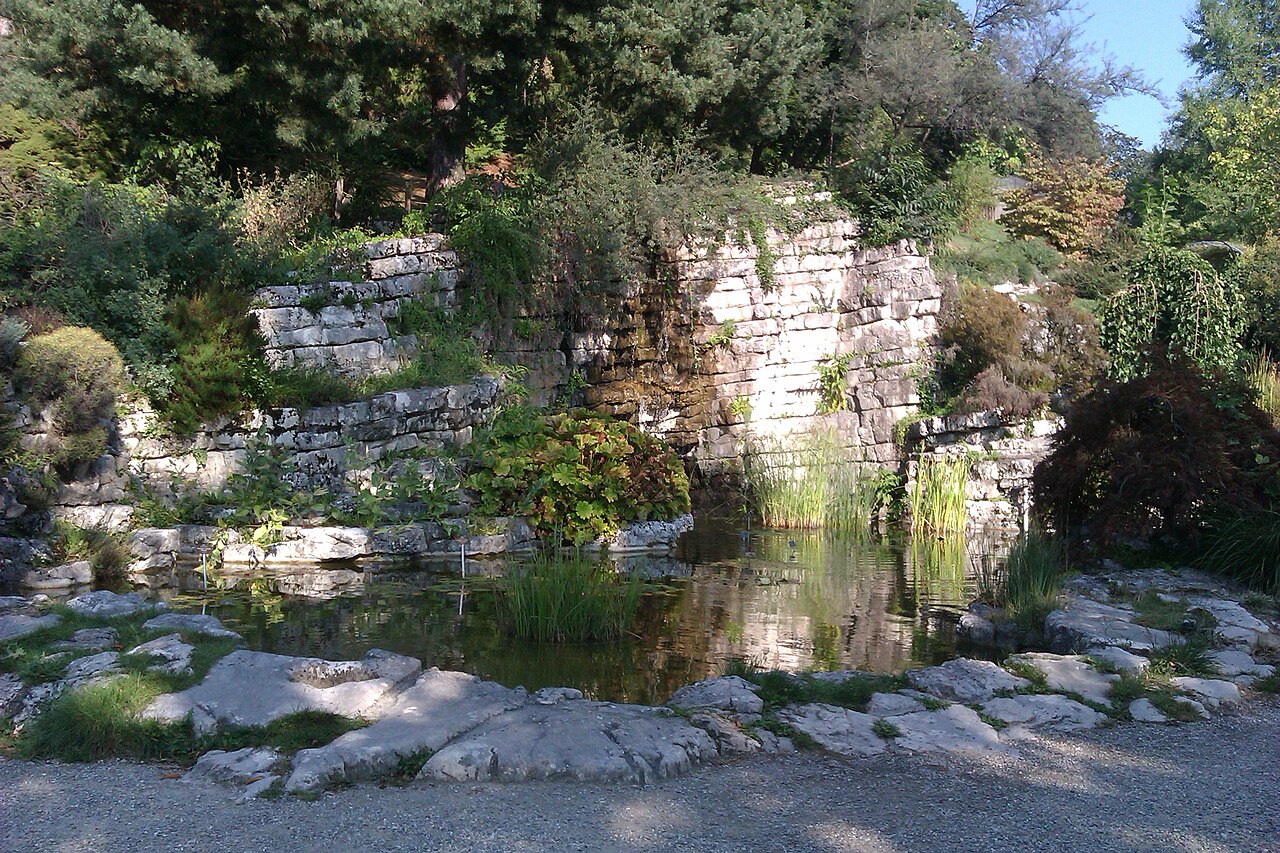
The wish for a botanical garden accompanied Lausanne's growth in the 19th century. In 1890 a garden was laid out on the university site, below the faculty of chemistry and physics in the rue de Couvaloup, mainly for teaching pharmacy. In 1946 it moved to its present position on the south face of the Montriond hill, in the Parc de Milan. Designed by the architect Alphonse Laverrière and the botanist Florian Cosandey, with the landscape designer Charles Lardet and Alfred Jordan for the rock gardens, the new garden opened on 1 June 1946.
Two small glasshouses were added in 1971 and 1985. The older one showed worrying signs of decay from 1989, yet its replacement was a long time coming: twenty-five years according to the canton of Vaud, around thirty according to Radio Lac. At the end of 2014 the cantonal government funded a new glasshouse through a supplementary credit of 900,000 francs. The heritage association Patrimoine suisse opposed the project, arguing that it would seriously harm the site's appearance; at the end of 2017 the cantonal court upheld the building permit while requiring an impact study covering the whole site. In January 2018 the canton announced that work could begin, including the dismantling of the two earlier glasshouses.
After four years of planning and eighteen months of building, the glasshouse was inaugurated on 9 September 2019 in the presence of the cantonal ministers Cesla Amarelle and Pascal Broulis. The Friends of the Botanical Garden contributed 30,000 francs towards it.
Architecture and engineering
1 min
Laverrière's garden is entered in the cantonal inventory of historic monuments and in the federal register of cultural property of national importance, so the new glasshouse had to fit in discreetly. It was placed at the foot of the hill, on the edge of the protected area, and rests directly on the natural slope of the ground without any earthworks.
The building is a long, narrow volume measuring 33 metres in length, 5.6 metres in width and 6.4 metres in height according to Radio Lac; the canton gives about thirty metres by six wide and six high. Its design is unmistakably contemporary, with restrained lines that verge on minimalism. More spacious than its predecessors, it was designed to use less energy and to meet current standards of safety and energy efficiency.
Inside, it is divided into two sections, one for tropical medicinal plants and the other for carnivorous plants. The sources consulted do not name the designer of the glasshouse and say nothing about its structure or type of glazing.
Plant collections
1 min
The glasshouse took over the tropical plant collection of the old one. Its first section brings together some 340 species of tropical medicinal plants. The second displays more than 70 species of carnivorous plants, the largest collection of its kind in Switzerland; these plants were previously grown at Cery, in the municipality of Prilly, before being brought back to the garden.
Around the glasshouse, the 1.7-hectare garden shows some 4,000 plant species according to Lausanne Musées. Rock gardens hold the mountain flora, alongside an arboretum, a medicinal garden originally created for pharmacy students, and an orangery. The institution also keeps a herbarium of one million specimens, painted herbaria and a specialised library of 35,000 works.
Visiting
1 min
The garden covers 1.7 hectares south-west of the Place de Milan, at Avenue de Cour 14B, and is served by the m2 metro (Délices station) and buses 1 and 25 (Jardin botanique stop). The glasshouse stands at the bottom of the site, at the foot of the hill, while the rest of the route climbs the south face of the Montriond hill. An hour to an hour and a half is enough for the glasshouse and the main outdoor sections. The rock gardens and arboretum are at their best from spring to autumn, whereas the glasshouse can be visited in any season. Now part of the Naturéum, the garden also offers scientific and artistic exhibitions, workshops for young people and guided tours, and the neighbouring Parc de Milan extends the walk.
46.51° N, 6.62° E
Greenhouses nearby
More greenhouses — Switzerland
Do you have a good photo of this greenhouse? Suggest it for this page →
Sources (5)
- vd.ch/toutes-les-actualites/actualite/news/12023i-inauguration-de-la-nouvelle-serre-du-jar
- vd.ch/actualites/communiques-de-presse-de-letat-de-vaud/detail/communique/serre-du-jardin-
- lausannemusees.ch/en_GB/museums/musee-et-jardins-botaniques-cantonaux
- radiolac.ch/actualite/une-nouvelle-serre-botanique-a-lausanne/
- fr.wikipedia.org/wiki/Jardin_botanique_de_Lausanne